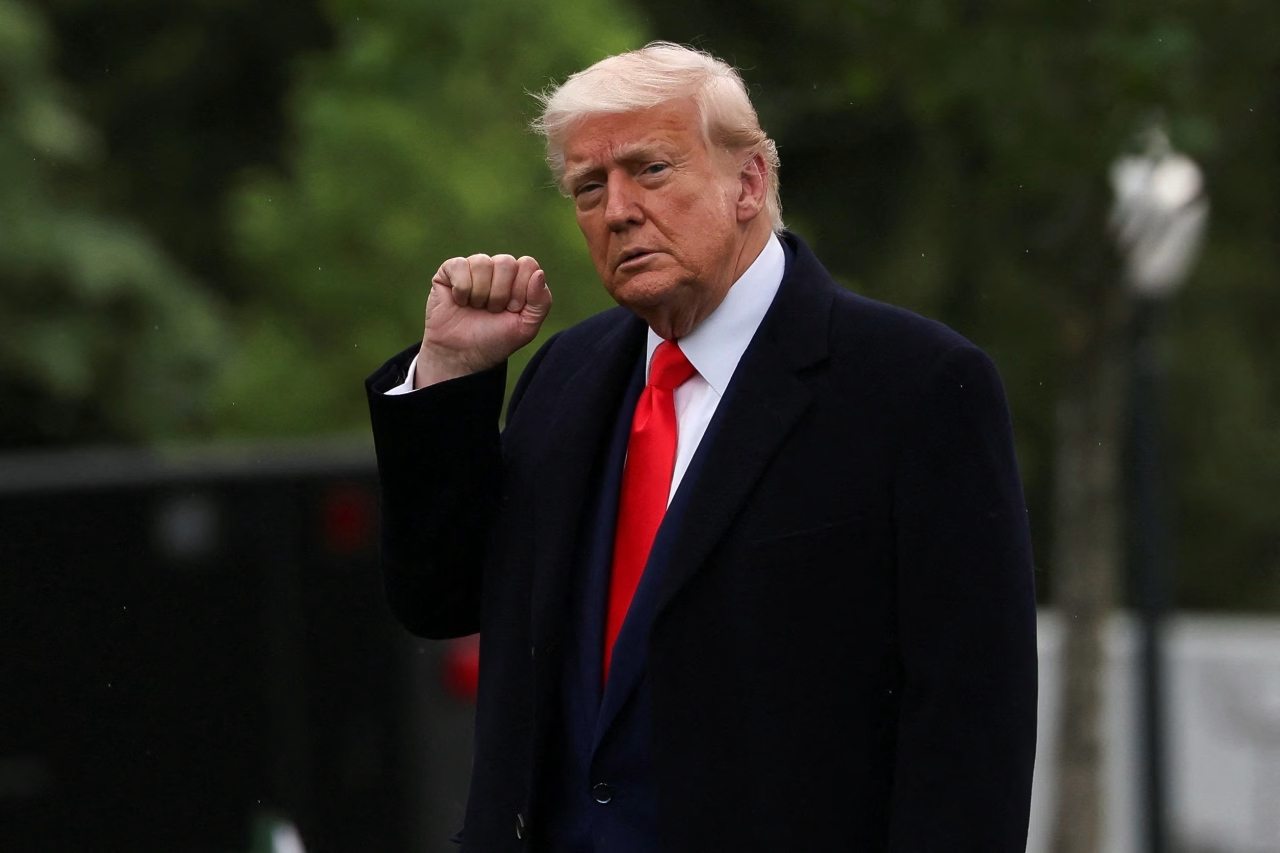
US President Donald Trump has hosted his third cryptocurrency gala at his Trump National Golf Club in Sterling, Virginia, rewarding major investors in his personal $TRUMP meme coin amid growing accusations that he is using the presidency to generate profits from his private business ventures. The latest event has reignited concerns about potential conflicts of interest, presidential accountability and the growing relationship between political power and the cryptocurrency industry.
The exclusive dinner, held on Sunday, brought together leading holders of the digital token, who qualified for invitations based on their cryptocurrency investments and positions on an online leaderboard. The event featured opportunities to meet Trump and several prominent personalities, including boxing champion Floyd Mayweather, television investor Kevin O’Leary, NBA champion Tristan Thompson and magician Lior Suchard.

The gathering was organised as a reward for investors who accumulated sufficient amounts of the president’s branded cryptocurrency. However, its timing and financial arrangements have attracted renewed criticism from Democratic lawmakers, who argue that the president’s involvement in private cryptocurrency businesses creates serious ethical concerns while he occupies the highest political office in the United States.
According to information published by the event organisers, 185 cryptocurrency wallets met the qualification criteria for Sunday’s dinner. However, the leaderboard on the $TRUMP coin website listed only 130 wallets when the competition ended on 16 November. Together, the listed wallets held approximately $8.6 million worth of the cryptocurrency, substantially below the $148 million recorded for the previous dinner in May 2025.
The difference highlights a considerable decline in the value of qualifying investments and participation compared with the first major gathering. The May 2025 event attracted approximately 220 cryptocurrency investors and generated significant attention because of the unusual arrangement involving access to a sitting president through purchases of a privately issued digital asset.
The latest gala also offered additional incentives for leading investors. Organisers reserved a Trump-branded fragrance, a commemorative poster, an event ticket and a watch for 120 attendees. The top 29 investors received invitations to a special VIP reception, while the four highest-ranking participants were promised an exclusive Trump 18-karat gold watch.
The arrangements effectively connected financial investment in the president’s cryptocurrency with access to exclusive experiences and presidential recognition. Critics argue that such incentives could encourage people to purchase or hold the token in the hope of receiving political access or other personal benefits.
During the gathering, Trump defended his support for cryptocurrency and presented the industry as an important part of America’s economic and technological future. He told attendees that his motivation was to strengthen the economic competitiveness of the United States, warning that China could take the lead in the sector if America failed to embrace digital assets.
Trump’s remarks reflected his broader ambition to position the United States as a global centre for cryptocurrency development, investment and innovation. His administration has promoted a more supportive regulatory environment for digital assets, describing the industry as an opportunity to attract investment, encourage technological development and strengthen the country’s financial influence.
However, the latest event took place against a backdrop of growing political opposition to the president’s personal involvement in cryptocurrency ventures. Democrats have repeatedly questioned whether Trump and members of his family are benefiting financially from businesses that could be influenced by decisions made within the federal government.
The president has already hosted two similar cryptocurrency gatherings since returning to the White House in January 2025. Both events attracted criticism from political opponents and government ethics advocates, who argued that allowing investors to purchase access to exclusive presidential events could undermine public confidence in government institutions.
The atmosphere at Sunday’s gathering appeared considerably quieter than the first gala. Attendees were seen waiting outside in rainy weather before entering the golf club, while some participants described the atmosphere inside as subdued. The earlier event had attracted greater public attention, with luxury sports cars arriving at the venue, protesters chanting outside and demonstrators gathering as the presidential Marine One helicopter approached.
The political controversy surrounding Trump’s cryptocurrency activities has intensified following the Democratic Party’s strong performance in the recent midterm elections. Democratic lawmakers have promised to investigate potential conflicts of interest involving the president’s personal wealth and private commercial activities during his administration.
They have also indicated plans to introduce legislation restricting arrangements that allow political figures to benefit financially from cryptocurrency investments connected to exclusive access to government officials.
In a letter sent last month, Democratic Senator Adam Schiff and eight other US senators raised concerns about the structure of the $TRUMP dinner and its investment-based qualification system. They argued that the arrangements appeared designed to increase demand for the cryptocurrency while potentially allowing the president to benefit financially from his official position.
The senators warned that the event could represent an improper use of presidential influence for personal enrichment. Their concerns reflect a broader debate in Washington over whether existing ethics regulations are sufficient to address the financial interests of presidents and their families in emerging industries such as cryptocurrency.
Financial disclosures released in June have added to the controversy. According to the reported figures, Trump generated more than $1 billion from his cryptocurrency-related businesses after returning to the White House.
His World Liberty Financial venture reportedly generated more than $500 million through sales of new cryptocurrency products. In addition, sales connected to the $TRUMP meme coin, which was launched shortly before his inauguration, reportedly generated another $600 million.
These figures have raised questions about the scale of the president’s financial interests and whether his private business activities could influence public policy decisions concerning the cryptocurrency market.
The White House has rejected allegations that Trump or his family members are involved in conflicts of interest. Earlier this year, spokesperson Anna Kelly told Reuters that neither the president nor his family had engaged in such conflicts or intended to do so. She defended the administration’s cryptocurrency policies, arguing that Trump had helped establish the United States as a leading global destination for digital assets through executive actions.
Nevertheless, another significant concern has emerged from an examination of the cryptocurrency wallets associated with Sunday’s event. An analysis of blockchain data prepared for Reuters by Public Citizen, a nonpartisan consumer advocacy organisation, found that more than half of the digital wallets publicly listed on the competition leaderboard were directly connected to cryptocurrency exchanges that prohibit US-based users.
This raised questions about the possibility that some investors were foreign nationals. Although the wallet connections do not independently establish the identities or nationalities of individual investors, the findings have intensified concerns about the potential involvement of overseas participants in a financial arrangement connected to the sitting US president.
The possibility of foreign investment in cryptocurrency ventures associated with a president has particular significance because of longstanding concerns about foreign influence over American political leadership. Critics argue that financial relationships involving overseas investors could create additional transparency and accountability challenges.
Meanwhile, the financial performance of several cryptocurrency-related ventures connected to the Trump family has also come under scrutiny. According to a Reuters analysis, outside investors in five major crypto and crypto-linked projects associated with the family have collectively lost more than $5 billion as the value of those investments declined to record lows.
The reported losses have raised questions about the risks faced by ordinary investors who purchase politically branded digital assets. Unlike traditional financial instruments, meme coins can experience extreme price movements driven by online popularity, political developments, market speculation and investor sentiment.
For supporters, Trump’s involvement in cryptocurrency represents an effort to encourage innovation and strengthen America’s position in a rapidly developing global industry. They argue that digital assets could create new investment opportunities and help modernise financial systems.

For critics, however, the central issue is not simply whether cryptocurrency should be supported but whether a sitting president should personally benefit from businesses operating in an industry subject to government policy and regulation.
The latest gala has therefore become another focal point in the debate over presidential ethics, financial transparency and the boundaries between public responsibility and private commercial interests. With Democrats promising investigations and potential legislative action, Trump’s cryptocurrency ventures are likely to remain a significant political issue.
As the cryptocurrency industry continues to expand, the controversy surrounding the president’s meme coin could also influence wider discussions about investor protection, foreign participation and the regulation of digital financial markets. The central question facing Washington is whether existing safeguards can adequately protect public institutions from potential conflicts involving political power and private wealth.
Related News:
 Thinktank Calls for Abolition of UK State Pension
 Why Americans Feel Ripped Off by Rising Prices
 Senators warn US childcare policies could raise costs
 IMF Warns Governments Over Rising Debt Burdens
 US Senate Debates Turn Bitter as Midterms Near
 France Faces Debt Crisis as Protests and Markets Clash
 Brazil Court Scandal Threatens Lula as Bolsonaros Rise
 Millions Face Tougher Medicaid Rules From January
 Trump Pledges $400m to Boost Republicans in Midterms
 Anthropic IPO Reveals AI Boom’s Huge Costs and Risks
 Fed Expected to Hold Rates Steady Ahead of US Midterms
 Paraguay President Impeached and Arrested After Banking Crisis
 Reform UK funding: mystery billionaire revealed
 US Awaits Iran Reply on New Ceasefire Proposal
 Immigration Judges Fear Pressure in Trump Era
 Weight-Loss Drugs Transform Fashion Shopping Habits
 Trump Refuses to Sign Housing Bill, But Law Takes Effect
 Is America Ready for an AOC Presidential Run?
 Trump Hardens Canada Trade Stance as Talks Stall
 Trump Calls Iran War ‘Small Potatoes’ Despite US Deaths
 Reform Faces Fresh Financial Controversy
 UK House Prices Fall as Mortgage Rates Rise
 Trump’s Washington Projects Face Architectural Criticism
 Thames Water Revises Oxfordshire Mega-Reservoir Plan
 UK Pay Growth Slows to 3.9% as Rate Decision Nears
 Bank Urged to Slow Bond Sales as UK Costs Rise
 UK Inflation Hits 3.1% as Household Pressure Grows
 Omar Proposes Bill to Redirect ICE Funding
 Trump and Mamdani Hold Cordial Gracie Mansion Meeting
 Trump Eyes Major Belarus Fertiliser Deal Amid Canada Trade Dispute
 Democrat Says ICE Restricted Detention Camp Oversight
 MPs Defend UK Economic Watchdog Against Critics
 Trump gives Xi red-carpet welcome as trade truce extends
 Xi urges Trump to avoid US-China military conflict
 Lula accuses Trump of seeking control over Brazil
 Saudi intercepts Houthi missiles as oil fears grow
 Poundland Rescue Bid Could Protect 11,000 Jobs
 Badenoch Raises Prospect of 2027 UK Election
 Pritzker’s National Profile Grows Ahead of 2028
 Latin America women fear rollback of rights
 Informa Agrees £2.24bn Deal to Buy Clarion
 EU-China Talks Target Surge in Hybrid Car Imports
 Ministers Push ATO to Reconsider Credit Card Ban
 Brown Targets Ohio Data Centers in Senate Comeback
 Bolsonaro Gains Key Endorsement Ahead of Brazil Runoff
 UK Savers Face Uncertainty as Rates Rise Above 5%
 IFS Warns UK Budget Faces £35bn Spending Gap
 Ohio Airports Become Key Hubs for ICE Deportation Flights
IMF Raises UK Growth Forecast Ahead of Healey’s Budget
 Brazil Cuts Working Week to 40 Hours in Lula Election Boost
 Trump Rallies GOP as Senate Democrats Boost Key Races
 Serbia Leader Linked to Controversial Trump Tower Plan
 Trump Halts New Russia Sanctions Amid Ukraine Rift
 Trump Fears Shock Democratic Senate Win in Kansas
 Meta Faces Election Bias Claims Ahead of Brazil Runoff
UK Borrowing Hits £24.5bn Ahead of Healey’s Budget
 China’s AI Ambitions Hit $2.4 Trillion Market Setback
Trump’s Midterm Campaign Faces Racism and Political Backlash
 UK Chancellor Moves to Scrap Gas Standing Charges
 Obama Mocks Trump at Georgia Rally for Democrats
 Trump’s Global Policies Put Republicans at Risk
 North Korea Linked to Record $6.3bn Binance Crypto Heist
 Global Crises Test Diplomacy as Trump’s Policies Face Scrutiny
 G20 Photo Cancelled as Russia Deepens Western Rift
 US Judge Blocks Pressure on Election Officials
 Australia Raises Interest Rates to 18-Year High
 Elon Musk’s $446m Midterm Gamble Ends in Defeat
 Paraguay President Quits After Major Bank Collapse
 Australia Faces Political Risks After US Midterm Shift
 Qatar Pushes Iran Deal to Reopen Strait of Hormuz
 Pope Leo Rebukes Milei Over Argentina’s Austerity Policies
 Nvidia and Jensen Huang Face Shareholder Lawsuit
Australian Mortgage Confidence Hits 32-Year Low
 Badenoch Unveils £36bn Tory Welfare Cuts Plan
 US Treasury Chief Moves to Military Base Over Iran Threat
 UK Civil Service Chief Vows Radical Whitehall Reform
 Tories Face Pension Age Rise Beyond 70, Labour Warns
 Scott Colom Celebrates Historic Mississippi Senate Victory
 Mary Peltola’s Alaska Win Gives Democrats 56 Senate Seats
 Musk Distances Himself From MAGA After Costly GOP Bet