Published: 31 October 2026. The English Chronicle Desk. The English Chronicle Online
The traditional “family photo” that normally marks the opening of major G20 diplomatic gatherings has been cancelled in Atlanta after several countries, including the United Kingdom and Australia, refused to appear alongside Russia’s foreign minister, Sergei Lavrov. The unusual decision has highlighted the deep divisions within the world’s major economies over Russia’s war in Ukraine and the Trump administration’s efforts to bring Moscow back into international diplomatic forums.
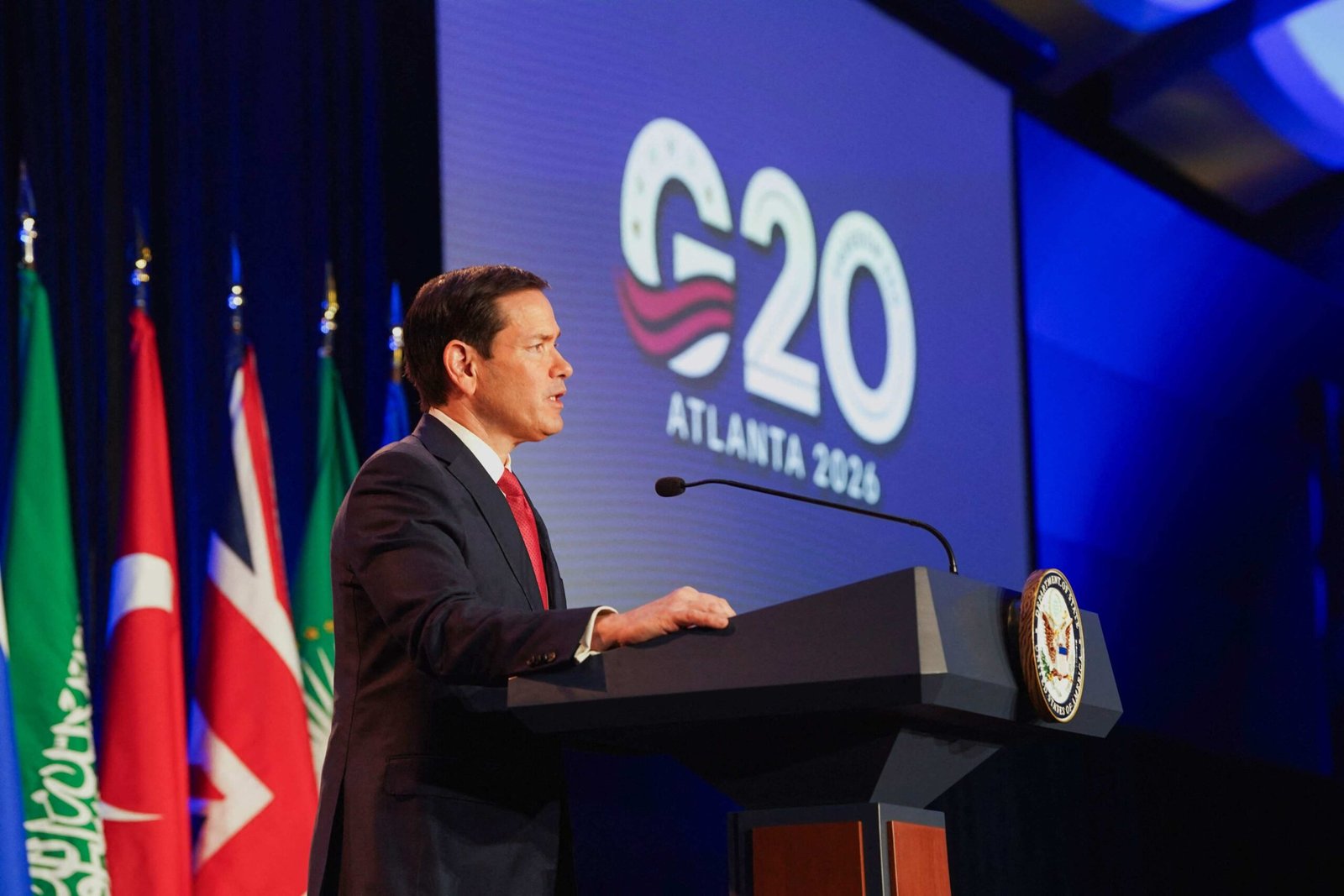
US Secretary of State Marco Rubio cancelled the planned photograph after it became clear that roughly one-third of the countries represented at the foreign ministers’ meeting were unwilling to stand beside Russian representatives. The decision avoided an embarrassing public confrontation but also exposed the difficulty of presenting an image of unity at a meeting increasingly dominated by disagreements over Russia, Ukraine and the future structure of global diplomacy.
Rubio nevertheless opened the talks with an appeal for cooperation. Speaking to foreign ministers in Atlanta, he described the international environment as being at a critical moment, pointing to interconnected economic and geopolitical crises that are affecting both global security and trade.

The cancellation of the photograph was particularly significant because the G20 family picture is more than a ceremonial moment. It traditionally symbolises cooperation among the world’s leading economies, allowing countries with substantial political disagreements to publicly demonstrate a willingness to work together. The refusal by a large group of participants to share the stage with Lavrov therefore sent a powerful diplomatic message.
European governments had already made their position clear before the meeting. Germany’s foreign minister, Johann Wadephul, said there would be no circumstances in which European participants would take part in a family photograph alongside Lavrov. He argued that Russia’s ongoing war meant relations with Moscow could not simply be presented as normal.
The British government took a similar position. Foreign Secretary Ed Miliband said the UK had not engaged with Russian officials in that manner for years, reinforcing London’s continued opposition to treating Russia’s international isolation as though it had ended.
Australia also used the meeting to publicly condemn Moscow’s actions. Foreign Affairs Minister Penny Wong criticised Russia’s invasion of Ukraine during the opening session, delivering the remarks in Lavrov’s presence. She described the war as brutal and unjustified and linked its consequences to international markets and global food security.
Australia subsequently supported the American decision to abandon the photograph. The Australian government said it remained opposed to any attempt to normalise what it described as Russia’s illegal invasion of Ukraine.
The dispute reflects a much wider diplomatic transformation under President Donald Trump. The US administration has sought to reintegrate Russia and President Vladimir Putin into international diplomacy despite the continuation of the war in Ukraine. Washington’s approach has produced significant friction with European allies and other governments that continue to view Moscow as a direct threat to international security.
The disagreement in Atlanta was not limited to the photograph. Diplomats who attended the opening discussions described the atmosphere as generally cordial, but said Russia remained firm in its position on Ukraine. Moscow also continues to oppose Poland’s potential membership of the G20, adding another contentious issue to an already complicated agenda.
Poland was represented at the meeting by Deputy Prime Minister and Foreign Minister Radosław Sikorski, with the country attending as a guest. Poland has been seeking full G20 membership and has received support from Washington.
The Polish position reflects the broader challenge facing the group. Russia’s participation has created a fundamental tension between countries that want the G20 to remain focused on economic cooperation and those that believe its membership and public diplomacy must reflect the geopolitical realities created by the war in Ukraine.
The disagreements could make it difficult for foreign ministers to produce a joint communiqué when the meeting concludes. A final statement normally provides a demonstration of consensus on major international and economic issues, but participants acknowledged that reaching common language would be extremely difficult under current circumstances.
Sikorski said the presence of countries directly involved in wars made agreement particularly challenging. His comments captured the unusual nature of the meeting, where major powers with sharply conflicting positions were expected to cooperate on global economic issues while simultaneously confronting unresolved security disputes.
Despite the tensions, participants said they remained committed to trying to overcome their differences. Diplomats indicated that they wanted to preserve enough cooperation to ensure that the G20 leaders’ summit, scheduled to be hosted by Trump in Florida next month, could proceed successfully.
The foreign ministers’ meeting is therefore being viewed partly as preparation for that larger gathering. The failure to produce a traditional family photograph, however, demonstrates how difficult it may be for leaders to project unity when their governments disagree fundamentally over Russia’s role in the international system.
Ukraine’s absence from this year’s meeting has added another layer to the controversy. Although Ukraine is not a member of the G20, it had previously been invited to participate in some meetings. US officials said this year’s decision to exclude Kyiv was deliberate and reflected a policy of inviting only formal members of the group.
The decision has been closely watched because Ukraine remains at the centre of the geopolitical dispute dividing many G20 members. European governments have strongly supported Kyiv, while the Trump administration has pursued a different diplomatic approach that places greater emphasis on direct engagement with Moscow.
Another major controversy concerns South Africa, one of the founding members of the G20 and the only African country in the grouping. South Africa was not invited to the Atlanta meeting despite its formal status as a member.
The omission has become another source of tension between Washington and Pretoria. South Africa has been involved in several disputes with the Trump administration. Last year, when South Africa held the G20 presidency, senior US officials, including Trump and Rubio, declined to attend meetings hosted by Pretoria.
South African officials have rejected any suggestion that the country simply chose not to participate. Phindile Kunene, a spokesperson for Foreign Affairs Minister Ronald Lamola, said Pretoria had consistently maintained that its absence was not voluntary.
The dispute over South Africa raises questions about the principles governing participation in the G20. While the organisation was created as a forum for major economies to cooperate on global economic challenges, its meetings increasingly reflect broader geopolitical divisions.
The Atlanta meeting has therefore become an important test of whether the G20 can maintain its traditional role as a platform for dialogue when its members are divided by wars, competing alliances and sharply different approaches to international diplomacy.
For the Trump administration, bringing Russia back into the international conversation represents an attempt to reshape the diplomatic landscape and potentially create new opportunities for negotiations. For many European governments and other allies, however, such engagement risks weakening the international pressure placed on Moscow over its war in Ukraine.

The cancelled photograph captured that disagreement in a single moment. Rather than showing ministers standing together as a symbol of cooperation, the absence of the image demonstrated how far apart some of the world’s most influential governments remain.
Yet officials at the meeting insist that diplomacy cannot simply stop because consensus is difficult. The coming weeks will show whether the G20 can find enough common ground to address economic and security challenges or whether its internal divisions will increasingly undermine its ability to act collectively.
The next major test will come at the leaders’ summit in Florida. If the diplomatic tensions visible in Atlanta continue, the gathering could become another stage for competing visions of the international order rather than a straightforward demonstration of global cooperation.
For now, the cancelled family photo stands as an unmistakable symbol of the G20’s current predicament: the group remains one of the world’s most important forums for economic coordination, but its members are increasingly divided over the wars, alliances and diplomatic priorities shaping the global system.
Related News:
 Saudi intercepts Houthi missiles as oil fears grow
 Fed Expected to Hold Rates Steady Ahead of US Midterms
 Global Crises Test Diplomacy as Trump’s Policies Face Scrutiny
 US Awaits Iran Reply on New Ceasefire Proposal
 Hormuz Talks Near Critical Stage
 Reeves Fights to Keep Treasury Role Amid Labour Turmoil
 Trump Hardens Canada Trade Stance as Talks Stall
 Trump Pledges $5,000 if Republicans Win Midterms
 US House Passes Russia Sanctions Bill Amid Debate
 Trump Eyes Major Belarus Fertiliser Deal Amid Canada Trade Dispute
 Iran Rejects Claims of Shift in US Talks
 Tony Blair Calls for Britain to Rejoin EU Within a Decade
 Xi urges Trump to avoid US-China military conflict
 EU-China Talks Target Surge in Hybrid Car Imports
 Tanker Attacked Near Qatar as Hormuz Tensions Escalate
 Trump’s Russian Diesel Deal Sparks Ukraine Fury
 France Faces Debt Crisis as Protests and Markets Clash
 Brazil Court Scandal Threatens Lula as Bolsonaros Rise
 Trump Rallies GOP as Senate Democrats Boost Key Races
 Trump Halts New Russia Sanctions Amid Ukraine Rift
 Cormann Warns Australia Against Populist Migration Caps
 Trump Fears Shock Democratic Senate Win in Kansas
 Trump Faces Voter Backlash Over Soaring Gas Prices
 China’s AI Ambitions Hit $2.4 Trillion Market Setback
 Trump Faces Crisis as Iran Reopens Hormuz Tensions
 Southeast Asia Turns to Russia Amid Energy Crisis
 Trump approval plunges amid Iran war fears
 Ohio’s Battle for Trust: Democrats Vying to Flip the Buckeye State
 Trump Threatens UN Budget Cuts as US Pushes ‘Trade Over Aid’ Agenda
 Kevin Warsh sworn in as Fed chair amid economic backlash
 UK Pushes for New EU Goods Trade Deal
 Discontent grows around Putin amid war strain
 Labour MPs Urge Burnham to Revive UK Aid Target
 Trump Refuses to Sign Housing Bill, But Law Takes Effect
 Houthis Strike Saudi Arabia as Middle East Tensions Rise
 Firms on both sides fear damage from US-Canada trade war
 Trump orders US to rename Lake Ontario ‘Lake America’
 Trump Calls Iran War ‘Small Potatoes’ Despite US Deaths
 Swedish Mining Push Puts Sami Land Rights Under Pressure
 Oil nears $100 as Saudi attacks shake markets
 Saudi Arabia Shuts Oil Pipeline After Drone Attack
 Trump Threatens EU With Tariffs Over Canada Proposal
 Trump Threatens EU Over Canada Partnership Proposal
 Japan Raises Rates to 31-Year High
 Middle powers seek new alliances amid Trump era
 AI Takes Centre Stage in Trump-Xi Talks
 MPs Defend UK Economic Watchdog Against Critics
 Trump gives Xi red-carpet welcome as trade truce extends
 Chinese Hybrid Car Surge Raises EU Auto Industry Concerns
 Lula accuses Trump of seeking control over Brazil
 Burnham Opens Door to Possible UK Return to EU
 French Debt Fears Put Euro Markets Under Pressure
 UK Diesel Reaches £2 as Inflation Surges Across Europe
 Minister Rejects Fears of UK Diesel Shortage
 DOJ Declines to Reopen Powell Renovation Probe
 Informa Agrees £2.24bn Deal to Buy Clarion
 IMF Warns Governments Over Rising Debt Burdens
 Doubts Grow Over Trump’s $15bn Iowa Steel Plant
 South Korea Probes Fuel Shipments to Russia
 France Urges UK to Consider Returning to EU
 Ministers Push ATO to Reconsider Credit Card Ban
 Oil Shock Sends Markets Lower as Middle East Risks Grow
 Houthi Missile Claim Sparks Riyadh Airport Disruption
 Turkey Rules Out Troops in Saudi Arabia’s Houthi Conflict
 Trump Rules Out Iran Attack Before US Elections
 IFS Warns UK Budget Faces £35bn Spending Gap
 Hall and Woodford Win Nobel Economics Prize
 IMF Warns Global Economy Is Nearing Its Limits
 Millions Face Tougher Medicaid Rules From January
 Trump Targets Arizona and Montana Amid GOP Election Worries
 Serbia Leader Linked to Controversial Trump Tower Plan
 UK Could Rejoin EU Through a Switzerland Plus Deal
 Japan’s Takaichi Faces a Crucial Second Year in Power
UK Borrowing Hits £24.5bn Ahead of Healey’s Budget
 Tax Online Sales to Save High Street, Burnham Urged
 Labour MPs Urge Burnham to Lead UK Reindustrialisation
 US Bans BYD Vehicles at Japan Military Base
 Albanese Faces Labor Pressure as Inflation Hits 4.3%
 UK Budget Leaves Households Facing Higher Energy Bills
 Trump’s Global Policies Put Republicans at Risk