Published: 15 October 2026. The English Chronicle Desk. The English Chronicle Online
Serbian President Aleksandar Vučić personally intervened in efforts to remove the protected status of a historic Belgrade building earmarked for a proposed $500 million Trump-branded development, according to an investigation based on interviews and leaked documents. The allegations have intensified scrutiny of the Serbian government, raised questions about the handling of a controversial property deal and placed renewed attention on the business interests of US President Donald Trump’s family.
The proposed development, which was expected to include a hotel and residential tower, became the centre of a major political and legal controversy in Serbia. The project involved a real estate company associated with Jared Kushner, Trump’s son-in-law, and was intended to transform the site of the former Yugoslav Ministry of Defence in the Serbian capital. The plan attracted opposition from heritage experts, environmental activists and demonstrators who argued that the government was sacrificing a historically significant location to benefit private investors.
According to the investigation, Vučić summoned senior heritage officials to a meeting at the presidential offices in February 2024 and pressed them to remove the building’s protected status. Two people familiar with the meeting said the president wanted the officials to reverse the designation because an unidentified foreign investor was interested in the site. The account raises questions about whether political pressure was used to facilitate a development that later became the subject of a criminal investigation.

Vučić has not been charged in the case, and the allegations against him have not been established in court. His government’s handling of the project, however, has become an important issue ahead of Serbia’s scheduled election on 25 October 2026. The controversy has unfolded amid wider public anger over corruption allegations, government accountability and the relationship between political leaders and powerful business interests.
The historic General Staff complex occupies a prominent position in central Belgrade. Designed as a significant example of modern Serbian architecture, the building also carries deep historical meaning. It was associated with Yugoslavia’s former military establishment and was damaged during NATO’s 1999 bombing campaign, which formed part of the alliance’s intervention over Kosovo. For many Serbians, the ruins became a symbol of national suffering, political history and resistance.
The building’s protected status had been reaffirmed by Vučić himself in 2016. Yet, according to people familiar with the February 2024 meeting, the president subsequently urged Dubravka Đukanović, then director of Serbia’s institute for the protection of cultural monuments, to facilitate its removal. Under Serbian law, such a decision required an expert assessment establishing that the legal conditions for protection were no longer satisfied. The director could not simply revoke the designation at the president’s request.
The pressure reportedly intensified after a government agreement with Kushner’s real estate company emerged in March 2024. The leaked agreement indicated that the company would receive a 99-year lease over the General Staff site without paying rent. A contract dated 13 May 2024 also committed the Serbian government to removing the site’s cultural heritage designation to the satisfaction of the investor’s company.
The arrangement prompted criticism from opponents who questioned why a historic public site should be made available on such favourable terms to a private developer. Environmental activist Aleksandar Jovanović Ćuta, who helped reveal the agreement, argued that Serbia should not be treated as private property controlled by its political leadership.
Kushner had said he had been considering the project since 2021 and expressed enthusiasm about the proposed design. The development was intended to combine hospitality and residential facilities under the Trump brand, bringing the two prominent American real estate families together in a major overseas venture.
The political context was significant. In early 2024, Donald Trump was seeking the Republican presidential nomination and was widely considered a strong contender to return to the White House. Kushner, who had served as a senior adviser during Trump’s first administration, had since focused on investment activities. The prospect of Trump returning to office added political sensitivity to a project involving a foreign government and members of his family.
The week after the May contract was signed, Đukanović was summoned to another meeting, this time involving Serbian Finance Minister Siniša Mali. According to testimony summarised in the indictment against senior officials, Mali urged Đukanović and Olivera Vučković, Belgrade’s leading heritage official, to initiate the procedure to remove the site’s protected status. When the women refused, believing the legal requirements had not been met, they were reportedly told to resign.
Both officials subsequently left their positions. In her resignation letter, Đukanović argued that she could not accept interventions that would permanently destroy the cultural and architectural value of the complex. She later confirmed the broad account of events but declined to comment further while legal proceedings were ongoing. Vučković also confirmed the account.
In November 2024, shortly after Trump won re-election, the Serbian government announced that the General Staff complex had lost its protected status. The decision provoked further criticism and contributed to protests over the future of the site. For demonstrators, the proposed tower became a symbol of wider concerns about political influence, public assets and the treatment of Serbia’s cultural heritage.
The controversy subsequently developed into a criminal case. Prosecutors alleged that Goran Vasić, who had replaced Đukanović as head of the heritage institute, forged an expert opinion supporting the removal of the building’s protected designation. Vasić was arrested, and further action followed against other officials.
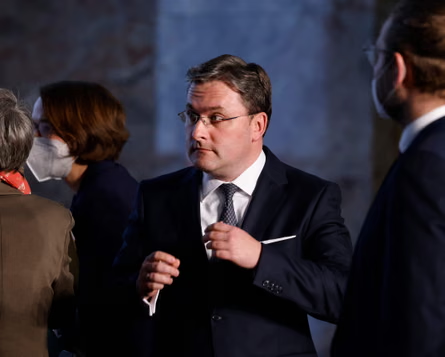
In December 2025, Serbia’s culture minister, Nikola Selaković, was indicted on charges of abuse of public office in connection with the scheme. Other senior figures also faced allegations. Selaković has denied wrongdoing, and the charges remain matters for the courts to determine.
After the charges were announced, Kushner’s company said the Belgrade project would not proceed at that time. Vučić reacted angrily, accusing prosecutors of corruption and threatening to hold those responsible for the loss of the investment accountable. He described the case as fabricated, while critics argued that his response raised further concerns about political interference in the justice system.
The latest investigation has focused attention on why the indictment did not mention the February 2024 meeting allegedly chaired by Vučić. The meeting could be relevant to understanding how the pressure to remove the building’s protected status developed. Its omission has prompted questions about the evidence available to prosecutors and whether the investigation may extend to additional officials.
A spokesperson for Serbia’s organised-crime prosecutors said investigators possessed evidence relating to the meeting. The spokesperson added that pretrial proceedings were continuing to determine whether other individuals might bear criminal responsibility. That statement indicates that the inquiry has not necessarily been limited to those already charged.
Vučić has not been charged, and neither has Mali. The investigation’s eventual conclusions will be important in determining whether the alleged pressure on heritage officials amounted to criminal conduct and whether further prosecutions are justified.
The case has also drawn attention to concerns about potential conflicts of interest involving the Trump family’s business activities. During his first presidency, Trump pledged that his family business would refrain from overseas deals while he was in office. After returning to the White House in January 2025, however, his family continued pursuing international commercial projects.
The Trump Organization has denied involvement in the alleged scheme. Its representative said the company had no plans to develop a project in Belgrade and had never participated in discussions or negotiations to acquire a site there. The representative also denied any knowledge of the allegations.
A spokesperson for Kushner said suggestions that the Belgrade proposal was part of a political arrangement or a “pay to play” scheme were categorically false. The spokesperson described the project as an opportunity to transform a site associated with a painful period in Serbian history into a symbol of reconciliation, while attracting private investment, creating jobs and supporting economic development. The spokesperson also said Kushner had no involvement in the Serbian government’s internal process concerning the site’s protected status.
These denials are central to the controversy. The available allegations concern the conduct of Serbian officials and the circumstances under which the heritage designation was removed; they do not establish that Trump or Kushner directed officials to act unlawfully. Any assessment of responsibility must distinguish the proposed commercial benefits from evidence of specific conduct.
The political fallout has been compounded by Serbia’s wider protest movement. Demonstrations gained momentum after the collapse of a canopy at Novi Sad railway station in November 2024 killed 16 people. The disaster fuelled anger over alleged corruption, public procurement and government accountability. Student organisers and other demonstrators adopted the slogan “Serbia or mafia”, reflecting their demand for political and institutional change.
The proposed Trump Tower became another focal point for those protests. Critics viewed the plan as an example of how government decisions affecting public assets and cultural heritage could be shaped by powerful interests. Supporters of the project, by contrast, argued that major foreign investment could bring jobs and economic opportunities to Belgrade.

The outcome of the criminal proceedings may have consequences beyond the future of the development. The case tests the independence of Serbia’s institutions, the ability of prosecutors to investigate senior officials and the extent to which protected heritage sites can be shielded from political pressure.
For now, the proposed tower remains suspended, the allegations are unresolved and the investigation continues. The central questions concern who pushed for the removal of the building’s protected status, whether the process complied with Serbian law and whether additional individuals should face scrutiny. As Serbia approaches its election, the controversy has become a broader test of transparency, accountability and the relationship between political power and private investment.
Related News:
 Trump Ads Trigger Fight Over Taxpayer Money
 Brazil Court Scandal Threatens Lula as Bolsonaros Rise
 Thousands Protest ICE Operations in Nationwide US Day of Action
 US states redraw maps after voting rights ruling
 Former ICC prosecutor condemns US sanctions
 Trump announces major US oil deal with Venezuela
 Trump Hardens Canada Trade Stance as Talks Stall
 Trump Calls Iran War ‘Small Potatoes’ Despite US Deaths
 Trump Media Ban Triggers First Amendment Clash
 US Networks Suspend Trump White House Pool Coverage
 Lula accuses Trump of seeking control over Brazil
 Republican Senator Questions Trump Ad Spending
 Latin America women fear rollback of rights
 Tanker Attacked Near Qatar as Hormuz Tensions Escalate
 Trump Says He Deserves Nobel Peace Prize
 Trump Attacks Norway After Nobel Peace Prize Snub
 Millions Face Tougher Medicaid Rules From January
 Ohio Airports Become Key Hubs for ICE Deportation Flights
 UK Urges Interpol to Reject Argentina’s Falklands Arrest Requests
 Judge Blocks Trump White House Media Ban
 Trump Targets Arizona and Montana Amid GOP Election Worries
 Brazil Cuts Working Week to 40 Hours in Lula Election Boost
 Trump Rallies GOP as Senate Democrats Boost Key Races
 Epstein Files Reveal Trump Officials’ Emails with Financier
 Thousands Protest ICE in New York Against Trump Deportation Campaign
 Ukraine Urges UK to Seize Russian Oil Tankers
 US Calls Australia Media Law “Foreign Extortion”
 Oil Prices Surge Above $120 Amid Iran Blockade Fears
 US Court Ruling Reshapes Voting Rights Landscape
 Cartel crackdown raises fears of fresh violence
 Trump orders US troop pullout from Germany
 Judge halts deportation of Yemeni refugees in US
 Trump approval plunges amid Iran war fears
 Trump Threatens UN Budget Cuts as US Pushes ‘Trade Over Aid’ Agenda
 Trump warns Iran as Middle East tensions surge again
 US ‘Narco Boat’ Strikes Draw Global Outcry
 Tensions Emerge in Netanyahu-Trump Alliance
 US Awaits Iran Reply on New Ceasefire Proposal
 Immigration Judges Fear Pressure in Trump Era
 Tulsi Gabbard exits after turbulent intelligence tenure
 Hormuz Talks Near Critical Stage
 Gunman Killed After White House Security Shootout
 Trump Refuses to Sign Housing Bill, But Law Takes Effect
 Houthis Strike Saudi Arabia as Middle East Tensions Rise
 Is America Ready for an AOC Presidential Run?
 Trump Calls Strait of Hormuz ‘American Territory’
 UN expert urges UK to rethink Israel policy
 UK plans tougher Israel stance with settlement trade ban
 New Mexico Takes Facebook to Trial Over Data Scandal
 Israel Accused of Undermining Palestinian Life
 Trump’s Washington Projects Face Architectural Criticism
 Fugitive Developer Rants at NSW Corruption Inquiry
 US Sanctions Open New Battle for Cuba Assets
 Omar Proposes Bill to Redirect ICE Funding
 Macron and Carney deepen France-Canada ties
 US Deportation Deals Send Migrants to Unfamiliar Countries
 Trump and Mamdani Hold Cordial Gracie Mansion Meeting
 Trump Eyes Major Belarus Fertiliser Deal Amid Canada Trade Dispute
 Democrat Says ICE Restricted Detention Camp Oversight
 UK Pauses Chagos Deal Amid US Opposition
 Xi urges Trump to avoid US-China military conflict
 Economic growth and political strain reshape Benin
 Burnham Opens Door to Possible UK Return to EU
 Drumcree Talks Falter as Legal Challenge Deepens
 UK-France Returns Deal Faces Expiry as Talks Stall
 Trump Immigration Policy Faces New Legal Tests
 Badenoch Raises Prospect of 2027 UK Election
 Musk’s DOGE Sparks Turmoil Inside US Government
 Argentina Protesters Resist Milei’s Land Sale Drive
 Flydubai Attack Probe Expands to New Zealand
 Trump Rally Faces Protests as Texas Race Tightens
 UK Mission in East Jerusalem to Remain Open
 Bolsonaro Gains Key Endorsement Ahead of Brazil Runoff
 Trump’s Russian Diesel Deal Sparks Ukraine Fury
 Controversial Vaccine Trial Approved in Guinea-Bissau
 India’s Voter Roll Crisis Sparks Nationwide Protests
 Ukrainian Soldier Faces Trial Over Nord Stream Blast
 Gadi Eisenkot: Israel’s Anti-Netanyahu Challenger
 Talarico Faces Tough Voter Test in Texas Senate Race
 Trump’s Ambassador Picks Face Growing Controversy