Published: 22 August 2026. The English Chronicle Desk. The English Chronicle Online.
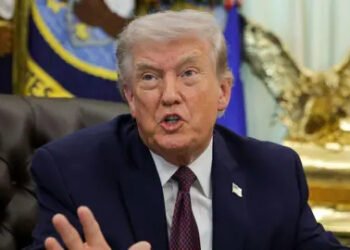
US President Donald Trump has described the strategically vital Strait of Hormuz as “an American territory”, escalating an already tense confrontation with Iran as Washington maintains a military blockade of Iranian shipping and attempts to exert greater economic and strategic pressure on Tehran.
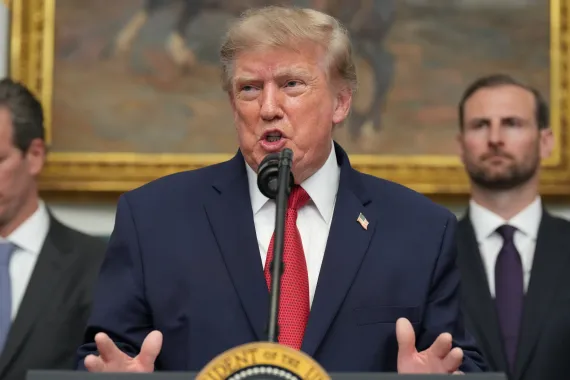
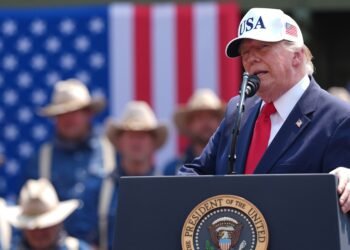
Trump made the remarks on Friday during a political rally in South Carolina, where he was campaigning for Darline Graham, who is seeking to fill the Senate seat previously held by her late brother, Lindsey Graham. His comments added a new and highly controversial dimension to the US administration’s position on one of the world’s most important maritime trade routes.
“We don’t even know if we won, because I view the Strait of Hormuz as an American territory right now,” Trump told the crowd.
The statement came as the United States continues military operations connected to its confrontation with Iran and seeks to restrict the movement of commercial vessels through the waterway. Trump has increasingly spoken of the Strait of Hormuz in terms of US control, arguing that the American blockade has effectively placed the route under Washington’s authority.

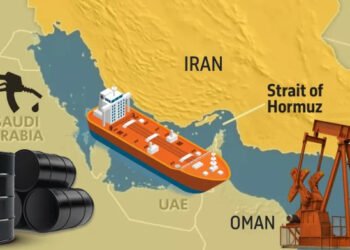
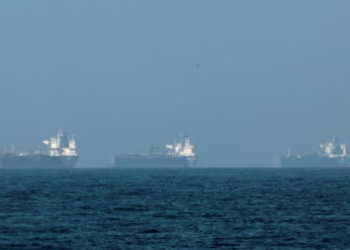
The Strait of Hormuz is a narrow maritime passage between Iran and Oman and is one of the most strategically important waterways in the global economy. A significant share of the world’s seaborne oil supply normally passes through the strait, making any disruption there capable of affecting energy prices, shipping costs and international markets.
The latest comments from Trump have therefore attracted attention far beyond the immediate US-Iran conflict. Any attempt to permanently claim control over the waterway would carry major international and legal implications because the strait is not sovereign US territory and serves as an international maritime route.
Trump has previously raised the possibility of formally declaring the waterway US territory. Last week, he suggested that the United States could take such a step, arguing that American forces were already controlling passage through the area because of the blockade.
“We control it with the blockade, and I like the idea of declaring it a territory,” Trump said earlier.
He later reinforced the idea by posting an image on social media showing a map that labelled the Strait of Hormuz as a “new U.S. territory”. The move immediately drew attention because of the waterway’s importance to Iran, neighbouring states and the international energy market.
Iran has rejected Trump’s claims. Iranian Deputy Foreign Minister Kazem Gharibabadi dismissed the US president’s remarks as “delusions”, reflecting Tehran’s refusal to recognise any American claim over the strait.
The dispute comes as the conflict between Washington and Tehran approaches its six-month mark without a peace agreement. The Trump administration has sought to intensify economic pressure on Iran by restricting access to the maritime route that plays a central role in the country’s oil exports.
The blockade has already affected commercial shipping. According to the US Central Command, American forces had redirected 68 commercial vessels by Friday to comply with the blockade. The development has raised concerns among shipping companies and traders about the risks associated with operating in or around the waterway.
For Iran, the Strait of Hormuz is particularly important because of its geographical position. Much of the country’s energy trade depends on access to the Persian Gulf and the wider maritime network beyond it. Any sustained restriction could therefore have serious consequences for Iranian revenues and the country’s ability to maintain international trade.
For the global economy, the stakes are also considerable. Roughly one-fifth of the world’s seaborne oil supply normally passes through the Strait of Hormuz. Disruption to that flow could put upward pressure on energy prices and increase costs for businesses and consumers in countries far removed from the Middle East.
The waterway’s importance also means that its security has traditionally been a matter of international concern. Ships carrying energy supplies from the Gulf pass through the strait while travelling between the Persian Gulf and the Gulf of Oman. Any prolonged military confrontation could affect not only Iran and the United States but also major energy-importing economies in Asia, Europe and elsewhere.
Trump’s latest comments were accompanied by remarks that further highlighted the seriousness of the confrontation. During the South Carolina rally, he joked about carrying out additional bombing against Iran.
“It’s a Friday night. We have plenty of time,” Trump said before reciting “The Snake”, a poem he has frequently used during political appearances. He then asked rhetorically what he would have to do to “bomb Iran a little bit more”.
The comments came at a particularly sensitive moment, with Washington attempting to pressure Tehran while simultaneously keeping military operations active. The absence of a peace agreement means the possibility of further escalation remains a major concern.
The administration’s strategy appears to combine military pressure with economic restrictions. By attempting to control maritime movement and limit Iran’s access to international shipping, Washington is seeking to increase the cost of continuing the conflict for Tehran.
However, such a strategy also carries risks for the United States. Military control of a major international waterway requires sustained naval resources and could expose American forces to further confrontation. It could also increase tensions with countries that depend on the strait for energy shipments and commercial trade.
There is also a broader question over how other countries would respond if Washington attempted to treat the strait as US territory. The waterway borders Iran and Oman, and neither country’s sovereignty over its surrounding waters would disappear simply because the United States imposed a blockade.
The situation could consequently become a major test of international maritime norms. A move perceived as an attempt by one country to claim control over a globally significant shipping route could trigger diplomatic opposition and intensify criticism of Washington’s approach to the conflict.
For businesses and international markets, uncertainty is already becoming a concern. Shipping companies must consider whether vessels can safely navigate the region, while energy traders must assess the possibility of prolonged disruption to oil supplies. Even limited interruptions can have effects on prices when markets are already sensitive to geopolitical developments.
The economic consequences could extend beyond oil. Higher energy costs can influence transportation, manufacturing, food production and household expenses. Countries heavily dependent on imported energy could face particular pressure if the crisis continues.
Iran, meanwhile, has shown no indication that it accepts the American characterisation of the waterway. Tehran’s dismissal of Trump’s comments suggests that the dispute over the strait is likely to remain part of the wider confrontation between the two countries.
Trump’s statement also demonstrates how the Strait of Hormuz has moved from being primarily a strategic maritime issue to becoming a central symbol of the broader US-Iran conflict. For Washington, control of the waterway represents leverage over Iran’s economy. For Tehran, any attempt by the United States to claim authority over the route represents a challenge to Iranian sovereignty and regional influence.
The coming weeks could therefore prove crucial. If the blockade continues, pressure on Iran’s economy and shipping sector is likely to grow. At the same time, the longer American forces remain involved in controlling the waterway, the greater the possibility of confrontation involving commercial vessels, regional actors or Iranian forces.

Trump’s declaration that he now views the Strait of Hormuz as “an American territory” has consequently raised the stakes in an already dangerous conflict. What began as a dispute over Iran’s economy and military capabilities is increasingly becoming a confrontation over control of a maritime route essential to global energy security.
For millions of people far from the Persian Gulf, the consequences may ultimately be felt not through the political rhetoric of Washington or Tehran, but through the price of fuel, transportation and everyday goods. The strategic importance of the Strait of Hormuz means that developments there can quickly become a global economic concern.
Related News:
 Houthis Strike Saudi Arabia as Middle East Tensions Rise
 UK Prepares Aircraft Carrier for Middle East Crisis
 Middle East Crisis Escalates as Oil Routes Shake Markets
 Tensions Emerge in Netanyahu-Trump Alliance
 Former ICC prosecutor condemns US sanctions
 Trump Receives Machado’s Nobel Medal in White House Meeting
 Thousands Protest ICE Operations in Nationwide US Day of Action
 Epstein Files Reveal Trump Officials’ Emails with Financier
 Thousands Protest ICE in New York Against Trump Deportation Campaign
 Thousands Protest Iran Strikes Outside US Embassy London
 US Bombers Arrive at RAF Base Amid Rising Iran Tensions
 Ukraine war briefing: Zelenskyy offers help to Saudi Crown prince on combatting Iranian drones
 Trump orders US troop pullout from Germany
 Activists allege abuse after Gaza flotilla seizure
 Trump likens US Navy actions to ‘pirates’
 Global order shifts amid Trump-era turmoil
 Indiana Republicans Defy Trump in Key Vote Test
 Putin Declares Russia Victory at Scaled Victory Day Parade
 Hunger increasingly weaponised in global conflicts
 Trump Claims Iran Peace Deal Near Completion
 Taliban global ties grow as rights fears mount
 Trump dismisses concerns over 250-day carrier deployment
 Russian Missiles Intensify Pressure on Kyiv
 Trump to Recheck Green Cards from 19 Nations After DC Attack
 Trump Escalates Minnesota Immigration Surge Amid Rising Tensions
 Greenland Faces Pivotal Summit Over Arctic Power Struggle
 Iran unrest slows under brutal crackdown and global tensions
 EU Says US Ties Have Suffered ‘Big Blow’ After Greenland Crisis
 Trump Praises ‘Terrific’ Petro After White House Talks
 Clinton Testimony Erupts in Fiery Exchange
 Middle East Flights Halted After Iran Strikes
 Mojtaba Khamenei Chosen as Iran’s New Supreme Leader
 Tehran Oil Depot Strikes Darken City With Toxic Smoke
 Pete Hegseth Iran War Remarks Spark Alarm
 Mojtaba Khamenei Supporters Rally as Iranians Fear Repression
 Iran Defiance Grows Amid US-Israel War Pressure
 Hormuz Crisis Sparks Global Oil Market Fears
 Iranian Exile Factions Seek US Backing for Iran’s Future
 Injured Mojtaba Khamenei Elevated as Iran Leader
 Yvette Cooper: UK Must Follow Principles, Not US Pressure
 Trump Iran War Stance Hardens as Conflict Widens
 MAGA Anxiety and the Iran War: A Movement Divided at CPAC
 Iran Crisis Tests Trump’s Global Leadership
 Trump Signals Hope for New Iran Talks as Ceasefire Fades
 US and Iran Pursue Extension of Ceasefire via Pakistan
 Trump Faces Crisis as Iran Reopens Hormuz Tensions
 GOP Senator Criticizes Trump’s Feud With Pope Leo XIV
 Charles Faces Trump Test in High-Stakes US Visit
 UK Stands Firm on Falklands Amid US Rift
 Investigation Into Anti-Trump Motives After Gala Shooting
 Ukraine Urges UK to Seize Russian Oil Tankers
 US Calls Australia Media Law “Foreign Extortion”
 USS Gerald R Ford Ends Record Naval Deployment
 Oil Prices Surge Above $120 Amid Iran Blockade Fears
 US Court Ruling Reshapes Voting Rights Landscape
 US states redraw maps after voting rights ruling
 Judge halts deportation of Yemeni refugees in US
 Trump approval plunges amid Iran war fears
 Ohio’s Battle for Trust: Democrats Vying to Flip the Buckeye State
 Trump Threatens UN Budget Cuts as US Pushes ‘Trade Over Aid’ Agenda
 Trump warns Iran as Middle East tensions surge again
 Australia pushes Pacific security pact amid China tension
 US ‘Narco Boat’ Strikes Draw Global Outcry
 Ohio Primaries Set Stage for Crucial Midterms
 Afghan Families Left in Limbo Face Risk of Deportation
 Trump Announces 3-Day Russia–Ukraine Ceasefire Deal
 US Awaits Iran Reply on New Ceasefire Proposal
 Fear and Betrayal: The Chilling Case of Kouri Richins
 Tulsi Gabbard exits after turbulent intelligence tenure
 Hormuz Talks Near Critical Stage
 Discontent grows around Putin amid war strain
 Gunman Killed After White House Security Shootout
 House Curbs Trump’s War Powers in Rare Rebellion
 Grief and Devotion Amidst the Rubble of Nabatieh
 Iran Prepares for Massive Six-Day Funeral for Khamenei
 Trump’s Mount Rushmore Speech: A Divisive Anniversary
 Millions Gather for Khamenei’s Six-Day State Funeral
 Iran Mourns: Millions at Khamenei’s Final Procession
 Israeli Strike in Southern Lebanon Kills Seven
 Is America Ready for an AOC Presidential Run?