Published: 22 August 2026. The English Chronicle Desk. The English Chronicle Online.
Kyiv is facing a renewed wave of Russian missile attacks that has deepened fear among residents and raised fresh concerns about Ukraine’s ability to defend its capital against ballistic threats. As explosions increasingly come with little warning, civilians are spending nights underground, businesses are watching vital infrastructure disappear and officials are preparing for the possibility of another difficult winter.
In the Dorohozhychi metro station, away from the streets of central Kyiv, 23-year-old Viktor, 18-year-old Sofiia and their three-month-old dog Teddy have been seeking shelter night after night. The couple said they had been sleeping at the station for about three weeks as Russian attacks intensified.
For people living in Kyiv, the metro system has once again become more than a means of transport. During periods of heavy bombardment, underground stations serve as improvised shelters where families try to sleep through the sound of explosions above them.

Sofiia said the situation had become particularly frightening because the interval between an air-raid warning and an explosion had shortened dramatically. Previously, residents could hear an alert and still have time to gather belongings and move towards a shelter. Now, she said, explosions can follow within seconds.
That shrinking window has transformed the psychological experience of living under attack. People are not only afraid of the missiles themselves but also of whether they will have enough time to reach safety.
A major missile attack on Kyiv earlier this week demonstrated the danger. A wave of missiles struck the capital shortly after an air-raid warning, hitting areas that included residential buildings. Sixteen people were reported killed in the attack, while subsequent drone alerts kept residents on edge for hours.
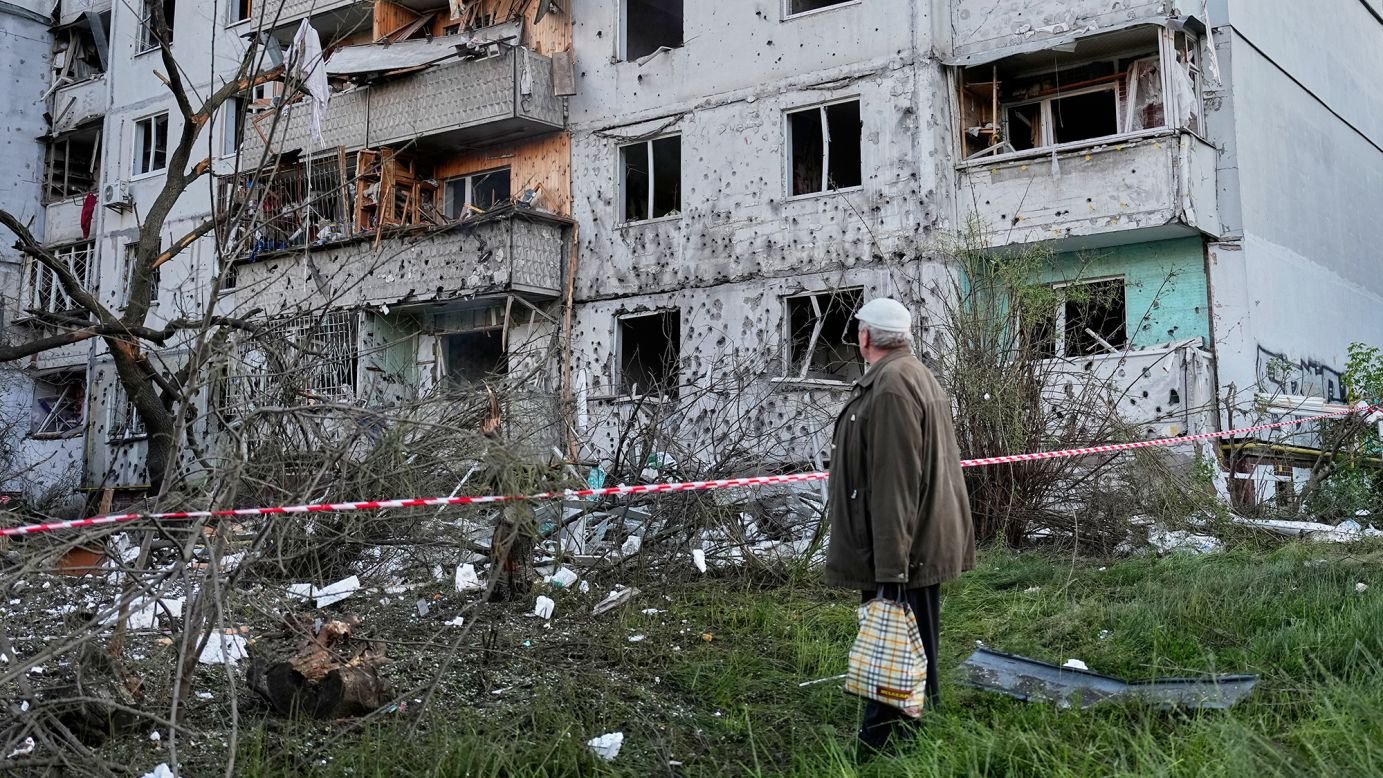
The damage was visible the following morning in the Solomianskyi district, where missiles struck residential and other urban areas. One apartment building suffered severe damage when part of its upper floor was destroyed. Another missile hit a disused structure in a car park, leaving rubble scattered across the area.
For residents such as 42-year-old Vitalii, the destruction has both a practical and emotional cost. His car was badly damaged in the blast, although its engine continued to work. He said the immediate loss could be measured financially, but the greater impact was psychological.
His assessment reflected a broader mood across the capital: residents remain determined to continue living their lives, but the sense of security that existed before the latest escalation has weakened.
Kyiv mayor Vitali Klitschko has described the attacks as an effort to push the population into depression. The former heavyweight boxing champion has repeatedly appeared at damaged sites as emergency workers clear debris and assess destruction.
The mayor’s comments point to a broader concern that the effects of the bombardment extend beyond physical casualties. Repeated attacks can disrupt sleep, work, education and family life while creating a persistent sense of uncertainty among civilians.
Ukraine’s air-defence challenge has become particularly serious because of the difficulty of intercepting high-speed ballistic missiles. The report says Ukrainian forces have exhausted their available interceptors for the US-made Patriot system, which is regarded as the key defence system capable of countering some of the ballistic threats facing the capital.
The shortage has increased concern about Kyiv’s vulnerability. While Ukraine continues to defend its airspace using a range of systems, ballistic missiles travelling at very high speeds leave defenders with limited time to respond.
The pressure is not limited to Kyiv itself. The wider Kyiv region has also experienced repeated attacks against industrial and commercial facilities. Russian strikes have damaged warehouses and distribution centres, creating concerns about employment, supply chains and the wider economy.
One of the most striking examples is the destruction of a major Rozetka distribution facility near Brovary. The automated centre, reportedly built at a cost of about $70m, had the capacity to process up to 100,000 parcels a day and employed around 1,000 people. It was destroyed by missiles during an attack earlier this month.
For Iryna Chechotkina, co-founder of Rozetka, the destruction represented far more than the loss of a building. The facility was the product of years of investment and work and supported thousands of businesses that depended on the company’s distribution network.
The attack also highlighted the vulnerability of Ukraine’s private sector. Even companies that are not directly involved in military operations can become casualties of a wider conflict when warehouses, logistics hubs and commercial infrastructure are targeted.
Ukraine has meanwhile expanded its own long-range strikes against targets inside Russia. Ukrainian forces have targeted oil refineries, warehouses and other facilities that Kyiv says contribute to Russia’s military logistics. The campaign has caused disruption, including reported pressure on fuel supplies in parts of Russia.
Russia has responded with attacks on Ukrainian commercial and logistical infrastructure, creating a cycle of escalation whose economic consequences could extend well beyond the immediate physical damage.
Another major concern is the coming winter. Although temperatures in Kyiv remain high during August, residents and officials are already thinking about the possibility of prolonged power cuts and interruptions to heating.
Last winter, some Ukrainian households faced extremely low indoor temperatures when electricity and central heating systems were disrupted. Residents who can afford to do so have been buying generators, batteries, electric heaters and other emergency equipment in preparation for another difficult season.
For some residents, however, the greatest concern is not simply keeping warm. Water and sanitation could become a serious problem if infrastructure is badly damaged.
Maria Hlazunova, who lives in central Kyiv, said residents had prepared themselves to cope with electricity and heating shortages. But she expressed greater anxiety about access to water and basic sanitation, particularly if infrastructure supporting the city’s water and wastewater systems were to be seriously affected.
The repeated attacks are therefore creating a layered crisis. The immediate danger comes from missiles and drones, while the longer-term risks involve infrastructure, employment, electricity, heating, water supplies and public confidence.
Emergency workers are also facing increasingly difficult conditions. Viktoriia Ruban, a spokesperson for Ukraine’s state emergency services in the Kyiv region, said Russian attacks had changed in frequency and timing. Instead of concentrating attacks exclusively at night, strikes are increasingly occurring during the day, with repeated intervals of several hours.
That change makes it harder for emergency crews to operate safely. Drone warnings can keep rescue workers away from damaged locations even after a missile has struck, delaying firefighting and recovery operations.
For Kyiv’s residents, the war is therefore becoming a struggle not only for physical survival but also for psychological endurance. Families are sleeping underground, businesses are rebuilding after devastating losses and city authorities are trying to prepare for further attacks.

Yet amid the destruction, there remains a determination to continue. Vitalii, whose car was damaged in the blast, summed up that attitude by noting that he and those around him were alive and physically unharmed. They would continue, he suggested, even though the attacks had made the future more frightening.
That mixture of resilience and anxiety now defines life in Kyiv. The capital continues to function, but the sound of air-raid sirens and explosions has become a constant reminder that the war remains capable of reaching homes, workplaces and ordinary daily routines.
As Ukraine enters another uncertain period of the conflict, the availability of air-defence ammunition, the protection of critical infrastructure and preparations for winter are becoming increasingly important. For the people sheltering beneath Kyiv, however, the immediate priority remains simple: surviving the next night.
Related News:
 Putin Declares Russia Victory at Scaled Victory Day Parade
 Zelenskyy warns over Oreshnik threat as Kyiv hit
 UK Prepares Aircraft Carrier for Middle East Crisis
 Trump orders US troop pullout from Germany
 Activists allege abuse after Gaza flotilla seizure
 Ukraine strikes Tuapse as oil disaster worsens
 Global order shifts amid Trump-era turmoil
 Ceasefire Standoff Deepens in Ukraine War
 Middle East Crisis Escalates as Oil Routes Shake Markets
 Discontent grows around Putin amid war strain
 Former ICC prosecutor condemns US sanctions
 Houthis Strike Saudi Arabia as Middle East Tensions Rise
 Taliban global ties grow as rights fears mount
 Trump dismisses concerns over 250-day carrier deployment
 Shock US Raid: Maduro Pleads Not Guilty in Manhattan Court
 Machado Trump medal gesture reshapes Venezuela power struggle
 Trump Receives Machado’s Nobel Medal in White House Meeting
 Iran unrest slows under brutal crackdown and global tensions
 EU weighs response amid Greenland tariff crisis with Trump
 US Considers Asylum for British Jews Amid Rising Antisemitism
 EU Says US Ties Have Suffered ‘Big Blow’ After Greenland Crisis
 Russia Strikes Kyiv and Kharkiv as Peace Talks Enter Day Two
 Thousands Protest ICE Operations in Nationwide US Day of Action
 Epstein Files Reveal Trump Officials’ Emails with Financier
 Thousands Protest ICE in New York Against Trump Deportation Campaign
 Yvette Cooper: UK Must Follow Principles, Not US Pressure
 ‘The frontline is like Terminator’: Ukraine’s fighting robots
 Italian Town Buys Mussolini Villa to Keep Away Fascist Fans
 Hungary election: Orbán faces biggest test amid scandal
 RAF Typhoons scrambled amid Russian drone threat near Nato
 Ukraine Urges UK to Seize Russian Oil Tankers
 US Calls Australia Media Law “Foreign Extortion”
 USS Gerald R Ford Ends Record Naval Deployment
 Oil Prices Surge Above $120 Amid Iran Blockade Fears
 Trump likens US Navy actions to ‘pirates’
 Australia pushes Pacific security pact amid China tension
 Indiana Republicans Defy Trump in Key Vote Test
 Trump Announces 3-Day Russia–Ukraine Ceasefire Deal
 Tensions Emerge in Netanyahu-Trump Alliance
 France Faces Record Presidential Crowded Race Amid Far-Right Surge
 Norway Doubles Down on Oil and Gas for Europe Energy Security
 Hunger increasingly weaponised in global conflicts
 Irish Gangland Figure Fails in Dublin Election Bid
 Deadly Russian Air Raids Strike Across Ukraine
 Trump’s Iran Legacy Hangs on Tehran Deal
 Millions Gather for Khamenei’s Six-Day State Funeral
 Le Pen to Run for President Despite Embezzlement Conviction
 Seoul proposes historic peace talks to replace Korean War armistice
 Israeli Strike in Southern Lebanon Kills Seven
 BBC to Apologise Over Edited Trump Speech Amid Backlash
 Britain deploys RAF specialists to assist Belgium with drone threats
 Greene Pushes Epstein Files Amid Trump Fallout
 December Run-Off in Chile as Election Produces No Winner
 Shadow Fleet at Sea: Europe’s Battle Against Illicit Oil Shipping
 Georgians Defy Government Crackdown After Year of Protests
 Spoof “Make America Go Away” Caps Rally Denmark Over Greenland
 Pentagon Signals Reduced Role in Deterring North Korea
 UK and US Drop in Global Corruption Index Rankings
 Canberra Poster Seizure Sparks Free Speech Row
 Evo Morales Returns After Mysterious Absence
 Jacinda Ardern Moves To Australia Following Her US Fellowships
 Jacinda Ardern Move Sparks Kiwi Reflection
 Nick Greiner Warns Over Election Review Fallout
 New Zealand Covid Response Praised Despite Lingering Scars
 Injured Mojtaba Khamenei Elevated as Iran Leader
 Gordon Brown urges court for crimes against children
 Pakistan Targets Militant Hideouts in Afghanistan
 Air Canada CEO Faces Outcry Over Recent Language Misstep
 Relationship with Trump may be beyond repair, Starmer warned
 Reform UK Pledges To Halt Visas Over Reparations Demands
 Trump Signals Hope for New Iran Talks as Ceasefire Fades
 Trump Brokers Landmark Lebanon Ceasefire Amid Regional Hopes
 Investigation Into Anti-Trump Motives After Gala Shooting
 Japan Protests Erupt Over Plans to Revise Constitution
 Fear and Betrayal: The Chilling Case of Kouri Richins
 Cannes filmmakers split over AI’s role in cinema
 Grief and Devotion Amidst the Rubble of Nabatieh
 Canada Secure Historic Last 16 Spot with Late Goal
 Meta Under Fire: The Battle Over Addictive Social Media Design
 England and Norway Fans Turn Miami Into World Cup Carnival