Published: 09 May 2026. The English Chronicle Desk. The English Chronicle Online.
France is heading toward one of the most fragmented presidential elections in its modern history, with around 30 candidates expected to compete in the 2027 race, as political forces across the spectrum struggle to consolidate support against the rising far right.
The election will be held to replace President Emmanuel Macron, who is constitutionally barred from seeking a third consecutive term, leaving a highly open and unpredictable political landscape.
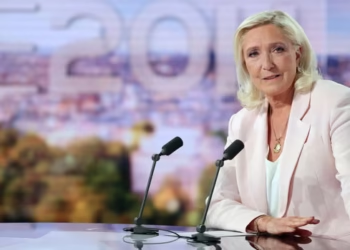
At the centre of the contest is the far-right party Marine Le Pen and her political movement the National Rally, which continues to lead in opinion polls. The party’s growing influence has triggered widespread concern among leftwing and centrist groups, many of whom are now struggling to unite behind a single challenger.
The scale of fragmentation is unprecedented. Nearly 30 political figures from across the ideological spectrum have signalled interest in running for president, creating what analysts describe as a crowded and ideologically divided field. The competition is not only between left and right, but also within individual political blocs, where rival candidates are increasingly competing for similar voter bases.

On the far right, Marine Le Pen remains a central figure, though her political future is uncertain as she awaits a key appeal verdict related to allegations of European Parliament fund misuse. If her conviction is upheld, leadership of the National Rally would likely pass to her younger ally Jordan Bardella, who has rapidly risen in prominence and is also performing strongly in national polls.
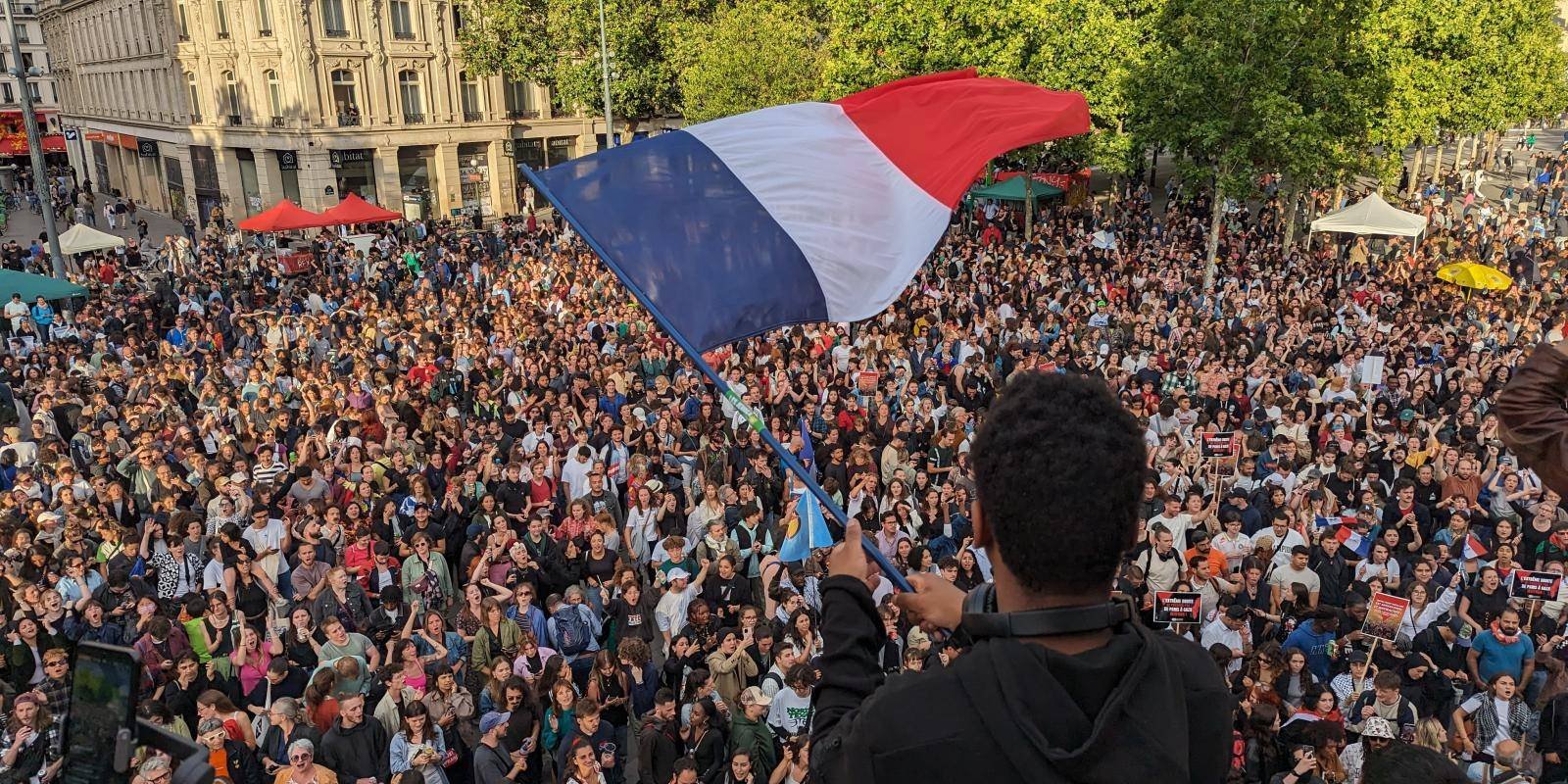
The left is facing its own internal divisions despite repeated calls for unity. A recent gathering in Paris brought together supporters of a renewed “Popular Front” style alliance, echoing historic efforts to block far-right advances. However, efforts to consolidate behind a single candidate have so far failed to produce consensus.
Veteran leftwing figure Jean-Luc Mélenchon has confirmed he will run again, marking his fourth presidential campaign. His candidacy has reignited debate within the left, as some factions view him as too polarising to build a broad coalition, despite his strong base of support.
Other potential contenders include former Socialist leader François Hollande and European Parliament member Raphaël Glucksmann, both of whom are exploring separate bids. Their emergence highlights the ideological and strategic fragmentation within France’s progressive political space.
Political analysts say the sheer number of candidates reflects not only ambition but also a lack of dominant leadership across major parties. The collapse of traditional party structures in recent years has created an environment where individual personalities increasingly matter more than party platforms.
Christelle Craplet, an opinion director at Ipsos BVA, noted that beyond Le Pen and Mélenchon, few candidates currently have strong national recognition or a clear electoral base. She said the race is shaping up as a battle defined less by policy clarity and more by fragmentation and personality-driven campaigns.
On the centre-right and centrist blocs, competition is equally intense. Several former and current government figures are positioning themselves for presidential bids, including ex-prime ministers and senior cabinet members. This includes candidates aligned with Macron’s political movement as well as rivals within traditional conservative parties.
One of the leading centre-right contenders is former prime minister Édouard Philippe, while others such as Gabriel Attal and Gérald Darmanin are also seeking to establish independent political profiles. Meanwhile, the conservative right is split between figures such as Bruno Retailleau and Laurent Wauquiez, both of whom are competing for leadership of the mainstream right-wing base.
The increasing number of candidates has raised concerns among political observers about voter confusion and electoral fragmentation. Antoine Bristielle of the Jean-Jaurès Foundation warned that the election risks becoming a referendum driven primarily by rejection of the far right rather than meaningful policy debate.
He argued that voters are increasingly focused on issues such as healthcare access, cost of living, and social welfare systems, yet these topics remain underrepresented in national political discourse. According to polling data, 74% of French citizens want either major reform or deep structural change, reflecting widespread dissatisfaction with the current political direction.
Public frustration is also linked to perceptions of political stagnation during Macron’s second term, with many voters feeling disconnected from decision-making processes. Analysts warn that this sentiment could further benefit anti-establishment parties, particularly the National Rally.
The far right’s rise has also drawn attention from the business community, which is increasingly engaging with National Rally figures despite historically avoiding formal ties. This shift reflects changing perceptions of the party’s political viability as it moves closer to potential power.

At a recent public gathering in Paris, leftwing activists called for unity under slogans invoking historical anti-fascist coalitions, highlighting fears that division could allow the far right to win the presidency for the first time.
However, achieving unity remains difficult. Competing ambitions, ideological differences, and leadership rivalries continue to prevent the formation of a single coordinated leftwing candidate.
Prime Minister Sébastien Lecornu has called for a more structured and issue-focused campaign environment, urging candidates to prioritise policy over personality. He warned that without substantive debate, public trust in the electoral process could decline further.
With the election still more than a year away, analysts caution that the political landscape remains highly fluid. Early polling suggests that while Le Pen or Bardella are well positioned to reach the final round, the identity of their opponent is far from settled.
As France approaches the 2027 election, the central question remains whether fragmented opposition forces can unite in time to challenge the far right—or whether division will ultimately define the outcome.
Related News:
 EU weighs response amid Greenland tariff crisis with Trump
 EU Says US Ties Have Suffered ‘Big Blow’ After Greenland Crisis
 Italian Town Buys Mussolini Villa to Keep Away Fascist Fans
 Hungary election: Orbán faces biggest test amid scandal
 Canadian astronaut French words ease language row
 Athens Mayor Moves to Tackle Overtourism Crisis
 RAF Typhoons scrambled amid Russian drone threat near Nato
 Global order shifts amid Trump-era turmoil
 Ceasefire Standoff Deepens in Ukraine War
 Norway Doubles Down on Oil and Gas for Europe Energy Security
 Putin Declares Russia Victory at Scaled Victory Day Parade
 Hybrid village stores fight rural decline
 Trump’s Revenge Drive Deepens GOP Divide
 Pope Meets Families in Italy Toxic Waste Zone
 Zelenskyy warns over Oreshnik threat as Kyiv hit
 Former ICC prosecutor condemns US sanctions
 Irish Gangland Figure Fails in Dublin Election Bid
 Farage and Reform UK Reshape British Politics
 Starmer Leadership Under Pressure After Setbacks
 Deadly Russian Air Raids Strike Across Ukraine
 UK Nations Brace for Potential Breakup Amid Reform Surge
 Le Pen to Run for President Despite Embezzlement Conviction
 Le Pen’s Popularity Holds Despite Conviction
 Dreyfus Statue Finally Gets Permanent Paris Home
 England and Norway Fans Turn Miami Into World Cup Carnival
 Is America Ready for an AOC Presidential Run?
 Five Years of Taliban Rule Leave Afghanistan in Crisis
 BBC to Apologise Over Edited Trump Speech Amid Backlash
 Britain deploys RAF specialists to assist Belgium with drone threats
 Greene Pushes Epstein Files Amid Trump Fallout
 Trump Deploys DHS to Charlotte in Major Arrest Operation
 December Run-Off in Chile as Election Produces No Winner
 Canada Passes Carney’s First Budget in Tight Parliamentary Vote
 Shadow Fleet at Sea: Europe’s Battle Against Illicit Oil Shipping
 Pentagon Officials in Ukraine to Discuss War End
 Venezuela Threatens Nobel Winner Machado with Fugitive Status
 Georgians Defy Government Crackdown After Year of Protests
 EU plans $105bn Ukraine aid using frozen Russian assets
 Trump Policies Boost China’s Global Rise, Survey Finds
 Pentagon Signals Reduced Role in Deterring North Korea
 Thousands Protest ICE Operations in Nationwide US Day of Action
 UK and US Drop in Global Corruption Index Rankings
 Canberra Poster Seizure Sparks Free Speech Row
 Evo Morales Returns After Mysterious Absence
 AFP Reviews Pauline Hanson Comments
 Trump Tariffs Threat Spark UK and EU Alarm
 The Dangerous Rise of Remigration Across Modern Europe
 Jacinda Ardern Moves To Australia Following Her US Fellowships
 US to offer passport services in West Bank settlements
 Jacinda Ardern Move Sparks Kiwi Reflection
 Nick Greiner Warns Over Election Review Fallout
 Iran Defiance Grows Amid US-Israel War Pressure
 Injured Mojtaba Khamenei Elevated as Iran Leader
 Gordon Brown urges court for crimes against children
 Oil Prices Jump After Trump Claims Iran Oil Hub Destroyed
 Pakistan Targets Militant Hideouts in Afghanistan
 Danish Election Deadlock Shakes Frederiksen’s Grip
 Air Canada CEO Faces Outcry Over Recent Language Misstep
 Pope Rebukes Leaders for War as Middle East Tensions Rise
 Army Probes Apache Flyover at Kid Rock’s Nashville Estate
 Relationship with Trump may be beyond repair, Starmer warned
 Report Says Pezzullo Acted ‘Recklessly’ in Dealings
 Trump Employs Nixon’s Madman Theory Amid Iran Crisis
 Suspected Plot Targets Pipeline Before Hungary Vote
 Trump Brokers Landmark Lebanon Ceasefire Amid Regional Hopes
 UK Stands Firm on Falklands Amid US Rift
 Oil Prices Surge Above $120 Amid Iran Blockade Fears
 Trump orders US troop pullout from Germany
 Trump approval plunges amid Iran war fears
 US ‘Narco Boat’ Strikes Draw Global Outcry
 Trump Announces 3-Day Russia–Ukraine Ceasefire Deal
 US Awaits Iran Reply on New Ceasefire Proposal
 Discontent grows around Putin amid war strain
 House Curbs Trump’s War Powers in Rare Rebellion
 Papal Visit Offers Political Lifeline to Spanish Premier
 Trump’s Mount Rushmore Speech: A Divisive Anniversary
 New South Wales Premier Chris Minns Signals Tough Road Ahead for Labor
 Ukraine Creates Long-Range Strike Command
 Houthis Strike Saudi Arabia as Middle East Tensions Rise
 Wildfires Force Mass Evacuations in France And Spain