Published: 25 April 2026. The English Chronicle Desk. The English Chronicle Online
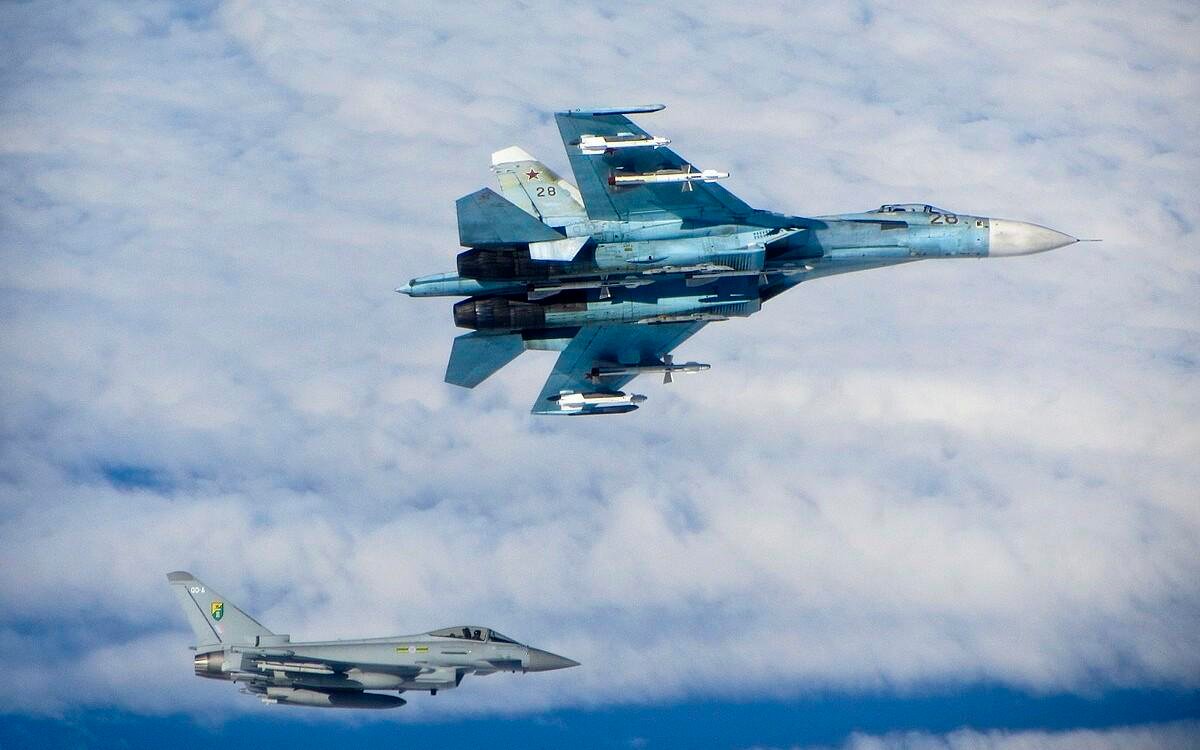
Royal Air Force fighter jets have been scrambled from a Romanian air base in response to a suspected Russian drone threat operating close to Nato territory, in a late-night mission that highlights ongoing tensions along Europe’s eastern flank.
Two Eurofighter Typhoon jets, operated by the Royal Air Force, were deployed from bases in Romania as part of a Nato air policing mission after radar systems detected multiple aerial objects approaching areas near the Ukrainian border.
Defence officials confirmed that while the aircraft established radar contact and were authorised to engage if necessary, they did not open fire and remained strictly within Romanian airspace throughout the operation.

The mission was conducted under Nato rules of engagement, with strict limits placed on cross-border activity to avoid escalation with Russia. Officials clarified that the jets did not enter Ukrainian airspace at any stage, directly contradicting some early reports suggesting otherwise.
A British defence source stressed that the operation was defensive in nature and focused on monitoring and deterrence rather than direct engagement. The aircraft were placed on standby to respond only if hostile drones crossed into Romanian territory.
According to Romanian defence authorities, radar systems tracked multiple aerial targets approaching the region near Reni in southern Ukraine, an area that has seen repeated military activity linked to the ongoing war.
Shortly after the detections, explosions were reported on the Ukrainian side of the border, although the exact cause of the incidents has not been independently confirmed. Contact with the drones was later lost, and no confirmed crossing into Romanian airspace occurred.
Residents in the nearby Romanian town of Galați later reported hearing unusual activity and contacted emergency services after an object was allegedly seen falling near the outskirts of the town.
The RAF deployment is part of a wider Nato air policing operation designed to protect member states bordering Ukraine from spillover incidents, particularly involving drones and missile debris linked to the ongoing conflict.
Romania, as a frontline Nato state, has frequently hosted allied air assets to strengthen surveillance and rapid response capability in the region. The presence of RAF Typhoons is part of a rotational mission involving multiple allied nations.
Officials emphasised that allied aircraft maintained a defensive posture throughout the operation, ensuring continuous monitoring of airspace without direct escalation.
The incident underscores the ongoing risks faced by Nato countries bordering Ukraine, where Russian drone activity and missile strikes have occasionally resulted in airspace violations or near-misses.
Although no engagement took place, the rapid deployment of fighter jets reflects heightened alert levels across the alliance as the war in Ukraine continues to produce unpredictable cross-border threats.
Military analysts note that such missions are increasingly common, with Nato forces prioritising rapid detection and interception capabilities to prevent any accidental incursions.
The UK Ministry of Defence has not yet issued a formal statement on the specific incident, though British forces remain actively involved in Nato’s eastern air policing strategy.
The RAF has maintained a continuous presence in the region as part of efforts to reassure allies and deter potential spillover from the conflict.
While no shots were fired and no breach of Nato territory occurred, the scramble highlights how quickly allied forces must respond to potential threats in a volatile security environment.

Officials reiterated that the mission remained fully within established protocols and did not represent an escalation in direct military engagement with Russia.
However, defence sources acknowledged that the proximity of drone activity to Nato borders continues to raise concern among allied commanders.
The overnight deployment of RAF Typhoons in Romania reflects the ongoing strain on Nato’s eastern defences as the war in Ukraine continues to generate cross-border security risks.
Although the situation was contained without incident, the event reinforces the importance of constant air surveillance and rapid-response capabilities in maintaining stability along one of Europe’s most sensitive frontiers.
Related News:
 Canadian astronaut French words ease language row
 Britain deploys RAF specialists to assist Belgium with drone threats
 Night after night, Belgium is on high alert.
 Ukraine to Get 100 French Rafale Jets in Historic Deal
 UK Prepares Aircraft Carrier for Middle East Crisis
 Iran Social Media Strategy Shifts to Information War
 Cluster Strikes Test Israel’s Missile Defences
 ‘The frontline is like Terminator’: Ukraine’s fighting robots
 Moldova River Crisis Exposes War’s Hidden Cost
 Chornobyl Still at Risk 40 Years After Disaster
 Athens Mayor Moves to Tackle Overtourism Crisis
 Reform UK funding: mystery billionaire revealed
 Trump orders US troop pullout from Germany
 Trump likens US Navy actions to ‘pirates’
 France Faces Record Presidential Crowded Race Amid Far-Right Surge
 Doomsday Clock Nears Midnight Amid Global Crises
 Putin Declares Russia Victory at Scaled Victory Day Parade
 Trump’s Revenge Drive Deepens GOP Divide
 Zelenskyy warns over Oreshnik threat as Kyiv hit
 Discontent grows around Putin amid war strain
 Farage and Reform UK Reshape British Politics
 Starmer Leadership Under Pressure After Setbacks
 Le Pen’s Popularity Holds Despite Conviction
 Dreyfus Statue Finally Gets Permanent Paris Home
 Is America Ready for an AOC Presidential Run?
 Five Years of Taliban Rule Leave Afghanistan in Crisis
 Trump dismisses concerns over 250-day carrier deployment
 BBC to Apologise Over Edited Trump Speech Amid Backlash
 Greene Pushes Epstein Files Amid Trump Fallout
 Trump Deploys DHS to Charlotte in Major Arrest Operation
 December Run-Off in Chile as Election Produces No Winner
 Canada Passes Carney’s First Budget in Tight Parliamentary Vote
 Shadow Fleet at Sea: Europe’s Battle Against Illicit Oil Shipping
 Georgians Defy Government Crackdown After Year of Protests
 EU plans $105bn Ukraine aid using frozen Russian assets
 Trump Policies Boost China’s Global Rise, Survey Finds
 Pentagon Signals Reduced Role in Deterring North Korea
 Thousands Protest ICE Operations in Nationwide US Day of Action
 UK and US Drop in Global Corruption Index Rankings
 Canberra Poster Seizure Sparks Free Speech Row
 Evo Morales Returns After Mysterious Absence
 AFP Reviews Pauline Hanson Comments
 Trump Tariffs Threat Spark UK and EU Alarm
 The Dangerous Rise of Remigration Across Modern Europe
 Jacinda Ardern Moves To Australia Following Her US Fellowships
 US to offer passport services in West Bank settlements
 Jacinda Ardern Move Sparks Kiwi Reflection
 Nick Greiner Warns Over Election Review Fallout
 Iran Defiance Grows Amid US-Israel War Pressure
 Injured Mojtaba Khamenei Elevated as Iran Leader
 Gordon Brown urges court for crimes against children
 The Kill Line: A Shifting Vision of the American Dream
 Oil Prices Jump After Trump Claims Iran Oil Hub Destroyed
 Pakistan Targets Militant Hideouts in Afghanistan
 Danish Election Deadlock Shakes Frederiksen’s Grip
 Air Canada CEO Faces Outcry Over Recent Language Misstep
 Pope Rebukes Leaders for War as Middle East Tensions Rise
 Army Probes Apache Flyover at Kid Rock’s Nashville Estate
 Artemis II: Humanity Returns to the Moon After Decades
 Relationship with Trump may be beyond repair, Starmer warned
 Italian Town Buys Mussolini Villa to Keep Away Fascist Fans
 Report Says Pezzullo Acted ‘Recklessly’ in Dealings
 Artemis II Returns After Historic Moon Flyby
 Trump Brokers Landmark Lebanon Ceasefire Amid Regional Hopes
 UK Stands Firm on Falklands Amid US Rift
 Trump approval plunges amid Iran war fears
 Ohio’s Battle for Trust: Democrats Vying to Flip the Buckeye State
 China Fireworks Factory Blast Kills 21 in Hunan
 US ‘Narco Boat’ Strikes Draw Global Outcry
 Afghan Families Left in Limbo Face Risk of Deportation
 US Awaits Iran Reply on New Ceasefire Proposal
 Pope Meets Families in Italy Toxic Waste Zone
 House Curbs Trump’s War Powers in Rare Rebellion
 UK Ministers Lobby Trump Over Under-16s Social Media Ban
 Trump’s Mount Rushmore Speech: A Divisive Anniversary
 New South Wales Premier Chris Minns Signals Tough Road Ahead for Labor
 Le Pen to Run for President Despite Embezzlement Conviction
 Ukraine Creates Long-Range Strike Command
 Houthis Strike Saudi Arabia as Middle East Tensions Rise
 Gen Z turns to BirdTok for a gentler digital escape