Published: 29 April 2026. The English Chronicle Desk. The English Chronicle Online
The Trump administration has strongly criticised Australia’s proposed media bargaining reforms, describing the policy as “foreign extortion” amid rising tensions over how governments regulate global technology companies and fund public-interest journalism.
The comments come in response to Australia’s plan to introduce a levy system requiring major technology firms such as Meta Platforms Inc., Google, and TikTok to negotiate payments with Australian news publishers. If companies fail to reach agreements, they could face a 2.25% revenue-based levy under the proposed legislation.
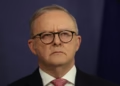
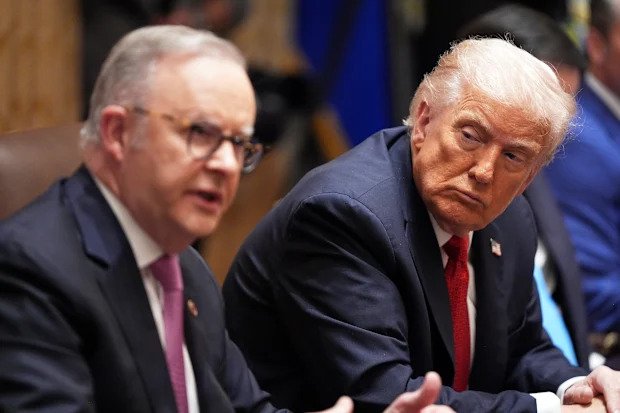
The policy is designed to ensure that digital platforms compensate media organisations for the use and distribution of news content online. Australian Prime Minister Anthony Albanese has defended the move, arguing that journalism is intellectual property and that publishers deserve fair compensation for their work, which is often monetised by global tech companies without direct payment.

The proposal is expected to gain support from both the Coalition and the Greens in Australia’s parliament, suggesting it could pass despite growing international criticism. However, the strongest opposition has come from the United States, where officials and industry groups warn that the plan could trigger broader trade disputes.
A spokesperson for the Trump administration, Kush Desai, said the US government would closely examine the details of the policy, emphasising that Washington remains committed to protecting American technology companies from what it considers discriminatory foreign regulations. The administration described such measures as unfair trade practices targeting US firms.
Major technology industry groups have also voiced concern. The Computer & Communications Industry Association, which represents companies including Meta, Google, Apple, Amazon, Uber, and Pinterest, criticised the Australian plan, calling it discriminatory and inconsistent with global trade rules. The group argued that the levy effectively functions as a compulsory payment tied to linking or displaying news content, which it described as a coercive financial requirement.
Both Meta and Google have also publicly opposed the reform. Meta Platforms Inc. said the proposal was fundamentally flawed, while Google questioned why artificial intelligence platforms were not included in the policy framework. TikTok, owned by ByteDance, is also expected to be affected by the measure.
Australian officials, however, maintain that the policy is not designed to generate government revenue but to encourage fair commercial agreements between technology platforms and news publishers. Under the plan, companies would be incentivised to negotiate directly with media organisations rather than pay the levy.
Prime Minister Albanese stressed that the initiative is about recognising the value of journalism in the digital economy. He argued that news content produced by journalists is intellectual property and should not be used commercially by large platforms without compensation. He also highlighted the importance of sustaining high-quality journalism, particularly in an era where traditional media revenue has declined due to digital disruption.
Within Australia’s political landscape, the proposal has drawn mixed reactions but is gaining traction across party lines. Some lawmakers argue that global tech companies generate significant advertising revenue from news content and should contribute financially to its production. Others, however, have raised concerns about implementation, transparency, and the potential impact on smaller and regional publishers.
Opposition figures, including representatives from the Coalition and the Greens, have expressed cautious support while calling for clearer mechanisms to ensure fair distribution of funds. There are concerns that larger media corporations may benefit more than smaller or independent outlets unless safeguards are introduced.

Internationally, the dispute highlights ongoing tensions between governments and major technology firms over digital regulation, taxation, and content monetisation. Similar debates have emerged in Europe and Canada, where authorities have also sought to ensure that tech giants contribute to local media ecosystems.
Trade experts warn that the disagreement between Australia and the United States could escalate if retaliatory measures are considered. Industry groups have urged Washington to respond firmly, arguing that such policies could set a precedent for other countries to impose similar levies on US-based companies.
Despite the controversy, Australian officials remain committed to advancing the legislation, framing it as a necessary step to support journalism and ensure a sustainable media industry. As negotiations continue, the outcome is likely to have wider implications for global digital policy and the relationship between governments and big tech companies.
The debate underscores a growing global challenge: how to balance innovation and free digital markets with the need to sustain independent journalism in an increasingly platform-dominated media environment.
Related News:
 Oil Prices Surge Above $120 Amid Iran Blockade Fears
 Canada Passes Carney’s First Budget in Tight Parliamentary Vote
 India’s Labour Law Overhaul Sparks Fierce Debate
 Carney’s Alberta Pipeline Deal Sparks Immediate Pushback
 Shock US Raid: Maduro Pleads Not Guilty in Manhattan Court
 Mark Carney Walks Diplomatic Tightrope on China Visit
 Machado Trump medal gesture reshapes Venezuela power struggle
 Trump Receives Machado’s Nobel Medal in White House Meeting
 Iran unrest slows under brutal crackdown and global tensions
 US Considers Asylum for British Jews Amid Rising Antisemitism
 Russia Strikes Kyiv and Kharkiv as Peace Talks Enter Day Two
 Keir Starmer meets Xi to strengthen UK-China economic relations
 Thousands Protest ICE Operations in Nationwide US Day of Action
 Epstein Files Reveal Trump Officials’ Emails with Financier
 Thousands Protest ICE in New York Against Trump Deportation Campaign
 Yvette Cooper: UK Must Follow Principles, Not US Pressure
 Trump to Deploy “God Squad” Over Gulf Wildlife Protections
 Trump Slams UK Ties and Threatens To Rewrite Trade Deal
 Athens Mayor Moves to Tackle Overtourism Crisis
 Southeast Asia Turns to Russia Amid Energy Crisis
 Ukraine Urges UK to Seize Russian Oil Tankers
 Capitalism ‘Suicidal’, Warns Petro at Climate Summit
 Trump orders US troop pullout from Germany
 Activists allege abuse after Gaza flotilla seizure
 Global order shifts amid Trump-era turmoil
 Trump approval plunges amid Iran war fears
 Trump Threatens UN Budget Cuts as US Pushes ‘Trade Over Aid’ Agenda
 Australia pushes Pacific security pact amid China tension
 Indiana Republicans Defy Trump in Key Vote Test
 Middle East Crisis Escalates as Oil Routes Shake Markets
 Tensions Emerge in Netanyahu-Trump Alliance
 Norway Doubles Down on Oil and Gas for Europe Energy Security
 US Awaits Iran Reply on New Ceasefire Proposal
 Putin Declares Russia Victory at Scaled Victory Day Parade
 Beijing Becomes Centerstage for Global Diplomatic Ballet
 Hormuz Talks Near Critical Stage
 UK Pushes for New EU Goods Trade Deal
 Reeves Fights to Keep Treasury Role Amid Labour Turmoil
 UK Urged to Build EU Rejoin Consensus, Says Miliband
 Zelenskyy warns over Oreshnik threat as Kyiv hit
 Discontent grows around Putin amid war strain
 Former ICC prosecutor condemns US sanctions
 Japan Suffers Plastic Shortage Due to Middle East Crisis
 Trump’s Iran Legacy Hangs on Tehran Deal
 Europe Weighs Hormuz Navigation Fee Plan
 Ukraine Creates Long-Range Strike Command
 Houthis Strike Saudi Arabia as Middle East Tensions Rise
 Taliban global ties grow as rights fears mount
 Seoul proposes historic peace talks to replace Korean War armistice
 Trump’s UK Ambassador Urges North Sea Drilling to Strengthen US Ties
BBC to Apologise Over Edited Trump Speech Amid Backlash
Trump’s UK Ambassador Urges North Sea Drilling to Strengthen US Ties
BBC to Apologise Over Edited Trump Speech Amid Backlash
 Millionaires group urge Reeves to introduce wealth tax to ‘lift kids out of poverty’
 Greene Pushes Epstein Files Amid Trump Fallout
 Shadow Fleet at Sea: Europe’s Battle Against Illicit Oil Shipping
 Starmer Says Labour’s Economic Plan Needs Years to Deliver
 Spoof “Make America Go Away” Caps Rally Denmark Over Greenland
 Trump Fed bid heads to Supreme Court
 Pentagon Signals Reduced Role in Deterring North Korea
 UK and US Drop in Global Corruption Index Rankings
 Canberra Poster Seizure Sparks Free Speech Row
 Evo Morales Returns After Mysterious Absence
 Jacinda Ardern Moves To Australia Following Her US Fellowships
 Jacinda Ardern Move Sparks Kiwi Reflection
 Nick Greiner Warns Over Election Review Fallout
 New Zealand Covid Response Praised Despite Lingering Scars
 Injured Mojtaba Khamenei Elevated as Iran Leader
 Gordon Brown urges court for crimes against children
 Pakistan Targets Militant Hideouts in Afghanistan
 Air Canada CEO Faces Outcry Over Recent Language Misstep
 Relationship with Trump may be beyond repair, Starmer warned
 Reform UK Pledges To Halt Visas Over Reparations Demands
 US and Iran Agree to Two-Week Provisional Ceasefire
 Trump Signals Hope for New Iran Talks as Ceasefire Fades
 Investigation Into Anti-Trump Motives After Gala Shooting
 Tough Fiscal Realities Await Next Scottish Government
 One Nation Candidate’s Surprising Ties to Independents
 Scepticism and tight security as Beijing braces for Trump
 Tony Abbott Returns as New Liberal Party President
 Trump’s Mount Rushmore Speech: A Divisive Anniversary
 Trump Swaps Planes Amid Iran Tensions