Published: 28 April 2026. The English Chronicle Desk. The English Chronicle Online.
A major parliamentary inquiry has recently cast serious doubt on the ambitious Aukus submarine project. The House of Commons defence committee warned that significant institutional failings could eventually derail this critical partnership. Decades of under-investment have left the United Kingdom’s naval shipbuilding capacity in a very precarious state today. Submarine availability remains critically low and continues to pose a major challenge for the nation’s core defence goals. This report highlights how administrative and financial hurdles now threaten to undermine the security interests of Australia.
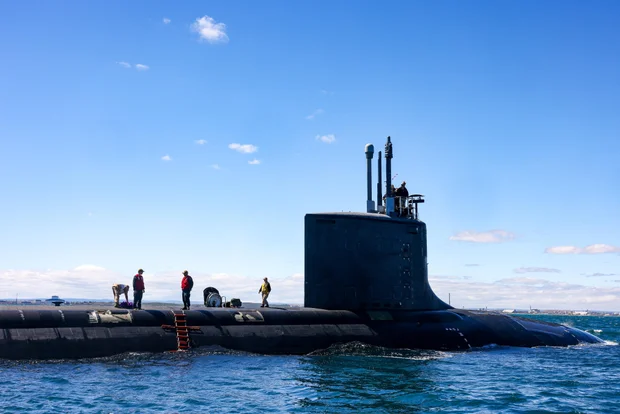
The situation recently became clear when the nuclear submarine HMS Anson visited Australia earlier this year in February. It stood as the only attack-class submarine currently available for the Royal Navy at that particular time. When conflict erupted in the Gulf region, the vessel was recalled rapidly to the northern hemisphere for urgent deployment. This sudden movement underscored the severe limitations facing the British fleet and raised concerns regarding its ongoing commitment. Confidence in the United Kingdom’s capacity to uphold its long-term obligations under the Aukus agreement has clearly faltered.
The defence committee’s comprehensive inquiry uncovered several shortcomings that threaten to prevent the project from becoming a future reality. Strong political leadership is absolutely essential to manage a program of such massive cost, length, and immense technical complexity. The committee noted that this necessary leadership has unfortunately faded within the current government, risking a slow, dangerous political drift. They have called upon the prime minister to adopt a more visible role to ensure the project stays on track. Without direct intervention from the highest levels of government, the entire ambitious initiative remains at a very high risk.

Australia is fundamentally dependent on the United Kingdom’s ability to design and build an entirely new class of nuclear submarine. Any significant delay or failure on the British side would leave Australia exposed without any sovereign long-term submarine capability at all. While Australia plans to acquire Virginia-class submarines from the United States to bridge the gap, the American capacity for delivery is also uncertain. This creates a difficult scenario where Australia must rely on partners facing their own complex industrial and logistical struggles. The path forward requires precise coordination, yet the current industrial environment remains fragile and prone to frequent, costly project delays.
Australia has already provided significant financial support to help uplift the United Kingdom’s submarine-building capacity and infrastructure needs. Prime Minister Anthony Albanese remains optimistic about the trilateral deal, citing strong support from his British counterpart, Keir Starmer. Despite these official reassurances, some Australian politicians argue that more robust contingency planning is required for potential future capability gaps. Shadow defence minister James Paterson suggested that acquiring advanced stealth bomber jets could mitigate risks if the submarine program faces further setbacks. Such discussions highlight the growing anxiety among stakeholders regarding the timeline for delivering these essential military capabilities to the region.
The United Kingdom faces intense pressure as it simultaneously builds the new Dreadnought class of nuclear-armed submarines for its own needs. Structural constraints are severe because the nation currently operates only one shipyard capable of building these complex vessels at Barrow-in-Furness. While funding has been allocated to upgrade this facility, the committee reported that the timeline for these improvements has already slipped. Efforts to regenerate the workforce at Barrow must be properly funded to meet the challenging requirements of the SSN-Aukus program design. The report stresses that success depends on prioritizing this project rather than letting it compete for scarce, limited national defence resources.

Committee chair Tan Dhesi warned that cracks are already beginning to show in the overall funding model for this agreement. Even seemingly minor shortfalls or administrative delays can snowball over time, leading to potentially severe consequences for the entire strategic alliance. The committee also expressed deep frustration regarding the government’s continued secrecy concerning the reality of progress on the ground. A review conducted by Sir Stephen Lovegrove more than a year ago remains hidden from the public despite previous commitments. This lack of transparency reflects poorly on the government and damages public confidence in the delivery of this crucial defence project.
Fulfilling the commitments under Aukus has clearly stretched the existing Astute-class fleet to, or even beyond, its absolute operational limits. The current submarine fleet is described as the smallest the United Kingdom has maintained in living memory by many expert observers. Experts from the Royal United Services Institute noted that operating the fleet at such intensity risks wearing out the ships prematurely. Attempting to satisfy multiple international obligations may force the military to abandon other vital training and operational functions for the fleet. Every deployment, such as the visit to Australia, carries a heavy cost in terms of maintenance and crew availability.
In response, a spokesperson for the Australian Submarine Agency stated that the report highlights the United Kingdom’s enduring commitment to the program. Both nations have been clear-eyed about the immense scale and complexity of acquiring a fleet of nuclear-powered attack submarines. They confirmed that significant work is currently underway across Australia, the United Kingdom, and the United States to align their respective regulatory settings. Officials remain confident in the ability of all partners to deliver this significant, multi-generational program within the ambitious, albeit challenging, timeframes. The road ahead remains difficult, but the strategic importance of the alliance continues to drive these intensive efforts forward across all three nations.
Related News:
 UK Presses On With Chagos Handover Despite Trump Criticism
 Shinzo Abe’s killer receives life sentence in Japan
 HMS Dragon to Head to Cyprus Amid Rising Tensions
 Starmer Praised for Stance on Trump and Iran Conflict
 Yvette Cooper: UK Must Follow Principles, Not US Pressure
 Trump Mocks Starmer and UK Carriers in White House Speech
 UK Urged to Build EU Rejoin Consensus, Says Miliband
 Green Party Surges Past Labour in Latest UK Poll
 Trump’s UK Ambassador Urges North Sea Drilling to Strengthen US Ties
 French Taxi Driver Cleared in David Lammy Theft Case After Fare Dispute
 Millionaires group urge Reeves to introduce wealth tax to ‘lift kids out of poverty’
 Starmer Faces Growing Dissent as Labour MPs Weigh Leadership Challenge
 Reeves rejects £1bn plea for NHS redundancy payouts
 PM Condemns Leaks, Vows Loyalty to Ministers and Stability
 Major Rent Reform Ends No-Fault Evictions in England
 Most Tories Expect to Support a Farage-Led Government
 Starmer Says Labour’s Economic Plan Needs Years to Deliver
 British skier killed in La Plagne avalanche tragedy
 Mandelson apologises over Epstein ties after public scrutiny
 Starmer Challenges US Over Controversial Greenland Deal
 Spoof “Make America Go Away” Caps Rally Denmark Over Greenland
 Labour Blocks Burnham as Party Rift Deepens Ahead of Polls
 Huge mistake: Labour blocks Burnham from byelection bid
 Artificial intelligence will cost jobs, admits Liz Kendall
 Labour targets Greens on drugs in Gorton Denton byelection
 Greens nominate Hannah Spencer for Gorton and Denton byelection
 Mandelson Faces Police Inquiry Over Epstein Leak
 Labour Thinktank Row Deepens Over Journalist Probe Claims
 Morgan McSweeney downfall shocks Labour leadership
 Cabinet Secretary Shake-Up Triggers Due Diligence Warning
 Starmer Faces Inquiry Calls Over Thinktank Probe
 UK shelves £110m border project amid trade strain
 Farage Unveils Reform UK Frontbench Team
 California Democrats Vow Trump Reckoning
 Wales Approves Assisted Dying Bill Consent
 UK EU Trade Reset Gains Public Backing
 Green Party Stuns Labour in Gorton and Denton Byelection
 Corbyn Leads Your Party in Coordinated Left-Flank Strategy
 Labour Together scandal sparks clean break vow
 Asylum Seekers to Work After Year-Long Wait
 Starmer Row as Greens Demand Apology
 Proposed Law Leaves Gap for Children of Convicted Paedophiles
 New Zealand Covid Response Praised Despite Lingering Scars
 Gordon Brown urges court for crimes against children
 Inquiry into HMRC child benefit errors launched by NAO
 Farage Faces Backlash Over Crypto Cameo Endorsements
 Big Tech Faces Investigation Over Australia’s Social Media Ban
 Relationship with Trump may be beyond repair, Starmer warned
 Unions Raise Concerns Over Doctors’ Pay Dispute
 Reform UK Pledges To Halt Visas Over Reparations Demands
 UK Government Poised to Revive Stalled Hillsborough Law
 Trump Signals Hope for New Iran Talks as Ceasefire Fades
 UK Stands Firm on Falklands Amid US Rift
 Investigation Into Anti-Trump Motives After Gala Shooting
 Welsh Labour Faces Potential Historic Election Defeat
 Starmer Survives Mandelson Rebellion
 One Nation Candidate’s Surprising Ties to Independents
 Labour Members Doubt Starmer Future as Burnham Leads Poll
 Reform UK Faces Crisis as Newly Elected Councillors Resign
 Farage Faces New Questions Over Private Helicopter Use
 NHS Drug Deal Faces Legal Threat Over US Trade Agreement
 Green Party Makerfield Candidate Resigns Over Posts
 Tony Abbott Returns as New Liberal Party President
 Discontent grows around Putin amid war strain
 Secret Role of UK Security Services in Troubles Amnesty Law
 Starmer Leadership Under Pressure After Setbacks
 Teaching Machines Right From Wrong in the Digital Age
 The Hidden Crisis Eroding Trust in British Communities
 Deepfake Abuse on X Sparks Safety Concerns for Dissidents
 UK Ministers Lobby Trump Over Under-16s Social Media Ban
 Russian Tanker Captain Remanded in UK Court After Channel Seizure
 Starmer Resolves to Fight Burnham in Leadership Battle
 Hollie Ridley to Step Down as Labour General Secretary
 Trump’s Mount Rushmore Speech: A Divisive Anniversary
 Jarvis Urges Burnham to Secure 3.5% Defence Spending
 Farage Warns Sky News Following Financial Inquiry
 Reform UK Finances Face Deep NCA Probe
 Trump Swaps Planes Amid Iran Tensions
 Ann Widdecombe, Formidable Political Figure, Dies at 78
 Houthis Strike Saudi Arabia as Middle East Tensions Rise