Published: 15 August 2026. The English Chronicle Desk. The English Chronicle Online.
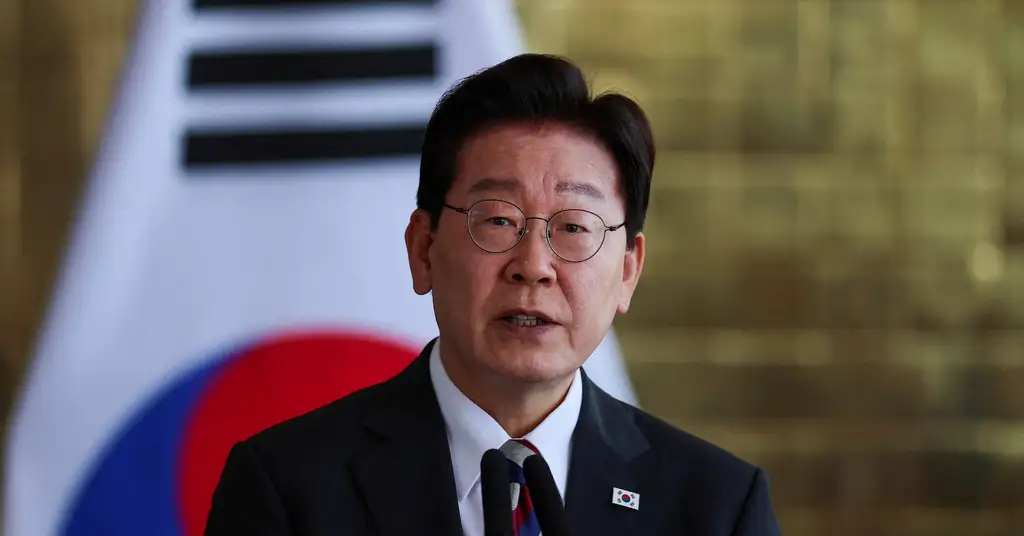
South Korean President Lee Jae Myung has utilized a major national address to issue a profoundly compelling, comprehensive, and far-reaching call for renewed, high-level diplomatic dialogue with North Korea, urgently pressing for a formal, permanent, and definitive end to the decades-old Korean War through the establishment of a robust, institutionalized, and lasting peace regime. Speaking during high-profile ceremonial events commemorating the momentous historical anniversary of the peninsula’s liberation from colonial rule, the South Korean leader emphatically stressed that neighboring states, regional powers, and directly involved international parties must step forward collectively to replace the fragile 1950-53 armistice agreement with a comprehensive and legally binding peace treaty.
He underscored with great conviction that pursuing genuine peaceful coexistence is an absolute strategic necessity rather than a mere political choice, noting that structured diplomatic engagement should simultaneously explore practical, verifiable methods to curb Pyongyang’s advancing nuclear capabilities while building layered institutional safeguards to prevent any accidental military escalation across the heavily fortified border. This landmark appeal builds heavily and consistently upon the administration’s ongoing, steadfast commitment to respect neighboring governance systems, avoid hostile absorption efforts, and actively shun provocative actions that could destabilize the broader region.

President Lee meticulously outlined a visionary framework centered squarely on mutual risk reduction, calling for both governments to step back decisively from hostile rhetoric and actively foster essential institutional trust. Although cross-border relations have faced profound, systemic challenges amid frozen diplomatic channels and heightened military posture adjustments from northern leadership, Seoul maintains that sustained, pragmatic communication remains absolutely essential to forestall regional instability and protect lasting peace across Northeast Asia.
Alongside renewed diplomatic overtures directed toward the north, the presidential address comprehensively addressed broader regional dynamics, including complex bilateral ties with neighboring Japan. Emphasizing a forward-looking foreign policy built firmly upon shared economic, technological, and security interests, the administration signaled its strong intent to deepen cooperative frameworks with close neighbors while continuing to acknowledge historical sensitivities with dignity, transparency, and clarity.
Observers note that while immediate responses from northern authorities remain characteristically reserved, Seoul’s diplomatic framework highlights a persistent, highly strategic effort to reshape regional security architectures through structured multilateral dialogue, mutual economic incentives, and comprehensive risk mitigation strategies designed to ensure long-term stability and regional prosperity.

Furthermore, the administration emphasized that international cooperation remains fundamentally vital for fostering an environment conducive to sustainable reconciliation, calling upon global allies to support diplomatic initiatives that encourage constructive engagement rather than perpetual confrontation on the peninsula.
Ultimately, this bold diplomatic push marks a critical juncture in inter-Korean relations, testing the willingness of all key stakeholders to embrace inclusive dialogue, mutual respect, and multilateral cooperation in pursuit of enduring peace, security, and stability across the entire region.
Related News:
 Australia pushes Pacific security pact amid China tension
 Discontent grows around Putin amid war strain
 Houthis Strike Saudi Arabia as Middle East Tensions Rise
 Taliban global ties grow as rights fears mount
 Shock US Raid: Maduro Pleads Not Guilty in Manhattan Court
 Machado Trump medal gesture reshapes Venezuela power struggle
 Trump Receives Machado’s Nobel Medal in White House Meeting
 Iran unrest slows under brutal crackdown and global tensions
 US Considers Asylum for British Jews Amid Rising Antisemitism
 Russia Strikes Kyiv and Kharkiv as Peace Talks Enter Day Two
 Thousands Protest ICE Operations in Nationwide US Day of Action
 Epstein Files Reveal Trump Officials’ Emails with Financier
 Thousands Protest ICE in New York Against Trump Deportation Campaign
 Nine Killed in Karachi Consulate Protest
 Yvette Cooper: UK Must Follow Principles, Not US Pressure
 Southeast Asia Turns to Russia Amid Energy Crisis
 US Calls Australia Media Law “Foreign Extortion”
 Oil Prices Surge Above $120 Amid Iran Blockade Fears
 Trump orders US troop pullout from Germany
 Activists allege abuse after Gaza flotilla seizure
 Global order shifts amid Trump-era turmoil
 BJP Sweeps West Bengal in Historic Breakthrough
 Indiana Republicans Defy Trump in Key Vote Test
 Middle East Crisis Escalates as Oil Routes Shake Markets
 Tensions Emerge in Netanyahu-Trump Alliance
 US Awaits Iran Reply on New Ceasefire Proposal
 One Nation Stuns Australia With Historic Farrer Win
 Putin Declares Russia Victory at Scaled Victory Day Parade
 Hormuz Talks Near Critical Stage
 Zelenskyy warns over Oreshnik threat as Kyiv hit
 Former ICC prosecutor condemns US sanctions
 Trump’s Iran Legacy Hangs on Tehran Deal
 Millions Gather for Khamenei’s Six-Day State Funeral
 Venezuela Quake Death Toll Surpasses 4,000
 Israeli Strike in Southern Lebanon Kills Seven
 Five Years of Taliban Rule Leave Afghanistan in Crisis
 BBC to Apologise Over Edited Trump Speech Amid Backlash
 Britain deploys RAF specialists to assist Belgium with drone threats
 Greene Pushes Epstein Files Amid Trump Fallout
 December Run-Off in Chile as Election Produces No Winner
 Canada Passes Carney’s First Budget in Tight Parliamentary Vote
 Shadow Fleet at Sea: Europe’s Battle Against Illicit Oil Shipping
 Georgians Defy Government Crackdown After Year of Protests
 Mandelson apologises over Epstein ties after public scrutiny
 Trump Policies Boost China’s Global Rise, Survey Finds
 Starmer Challenges US Over Controversial Greenland Deal
 Spoof “Make America Go Away” Caps Rally Denmark Over Greenland
 Pentagon Signals Reduced Role in Deterring North Korea
 UK and US Drop in Global Corruption Index Rankings
 Canberra Poster Seizure Sparks Free Speech Row
 Evo Morales Returns After Mysterious Absence
 The Dangerous Rise of Remigration Across Modern Europe
 Jacinda Ardern Moves To Australia Following Her US Fellowships
 Jacinda Ardern Move Sparks Kiwi Reflection
 Nick Greiner Warns Over Election Review Fallout
 New Zealand Covid Response Praised Despite Lingering Scars
 Injured Mojtaba Khamenei Elevated as Iran Leader
 Gordon Brown urges court for crimes against children
 Oil Prices Jump After Trump Claims Iran Oil Hub Destroyed
 Pakistan Targets Militant Hideouts in Afghanistan
 Air Canada CEO Faces Outcry Over Recent Language Misstep
 Big Tech Faces Investigation Over Australia’s Social Media Ban
 Farage Shuns Truss as US Right-Wing Roadshow Hits London
 Relationship with Trump may be beyond repair, Starmer warned
 Italian Town Buys Mussolini Villa to Keep Away Fascist Fans
 Reform UK Pledges To Halt Visas Over Reparations Demands
 Trump Signals Hope for New Iran Talks as Ceasefire Fades
 Trump Brokers Landmark Lebanon Ceasefire Amid Regional Hopes
 UK Stands Firm on Falklands Amid US Rift
 Investigation Into Anti-Trump Motives After Gala Shooting
 Japan Protests Erupt Over Plans to Revise Constitution
 Trump Announces 3-Day Russia–Ukraine Ceasefire Deal
 Fear and Betrayal: The Chilling Case of Kouri Richins
 Maldives Cave Diving Tragedy Raises Safety Alarm
 Farage and Reform UK Reshape British Politics
 Grief and Devotion Amidst the Rubble of Nabatieh
 Canada Secure Historic Last 16 Spot with Late Goal
 Keiko Fujimori Claims Dramatic Victory in Peru Runoff
 Trump’s Mount Rushmore Speech: A Divisive Anniversary
 Trump Swaps Planes Amid Iran Tensions