Published: 11 July 2026. The English Chronicle Desk. The English Chronicle Online.
The death toll from Venezuela’s catastrophic twin earthquakes has climbed above 4,000, highlighting the immense humanitarian and reconstruction challenge facing the South American nation. Government officials confirmed on Friday that at least 4,118 people have lost their lives, while nearly 17,000 others have been injured in one of the country’s deadliest natural disasters in modern history. Thousands of people also remain missing, leaving families desperately searching for answers as hopes of finding additional survivors continue to fade.
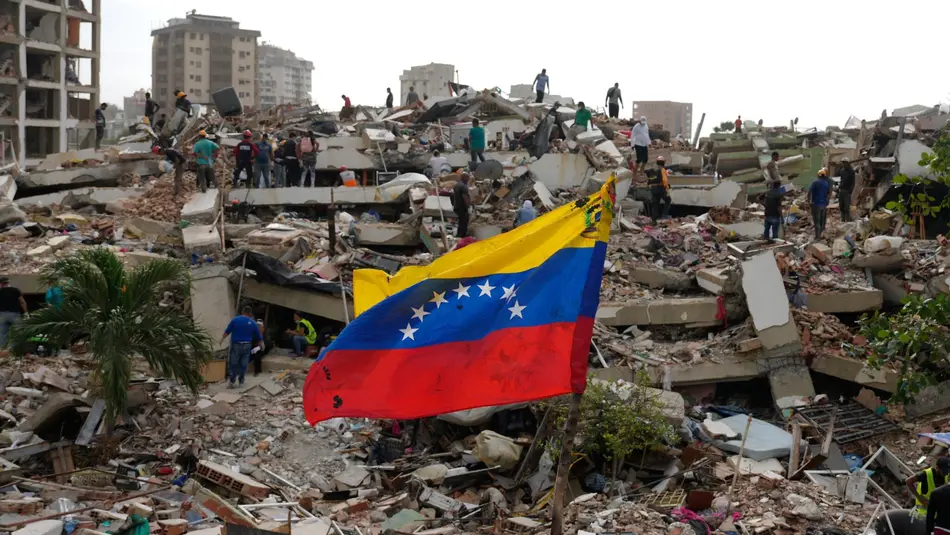
The powerful earthquakes struck Venezuela on 24 June, devastating large parts of the coastal state of La Guaira. According to officials, a magnitude 7.2 earthquake was followed just 39 seconds later by an even stronger magnitude 7.5 quake—the most powerful earthquake to hit Venezuela in more than a century. The twin shocks caused widespread destruction, reducing residential neighbourhoods, commercial buildings and critical infrastructure to rubble within seconds.
Entire high-rise apartment blocks collapsed during the disaster, trapping thousands beneath concrete and twisted steel. Roads, bridges, schools and hospitals suffered severe structural damage, making rescue operations exceptionally difficult during the crucial hours immediately after the earthquakes. Emergency workers from across Venezuela, supported by international rescue teams, worked around the clock in search of survivors despite dangerous aftershocks and unstable buildings.
Authorities now say formal search-and-rescue operations have officially ended after weeks of intensive efforts. Nevertheless, countless relatives continue to sift through the debris with the hope of recovering the bodies of missing loved ones to provide them with dignified burials. For many families, the emotional trauma of uncertainty remains as painful as the disaster itself.
The tragedy has been compounded by Venezuela’s long-running economic crisis, which has significantly weakened public services and emergency response capabilities over the past decade. Limited equipment, shortages of medical supplies and damaged transport networks have complicated relief efforts, placing enormous pressure on local authorities and humanitarian organisations operating in the affected regions.

The humanitarian situation remains critical. Official figures indicate that 16,740 people have been injured, many requiring specialised medical treatment, rehabilitation and psychological support. Thousands of residents have been displaced after losing their homes, forcing many families to seek shelter in temporary camps, schools and public buildings.
Adding to public anxiety, a magnitude 3.0 earthquake struck central Caracas on Friday, causing brief panic among residents and prompting the evacuation of several buildings. Although the latest tremor caused no significant reported damage, it served as a reminder of the continuing seismic risks facing the country and heightened fears among communities already traumatised by the earlier catastrophe.
International humanitarian agencies continue to warn that Venezuela faces an enormous recovery challenge that could take years to overcome. The United Nations has launched an emergency appeal seeking nearly 300 million US dollars to support relief operations aimed at assisting approximately 1.3 million people in urgent need of humanitarian aid. The funding would help provide emergency shelter, food assistance, clean drinking water, healthcare services and sanitation facilities for affected communities.
Across La Guaira, temporary field hospitals, mobile medical clinics and emergency kitchens have been established in public spaces to provide immediate assistance. Medical teams continue treating injured survivors while aid organisations distribute food, drinking water and essential household supplies to families who lost nearly everything in the disaster.
The United Nations Office for Disaster Risk Reduction has estimated that direct physical damage to housing, public infrastructure and other essential facilities could reach approximately 37 billion US dollars. Rebuilding damaged cities, restoring transportation networks and repairing public services are expected to require substantial international financial support and long-term investment.
Venezuela’s interim President Delcy Rodríguez has appealed to the international community for greater financial assistance to accelerate recovery efforts. She has called for the release of Venezuelan assets frozen overseas, arguing that the funds should be redirected towards rebuilding communities devastated by the earthquakes.
Among her requests is an appeal to King Charles III regarding approximately 30 tonnes of Venezuelan gold currently frozen under United Kingdom sanctions. Rodríguez argues that the country’s extraordinary humanitarian emergency justifies making those assets available to finance reconstruction, healthcare and emergency relief programmes.
The proposal has attracted international attention as Venezuela seeks additional resources to confront what experts describe as one of the largest reconstruction projects in the country’s modern history. Whether frozen assets can legally be redirected remains uncertain and could involve complex diplomatic and legal discussions.
Despite growing criticism over the government’s handling of the disaster, Rodríguez has defended the national emergency response, insisting that authorities acted swiftly under extremely difficult circumstances. She has pledged that Venezuela will remain stable throughout the recovery process and rejected suggestions that the disaster could trigger widespread social unrest.

However, many Venezuelans have voiced frustration over what they describe as an inadequate initial response before international rescue teams arrived. Residents in some of the worst-affected communities reported delays in receiving emergency assistance, shortages of heavy rescue equipment and limited access to medical care during the crucial first days following the earthquakes.
Humanitarian organisations acknowledge that the unprecedented scale of destruction would have overwhelmed even well-equipped emergency systems. Nevertheless, they continue to stress the importance of sustained international cooperation as Venezuela moves from emergency rescue operations towards long-term recovery and reconstruction.
Experts believe rebuilding homes, schools, hospitals, transport infrastructure and public utilities will take many years. Beyond repairing physical damage, authorities must also address the psychological impact on survivors, many of whom lost family members, homes and livelihoods within moments.
As the official death toll continues to rise and thousands remain unaccounted for, Venezuela faces one of the darkest chapters in its recent history. The coming months will determine how successfully the country can mobilise domestic and international resources to rebuild devastated communities, restore essential services and help millions of affected citizens recover from a disaster whose consequences will be felt for generations.
Related News:
 Powerful 7.7-Magnitude Earthquake Hits Eastern Indonesia
 Nine Killed in Karachi Consulate Protest
 Southeast Asia Turns to Russia Amid Energy Crisis
 Capitalism ‘Suicidal’, Warns Petro at Climate Summit
 Australia pushes Pacific security pact amid China tension
 BJP Sweeps West Bengal in Historic Breakthrough
 Norway Doubles Down on Oil and Gas for Europe Energy Security
 Doomsday Clock Nears Midnight Amid Global Crises
 US Awaits Iran Reply on New Ceasefire Proposal
 One Nation Stuns Australia With Historic Farrer Win
 Hormuz Talks Near Critical Stage
 Discontent grows around Putin amid war strain
 Germany Summons Chinese Envoy Over Russian Troop Training
 Millions Gather for Khamenei’s Six-Day State Funeral
 Houthis Strike Saudi Arabia as Middle East Tensions Rise
 Wildfires Force Mass Evacuations in France And Spain
 Taliban global ties grow as rights fears mount
 Seoul proposes historic peace talks to replace Korean War armistice
 Israeli Strike in Southern Lebanon Kills Seven
 Five Years of Taliban Rule Leave Afghanistan in Crisis
 Wildfires rage across Europe as hundreds arrested in France
 BBC to Apologise Over Edited Trump Speech Amid Backlash
 Britain deploys RAF specialists to assist Belgium with drone threats
 Greene Pushes Epstein Files Amid Trump Fallout
 Trump Deploys DHS to Charlotte in Major Arrest Operation
 December Run-Off in Chile as Election Produces No Winner
 Canada Passes Carney’s First Budget in Tight Parliamentary Vote
 Shadow Fleet at Sea: Europe’s Battle Against Illicit Oil Shipping
 Pentagon Officials in Ukraine to Discuss War End
 Venezuela Threatens Nobel Winner Machado with Fugitive Status
 Georgians Defy Government Crackdown After Year of Protests
 EU plans $105bn Ukraine aid using frozen Russian assets
 Trump Policies Boost China’s Global Rise, Survey Finds
 Iran unrest slows under brutal crackdown and global tensions
 Pentagon Signals Reduced Role in Deterring North Korea
 Thousands Protest ICE Operations in Nationwide US Day of Action
 Starmer Condemns ‘Depraved’ Russian Strikes on Ukraine
 Herzog visit sparks protests across Australian cities
 UK and US Drop in Global Corruption Index Rankings
 Tarique Rahman’s Rise Toward Bangladesh’s Top Job
 Canberra Poster Seizure Sparks Free Speech Row
 Evo Morales Returns After Mysterious Absence
 AFP Reviews Pauline Hanson Comments
 Duterte ICC Hearing Begins Amid Defiance
 Trump Tariffs Threat Spark UK and EU Alarm
 The Dangerous Rise of Remigration Across Modern Europe
 Jacinda Ardern Moves To Australia Following Her US Fellowships
 US to offer passport services in West Bank settlements
 Jacinda Ardern Move Sparks Kiwi Reflection
 Nick Greiner Warns Over Election Review Fallout
 Iran Defiance Grows Amid US-Israel War Pressure
 Injured Mojtaba Khamenei Elevated as Iran Leader
 Gordon Brown urges court for crimes against children
 Oil Prices Jump After Trump Claims Iran Oil Hub Destroyed
 Pakistan Targets Militant Hideouts in Afghanistan
 Danish Election Deadlock Shakes Frederiksen’s Grip
 Air Canada CEO Faces Outcry Over Recent Language Misstep
 Pope Rebukes Leaders for War as Middle East Tensions Rise
 Army Probes Apache Flyover at Kid Rock’s Nashville Estate
 Relationship with Trump may be beyond repair, Starmer warned
 Italian Town Buys Mussolini Villa to Keep Away Fascist Fans
 Report Says Pezzullo Acted ‘Recklessly’ in Dealings
 Trump Employs Nixon’s Madman Theory Amid Iran Crisis
 Suspected Plot Targets Pipeline Before Hungary Vote
 Trump Brokers Landmark Lebanon Ceasefire Amid Regional Hopes
 UK Stands Firm on Falklands Amid US Rift
 Crackdown Backfires on UK Climate Protesters
 Oil Prices Surge Above $120 Amid Iran Blockade Fears
 Coalition pushes fossil fuel phaseout plan
 Trump orders US troop pullout from Germany
 Trump approval plunges amid Iran war fears
 Ohio’s Battle for Trust: Democrats Vying to Flip the Buckeye State
 US ‘Narco Boat’ Strikes Draw Global Outcry
 Trump Announces 3-Day Russia–Ukraine Ceasefire Deal
 Maldives Cave Diving Tragedy Raises Safety Alarm
 Pope Meets Families in Italy Toxic Waste Zone
 Farage and Reform UK Reshape British Politics
 Starmer Leadership Under Pressure After Setbacks
 Le Pen to Run for President Despite Embezzlement Conviction
 Ukraine Creates Long-Range Strike Command