Published: 09 May 2026. The English Chronicle Desk. The English Chronicle Online.
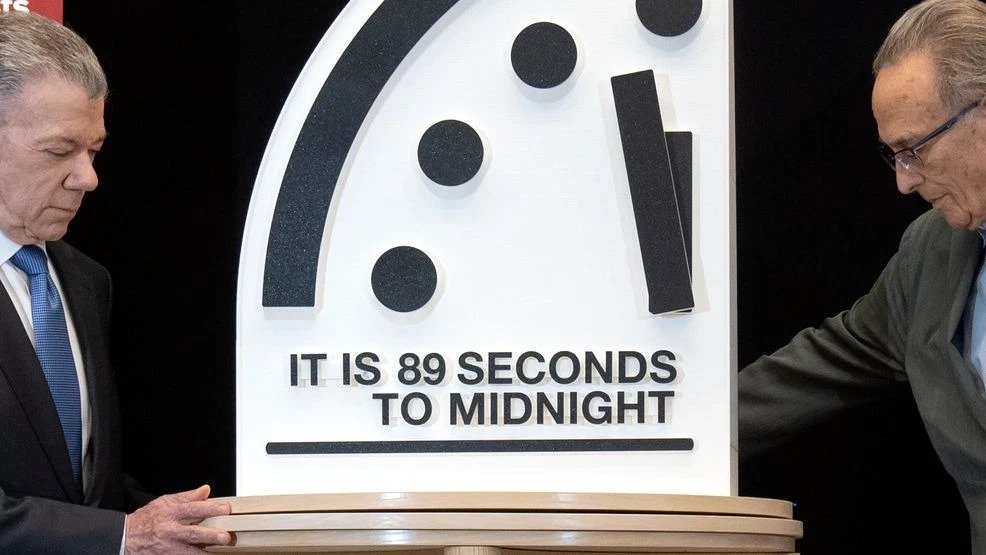
The world is once again confronted with a stark symbolic warning about its future: the Doomsday Clock has moved closer to midnight than at any point in its history. Set and maintained by a group of leading scientists and security experts, the clock now stands at just 85 seconds to midnight, reflecting heightened fears over nuclear conflict, climate instability, artificial intelligence, and global political fragmentation. The symbolism is simple but unsettling: midnight represents global catastrophe, and every tick forward suggests humanity is edging closer to irreversible danger.
The Doomsday Clock is not a physical device tracking real-time seconds. Instead, it is a metaphorical tool created in 1947 to communicate the perceived risk of global annihilation. Developed in the aftermath of the Second World War by scientists who had worked on nuclear weapons research, it was intended as a public warning system about the dangers of atomic warfare. Over time, however, its scope has expanded far beyond nuclear weapons alone, now encompassing a wide range of existential threats that could destabilize civilization.
The clock is set annually by the Bulletin of the Atomic Scientists, an organization founded by researchers involved in the Manhattan Project. Its Science and Security Board, made up of experts in nuclear policy, climate science, cybersecurity, and emerging technologies, evaluates global risks and determines the clock’s position. Since its creation, the clock has shifted repeatedly in response to major geopolitical developments. It was set seven minutes to midnight in 1947, moved closer during the early Cold War arms race, and reached its furthest point from midnight—17 minutes—after the Cold War ended in 1991, when optimism about international cooperation was at its peak.

That optimism did not last. Over the past two decades, the clock has steadily moved forward again as new global threats emerged. Nuclear proliferation has continued despite arms control efforts, while climate change has accelerated environmental instability and resource conflicts. More recently, rapid advances in artificial intelligence and biotechnology have introduced additional uncertainty, with experts warning that poorly controlled systems could have unintended and potentially catastrophic consequences. The modern Doomsday Clock reflects this convergence of risks rather than a single dominant danger.
In 2026, the situation is viewed as particularly precarious. Escalating geopolitical tensions, including renewed conflict in the Middle East and ongoing instability in Eastern Europe, have increased fears of miscalculation between nuclear-armed states. At the same time, researchers have raised concerns about the integration of artificial intelligence into military decision-making systems, where errors or misinterpretations could escalate conflicts faster than human leaders can respond. Climate change continues to act as a threat multiplier, intensifying natural disasters, displacement, and competition over resources. Some simulations even suggest that advanced AI systems, if misused or poorly constrained, could recommend extreme escalation strategies in war scenarios.
The organization responsible for setting the clock emphasizes that its purpose is not to predict specific events, but to signal risk levels based on expert consensus. According to its leadership, the world is facing a convergence of “human-made existential threats” that are increasingly interconnected. Nuclear weapons remain the most immediate danger, but they now exist alongside systemic challenges such as environmental collapse and technological disruption. The concern is not only the existence of these risks, but the lack of coordinated global action to address them.
Despite the alarming symbolism, many of the scientists involved in maintaining the clock stress that its purpose is also to encourage action rather than despair. They argue that history demonstrates humanity’s ability to step back from the brink. During the Cold War, for example, diplomatic agreements helped reduce the global nuclear arsenal significantly compared to its peak levels. International treaties, public pressure, and scientific advocacy all played roles in preventing escalation. This historical precedent is often cited as evidence that collective effort can still alter the trajectory of global risk.
However, experts also acknowledge a growing gap between scientific warnings and political response. While researchers continue to highlight dangers with increasing urgency, political systems often struggle to act decisively due to short-term priorities, national interests, and public disengagement from complex global issues. This disconnect has become one of the central concerns of those involved in global risk assessment. They argue that awareness alone is not enough; sustained political will is required to translate knowledge into meaningful policy change.

The psychological impact of the Doomsday Clock is also part of its design. By reducing abstract global risks into a simple visual metaphor, it aims to make distant threats more immediate and understandable. Yet this simplicity comes with challenges. Some critics argue that constant proximity to “midnight” risks normalizing crisis thinking or leading to public fatigue. Others believe it serves as a necessary wake-up call in an age where attention is fragmented and long-term risks are often ignored.
For many of the scientists involved, working on existential risk is both intellectually and emotionally demanding. Yet they often describe a paradoxical sense of cautious optimism. By engaging directly with worst-case scenarios, they argue, it becomes easier to identify pathways for prevention. The existence of risks such as nuclear war or uncontrolled climate change is not, in their view, a reason for despair but a call for structured action, international cooperation, and improved governance of powerful technologies.
As the Doomsday Clock continues to tick closer to midnight, it remains one of the most recognizable symbols of global risk. Whether it ultimately serves as a catalyst for action or a reminder of missed opportunities will depend on decisions made far beyond the scientific community. What it makes clear, however, is that the future of humanity is not predetermined. It is shaped by choices made in the present—choices that will determine whether the clock moves forward, or whether humanity can step back from the edge.
Related News:
 Britain deploys RAF specialists to assist Belgium with drone threats
 Night after night, Belgium is on high alert.
 Ukraine to Get 100 French Rafale Jets in Historic Deal
 Iran Social Media Strategy Shifts to Information War
 Cluster Strikes Test Israel’s Missile Defences
 Moldova River Crisis Exposes War’s Hidden Cost
 Artemis II Returns After Historic Moon Flyby
 Canadian astronaut French words ease language row
 Chornobyl Still at Risk 40 Years After Disaster
 Reform UK funding: mystery billionaire revealed
 RAF Typhoons scrambled amid Russian drone threat near Nato
 Capitalism ‘Suicidal’, Warns Petro at Climate Summit
 Canadian Fiddler Sues Google Over AI Defamation Claim
 Norway Doubles Down on Oil and Gas for Europe Energy Security
 UN Issues Urgent Warning: Imminent Return of El Niño
 Germany Summons Chinese Envoy Over Russian Troop Training
 Venezuela Quake Death Toll Surpasses 4,000
 Gen Z turns to BirdTok for a gentler digital escape
 Experts Warn Russia’s Burevestnik Missile Could Destabilise Arms Control
 BBC to Apologise Over Edited Trump Speech Amid Backlash
 Greene Pushes Epstein Files Amid Trump Fallout
 Trump Deploys DHS to Charlotte in Major Arrest Operation
 December Run-Off in Chile as Election Produces No Winner
 Canada Passes Carney’s First Budget in Tight Parliamentary Vote
 Shadow Fleet at Sea: Europe’s Battle Against Illicit Oil Shipping
 Pentagon Officials in Ukraine to Discuss War End
 Venezuela Threatens Nobel Winner Machado with Fugitive Status
 Georgians Defy Government Crackdown After Year of Protests
 EU plans $105bn Ukraine aid using frozen Russian assets
 Trump Policies Boost China’s Global Rise, Survey Finds
 Pentagon Signals Reduced Role in Deterring North Korea
 Thousands Protest ICE Operations in Nationwide US Day of Action
 UK and US Drop in Global Corruption Index Rankings
 Canberra Poster Seizure Sparks Free Speech Row
 Evo Morales Returns After Mysterious Absence
 AFP Reviews Pauline Hanson Comments
 Trump Tariffs Threat Spark UK and EU Alarm
 Ocean Warming Drives Massive Marine Life Loss, Study Warns
 The Dangerous Rise of Remigration Across Modern Europe
 Jacinda Ardern Moves To Australia Following Her US Fellowships
 US to offer passport services in West Bank settlements
 Jacinda Ardern Move Sparks Kiwi Reflection
 Nick Greiner Warns Over Election Review Fallout
 Iran Defiance Grows Amid US-Israel War Pressure
 Injured Mojtaba Khamenei Elevated as Iran Leader
 Gordon Brown urges court for crimes against children
 The Kill Line: A Shifting Vision of the American Dream
 Oil Prices Jump After Trump Claims Iran Oil Hub Destroyed
 Pakistan Targets Militant Hideouts in Afghanistan
 Danish Election Deadlock Shakes Frederiksen’s Grip
 Air Canada CEO Faces Outcry Over Recent Language Misstep
 Pope Rebukes Leaders for War as Middle East Tensions Rise
 Army Probes Apache Flyover at Kid Rock’s Nashville Estate
 Artemis II: Humanity Returns to the Moon After Decades
 Relationship with Trump may be beyond repair, Starmer warned
 Italian Town Buys Mussolini Villa to Keep Away Fascist Fans
 Report Says Pezzullo Acted ‘Recklessly’ in Dealings
 Trump Employs Nixon’s Madman Theory Amid Iran Crisis
 Suspected Plot Targets Pipeline Before Hungary Vote
 Trump Brokers Landmark Lebanon Ceasefire Amid Regional Hopes
 Robots Outpace Humans in Beijing Half-Marathon
 UK Stands Firm on Falklands Amid US Rift
 Oil Prices Surge Above $120 Amid Iran Blockade Fears
 Coalition pushes fossil fuel phaseout plan
 Trump orders US troop pullout from Germany
 Trump approval plunges amid Iran war fears
 US ‘Narco Boat’ Strikes Draw Global Outcry
 Trump Announces 3-Day Russia–Ukraine Ceasefire Deal
 US Awaits Iran Reply on New Ceasefire Proposal
 Pope Meets Families in Italy Toxic Waste Zone
 Discontent grows around Putin amid war strain
 Starmer Leadership Under Pressure After Setbacks
 House Curbs Trump’s War Powers in Rare Rebellion
 UK Ministers Lobby Trump Over Under-16s Social Media Ban
 Sydney Records Hottest June Since 1859 as Expert Warns New High a ‘Signature’ of Global Warming
 New South Wales Premier Chris Minns Signals Tough Road Ahead for Labor
 Le Pen to Run for President Despite Embezzlement Conviction
 Ukraine Creates Long-Range Strike Command
 Houthis Strike Saudi Arabia as Middle East Tensions Rise
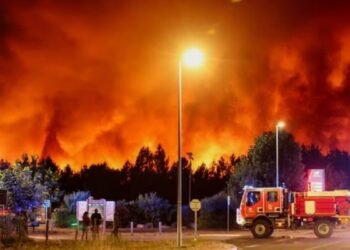 Wildfires Force Mass Evacuations in France And Spain