Published: 23 May 2026. The English Chronicle Desk. The English Chronicle Online.
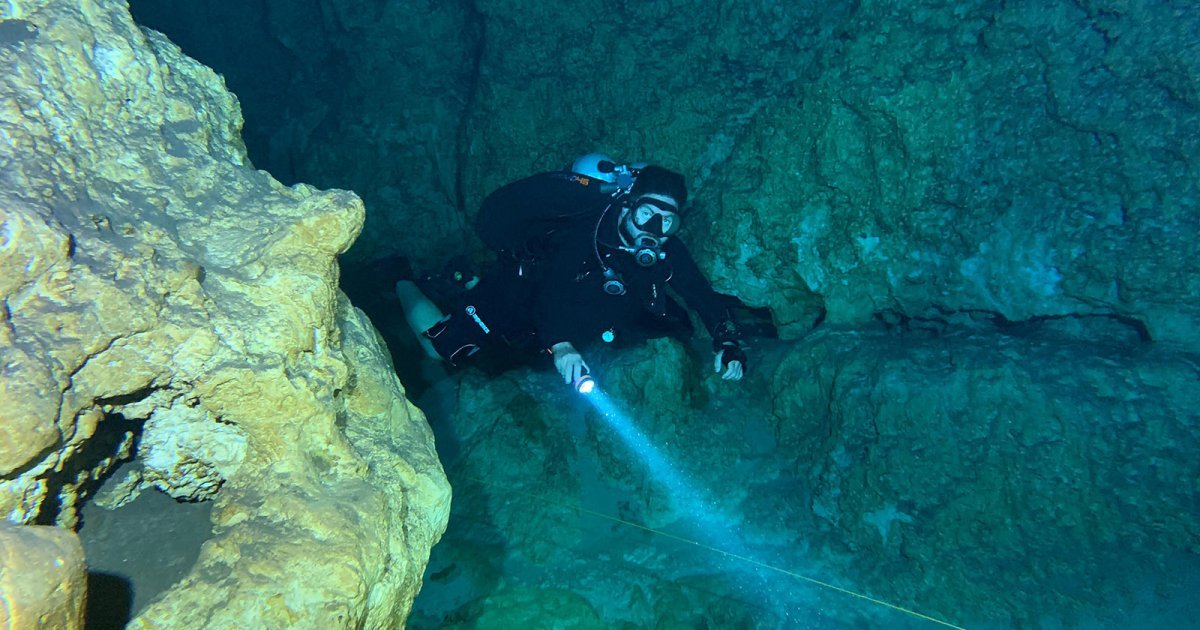
A fatal cave diving incident in the Maldives has triggered renewed global concern over the dangers of advanced diving practices, after four Italian divers and a Maldivian naval diver lost their lives in a complex underwater recovery operation in the Vaavu Atoll. The tragedy, which unfolded at the Dhekunu Kandu dive site, has prompted experts to once again highlight the strict technical, psychological, and environmental demands of cave diving, a discipline widely regarded as one of the most hazardous forms of underwater exploration.
According to the Divers Alert Network, which coordinated part of the recovery effort, the bodies of all victims were retrieved after several days of challenging deep-water operations involving specialist international rescue divers. The victims included Italian ecology professor Monica Montefalcone, her daughter Giorgia Sommacal, marine biologist Federico Gualtieri, researcher Muriel Oddenino, and diving instructor Gianluca Benedetti. A Maldivian naval diver, Mohamed Mahudhee, also died during the recovery phase due to decompression sickness.
The incident occurred inside a submerged cave system in Vaavu Atoll, where divers reportedly became trapped during an exploratory dive. Initial response efforts were led by the Maldives National Defence Force before international cave diving specialists were deployed to assist in the recovery. Authorities from both the Maldives and Italy have launched ongoing investigations into the precise circumstances that led to the fatal dive, including equipment configuration, dive planning, and environmental conditions inside the cave system.

Maldivian authorities confirmed that specialist Finnish cave divers, including experienced technical operators such as Sami Paakkarinen, Jenni Westerlund, and Patrik Grönqvist, were brought in to support the operation. They conducted multiple deep and technically demanding dives using closed-circuit rebreathers, underwater propulsion scooters, and redundant safety systems designed for low-visibility cave environments. The recovery operation itself highlighted the extreme complexity of working within submerged cave networks where navigation, buoyancy, and gas management must be precisely controlled.
President Mohamed Muizzu, the head of state of the Maldives, expressed condolences following the tragedy, with state officials and military personnel paying respects to the deceased diver involved in the recovery mission. The incident has also sparked national reflection on the risks faced by emergency personnel engaged in underwater rescue operations in extreme environments.
Cave diving experts have since pointed to the case as a stark reminder of how quickly underwater exploration can turn fatal when strict safety protocols are not followed. Unlike open-water diving, cave diving does not allow for direct vertical ascent to the surface. Once inside a submerged cave, divers are often physically trapped by rock formations above them, meaning the only exit route is the same path used to enter.
British cave diver Jonathan Volanthen, known for his role in the 2018 Thailand cave rescue, explained that cave diving presents fundamentally different risks compared to recreational diving. He noted that poor visibility inside caves can escalate rapidly when sediment is disturbed, turning clear water into near-total darkness. In such conditions, divers can lose all sense of direction within seconds, making pre-laid guide lines essential for safe navigation.
Volanthen also stressed the importance of gas management at depth. As pressure increases underwater, breathing gas is absorbed into the bloodstream, requiring controlled and gradual ascent to prevent decompression sickness. Any disruption in ascent planning can result in severe injury or death, particularly in deep cave systems where emergency surfacing is impossible.
American cave diving specialist Edd Sorenson, who has led numerous technical cave rescue operations, further emphasised the importance of redundancy in diving equipment. He explained that experienced cave divers carry multiple independent systems for breathing, lighting, and navigation, ensuring that a single equipment failure does not become fatal. He also highlighted that caves often contain fine sediment that can easily be disturbed by incorrect fin techniques, rapidly reducing visibility to zero.
Sorenson noted that proper propulsion techniques, such as the frog kick, are essential in cave environments to avoid stirring sediment from the cave floor. He also warned that even highly experienced divers can underestimate risk due to overconfidence, particularly those who have advanced to instructor or leadership roles in diving communities.
Cave diving instructor Cristina Zenato, based in the Bahamas and recognised for her extensive experience in submerged cave systems, urged against viewing cave diving as inherently reckless. She argued that, when properly trained and disciplined, it is a highly controlled activity governed by strict safety principles. However, she also acknowledged that the underwater environment is fundamentally hostile to human survival, requiring continuous risk assessment and strong personal judgment.
Zenato emphasised that decision-making is often the most critical factor in survival. Even highly trained divers, she noted, sometimes choose not to enter a dive site based on instinct and environmental reading. In her view, recognising when not to dive is as important as technical proficiency inside the water.
The tragedy has reignited debate over training standards and supervision in advanced diving tourism, particularly in high-risk destinations such as the Maldives, where deep reef systems and cave structures attract both professional researchers and recreational divers. Experts argue that while modern equipment has made cave diving safer than in previous decades, the discipline remains unforgiving of even minor errors.
Authorities continue to investigate whether procedural failures, environmental misjudgment, or equipment issues contributed to the accident. Early indications suggest that a combination of depth, limited visibility, and complex cave topology may have played a role in the divers becoming trapped.

For emergency responders, the incident also highlights the dangers faced during underwater recovery missions. The death of Maldivian diver Mohamed Mahudhee underscores the risks inherent in decompression exposure during repeated deep dives conducted under operational pressure.
As investigations continue, the global diving community is calling for renewed emphasis on strict training certification, improved dive planning protocols, and stronger enforcement of safety limits in commercial diving operations. While cave diving remains a respected field of exploration and scientific research, experts agree that it demands absolute discipline, technical mastery, and respect for conditions that can change in moments.
The Maldives tragedy now stands as a sobering reminder that beneath calm tropical waters lies an environment where even the most experienced divers are vulnerable, and where a single miscalculation can have irreversible consequences.
Related News:
 Israeli Strike in Southern Lebanon Kills Seven
 Five Years of Taliban Rule Leave Afghanistan in Crisis
 The diet that can significantly ease symptoms of IBS
 Europe, North America face early wave of bird flu
 Tick Bite Tragedy Claims Teen in Meat Allergy Case
 Hospital Fungal Outbreak Sparks Major Cover-Up Claims
 Nine Killed in Karachi Consulate Protest
 Tehran Diary: Dark Days Under Relentless Bombardment
 Canada Plasma Deaths Raise Safety Concerns After Two Donors Die
 North Korea Fires Missiles Amid US-South Korea Drills
 Iran Crisis Tests Trump’s Global Leadership
 “I was fighting two wars”: Ukraine soldiers’ addiction crisis
 Ben Roberts-Smith Denies War Crime Allegations in First Statement
 Chornobyl Still at Risk 40 Years After Disaster
 New Bacteria Discovery Offers Hope Against Noma
 Southeast Asia Turns to Russia Amid Energy Crisis
 Escobar’s Hippos May Be Moved to India Zoo
 Cartel crackdown raises fears of fresh violence
 US states redraw maps after voting rights ruling
 Giuliani hospitalised in critical condition
 China Fireworks Factory Blast Kills 21 in Hunan
 Australia pushes Pacific security pact amid China tension
 BJP Sweeps West Bengal in Historic Breakthrough
 US ‘Narco Boat’ Strikes Draw Global Outcry
 US Court Restores Abortion Pill Access Temporarily
 Hantavirus Cruise: Britons Face 45-Day Isolation Order
 Florida Surgeon ‘Devastated’ Over Fatal Surgery Error
 Bad Weather Threatens Hantavirus Cruise Ship Evacuation
 Search Intensifies for Missing Hiker on WA Bibbulmun Track
 Barrister Criticises Trial After Suicide Case Verdict
 US Awaits Iran Reply on New Ceasefire Proposal
 One Nation Stuns Australia With Historic Farrer Win
 Crisis in the Canary Islands as Cruise Ship Evacuated
 Cruisers Face Perth Quarantine After Hantavirus Outbreak
 WHO Declares Ebola Outbreak a Global Emergency
 Deadly Ebola Outbreak Surges as Western Aid Vanishes
 Hormuz Talks Near Critical Stage
 China mine blast death toll rises to 90
 Ebola outbreak in DRC overwhelms health system as cases surge
 Pope Meets Families in Italy Toxic Waste Zone
 Discontent grows around Putin amid war strain
 Millions Gather for Khamenei’s Six-Day State Funeral
 Unflinching Witness: Doctors Document Gaza’s Medical Crisis
 New Footage Revives Peter Falconio Mystery
 Mystery Grows Over Mitch McConnell’s Health
 Venezuela Quake Death Toll Surpasses 4,000
 Houthis Strike Saudi Arabia as Middle East Tensions Rise
 Taliban global ties grow as rights fears mount
 Seoul proposes historic peace talks to replace Korean War armistice
 Powerful 7.7-Magnitude Earthquake Hits Eastern Indonesia
 Is America Ready for an AOC Presidential Run?
 BBC to Apologise Over Edited Trump Speech Amid Backlash
 Reeves rejects £1bn plea for NHS redundancy payouts
 Greene Pushes Epstein Files Amid Trump Fallout
 Zelenskyy Signs Fighter Jet Deal Amid Russian Drone Attacks
 Shadow Fleet at Sea: Europe’s Battle Against Illicit Oil Shipping
 ‘Extinct’ Antelope Returns to Sahara, Bringing Hope
 Irish Beach Tragedy: Irish Drown at Whitehaven Beach in Australia
 Streeting moves on doctor pay to end strike dispute
 UK and US Drop in Global Corruption Index Rankings
 Canberra Poster Seizure Sparks Free Speech Row
 Jacinda Ardern Move Sparks Kiwi Reflection
 Middle East Airspace Crisis Strands Thousands
 Kelly Wilkinson Inquest Reveals Bail Failure
 Princess Eugenie steps down as patron of anti-slavery charity
 New Zealand Covid Response Praised Despite Lingering Scars
 Injured Mojtaba Khamenei Elevated as Iran Leader
 The Kill Line: A Shifting Vision of the American Dream
 Air Canada CEO Faces Outcry Over Recent Language Misstep
 Extreme Weather: Europe Shivers as Cyclone Narelle Hits
 Palantir Boss Defends NHS Deal Amid Government Break Clause
 Asia Turns Back to Coal Amid Middle East Energy Crisis
 Relationship with Trump may be beyond repair, Starmer warned
 Trump’s Six-Week Iranian War: The High Cost of Ignorance
 Crisis in NHS Surgery Scheduling Hits Patients Hard
 RFU Backs Borthwick Despite England’s Poor Six Nations
 Trump Rejects Tehran Peace Plan as Regional Truce Crumbles
 Wes Streeting faces narrow road to Labour members’ favour
 Clean Air Initiatives Spark Major Fall in London Hospital Admissions
 UK Schools Struggle as Classrooms Top 40C