Published: 09 July 2026. The English Chronicle Desk. The English Chronicle Online.
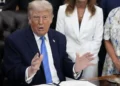
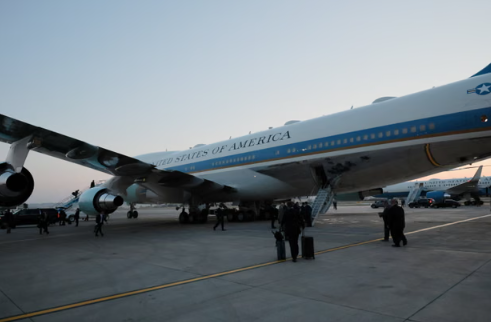
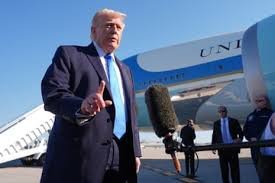
President Donald Trump made a notable departure from his planned travel schedule on Wednesday. He returned from the NATO summit in Turkey aboard the long-serving, older Air Force One aircraft. This decision marked a sudden shift from his journey to Ankara on the new, luxury Boeing 747 jet. That specific aircraft was gifted to the United States government by Qatar during the previous year. The change in transport arrangements occurred while the president was attending high-level international meetings. He ultimately transferred to the new Qatari-gifted plane at RAF Mildenhall in the United Kingdom. This stopover allowed American service members stationed at the base to tour the impressive new presidential jet.
The president maintained that the switch was motivated by a desire to honor military personnel. He stated that the new plane was sent ahead to allow troops a chance to see it. Trump expressed his enthusiasm for the aircraft on his personal social media platform late Wednesday evening. He shared a photograph of excited service members posing before the prominent and colorful new presidential jet. According to the president, the decision involved very little deviation from his original planned flight path. However, the unexpected swap prompted immediate questions from reporters regarding potential security concerns involving regional instability.
Heightened tensions between the United States and Iran have dominated the current geopolitical landscape this week. The United States military recently launched significant strikes against more than eighty separate Iranian targets. These operations followed reports of attacks on commercial shipping vessels within the vital Strait of Hormuz. President Trump arrived at the NATO summit by declaring that any ceasefire with Iran was over. He also spoke openly about the personal security risks he faces while serving in his current role. The president notably told reporters that he remains at the very top of Iran’s target list.
Observers have long debated the security readiness of the new, converted Boeing 747 luxury aircraft. While the White House insists the plane is safe, some experts remain cautious about its defensive capabilities. Unlike the older fleet of presidential aircraft, this gifted jet lacks certain sophisticated missile detection systems. Some analysts suggest the rapid conversion process excluded highly complex engineering modifications required for full military security. Democratic lawmakers previously voiced strong concerns regarding the safety and potential conflicts of interest involved. These officials estimated that the conversion process cost taxpayers more than one billion dollars in total.
During a news conference in Ankara, the president faced direct inquiries about these specific security fears. Reporters asked if the shift away from the new plane related to threats from Iran. Trump did not provide a direct answer regarding the aircraft’s security but addressed the broader danger. He reiterated that the life of a president is inherently dangerous in the current global climate. He suggested that he has been lucky so far but acknowledged that his situation remains very precarious. When pressed again, the president characterized the aircraft swap as a simple logistics choice. He explained that the plane needed to visit several large bases for the soldiers to see.
The logistical reality of the return journey appeared slightly different than the president’s initial public explanation. While the jet was intended to visit multiple bases, it seemingly only stopped at RAF Mildenhall. Flight trackers noted that the older Boeing VC-25A aircraft flew with its transponder signals temporarily disabled. This is a common security procedure when transporting a president through particularly high-risk or sensitive environments. Other world leaders departing Turkey kept their flight tracking systems active throughout their journey home. The contrast in transport protocols served to highlight the unique scrutiny surrounding this particular presidential mission.
Despite the controversy, the administration continues to defend the use of the new, government-acquired aircraft. Officials maintain that it is a state-of-the-art machine equipped with all necessary high-level communication protocols. The White House press office has pushed back against allegations that the jet is currently unsafe. They emphasize that the administration utilizes every available tool to protect the safety of the president. The new plane is expected to serve as a bridge until a permanent replacement fleet arrives. Boeing is currently working on the long-term project, although that program remains several years behind schedule.
As the president flew back to Washington, the broader conflict with Iran continued to escalate. Reports indicated that missile warning sirens sounded across several nations including Bahrain, Kuwait, and Qatar. Kuwaiti officials confirmed their military intercepted multiple incoming missiles and drones throughout the busy Wednesday period. These events underscore the dangerous conditions that shadowed the president’s travel plans throughout this week. The spectacle of the new plane provided a brief moment of pride for the administration. Nevertheless, the underlying security concerns regarding the president’s travel continue to fuel intense public discussion.
The president’s arrival in the United States marks the end of a very intense diplomatic mission. His interactions with NATO allies in Turkey have been described as both unpredictable and surprisingly positive. The focus now shifts toward the domestic fallout from the ongoing conflict with Iranian forces. Concerns regarding the security of presidential travel will likely persist for the immediate future. The new Qatari-gifted aircraft will remain a subject of interest as it begins its official service. For now, the administration appears determined to showcase the jet while managing the complexities of statecraft. Each detail of the journey reflects the challenging intersection of luxury, security, and global power.
Related News:
 Shock US Raid: Maduro Pleads Not Guilty in Manhattan Court
 Trump Plans Venezuela Meeting, Warns of Cartel Land Strikes
 Mandelson apologises over Epstein ties after public scrutiny
 Rudd successor: Defence chief and former ministers considered
 US Senate rejects resolution limiting Trump military powers
 Trump Calls Greenland Critical for US Security After Denmark Talks
 Machado Trump medal gesture reshapes Venezuela power struggle
 Trump Receives Machado’s Nobel Medal in White House Meeting
 Iran unrest slows under brutal crackdown and global tensions
 Trump Allies Pursue $200m European Gas Pipeline Deal
 US Considers Asylum for British Jews Amid Rising Antisemitism
 Starmer Challenges US Over Controversial Greenland Deal
 Spoof “Make America Go Away” Caps Rally Denmark Over Greenland
 Trump slams UK ‘stupidity’ over Chagos Islands, eyes Greenland takeover
 UK Presses On With Chagos Handover Despite Trump Criticism
 Shinzo Abe’s killer receives life sentence in Japan
 Starmer Resists Matching Trump Amid Greenland Tensions
 Netanyahu Accepts Trump’s ‘Board of Peace’ Invitation
 Russia Strikes Kyiv and Kharkiv as Peace Talks Enter Day Two
 Turnbull urges Albanese to confront Trump’s global ‘bully’ politics
 Snow Threatens Japan Election Turnout Amid Extreme Cold
 Crisis Looms as Liberals Debate Sussan Ley Future
 Cambridge Faces Scrutiny Over Arms Investment Transparency
 Files Link Andrew to Epstein Dinner After Prison Release
 Thousands Protest ICE Operations in Nationwide US Day of Action
 Epstein Files Reveal Trump Officials’ Emails with Financier
 Trump softens stance on Chagos Islands deal after Starmer call
 Epstein UAE Emails Shake British Royal Andrew’s Legacy
 Liberal Fallout: Taylor Challenge Casts Shadow Over Sussan Ley’s Leadership
 Ukraine, Russia Meet in Geneva Ahead of War Anniversary
 Brazilian Politician Brothers Sentenced for Marielle Murder
 Tommy Robinson Meets Trump Officials at US State Department
 New Zealand Covid Response Praised Despite Lingering Scars
 HMS Dragon to Head to Cyprus Amid Rising Tensions
 Starmer Praised for Stance on Trump and Iran Conflict
 Yvette Cooper: UK Must Follow Principles, Not US Pressure
 UK Ministers Signal Strategic Independence From Trump Demands
 Slovenia Election: A Nation at a Crossroads
 Florida Governor renames Palm Beach Airport for Donald Trump
 Labor Under Fire Over Stalled University Fee Reform
 Big Tech Faces Investigation Over Australia’s Social Media Ban
 Farage Shuns Truss as US Right-Wing Roadshow Hits London
 Starmer Urges Ambitious EU Ties Amid Middle East Conflict
 A Global Voice For Justice: Stephen Lewis Dies At Age 88
 Trump Mocks Starmer and UK Carriers in White House Speech
 Michigan Battleground: Middle East Crisis Stirs US Senate Race
 Reform UK Pledges To Halt Visas Over Reparations Demands
 Starmer visits Gulf as US and Iran agree ceasefire
 Trump Signals Hope for New Iran Talks as Ceasefire Fades
 GOP Senator Criticizes Trump’s Feud With Pope Leo XIV
 Global Oil Prices Surge Amid Renewed Gulf Tensions
 Faith and Power: Catholics React to Trump-Pope Feud
 Timor-Leste Faces Tough Questions Over Resort Proposal
 Security Scrutiny After Washington Shooting Incident
 Aukus Submarine Plan Faces Critical Failures
 UK Envoy Sparks Controversy Over Special Relationship Claims
 US Calls Australia Media Law “Foreign Extortion”
 USS Gerald R Ford Ends Record Naval Deployment
 Trump orders US troop pullout from Germany
 Global order shifts amid Trump-era turmoil
 Australia pushes Pacific security pact amid China tension
 Middle East Crisis Escalates as Oil Routes Shake Markets
 One Nation Candidate’s Surprising Ties to Independents
 Anika Wells Repays Over £5,000 in Travel Claims
 Tensions Emerge in Netanyahu-Trump Alliance
 Putin Declares Russia Victory at Scaled Victory Day Parade
 California Mayor Resigns Over Foreign Agent Charges
 UK and EU Face Stalemate Over Youth Mobility Reset
 Liberal Senator Criticises Immigration Rhetoric
 Hanson Stunner: Norway Model Sparking Energy Row
 Tony Abbott Returns as New Liberal Party President
 Tony Abbott Returns as New Liberal Party President
 Tulsi Gabbard exits after turbulent intelligence tenure
 UK Urged to Build EU Rejoin Consensus, Says Miliband
 Zelenskyy warns over Oreshnik threat as Kyiv hit
 Discontent grows around Putin amid war strain
 Former ICC prosecutor condemns US sanctions
 Trump’s Iran Legacy Hangs on Tehran Deal
 Trump’s Mount Rushmore Speech: A Divisive Anniversary
 Starmer Braces for Nato Spending Clash in Ankara