Published: 06 July 2026. The English Chronicle Desk. The English Chronicle Online.
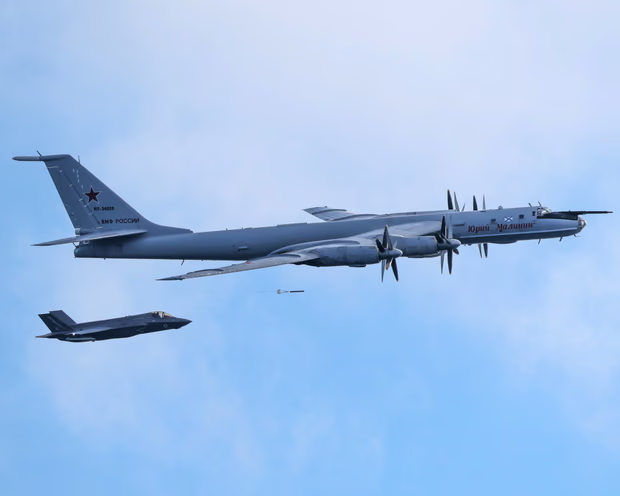
Prime Minister Keir Starmer prepares to attend a highly anticipated Nato summit this coming week. He will travel to Ankara while facing significant diplomatic pressure regarding national defence spending commitments. Washington officials have issued a stern rebuke concerning alliance members that currently lag behind targets. The American ambassador to Nato expressed clear dissatisfaction with the speed of current financial efforts. These remarks arrived shortly after the British government released its latest defence investment plan document. That official strategy announced fifteen billion pounds of additional funding for the armed forces sector. However, critics argue that the projected increase as a percentage of gross domestic product remains slow. Current projections suggest spending will climb from two point six percent in next year’s budget. It will then reach two point seven percent by the year twenty thirty under current plans. The government suggests an eventual trajectory towards three percent within the next parliamentary cycle ahead. Yet these figures stand in stark contrast to agreements made at last year’s historic summit. Members had previously pledged to reach three point five percent of GDP by twenty thirty-five. Furthermore, that broader agreement included a total target of five percent for defence-related security spending. Matt Whitaker, serving as the United States ambassador to Nato, voiced these concerns quite forcefully. He noted on Sunday night that certain alliance members are simply not moving fast enough. He specifically praised Poland and the Nordic nations for leading the way on these efforts. Conversely, he suggested that many other allies are failing to meet essential and urgent expectations. President Trump explicitly expects all allies to step up their financial contributions with immediate effect. The American administration desires a sustainable path toward the five percent target as soon possible. Prime Minister Starmer understands that Washington views the United Kingdom as one of the stragglers. There remains considerable uncertainty regarding future policy once the leadership transition officially takes place soon. Andy Burnham is widely expected to assume the role of prime minister later this month. This transition adds a layer of complexity to ongoing negotiations during this critical international gathering. Dan Jarvis, the new defence secretary, has already addressed these pressing concerns this past weekend. He recently assumed this senior position after his predecessor quit the role last month abruptly. Mr. Jarvis has now called on Mr. Burnham to increase defence spending quite dramatically later. He insists that the incoming leadership must evidence a clear trajectory toward the Nato target. Speaking ahead of the summit in Turkey, he outlined his vision for future financial reviews. He expressed a strong desire to see firm resource commitments in the next spending round. Mr. Jarvis remains keen to continue serving in his current role within the cabinet office. He has already initiated constructive dialogue with Mr. Burnham and his team regarding these priorities. He claims to have known the prospective prime minister for a very long time indeed. He maintains total confidence that Mr. Burnham will provide the necessary resources during challenges. The timing of this summit creates a complex backdrop for the United Kingdom on stage. Tensions have also risen following recent incidents involving British assets in the Norwegian Sea. The Ministry of Defence confirmed that Russian aircraft recently approached the HMS Prince of Wales. British F-35 fighter jets were scrambled to intercept the Russian plane during this event. The Russian craft reportedly flew at low altitude near the prestigious British aircraft carrier vessel. Officials stated that the maritime patrol aircraft repeatedly approached the carrier during the afternoon.
  The Russian plane allegedly dropped several sonar devices into the water near the ship. A formal statement from the Ministry of Defence described this activity as unsafe and unprofessional. Two British F-35 jets successfully escorted the Russian plane until it finally left the area. This confrontation highlights the increasing necessity for robust defensive capabilities in an unstable global climate. Prime Minister Starmer will find himself navigating these complex security challenges while in Ankara shortly. He must balance domestic economic constraints against the firm expectations of the American executive branch. Diplomatic observers suggest that the coming days will be pivotal for British foreign policy goals. The international community will watch closely to see how the United Kingdom justifies its position. Pressure remains high for the government to align with the ambitious targets set by allies. Whether the current administration can appease American demands remains a question for the coming summit. The stakes for British security and international reputation are undoubtedly high as the week begins. Future defence policy will likely depend on the tone set during these high-level discussions abroad. The world awaits a clear statement regarding the long-term commitment of the United Kingdom soon.
Related News:
 Shock US Raid: Maduro Pleads Not Guilty in Manhattan Court
 Trump Plans Venezuela Meeting, Warns of Cartel Land Strikes
 Mandelson apologises over Epstein ties after public scrutiny
 Rudd successor: Defence chief and former ministers considered
 US Senate rejects resolution limiting Trump military powers
 Trump Calls Greenland Critical for US Security After Denmark Talks
 Trump: Iran Killing Has Stopped, Strike Threats Pulled Back
 Machado Trump medal gesture reshapes Venezuela power struggle
 Trump Receives Machado’s Nobel Medal in White House Meeting
 Iran unrest slows under brutal crackdown and global tensions
 Trump Allies Pursue $200m European Gas Pipeline Deal
 US Considers Asylum for British Jews Amid Rising Antisemitism
 Starmer Challenges US Over Controversial Greenland Deal
 Spoof “Make America Go Away” Caps Rally Denmark Over Greenland
 Trump slams UK ‘stupidity’ over Chagos Islands, eyes Greenland takeover
 UK Presses On With Chagos Handover Despite Trump Criticism
 Shinzo Abe’s killer receives life sentence in Japan
 Starmer Resists Matching Trump Amid Greenland Tensions
 Netanyahu Accepts Trump’s ‘Board of Peace’ Invitation
 Russia Strikes Kyiv and Kharkiv as Peace Talks Enter Day Two
 Turnbull urges Albanese to confront Trump’s global ‘bully’ politics
 Snow Threatens Japan Election Turnout Amid Extreme Cold
 Crisis Looms as Liberals Debate Sussan Ley Future
 Cambridge Faces Scrutiny Over Arms Investment Transparency
 Files Link Andrew to Epstein Dinner After Prison Release
 Thousands Protest ICE Operations in Nationwide US Day of Action
 Epstein Files Reveal Trump Officials’ Emails with Financier
 Trump softens stance on Chagos Islands deal after Starmer call
 Epstein UAE Emails Shake British Royal Andrew’s Legacy
 Liberal Fallout: Taylor Challenge Casts Shadow Over Sussan Ley’s Leadership
 Ukraine, Russia Meet in Geneva Ahead of War Anniversary
 Brazilian Politician Brothers Sentenced for Marielle Murder
 Tommy Robinson Meets Trump Officials at US State Department
 New Zealand Covid Response Praised Despite Lingering Scars
 HMS Dragon to Head to Cyprus Amid Rising Tensions
 Starmer Praised for Stance on Trump and Iran Conflict
 Yvette Cooper: UK Must Follow Principles, Not US Pressure
 UK Ministers Signal Strategic Independence From Trump Demands
 Slovenia Election: A Nation at a Crossroads
 Florida Governor renames Palm Beach Airport for Donald Trump
 Labor Under Fire Over Stalled University Fee Reform
 Big Tech Faces Investigation Over Australia’s Social Media Ban
 Farage Shuns Truss as US Right-Wing Roadshow Hits London
 Starmer Urges Ambitious EU Ties Amid Middle East Conflict
 A Global Voice For Justice: Stephen Lewis Dies At Age 88
 Trump Mocks Starmer and UK Carriers in White House Speech
 Michigan Battleground: Middle East Crisis Stirs US Senate Race
 Reform UK Pledges To Halt Visas Over Reparations Demands
 Starmer visits Gulf as US and Iran agree ceasefire
 Trump Signals Hope for New Iran Talks as Ceasefire Fades
 GOP Senator Criticizes Trump’s Feud With Pope Leo XIV
 Global Oil Prices Surge Amid Renewed Gulf Tensions
 Faith and Power: Catholics React to Trump-Pope Feud
 Timor-Leste Faces Tough Questions Over Resort Proposal
 Security Scrutiny After Washington Shooting Incident
 Aukus Submarine Plan Faces Critical Failures
 UK Envoy Sparks Controversy Over Special Relationship Claims
 US Calls Australia Media Law “Foreign Extortion”
 USS Gerald R Ford Ends Record Naval Deployment
 Trump orders US troop pullout from Germany
 Global order shifts amid Trump-era turmoil
 Australia pushes Pacific security pact amid China tension
 Middle East Crisis Escalates as Oil Routes Shake Markets
 One Nation Candidate’s Surprising Ties to Independents
 Anika Wells Repays Over £5,000 in Travel Claims
 Tensions Emerge in Netanyahu-Trump Alliance
 Putin Declares Russia Victory at Scaled Victory Day Parade
 California Mayor Resigns Over Foreign Agent Charges
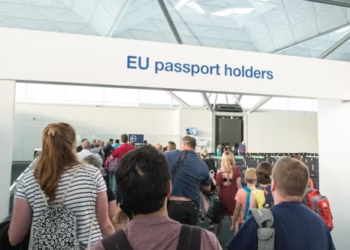 UK and EU Face Stalemate Over Youth Mobility Reset
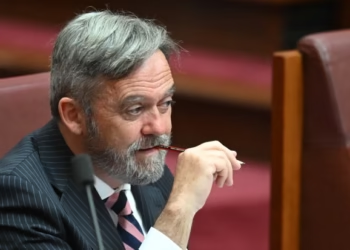 Liberal Senator Criticises Immigration Rhetoric
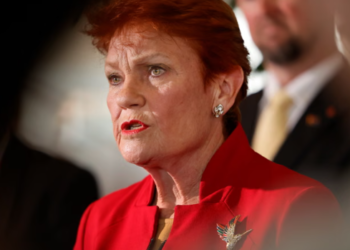 Hanson Stunner: Norway Model Sparking Energy Row
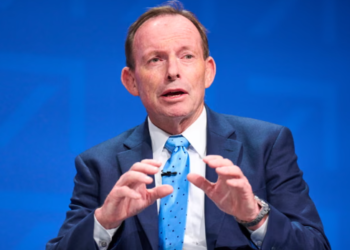 Tony Abbott Returns as New Liberal Party President
 Tony Abbott Returns as New Liberal Party President
 Tulsi Gabbard exits after turbulent intelligence tenure
 UK Urged to Build EU Rejoin Consensus, Says Miliband
 Zelenskyy warns over Oreshnik threat as Kyiv hit
 Discontent grows around Putin amid war strain
 Former ICC prosecutor condemns US sanctions
 Trump’s Iran Legacy Hangs on Tehran Deal
 Trump’s Mount Rushmore Speech: A Divisive Anniversary