Published: 6 July 2026 | The English Chronicle Desk | The English Chronicle Online
A young Venezuelan girl has captured the hearts of people around the world after surviving for 32 hours beneath the rubble of a collapsed building following a powerful earthquake, telling rescuers that she stayed alive by eating “ketchup and cheese” while desperately waiting to be found.
Her remarkable survival story has emerged as one of the few moments of hope amid the widespread devastation caused by the earthquake, which left scores of people dead, hundreds injured and thousands displaced across affected regions. Rescue workers described the girl’s recovery as nothing short of extraordinary, while medical professionals said her determination and calmness played an important role in helping her endure the prolonged ordeal.
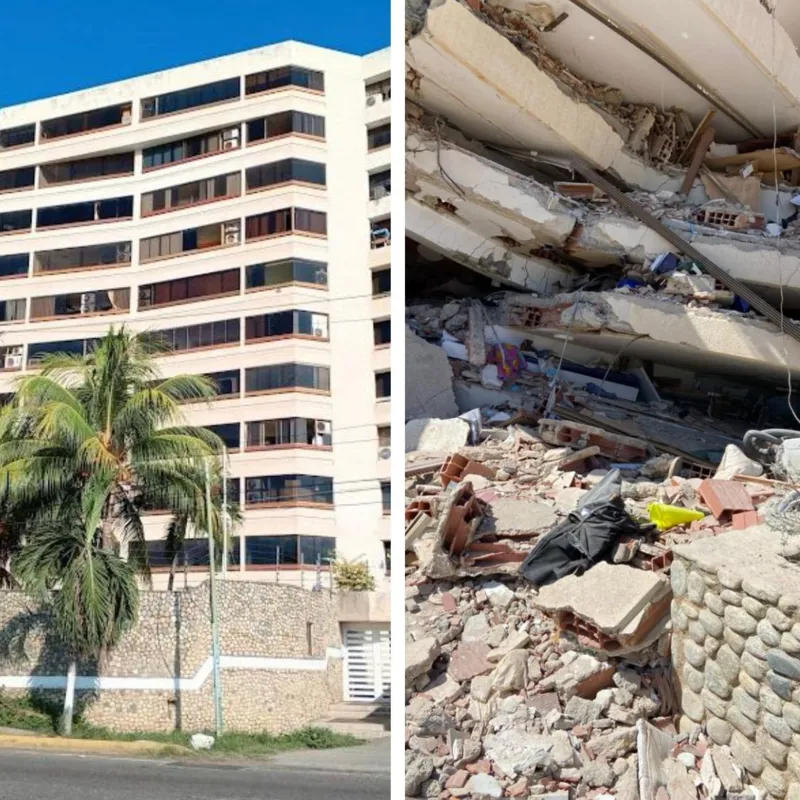
The powerful earthquake struck without warning, reducing homes, apartment blocks and public buildings to piles of concrete and twisted metal. The tremors sent residents rushing into the streets, while emergency services launched large-scale search-and-rescue operations almost immediately after the disaster.
In the hours that followed, rescue teams, firefighters, military personnel and volunteers worked around the clock to locate survivors trapped beneath collapsed structures. Heavy machinery was used where possible, but in many areas rescuers relied on hand tools and specialist equipment to avoid causing further collapses that could endanger those still alive beneath the debris.
It was during one of these painstaking rescue operations that emergency workers detected faint sounds coming from underneath a partially collapsed building.

Using listening devices and search cameras inserted through narrow gaps in the rubble, rescuers eventually confirmed that someone was still alive.
The trapped survivor turned out to be a young girl who had somehow survived more than a full day beneath the collapsed structure.
After carefully removing layers of broken concrete and debris over several hours, emergency crews finally reached her and brought her safely to the surface, where she was greeted with applause, tears and relief from rescuers and anxious family members.
Despite spending 32 hours trapped beneath the wreckage, the girl remained conscious and was able to speak with medical personnel almost immediately after being rescued.
When asked how she had managed to survive, she reportedly gave a simple but unforgettable answer.
“I ate ketchup and cheese,” she told those around her, explaining that the small amounts of food she found near her had helped keep her alive during the terrifying ordeal.
Her words quickly spread across social media and international news outlets, becoming a symbol of resilience and hope amid the tragedy.
Doctors who examined the girl said she was suffering from dehydration, exhaustion and minor injuries but had escaped the life-threatening crush injuries that often accompany prolonged entrapment beneath collapsed buildings.
Medical experts explained that surviving more than 30 hours under rubble depends on several critical factors, including the presence of air pockets, limited physical injuries, access to even small amounts of food or water and the ability to remain calm.
In this case, rescuers believe a narrow void created by fallen concrete slabs allowed enough oxygen to circulate, preventing suffocation.
Emergency physicians also noted that remaining relatively still likely helped conserve her energy until help arrived.
The earthquake has caused widespread destruction across several Venezuelan communities.
Government officials reported extensive structural damage to residential neighbourhoods, schools, hospitals and public infrastructure, while emergency shelters were established to accommodate families who lost their homes.
Search-and-rescue operations have continued as authorities work to locate those still believed to be trapped beneath collapsed buildings.
Heavy equipment has been deployed alongside specially trained rescue dogs capable of detecting human scent under layers of concrete.
International humanitarian organisations have also begun coordinating assistance, providing emergency medical supplies, temporary shelters, food, drinking water and sanitation support for affected communities.
Disaster response experts say the first 72 hours following a major earthquake are considered the most critical period for locating survivors.
Although survival chances decrease significantly with time, remarkable rescues have occasionally occurred many days after earthquakes, particularly where trapped individuals have access to air and minimal water.
The young girl’s rescue has provided renewed motivation for exhausted emergency workers continuing their search efforts.
Several rescuers admitted they had nearly lost hope before hearing her voice beneath the rubble.
One emergency responder described the moment as unforgettable.
“Everyone stopped working for a second when we realised someone was alive. That gave the entire team new energy.”
Psychologists note that stories of survival often become emotionally significant following natural disasters.
While they cannot erase the immense suffering experienced by affected communities, they provide hope for both rescue workers and families still waiting for news of missing loved ones.
For children in particular, surviving traumatic events often requires long-term emotional support in addition to physical recovery.
Mental health specialists warn that earthquake survivors frequently experience anxiety, nightmares and post-traumatic stress symptoms long after physical injuries have healed.
Authorities have therefore begun arranging psychological counselling services for children and families affected by the disaster.
Meanwhile, engineers have started assessing damaged buildings to determine which structures remain safe and which require demolition.
Urban planners say the earthquake once again highlights the importance of enforcing modern seismic construction standards, particularly in regions vulnerable to tectonic activity.
Although earthquakes cannot be prevented, properly designed buildings significantly improve survival rates during powerful ground shaking.
Experts believe investments in resilient infrastructure remain among the most effective ways of reducing future disaster-related casualties.
As recovery operations continue, communities across Venezuela have demonstrated remarkable solidarity.
Neighbours have joined volunteers in distributing food, clothing and essential supplies to displaced families, while local businesses and charitable organisations have organised fundraising campaigns to support ongoing relief efforts.
Religious institutions have also opened their doors to provide temporary accommodation and emotional support for those affected.
Government officials have pledged continued assistance as rebuilding begins, acknowledging that reconstruction will likely require months or even years depending on the extent of the damage.
For the rescued girl and her family, however, the immediate focus remains her recovery.
Doctors expect her condition to improve steadily following treatment, hydration and observation.
Her extraordinary account of surviving on little more than ketchup and cheese while waiting in darkness has become one of the defining human stories to emerge from the disaster.

In the midst of overwhelming loss and destruction, her rescue serves as a powerful reminder of human resilience, the dedication of emergency responders and the enduring hope that continues to drive search teams long after disaster strikes.
As Venezuela begins the difficult process of rebuilding shattered communities, the young survivor’s story has become a symbol of courage against extraordinary odds—proof that even in the darkest circumstances, determination, compassion and tireless rescue efforts can still produce moments of remarkable hope.
Related News:
 Horror in the Outback as Crocodile Kills World-Renowned Doctor
 Pope Meets Families in Italy Toxic Waste Zone
 Everest Climber Recalls Guide’s Six-Day Survival
 Costa Blanca Holiday Horror as Food Poisoning Outbreak Hits Four-Star Hotel
 Snow and Rain Warnings as Cold Snap Continues in the UK
 Epstein Eyed Record Label Investment to Access Women, Files Suggest
 ‘A Disgrace’ — Patient Blasts Neurology Report
 ‘We Pray for Peace’: Indian Filmmaker From Troubled State Who Won a BAFTA
 Drugs, Denial, Stigma: Fiji’s HIV Crisis Hits Children
 ‘I Wanted to Save Her Life’ — The Moment Twin Sisters Learned They Were Identical
 ‘I Almost Died After a Touch‑and‑Go C‑Section’
 ‘It’s Joy in a Pot’: Why Houseplants Could Make You Happier
 ‘Every Day Feels Like a Month’: Iranians Describe Life Under ‘Constant’ US‑Israeli Strikes
 Woman, 29, ‘Chucked’ Into Care Home 100 Miles Away
 Tears and Cheers as Controversial Long‑Running Australian Breakfast Radio Show Implodes
 My One-Hour Flight Transfer Left Me Facing 10 Days Stuck in a City Under Attack
 Father Dies by Suicide Weeks After Wedding in Clitheroe
 SNP Health Secretary Criticised Over NHS Failures Locally
 Missing Cuba-Bound Aid Ships Spark Urgent Search
 The High Cost of Survival: How the 2026 Fiscal Outlook is Redefining British Life
 Safety Fears at New £200m Maternity Unit: Mums-to-Be ‘Put at Risk’
Fuel Famine: How African Nations are Rationing Power and ‘Diluting’ Petrol to Survive
Safety Fears at New £200m Maternity Unit: Mums-to-Be ‘Put at Risk’
Fuel Famine: How African Nations are Rationing Power and ‘Diluting’ Petrol to Survive
 ‘My Daughter is Under the Rubble’: The Human Cost of the Tehran Strikes
 ‘I’m So Ready’: Céline Dion Announces 10-Night Paris Comeback Residency
 ‘The Final Word’: Kathleen Stock’s Polemic Against Assisted Dying Reshapes the UK Debate
 ‘The Cost of Living’: Asia’s Migrant Workers Debate if Gulf Jobs are Worth the Risk of War
 7.4-Magnitude Earthquake Jolts Eastern Indonesia; Tsunami Warning Lifted
 Pope Leo Urges Peace in First Easter Mass Address
 Bangladesh Launches Emergency Vaccine Drive After 100 Child Deaths
 ‘I Will Not Abandon Him’: Pauline Hanson Stands by Ben Roberts-Smith After War Crime Charges
 ‘The Soul of Spain’: Politicians Clash Over Renewed Push to Move Picasso’s Guernica
 The Suffocating Silhouette: Why Metal’s Mask Trend is Turning Deadly
 Debt Relief or Drop in the Ocean? UK Caps Student Loan Interest at 6%
 The Fallen Icon: Ben Roberts-Smith Charged with Five War-Crime Murders
 The $100 Billion Peace: Trump’s ‘Grand Bargain’ Ends Iran Conflict at a Staggering Cost
 ‘The Best Decision I Ever Made’: A Mother’s Viral Plea After a Near-Miss with Lung Disease
 The Miracle of Phoenix: ‘Half Dead’ Rescue Dog Defies the Odds in Worcestershire
 The Hidden Hurdle: Breaking the Silence on Athletic Incontinence
 Moldova River Crisis Exposes War’s Hidden Cost
 Relief at the Pump: Irish PM Unveils €505m Package to Stem Fuel Crisis
 Toxic Trail: Dog Owners Warned Over ‘Vile’ Poisoned Meat Found in Parks
 Turning Point: Britney Spears Enters Rehabilitation Following DUI Incident
 The Spectrum of Wit: All-Autistic Comedy Line-up Breaks ‘Seismic’ Ground
 The Waiting Ward: ‘Month of Worry’ as Doctor Strikes Trigger Seismic Surgery Delays
 Rights and Respect: Nurse Wins Legal Settlement Over Transgender Pronoun Dispute
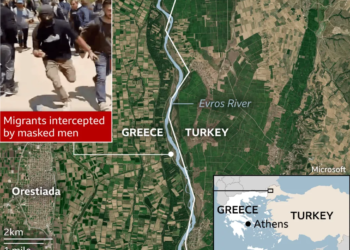 The Masked Frontier: Allegations of Greek Police Using Proxies for ‘Seismic’ Border Pushbacks
 Legacy of the Future: Prince Harry Argues Children Should Be an ‘Upgrade’ of Parents
 “I was fighting two wars”: Ukraine soldiers’ addiction crisis
 Canadian astronaut French words ease language row
 The ‘War Tax’: How the Iran Conflict is Siphoning Your Bank Account
 The ‘Machli’ Manifesto: Why Indian Politicians are Trading Rallies for Fish Markets
 ‘Words Are Not Enough’: Quinton Byfield Urges Concrete Action as Hockey Faces New Racism Row
 The £36 Billion Reckoning: BHP Faces Quantum Trial After High Court Liability Landmark
 “Three-Wheeled Triumph”: Mayor of Erewash Completes 2,000-Mile European Charity Run
 The “Cancer Commute”: Patient Warns of Breaking Point Over 40-Mile Treatment Trek
 Ukraine Urges UK to Seize Russian Oil Tankers
 Two Dead in Adelaide Airport Plane Crash Fire
 The “Charles Charm” Offensive: Did the Royals Find Their Mojo in D.C.?
 Tragedy in the Red Centre: Outback Search Ends in Discovery of Missing Girl’s Body
 “Invisible Agony”: 98-Year-Old Woman Left in “Severe Pain” for Days Amidst Care Backlog
 The “Time Tax” of Memory: Why Dementia Care is the Ultimate Test of UK Resilience
 China Fireworks Factory Blast Kills 21 in Hunan
 US Court Restores Abortion Pill Access Temporarily
 “The Trial’s Strange Turn”: Musk v. Altman Case Veers into Personal Testimony and ‘Sperm Offers’
 “The Swap Shop”: Dr Chris van Tulleken Backs Southampton Teens’ Fight Against ‘The Matrix’ of Ultra-Processed Food
 The Pathogen Protocol”: Third British National Monitored for ‘Nasty’ Suspected Hantavirus
 Florida Surgeon ‘Devastated’ Over Fatal Surgery Error
 Crisis in the Canary Islands as Cruise Ship Evacuated
 “The Invisible Shadow”: Fear Grips Eastern DR Congo as Deadly Bundibugyo Ebola Strain Spreads
 “The Critical Intervention”: Essential Steps for Identifying and Treating Heat-Related Emergencies
 “The Invisible Threat”: Understanding UV Indices and Building Your Personal Defense Strategy
“The Price Persistence”: Navigating the UK’s Evolving Cost-of-Living Landscape
“The Invisible Threat”: Understanding UV Indices and Building Your Personal Defense Strategy
“The Price Persistence”: Navigating the UK’s Evolving Cost-of-Living Landscape
 Farage and Reform UK Reshape British Politics
 Emergency Caesareans Rise Across England
 Family Says Heatwave Drownings Reopen Grief
 Fans Bring Flags and Fire to World Cup Scenes
 Fans Invited to Share Scotland World Cup Stories
 Spain Tourism Surges as Travellers Avoid Middle East
 “My Drinking Days Are Over” — How to Enjoy an Alcohol-Free World Cup
 Spain Sees Tourism Boom as Travellers Shift Away From Middle East