Published: 21 May 2026. The English Chronicle Desk. The English Chronicle Online.
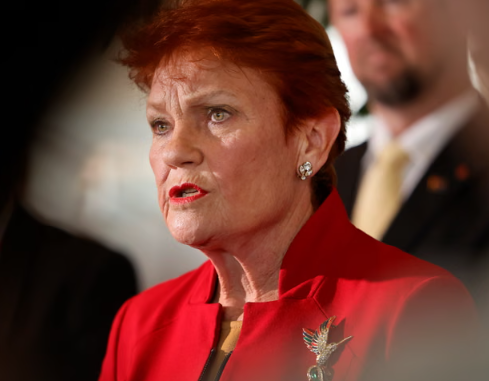
The political world is facing a dramatic shakeup today over natural resources and taxation. Pauline Hanson has ignited a massive debate by unveiling a bold new energy strategy. The One Nation leader chose a high-profile gas industry conference to launch her plan. Speaking in Adelaide on Thursday, she shocked many delegates with her interventionist policy proposals. Her target is the contentious offshore gas profits tax currently used across the nation. Hanson vowed to replace this existing petroleum resource rent tax with a fresh model. Her alternative strategy is heavily inspired by the resource management system used in Norway.
Under this plan, the commonwealth would acquire substantial equity stakes in new gas ventures. Taxpayers would secure a thirty percent ownership share in upcoming offshore exploration projects. In return, the government would offer a thirty percent rebate on initial exploration costs. This radical co-ownership structure aims to extract vastly greater returns for ordinary citizens. Hanson told industry executives that public unrest is building over current resource returns. She noted that people are rightly unhappy with the revenue flowing back to communities. However, her specific remedy has immediately split opinion across the entire political spectrum.
The proposal has drawn a mix of heavy criticism and deep cynicism tonight. Federal government officials, industry leaders, and opposition politicians have all raised serious doubts. The Coalition led the political charge by launching a fierce rhetorical attack on Thursday. One Nation was openly accused of importing radical economic ideas from unstable socialist regimes. Liberal frontbencher James Paterson voiced deep scepticism about state-owned oil and gas corporate entities. He remarked to reporters that this specific policy feels borrowed directly from Hugo Chávez. Paterson stated that nationalising the domestic oil and gas industry is definitely not the answer.
He acknowledged that citizens understandably want a better financial return on their natural resources. He agreed that debating the complex details of tax policy remains a reasonable pursuit. Yet, the concept of direct state ownership represents a step too far for critics. Hanson was quick to deny that her scheme amounts to a socialist takeover. She insisted the proposed investment body would have no role in day-to-day operations. The politician claimed that private briefings with industry had yielded no initial negative pushback. She also confirmed that prominent mining billionaire Gina Rinehart had not been consulted beforehand.
The long-term financial risks of the policy are already drawing intense scrutiny from analysts. Taxpayers would gain a share of profits but would face massive investment liabilities. This exposure could easily last for decades under the proposed lifetime co-ownership rules. The government investment would start at exploration and continue until final project decommissioning. Experts point out that moving from exploration to actual production takes over ten years. Consequently, regular taxpayers would not see any immediate financial return on their money. This lengthy timeline makes the strategy a highly speculative gamble for any government.
The political timing of this policy announcement is particularly significant for local commentators. One Nation currently holds just two lower house seats in the federal parliament. Despite this small legislative footprint, the party has been surging lately in opinion polls. This recent rise in popularity means all their policies now receive intense national scrutiny. Hanson used her platform to reject a competing plan for a heavy export levy. Activists have been campaigning to replace the current tax with a fixed export tax. They want a twenty-five percent levy slapped on all offshore resource shipments abroad.
Hanson boldly labelled that specific twenty-five percent export tax proposal as pure economic vandalism. She took this hardline stance despite polls showing her own base supports the levy. Instead, she wants to abolish the resource rent tax, which she called a failure. Her preferred mechanism involves introducing a traditional royalty regime for all new developments. The profits generated from state equity would then be stashed in a sovereign fund. This wealth fund idea directly mirrors the famous economic strategy used by Norway today. Whether such a sophisticated system can work outside Europe remains a matter of debate.
The main industry group at the Adelaide event offered a careful, diplomatic reaction. Australian Energy Producers welcomed the general support expressed by Hanson for their vital sector. However, the peak body strongly defended the current amount of tax its members contribute. Chief executive Samantha McCulloch stated the existing tax system is working exactly as intended. She noted that the recent federal budget confirmed revenues rise alongside international prices. The industry argues that companies are already paying their fair share under current laws. They believe changing the rules mid-stream could damage future international investment confidence.
Other major mining representatives were far more direct in their opposition to equity stakes. The Minerals Council of Australia represents the wider, multi-billion-dollar resource sector across the country. Chief executive Tania Constable argued that state equity does not work in mature industries. She suggested that government stakes are only useful for fledgling, brand-new commercial sectors. Forcing state ownership on an established, mature market is seen as a mistake. Resources minister Madeleine King echoed this specific point during her own press conference today. King stated clearly that the ideal moment for state investment passed decades ago.
The minister argued that the country cannot simply go backward in its economic approach. She also suggested that many citizens would object to the state funding fossil fuels. Many people believe governments should not invest public money into carbon-heavy gas projects now. Capital for these massive developments should instead be brought to bear by private markets. Meanwhile, opposition leader Angus Taylor used his conference address to push a different path. Taylor renewed his public commitment to completely abandon the national net zero target. He also promised to scrap the safeguard mechanism to promote more drilling instead.
The opposition leader urged the oil and gas sector to achieve true energy abundance. Taylor strongly encouraged industry executives to start making lots of noise in public debates. He wants companies to fight their detractors openly by using modern campaign tools. He specifically highlighted social media as a key battleground for changing public opinion today. The Coalition remains completely opposed to the twenty-five percent resource export tax idea too. They want private enterprises to lead the charge without government interference or nationalisation. This leaves One Nation standing in a unique and controversial middle ground tonight.
The debate highlights a growing global tension over resource wealth and climate responsibilities. Countries everywhere are struggling to balance taxpayer returns with private investment incentives. Hanson has tapped into genuine public frustration over rising domestic energy costs and corporate profits. Her choice of a Norway-style model shows a desire for sophisticated economic nationalism. Yet, the practical challenges of implementation in a mature market remain truly immense. With opinion polls shifting, this energy policy row is set to intensify further. The fight over who owns natural resources will shape the political landscape for years.
Related News:
 Shock US Raid: Maduro Pleads Not Guilty in Manhattan Court
 Trump Plans Venezuela Meeting, Warns of Cartel Land Strikes
 Mandelson apologises over Epstein ties after public scrutiny
 Rudd successor: Defence chief and former ministers considered
 US Senate rejects resolution limiting Trump military powers
 Trump Calls Greenland Critical for US Security After Denmark Talks
 Trump: Iran Killing Has Stopped, Strike Threats Pulled Back
 Machado Trump medal gesture reshapes Venezuela power struggle
 Trump Receives Machado’s Nobel Medal in White House Meeting
 Iran unrest slows under brutal crackdown and global tensions
 Trump Allies Pursue $200m European Gas Pipeline Deal
 US Considers Asylum for British Jews Amid Rising Antisemitism
 Starmer Challenges US Over Controversial Greenland Deal
 Spoof “Make America Go Away” Caps Rally Denmark Over Greenland
 Trump slams UK ‘stupidity’ over Chagos Islands, eyes Greenland takeover
 UK Presses On With Chagos Handover Despite Trump Criticism
 Kim Jong-un Fires Vice-Premier Over Factory Failures
 Shinzo Abe’s killer receives life sentence in Japan
 Starmer Resists Matching Trump Amid Greenland Tensions
 Netanyahu Accepts Trump’s ‘Board of Peace’ Invitation
 Russia Strikes Kyiv and Kharkiv as Peace Talks Enter Day Two
 Canada Rules Out Free Trade Deal With China Amid US Tensions
 Turnbull urges Albanese to confront Trump’s global ‘bully’ politics
 Snow Threatens Japan Election Turnout Amid Extreme Cold
 Keir Starmer meets Xi to strengthen UK-China economic relations
 Crisis Looms as Liberals Debate Sussan Ley Future
 Cambridge Faces Scrutiny Over Arms Investment Transparency
 Files Link Andrew to Epstein Dinner After Prison Release
 Thousands Protest ICE Operations in Nationwide US Day of Action
 Epstein Files Reveal Trump Officials’ Emails with Financier
 Thousands Protest ICE in New York Against Trump Deportation Campaign
 Trump-Petro Meeting Sparks Hopes of Diplomatic Detente
 Trump softens stance on Chagos Islands deal after Starmer call
 Epstein UAE Emails Shake British Royal Andrew’s Legacy
 Liberal Fallout: Taylor Challenge Casts Shadow Over Sussan Ley’s Leadership
 Ukraine, Russia Meet in Geneva Ahead of War Anniversary
 Brazilian Politician Brothers Sentenced for Marielle Murder
 Jimmy Lai Freed From Fraud Conviction in Rare Hong Kong Court Victory
 Tommy Robinson Meets Trump Officials at US State Department
 New Zealand Covid Response Praised Despite Lingering Scars
 HMS Dragon to Head to Cyprus Amid Rising Tensions
 Starmer Praised for Stance on Trump and Iran Conflict
 Yvette Cooper: UK Must Follow Principles, Not US Pressure
 UK Ministers Signal Strategic Independence From Trump Demands
 Slovenia Election: A Nation at a Crossroads
 Florida Governor renames Palm Beach Airport for Donald Trump
 Labor Under Fire Over Stalled University Fee Reform
 Big Tech Faces Investigation Over Australia’s Social Media Ban
 Farage Shuns Truss as US Right-Wing Roadshow Hits London
 Starmer Urges Ambitious EU Ties Amid Middle East Conflict
 A Global Voice For Justice: Stephen Lewis Dies At Age 88
 Trump Mocks Starmer and UK Carriers in White House Speech
 Michigan Battleground: Middle East Crisis Stirs US Senate Race
 Final Countdown as Trump Deadline Looms Over Tehran
 Reform UK Pledges To Halt Visas Over Reparations Demands
 Starmer visits Gulf as US and Iran agree ceasefire
 Trump Signals Hope for New Iran Talks as Ceasefire Fades
 GOP Senator Criticizes Trump’s Feud With Pope Leo XIV
 Global Oil Prices Surge Amid Renewed Gulf Tensions
 Faith and Power: Catholics React to Trump-Pope Feud
 Timor-Leste Faces Tough Questions Over Resort Proposal
 Investigation Into Anti-Trump Motives After Gala Shooting
 Security Scrutiny After Washington Shooting Incident
 Aukus Submarine Plan Faces Critical Failures
 UK Envoy Sparks Controversy Over Special Relationship Claims
 US Calls Australia Media Law “Foreign Extortion”
 USS Gerald R Ford Ends Record Naval Deployment
 Oil Prices Surge Above $120 Amid Iran Blockade Fears
 Trump orders US troop pullout from Germany
 Global order shifts amid Trump-era turmoil
 Australia pushes Pacific security pact amid China tension
 Indiana Republicans Defy Trump in Key Vote Test
 Middle East Crisis Escalates as Oil Routes Shake Markets
 One Nation Candidate’s Surprising Ties to Independents
 Anika Wells Repays Over £5,000 in Travel Claims
 Tensions Emerge in Netanyahu-Trump Alliance
 Putin Declares Russia Victory at Scaled Victory Day Parade
 California Mayor Resigns Over Foreign Agent Charges
 UK and EU Face Stalemate Over Youth Mobility Reset
 Liberal Senator Criticises Immigration Rhetoric