
Published: 12 May 2026. The English Chronicle Desk. The English Chronicle Online.
The political landscape of Westminster shifted dramatically today as Miatta Fahnbulleh resigned from the government. Her sudden departure marks the first ministerial exit during this period of significant internal party turmoil. Fahnbulleh held the position of communities minister and was seen as a rising star within Labour. She has now publicly called for Prime Minister Keir Starmer to step down from his post. This move follows a series of disappointing local election results across England, Wales and also Scotland. The Peckham MP noted that the public has lost confidence in the current leadership of the party. She believes an orderly transition is now the only way to save the Labour government. This resignation has intensified the scrutiny on Starmer as he faces a growing backbench rebellion today. More than seventy Labour members of parliament have now called for his immediate resignation this week.
The Prime Minister remains defiant despite the high volume of voices calling for a fresh start. Darren Jones, a close ally of the leader, spoke to the media earlier this morning. He confirmed that Starmer is listening to the concerns raised by his many parliamentary colleagues. However, Jones refused to confirm if Starmer will lead the party into the next election. He reminded critics that being the prime minister is an incredibly gruelling and difficult task. Jones suggested that some people think a new leader would solve every problem overnight. He compared this perspective to waiting for a messiah rather than facing complex political realities. The Chief Secretary to the Treasury urged the party to maintain focus on their policies. He noted that the rise of five-party politics makes the current environment very challenging indeed. Starmer is expected to meet with his cabinet later today to discuss the ongoing crisis.
The atmosphere within the cabinet is reportedly divided as senior ministers weigh the best path forward. A group of high profile ministers met with the Prime Minister on Monday evening to talk. This group included figures like Yvette Cooper, Shabana Mahmood, John Healey and also David Lammy. Some of these senior figures suggested that an orderly transition of power might be necessary. They fear that the recent election defeats could signal the end of this current premiership. Other ministers like Richard Hermer and Steve Reed have urged the Prime Minister to stay. They believe that fighting through the crisis is better than surrendering to the internal pressure. The deputy prime minister has participated in these delicate discussions about the future of the party. The goal for many is to find a responsible and dignified way to handle matters. This internal debate is happening while the country faces significant economic and also social challenges.
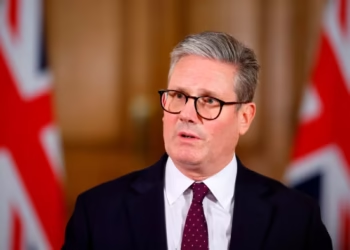
In a speech delivered yesterday, Starmer made his intentions clear to the public and the party. He stated that he will not resign and intends to prove his many doubters wrong. The Prime Minister vowed to fight any leadership challenge that might emerge in the coming days. He argued that walking away now would plunge the United Kingdom into a state of chaos. Starmer reminded the audience of the instability seen under previous Conservative governments during their long tenure. He believes that the Labour party would never be forgiven for causing such deep national instability. The Prime Minister is focused on the King’s Speech which is scheduled for Wednesday this week. He insists that the government must get on with the job of delivering essential legislation. His supporters claim that the country needs stability during this period of global security crisis. They argue that unity is the greatest strength the Labour party currently possesses right now.
The reaction from the wider Labour party has been a mixture of anger and deep concern. Some members of parliament have expressed their horror at the current attempts to oust the leader. Neil Coyle criticized colleagues for falling into what he described as a dangerous elephant trap today. He argued that the local elections were not solely a referendum on Starmer’s personal leadership style. Another supporter, Nick Smith, emphasized that the economic impact of global events requires steady political hands. However, the sheer number of critics suggests that the Prime Minister faces an uphill battle ahead. Miatta Fahnbulleh’s close ties to Ed Miliband suggest that the unrest reaches deep into the party. Her resignation letter emphasized that the message on the doorsteps was clear and very negative. Voters expressed a lack of trust that the MP believes cannot be easily repaired now. This sentiment is shared by many who feel the party needs a brand new direction.
The next twenty four hours will be critical for the survival of the Starmer administration tonight. The cabinet meeting scheduled for this morning will likely be a very tense and difficult affair. Ministers will have to decide if they continue to support a leader facing such opposition. The upcoming King’s Speech is intended to showcase the legislative priorities of the current Labour government. If the Prime Minister cannot command the support of his MPs, that speech may be overshadowed. The rise of populist parties in the United Kingdom has added a new layer of pressure. Labour must find a way to appeal to a fragmented and often disillusioned British electorate. The eyes of the nation are now firmly fixed on Downing Street and the parliament. Everyone is waiting to see if more ministers follow Fahnbulleh out of the government door. The future of the British government hangs in a very delicate and uncertain balance today.
Starmer has always been known for his resilience and his ability to manage difficult political situations. He survived previous internal battles and managed to bring the party back to power last year. However, the current scale of the rebellion is unlike anything he has faced as Prime Minister. The loss of seventy MPs is a significant blow to his authority in the Commons. Many of these critics are not just backbenchers but people with significant influence in local areas. The Prime Minister’s team is working hard to shore up support among the remaining loyalist MPs. They are highlighting the risks of a leadership contest during a period of international economic uncertainty. They believe that the public wants a government that is focused on delivery and results. Whether the public still believes Starmer can deliver those results is the most vital question. The answer to that question will determine the fate of his premiership and the party.
As the sun sets over Westminster, the whispers of potential successors are starting to grow much louder. Names of cabinet members who were once seen as loyalists are now being discussed in hallways. The political drama is unfolding at a time when the British public is feeling the squeeze. Cost of living concerns and public service pressures remain at the forefront of the national mind. Voters are looking for leadership that can provide clear solutions to these very pressing everyday problems. The Prime Minister maintains that his programme of bills will address these challenges in due course. He asks for more time to prove that his vision for the country is correct. His opponents argue that time has already run out and a change is strictly necessary. The English Chronicle will continue to provide updates as this fast moving story develops further. For now, the government remains in a state of high alert and deep political anxiety.
Related News:
 Reeves Faces Setback as Labour May Miss Homes Target
 Kate Winslet to Narrate Film Highlighting King’s Environmental Mission
 Trump’s UK Ambassador Urges North Sea Drilling to Strengthen US Ties
 UK Bans Fake Numbers: Scammers Lose Their Trick
 M&S Profits More Than Halve After Cyber-Attack
 Patients to Test Health at Home to Ease NHS Winter Pressure
 Millionaires group urge Reeves to introduce wealth tax to ‘lift kids out of poverty’
 Reeves rejects £1bn plea for NHS redundancy payouts
 Northern Lights may illuminate UK skies this week
 PM Condemns Leaks, Vows Loyalty to Ministers and Stability
 Major Rent Reform Ends No-Fault Evictions in England
 Stroke Patient Mistaken for Drunk, Care Delayed
 Inside the Helpline Protecting Missing Children in the UK
 Boots Showstopper Beauty Bundle Outshines Many Advent Calendars This Holiday Season
 PlayStation PS5 Deals Hit Lowest Prices Ahead of Black Friday
 Five-Year-Old Dies After Rare Tonsil Surgery Complication
 Starmer Says Labour’s Economic Plan Needs Years to Deliver
 UK unemployment rises to four-year high of 5.1% before budget
 Wiltshire Police Use Lasso to Catch Rampaging Village Goat
 Coasting Drinks: The Trend Redefining Alcohol Enjoyment This New Year
 Rising Hate Crimes Threaten Safety on UK Public Transport
 Starmer Faces Parliamentary Battles Over UK-EU ‘Reset’ Plan
 Met Police Vetting Failures Let Serial Rapists Remain
 Google Employee Claims Redundancy After Harassment Report
 Fatal Bolton Taxi Crash Claims Three Teens and Driver
 ScottishPower Tops List of Worst UK Energy Suppliers
 Judi Dench Champions Fight to Save London’s Green Spaces
 Crowborough Camp Welcomes First Asylum Seekers
 BBC Funding Crisis: Tim Davie Warns of Jeopardy Ahead
 Artificial intelligence will cost jobs, admits Liz Kendall
 Older Women Vanish from BBC Screens, Review Confirms Bias
 Streeting moves on doctor pay to end strike dispute
 Send spending gap leaves deprived areas behind
 Hidden Crisis: Domestic Abuse Suicide Toll in UK
 UK Unemployment Rate Climbs to 5.2% Peak
 BBC World Cup Presenting Duties Shared Among Trio
 Wales Approves Assisted Dying Bill Consent
 CPS Updates Guidance on Honour-Based and Dowry Abuse
 Asylum Seekers to Work After Year-Long Wait
 Inquiry into HMRC child benefit errors launched by NAO
 Rising Costs Force Families to Rethink Days Out
 Scott Mills Sacked by BBC Over Personal Conduct Claims
 Palantir Boss Defends NHS Deal Amid Government Break Clause
 Relationship with Trump may be beyond repair, Starmer warned
 UK Government Poised to Revive Stalled Hillsborough Law
 UK Staycations Rise as Travel Fears Grow
 Home Office Faces Legal Risks Over Asylum Hotel Living
 Official Admits Debate Over Mandelson Vetting Records
 Crisis in NHS Surgery Scheduling Hits Patients Hard
 Welsh Labour Faces Potential Historic Election Defeat
 Blue Badge Abuse: The Rising Tide of Public Hostility
 UK Faces Future Where Deaths Outnumber Births Yearly
 Scott Parker Leaves Burnley After Premier League Drop
 Silent Tracks: Rail Line Without Passengers
 RFU Backs Borthwick Despite England’s Poor Six Nations
 Major test for Labour as polls open in Great Britain
 Starmer Strikes Back as 100 MPs Sign Support Pledge
 UK Firms Freeze Spending as Iran Conflict Bites
 Rugby Legend Scott Hastings Dies Aged 61
 Reeves to Fast-Track Clean Energy Amid Iran Crisis
 The Battle for Wembley Sparking Unprecedented Legal Warfare
 Record Spending Highlights Growing Crisis In National Health Service
 Secret Role of UK Security Services in Troubles Amnesty Law
 Tube Strike Brings Capital to a Standstill Over Shift Disputes
 BP Stands Firm on Amanda Blanc Amid Boardroom Storm
 Teaching Machines Right From Wrong in the Digital Age
 UK House Prices Drop For Third Month Due To War Fears
 The Hidden Crisis Eroding Trust in British Communities
 Deepfake Abuse on X Sparks Safety Concerns for Dissidents
 Stolen Mobiles Could Soon Become Useless Bricks
 Clean Air Initiatives Spark Major Fall in London Hospital Admissions
 United Kingdom Politics Worse Now Than Before Brexit, Warns MP
 Russian Tanker Captain Remanded in UK Court After Channel Seizure
 Shocking Zoo Incident Sparks Attempted Murder Probe
 The Hybrid School Revolution Defying the Social Media Ban
 UK Care Crisis: Row Explodes Over New Visa Settlement Rules
 Sainsbury’s Boss Optimistic As Grocery Inflation Eases
 US Airman Avoids British Court in Indecent Exposure Case
 Ann Widdecombe, Formidable Political Figure, Dies at 78
 UK Schools Struggle as Classrooms Top 40C