Published: 04 July 2026. The English Chronicle Desk. The English Chronicle Online
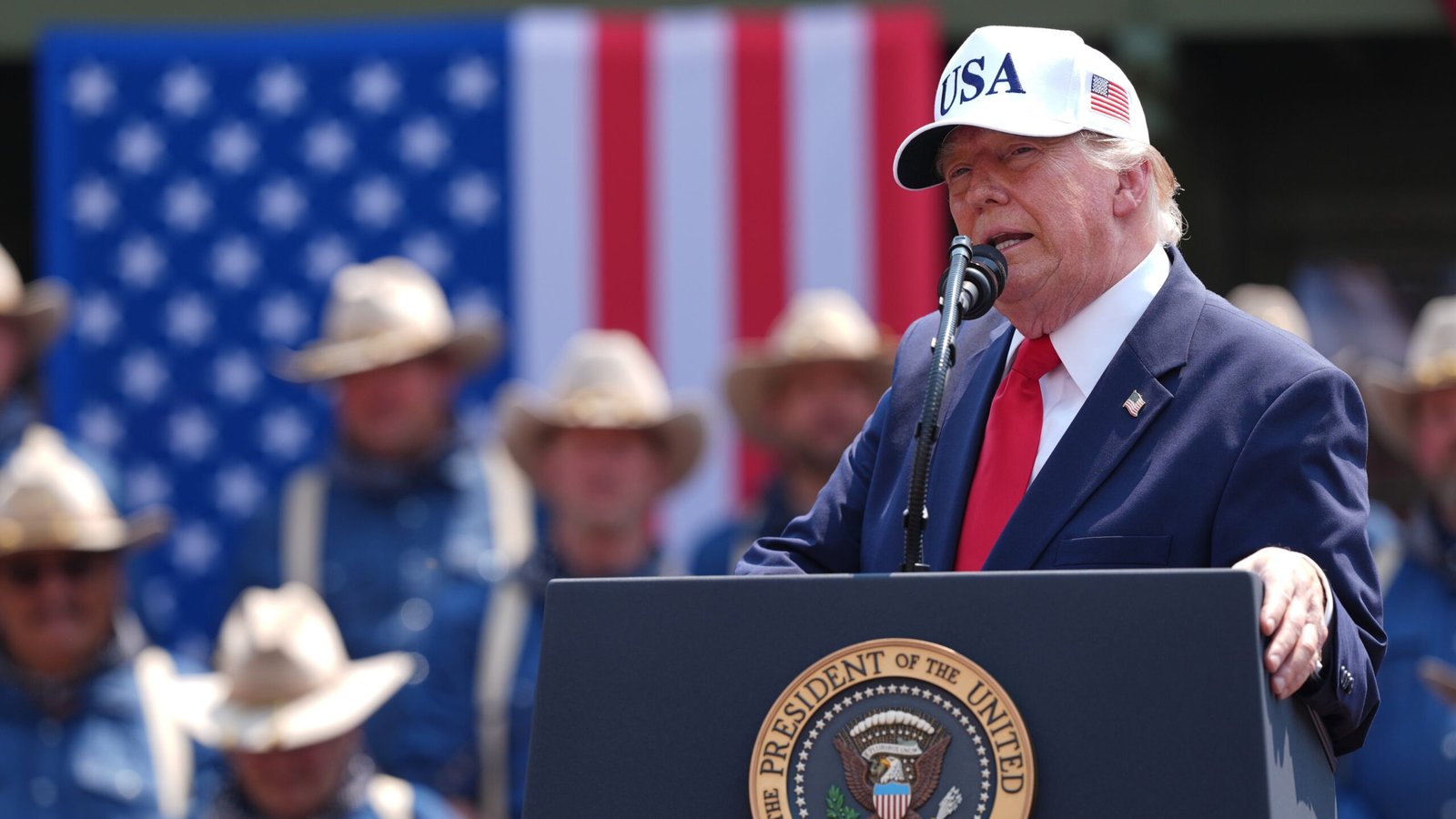
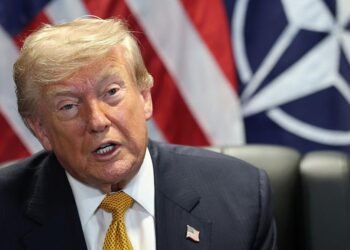
The United States has embarked upon the monumental celebration of its 250th birthday, a milestone intended to reflect upon two and a half centuries of independence, democratic evolution, and national identity. However, the commencement of this historic weekend was marked not by a unified message of patriotic solidarity, but by a striking display of political polarization. President Donald Trump, speaking at the iconic Mount Rushmore National Memorial in South Dakota on Friday evening, utilized the grand stage to deliver an aggressively partisan address. In a speech that diverged sharply from the traditional expectations of a head of state seeking to bridge national divides, the President framed the contemporary American landscape as a battleground against a rising communist menace, positioning his political opponents as fundamental enemies of the ideals established in 1776.

The setting itself—a granite monument carved into the Black Hills featuring the visages of George Washington, Thomas Jefferson, Theodore Roosevelt, and Abraham Lincoln—was designed to evoke the gravitas of American history. Before an overwhelmingly white crowd that echoed with chants of “USA! USA!” and the roaring flyover of F-16 jets, President Trump offered a tribute to these four figures. He characterized them as men of action, ambition, and destiny, whose leadership forged the core of the American spirit. Yet, this historical reverence was quickly pivoted into a modern-day call to arms. President Trump, who has frequently mused on the prospect of his own likeness joining the ranks on the mountainside, argued that American exceptionalism is currently under a state of renewed attack. He asserted that this threat is not merely external but permeates the domestic fabric, targeting the very identity of the nation.
The timing of the President’s address, occurring merely four months prior to the pivotal November midterm congressional elections, underscored the strategic nature of his rhetoric. By casting progressive Democrats as communists, President Trump sought to solidify his base and define the stakes of the upcoming political contest in existential terms. This narrative arrived only hours after New York Mayor Zohran Mamdani, a prominent democratic socialist, offered a starkly different vision for the nation, one rooted in inclusivity and pro-immigrant policies. The rise of progressive candidates in various Democratic primaries across the country appears to have intensified the President’s focus on branding his opposition as antithetical to American values. He warned that this resurgence of communism is being fueled by newcomers to the country, thereby weaving his anti-communist rhetoric directly into the anti-immigrant platform that has defined much of his political career.
Throughout the speech, the President employed severe, uncompromising language, describing communism as a threat greater than the world wars or the terrorist attacks of September 11, 2001. He presented a binary choice to the American public, insisting that loyalty to Karl Marx and loyalty to the United States were fundamentally incompatible. For President Trump, the spirit of July 4, 1776, is currently being slandered by those he claims are peddling Marxist lies about the American heritage. He specifically rebuked narratives that highlight the flaws of historical figures, such as the fact that Washington and Jefferson were slaveholders, framing such historical inquiry as an attack on the future of the nation. This approach has drawn significant criticism from historians and social activists, who argue that the President is weaponizing the 250th anniversary to rewrite history and exclude the complexities of the American experience, particularly regarding race and systemic inequality.
The irony of delivering such a speech in the Black Hills was not lost on observers. The territory surrounding Mount Rushmore was seized illegally from the Sioux Nation in 1877, a violation of treaties that remains a profound source of historical injustice. While President Trump pledged to vanquish communism and send its adherents into exile, critics noted the troubling nature of equating political disagreement with criminal activity and threats of expulsion. The President’s vow to build a country bigger, better, and stronger than ever before was coupled with a call to Congress to terminate the filibuster and pass the Save America Act, legislation that has faced intense scrutiny for its potential to restrict voter access. By claiming that such measures would prevent electoral loss for a century, he framed the survival of his political movement as synonymous with the survival of the republic itself.
The atmosphere at the event was decidedly celebratory for the President’s supporters, with actors portraying the four presidents delivering famous historical quotations and country music artist Chancey Williams providing entertainment. The crowd’s fervor reflected the intense polarization that currently grips the nation. Yet, as the President continues his tour, the contrast between the grand historical significance of the 250th birthday and the current political discourse remains stark. While he is scheduled to address a crowd on the national mall amid a searing heatwave that has severely hampered independence day festivities across the country, his approval ratings remain near historic lows. This highlights a significant disconnect between the President’s narrative of a nation under siege and the broader, more complex reality of a country grappling with economic, social, and political instability.

The address at Mount Rushmore serves as a definitive marker for the direction of the national conversation as America enters its next quarter-millennium. By prioritizing the politics of division, President Trump has signaled that the path to the midterm elections will be marked by intense rhetorical battles. Whether this strategy will unify his supporters or further alienate a broader demographic of citizens remains the central question of this celebratory period. The rhetoric of “life, liberty, and the pursuit of happiness” was juxtaposed against his definition of communism as “death, tyranny and the pursuit of evil,” illustrating a worldview that permits little room for nuance or compromise. As the fireworks prepare to illuminate the sky over the national mall, the nation faces a profound challenge in navigating its future while reconciling with the contentious interpretations of its past. The 250th birthday, rather than being a moment of unified reflection, has instead become a mirror of the deeply fractured state of contemporary American governance and societal values.
Related News:
 Trump Receives Machado’s Nobel Medal in White House Meeting
 Thousands Protest ICE Operations in Nationwide US Day of Action
 Epstein Files Reveal Trump Officials’ Emails with Financier
 Thousands Protest ICE in New York Against Trump Deportation Campaign
 Michigan Battleground: Middle East Crisis Stirs US Senate Race
 Melania Trump Epstein remarks spark survivor backlash
 Trump Signals Hope for New Iran Talks as Ceasefire Fades
 GOP Senator Criticizes Trump’s Feud With Pope Leo XIV
 US Labor Department in turmoil after secretary resigns
 Investigation Into Anti-Trump Motives After Gala Shooting
 Trump DOJ Targets James Comey Again
 Judge Blocks Trump Bid for Arizona Voter Data
 US Court Weighs Fate of TPS for Migrants
 USS Gerald R Ford Ends Record Naval Deployment
 Trump orders US troop pullout from Germany
 Indiana Republicans Defy Trump in Key Vote Test
 Tensions Emerge in Netanyahu-Trump Alliance
 Immigration Judges Fear Pressure in Trump Era
 US judge dismisses Kilmar Abrego Garcia indictment
 Tulsi Gabbard exits after turbulent intelligence tenure
 Trump’s Revenge Drive Deepens GOP Divide
 Former ICC prosecutor condemns US sanctions
 Trump Weighs Retreat from Controversial $1.8bn Slush Fund
 House Democrats Divided Over Israel Military Funding Bid
 Houthis Strike Saudi Arabia as Middle East Tensions Rise
 Trump Orders Signs Criticising Smithsonian Museum
 Is America Ready for an AOC Presidential Run?
 US National Guard Member Killed in DC Shooting
 Mandelson apologises over Epstein ties after public scrutiny
 Trump Calls Greenland Critical for US Security After Denmark Talks
 Trump press secretary attacks reporter over ICE question
 Kyrsten Sinema Faces High-Profile Lawsuit Over Marriage Interference
 Iran unrest slows under brutal crackdown and global tensions
 Starmer Challenges US Over Controversial Greenland Deal
 Spoof “Make America Go Away” Caps Rally Denmark Over Greenland
 Trump Fed bid heads to Supreme Court
 Starmer Resists Matching Trump Amid Greenland Tensions
 Partial US Government Shutdown Hits Homeland Security Funding
 Sinema payment row deepens after $9,000 transfer claim
 US-Cuba Negotiations Shift as Oil Blockade Looms
 Nurses’ families fear breakup under UK immigration crackdown
 Ukraine, Russia Meet in Geneva Ahead of War Anniversary
 California Democrats Vow Trump Reckoning
 Trump’s Surgeon General Pick Evades Vaccine Questions
 Adelaide University Faces Backlash Over Event Cancellation
 Ukraine war briefing: Zelenskyy offers help to Saudi Crown prince on combatting Iranian drones
 New Zealand Covid Response Praised Despite Lingering Scars
 Starmer Praised for Stance on Trump and Iran Conflict
 UK Ministers Signal Strategic Independence From Trump Demands
 Big Tech Faces Investigation Over Australia’s Social Media Ban
 Farage Shuns Truss as US Right-Wing Roadshow Hits London
 Reform UK Pledges To Halt Visas Over Reparations Demands
 Trump’s Presidency: A House of Cards Collapsing?
 Kezia Dugdale Warns of Possible Reversal of Equal Rights Gains
 Trump Starts $166bn Tariff Refund Process
 UK Stands Firm on Falklands Amid US Rift
 Trump Defiant After Washington Hotel Shooting
 Identity Revealed: Suspected Washington Gunman Named
 Oil Prices Surge Above $120 Amid Iran Blockade Fears
 Trump approval plunges amid Iran war fears
 Ohio’s Battle for Trust: Democrats Vying to Flip the Buckeye State
 US ‘Narco Boat’ Strikes Draw Global Outcry
 One Nation Candidate’s Surprising Ties to Independents
 US Awaits Iran Reply on New Ceasefire Proposal
 Fear and Betrayal: The Chilling Case of Kouri Richins
 Tony Abbott Returns as New Liberal Party President
 Kevin Warsh sworn in as Fed chair amid economic backlash
 US green card applicants must apply from abroad, DHS says
 Discontent grows around Putin amid war strain
 DeSantis’s ‘Alligator Alcatraz’ Faces Final Shutdown
 Farage and Reform UK Reshape British Politics
 Starmer Leadership Under Pressure After Setbacks
 Trump Urged to Condemn UFC Fighter Over Obama Slurs
 US Military Pacific Boat Strike Kills Three People
 AOC Backs El-Sayed in Tight Michigan Senate Primary
 US Courts Back Trump on Park Signage Removals
 Iran Mourns: Millions at Khamenei’s Final Procession
 Trump Swaps Planes Amid Iran Tensions
 Le Pen’s Popularity Holds Despite Conviction
 Trump Refuses to Sign Housing Bill, But Law Takes Effect