Published: 03 July 2026. The English Chronicle Desk. The English Chronicle Online.
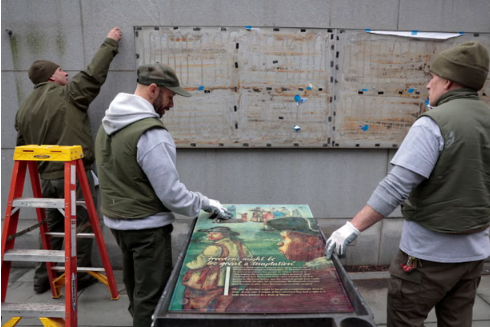
A recent decision from a federal appeals court marks a major shift in how national parks manage their historical narratives. The court ruled that the Trump administration is permitted to keep certain materials removed from various sites across the country. These specific items include information concerning climate change, immigration history, and the realities of American slavery. The legal battle highlights ongoing tensions regarding how the public remembers and interprets the complex American past. This latest ruling serves as a significant turning point in a long dispute over public monuments. The federal government has spent the last year systematically dismantling plaques and signage it considers ideological. President Donald Trump has actively pushed for this strategy during his current tenure in the White House. He famously described these removals as a necessary effort to restore truth and sanity to national memory. This directive was formalized through an executive order issued by the president during the summer of 2025.
In May 2025, Interior Secretary Doug Burgum issued clear instructions to the National Park Service regarding these sensitive historical materials. He mandated the identification and removal of any images or narratives deemed to disparage the American people. This broad mandate targeted descriptions that the administration felt were inappropriate or harmful to the national image. Various advocacy groups quickly mobilized to challenge this government directive in the court system. The National Parks Conservation Association led the charge alongside the Association of National Park Rangers. These organizations filed a lawsuit in February 2026 against the Department of the Interior and the National Park Service. They argued that the government was engaging in a destructive campaign of historical erasure across public lands. The plaintiffs maintained that these park displays provided essential educational context for visitors from around the world.
The legal proceedings took an unexpected turn when a district court initially ruled against the federal administration. Massachusetts Judge Angel Kelley sided with the non-profit groups in her decision during June of this year. She issued an order requiring the government to reinstall all removed materials within a strict twenty-one day window. Judge Kelley strongly criticized the White House in her motion for engaging in a dangerous process of censorship. She argued that sanitizing historical sites would fundamentally undermine the public trust and the integrity of American institutions. This initial victory for the advocacy groups signaled a potential rollback of the administration’s controversial historical policy. However, the federal government moved quickly to appeal that district court decision through higher legal channels. The case was elevated to the US Court of Appeals for the First Circuit for a definitive review.
On Thursday, a three-judge panel issued a new ruling that significantly alters the trajectory of this ongoing legal challenge. The panel concluded that the lower court had made a fundamental error in its assessment of the potential consequences. They argued that the advocacy groups failed to demonstrate how these removals would cause any lasting or irreparable harm. The appellate judges noted that the plaintiffs did not provide sufficient evidence regarding the nature of their injury. They stated that the claims of reputational damage remained too speculative to justify a federal injunction against the government. Furthermore, the court found no clear link between the interior secretary’s mandate and the alleged decline in membership. The ruling emphasizes that philosophical disagreements over history do not automatically qualify as specific harms under current legal standards.
This decision provides the Trump administration with substantial legal leeway to continue its policy of managing park signage. Supporters of the administration view this outcome as a justified victory for presidential authority over federal property and narratives. They argue that the government has the right to determine how public lands reflect national values and historical perspectives. Conversely, critics of the policy remain deeply concerned about the long-term impact on historical transparency and honest public education. Historians and educators have warned that removing these materials could create significant gaps in the public understanding of complex issues. Climate change information, for instance, was frequently presented at parks to explain environmental changes occurring in delicate ecosystems today. By removing these resources, the administration effectively limits the educational tools available to park rangers and visiting tourists.
The debate over what information belongs in a national park is deeply embedded in larger cultural conflicts currently gripping the nation. Different states and organizations have often found themselves at odds regarding the best way to honor or analyze the past. Some advocate for a focus on celebratory history that emphasizes national achievement and unity above all other considerations. Others argue that national parks must serve as accurate, comprehensive, and objective records of all aspects of the human experience. The struggle to reconcile these two opposing viewpoints will likely continue long after this current legal chapter ends. Public interest in the matter has surged as more individuals realize how these changes affect their own local historical sites.
The National Park Service now faces the complicated task of navigating these new legal waters while managing daily operations for millions of visitors. Field staff are caught in the middle of these policy shifts as they manage physical signage and interact with the public. Many rangers have expressed frustration with the inconsistent messaging that often stems from these high-level political decisions. Their role as interpreters of history is increasingly complicated when official narratives are subject to rapid change by the executive branch. This situation demonstrates the fragile balance required to maintain credibility in public institutions while operating under diverse administrative priorities.
As the legal battle moves forward, both sides are expected to refine their arguments for potential future proceedings in the courts. The advocacy groups may seek to provide more concrete evidence of harm to satisfy the requirements set by the appeals panel. Meanwhile, the Department of the Interior is unlikely to reverse its course given the clear victory established by Thursday’s court ruling. The American public will continue to watch these developments closely as they visit national parks across the nation this summer. This case proves once again that the battle over history is never truly settled in a vibrant and divided democracy. The impact of this specific court decision will be felt in parks for many years to come as the landscape of public memory shifts beneath our feet. Future generations will inherit the version of history that is curated by those in power today, making every decision about park signage carry immense long-term weight for the entire country.
Related News:
 US National Guard Member Killed in DC Shooting
 Trump to Recheck Green Cards from 19 Nations After DC Attack
 Trump Escalates Minnesota Immigration Surge Amid Rising Tensions
 Homeland security agents deployed amid Minneapolis protests
 Democrats Push Affordability to Challenge Trump Ahead of Votes
 Greenland Faces Pivotal Summit Over Arctic Power Struggle
 Government Unveils Northern Powerhouse Rail Plans
 Trump press secretary attacks reporter over ICE question
 Kyrsten Sinema Faces High-Profile Lawsuit Over Marriage Interference
 ‘He Believed Help Was Coming’: Why Iran’s Protesters Feel Betrayed
 Water firms may avoid fines under UK water reform plan
 No Gas Boiler Ban as UK Warm Homes Plan Backs Heat Pumps
 Trump Fed bid heads to Supreme Court
 Trump officials continue false claims after Alex Pretti shooting
 Fulton election raid hits Georgia election office
 Partial US Government Shutdown Hits Homeland Security Funding
 Thousands Protest ICE Operations in Nationwide US Day of Action
 Epstein Files Reveal Trump Officials’ Emails with Financier
 Thousands Protest ICE in New York Against Trump Deportation Campaign
 Sinema payment row deepens after $9,000 transfer claim
 Nurses’ families fear breakup under UK immigration crackdown
 California Democrats Vow Trump Reckoning
 Trump’s Surgeon General Pick Evades Vaccine Questions
 Clinton Testimony Erupts in Fiery Exchange
 Adelaide University Faces Backlash Over Event Cancellation
 Thousands Protest Iran Strikes Outside US Embassy London
 US Bombers Arrive at RAF Base Amid Rising Iran Tensions
 Trump to Deploy “God Squad” Over Gulf Wildlife Protections
 Can Congress Stop US Sports Teams From Moving Cities?
 Can King Charles Calm Trump on Key US Visit?
 Evacuations Ordered as California Wildfires Spread Fast
 Melania Trump Epstein remarks spark survivor backlash
 Trump Signals Hope for New Iran Talks as Ceasefire Fades
 US Catholics Caught Between President and the Pope
 Iron Worker Challenges Trump Loyalist in Ohio
 Trump Faces Crisis as Iran Reopens Hormuz Tensions
 GOP Senator Criticizes Trump’s Feud With Pope Leo XIV
 Charles Faces Trump Test in High-Stakes US Visit
 UK Stands Firm on Falklands Amid US Rift
 Trump at Press Dinner Sparks Tension
 Investigation Into Anti-Trump Motives After Gala Shooting
 Trump Defiant After Washington Hotel Shooting
 Identity Revealed: Suspected Washington Gunman Named
 US Court Weighs Fate of TPS for Migrants
 Capitalism ‘Suicidal’, Warns Petro at Climate Summit
 Florida Redistricting Map Sparks Major US Political Battle
 US states redraw maps after voting rights ruling
 Trump orders US troop pullout from Germany
 Judge halts deportation of Yemeni refugees in US
 White House Security Case Sparks Political Firestorm
 Trump approval plunges amid Iran war fears
 Ohio’s Battle for Trust: Democrats Vying to Flip the Buckeye State
 Trump Threatens UN Budget Cuts as US Pushes ‘Trade Over Aid’ Agenda
 Trump warns Iran as Middle East tensions surge again
 US ‘Narco Boat’ Strikes Draw Global Outcry
 Ohio Primaries Set Stage for Crucial Midterms
 Afghan Families Left in Limbo Face Risk of Deportation
 Tensions Emerge in Netanyahu-Trump Alliance
 US Awaits Iran Reply on New Ceasefire Proposal
 Immigration Judges Fear Pressure in Trump Era
 Charities Demand Labour Deliver Urgent New Clean Air Act
 Kevin Warsh sworn in as Fed chair amid economic backlash
 US green card applicants must apply from abroad, DHS says
 Tulsi Gabbard exits after turbulent intelligence tenure
 Hormuz Talks Near Critical Stage
 Former ICC prosecutor condemns US sanctions
 Gunman Killed After White House Security Shootout
 DeSantis’s ‘Alligator Alcatraz’ Faces Final Shutdown
 Prosecutor Proposes Law to Combat Election Deceit
 House Curbs Trump’s War Powers in Rare Rebellion
 AOC Backs El-Sayed in Tight Michigan Senate Primary
 Trump’s Mount Rushmore Speech: A Divisive Anniversary
 Lanarkshire AI Hub Fails Energy Promises
 Court Rejects Florida Campus Speech Restrictions
 Graham Platner’s Exit Leaves Democrats in Chaos
 Trump Refuses to Sign Housing Bill, But Law Takes Effect
 Houthis Strike Saudi Arabia as Middle East Tensions Rise
 Three-Quarters of England’s Riverbanks Still Off Limits
 Trump Orders Signs Criticising Smithsonian Museum
 Is America Ready for an AOC Presidential Run?