Published: 19 June 2026. The English Chronicle Desk. The English Chronicle Online.
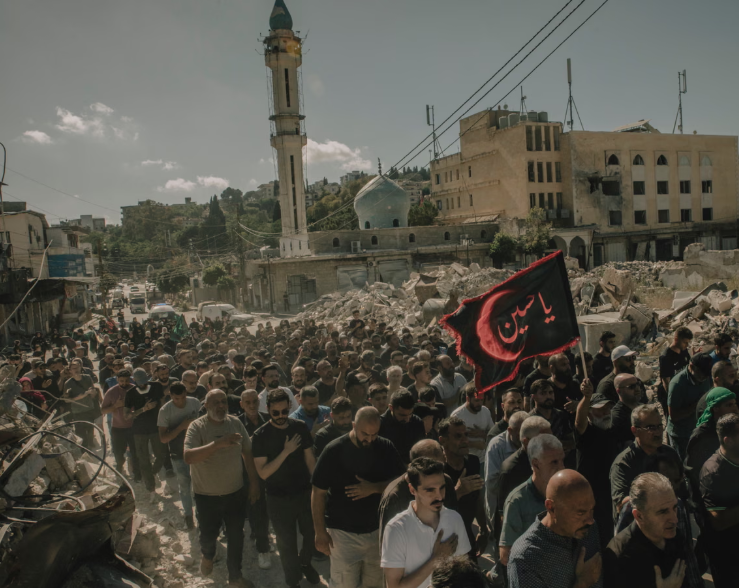
The somber procession moved slowly through mounds of shattered concrete and twisted metal. Mourners chanted ancient laments while beating their chests in rhythmic unison under a grey sky. The heavy thud of distant artillery fire echoed from the nearby southern foothills. This annual religious gathering carried an intense emotional weight for the remaining local residents. Worshippers explicitly compared their current suffering to historical tragedies of the deep past. The holy ceremony of Ashura traditionally marks a very significant period of communal mourning. It honors a revered historical figure who came to symbolize resistance against ultimate oppression.
In peaceful times this major commemoration is the absolute pride of the entire city. The vibrant event normally draws massive crowds of up to thirty thousand passionate people. They usually fill every corner of the streets with a powerful collective cry. This particular year the ancient story of sacrifice took on a profoundly renewed meaning. A devastating conflict had recently claimed thousands of innocent lives across the wider nation. The vast majority of those casualties belonged to the local Shia Muslim community. Nabatieh itself stood as one of the hardest hit urban centers during bombings. Huge swathes of the ancient city were completely leveled by successive military strikes.
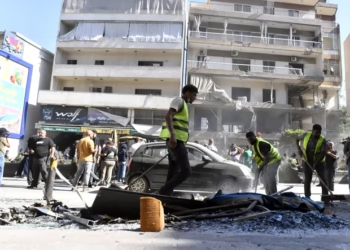
On Wednesday morning the cries of deep sorrow were muted by the physical destruction. Emergency teams had cleared the main roads only two days prior to today. The small crowd of two hundred people could not fill the heavy silence. Empty streets and shattered structures defined the landscape after a hundred days of war. Nabatieh was openly mourning its many recent dead during this poignant ritualistic event. Worshippers openly wept while recounting a conflict that displaced most of the population. Many victims simply did not have any viable chance to escape the violence. Large posters of fallen individuals now dot almost every single corner of town.
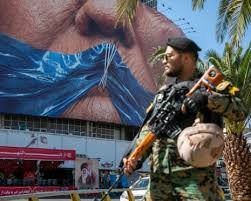
At a prominent roundabout nearby a massive poster displayed dozens of young local fighters. These men were all killed within that single neighboring village during recent hostilities. A local resident named Ismail Yaghi explained the deep personal significance of this day. He stated that the community had essentially lived the historic battle every single day. The fifty year old man looked quietly at the numerous posters of youth. Their faces were hung on walls and printed clearly onto worn clothing items. He expressed a complex mix of deep sadness and immense pride for them. Yaghi noted a firm belief that their spiritual lives had only just begun.
The remaining residents had not actually expected to gather here for the ceremony. Almost all eighty thousand original inhabitants had fled due to urgent military orders. A sudden ceasefire agreement had unexpectedly halted the rapid advance of opposing forces. Civil defense crews immediately began preparing the area for the sacred religious event. Dedicated volunteers quickly traded their medical kits for basic cleaning tools like brooms. They worked tirelessly to clear heavy rubble from the central mosque building. Black banners were hung carefully to cover massive holes caused by recent airstrikes. The head of the ambulance service managed these hurried preparations with limited time.
Mehdi Sadek noted that preparation usually takes an entire month of careful planning. This time his team only had two brief days to complete everything required. He paused his work as the loud sound of artillery shook the structure. Dark smoke rose ominously above the green hills that ring the broken city. Despite the official truce both sides continued firing within the tense security zone. Opposing troops remained positioned just beyond the prominent hill on the city edge. Fighting intensified significantly on Friday morning as active engagements resumed with lethal force. Casualties were reported on both sides following a fresh wave of intense airstrikes.
Sadek mentioned that more people had attended the previous day before the shelling. The local military blocked major entrances after civilians were fired upon earlier this week. Terrified families fled the renewed violence out of fear the truce would collapse. They worried this agreement would fail just like the previous two attempts did. Sadek stated they desperately wanted a real ceasefire to ensure long term safety. They chose to hold the ceremony to encourage displaced people to return home. Despite these efforts very few residents have actually chosen to come back yet. A few individuals drove through briefly just to check on their properties.
This quiet scene stood in stark contrast to previous post war reconstruction eras. In prior years residents returned instantly in large numbers to rebuild their shops. A displaced engineer named Hussein Nahleh traveled all the way from the capital. His own home was completely destroyed but he still wished to attend Ashura. He stayed with local acquaintances whose houses miraculously survived the intense bombardment. A few men standing nearby suddenly pointed toward the clear afternoon sky above. A high altitude surveillance drone circled continuously to watch the small gathering below. Civil defense crews kept working to pull bodies from underneath the collapsed buildings.
Teams used the fragile truce to search previously inaccessible areas for human remains. Some dangerous zones remained entirely unreachable due to active targeting of emergency vehicles. The regional head of civil defense described the situation as highly unstable today. Hussein Fakih noted that the reality of the ceasefire remained deeply ambiguous here. He suddenly interrupted his interview to answer an urgent ringing phone call nearby. Fakih returned with tears in his eyes after receiving some very bad news. He explained that his own family home had just been completely destroyed.
Related News:
 Saudi Arabia Urging US to Keep Up Iran Attacks
 Netanyahu Vows Continued Lebanon Strikes Amid Peace Talks
 US and Iran Pursue Extension of Ceasefire via Pakistan
 Global order shifts amid Trump-era turmoil
 Middle East Crisis Escalates as Oil Routes Shake Markets
 Tensions Emerge in Netanyahu-Trump Alliance
 Netanyahu Calls Early Election Amid Coalition Turmoil
 Israeli Strikes in Lebanon Kill 10 Amid Ceasefire Strain
 Hunger increasingly weaponised in global conflicts
 Former ICC prosecutor condemns US sanctions
 Iran To Propose New Shipping Fees In Strait Of Hormuz
 High Drama in Tehran Over Secret Nuclear Letters
 Houthis Strike Saudi Arabia as Middle East Tensions Rise
 US Citizens Warned to Venezuela Flee Amid Paramilitary Threats
 Gulf states warn Trump Iran strikes risk wider Middle East war
 Iran unrest slows under brutal crackdown and global tensions
 Thousands Protest ICE Operations in Nationwide US Day of Action
 Epstein Files Reveal Trump Officials’ Emails with Financier
 Thousands Protest ICE in New York Against Trump Deportation Campaign
 Sydney Protest Pepper Spray Clash During Herzog Visit
 Iran-Iraq Border Strikes Spark New Front Fears
 Ukraine war briefing: Zelenskyy offers help to Saudi Crown prince on combatting Iranian drones
 Mojtaba Khamenei Chosen as Iran’s New Supreme Leader
 Seventh US Service Member Killed in Iran Conflict Identified
 Mojtaba Khamenei Supporters Rally as Iranians Fear Repression
 Tehran Strikes Mark War’s Most Devastating Night
 Iran Defiance Grows Amid US-Israel War Pressure
 Injured Mojtaba Khamenei Elevated as Iran Leader
 US Missile Strike on Iran School Sparks Global Shock
 Iran Gulf attacks escalate as ships and airports targeted
 Ancient Heritage Sites Damaged in Recent Airstrikes
 Gaza Detainee Abuse: Israel Drops Charges Against Soldiers
 Lebanon Ground Campaign Raises Occupation Fears
 Gulf Tensions Rise as Iran Alleges Covert Support
 Iranian President’s Son Shares Wartime Hopes and Fears
 Diplomacy on the Brink: Pakistan’s Risky Peace Mission
 Iran Drone Strike Hits Kuwaiti Oil Tanker in Dubai Port
 Trump Slams Europe as Transatlantic Tensions Boil Over
 Trump’s Six-Week Iranian War: The High Cost of Ignorance
 The Price of Hubris: Trump, Netanyahu, and the ‘Easy’ War
 Trump and Tehran Find Common Ground in Landmark Ceasefire
 Israel Defies Ceasefire as Lebanon Operations Persist
 Pakistan Brokers Historic Peace Deal Amid Rising Tensions
 Middle East Analysis: The Cost of a Fragile Peace
 Islamabad Hosts Historic Peace Talks Between Iran and USA
 Reeves Slams Trump Over Iran War Lack Of Exit Plan
 Ukraine Urges UK to Seize Russian Oil Tankers
 US Calls Australia Media Law “Foreign Extortion”
 Oil Prices Surge Above $120 Amid Iran Blockade Fears
 Trump orders US troop pullout from Germany
 Activists allege abuse after Gaza flotilla seizure
 Japan Protests Erupt Over Plans to Revise Constitution
 FIFA Confirms Global Ban for Benfica Star Prestianni
 Saudi Arabia Blocks Trump’s Naval Plan for Hormuz Strait
 New South Wales Wetland Rescue Legislation Passes
 Trump Rejects Tehran Peace Plan as Regional Truce Crumbles
 US and Mexico Face Heatwave as Floods Batter South Africa
 The Long Way Home: Australia’s High-Stakes Virus Mission
 Trump Warns Iran Ceasefire Is Now on Life Support
 Putin Signals War End as Russian Momentum Stalls
 Fear and Betrayal: The Chilling Case of Kouri Richins
 Scepticism and tight security as Beijing braces for Trump
 Philippine Senator Flees After Days Under Senate Siege
 Tensions Flare as Israeli Nationalists March in Jerusalem
 Tragedy in the Maldives: Inside the Deep Sea Rescue
 Fragile Truce Shattered as Violence Escapes Diplomatic Control
 Discontent grows around Putin amid war strain
 US Strikes Iranian Sites Amid Shaky Ceasefire Talks
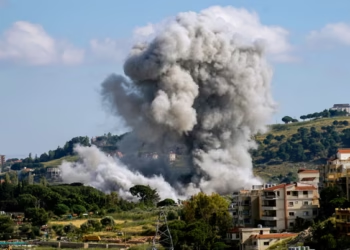 Israel Intensifies Lebanon Strikes to Crush Hezbollah
 Trump’s Iran Deal Plan Sparks Intense Alarm Across Israel
 US and Iran Trade Fresh Strikes, Threatening Ceasefire
 Washington Brokerage Sparking Hope Amid Regional Firestorms
 Aukus Deal Facing Fierce Backing and Historic Criticism
 Thai Princess Bajrakitiyabha Passes Away at 47
 US and Iran Agree Historic Framework to End 15-Week War
 Trump Signs Landmark Iran Accord in Versailles
 Iran Prepares for Massive Six-Day Funeral for Khamenei
 Iran Mourns: Millions at Khamenei’s Final Procession
 Israeli Officer Investigated for Car Grenade Attack
 Yemen Accuses Iran of Violating National Sovereignty