Published: 18 June 2026. The English Chronicle Desk. The English Chronicle Online.
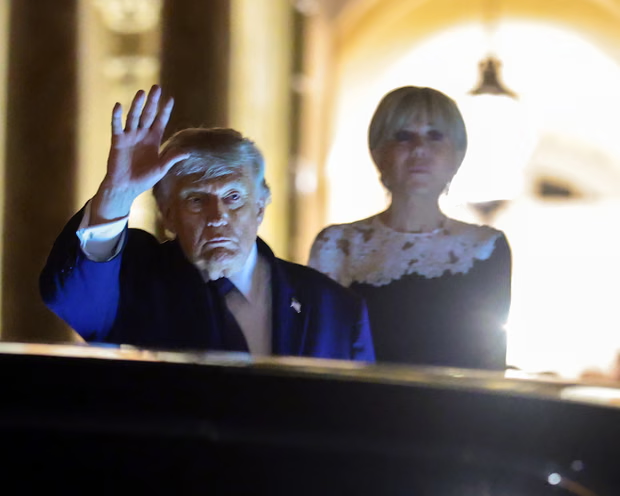
A sudden geopolitical shift has sent waves through international diplomacy as Donald Trump secured a momentous agreement with Tehran, a development that has triggered a volatile mix of fervent celebration, bitter condemnation, and profound skepticism across the globe. The dramatic signing ceremony, which took place during a high-profile dinner with French President Emmanuel Macron at the historic Palace of Versailles, immediately evoked powerful historical parallels. Observers quickly noted that the venue was the exact site of the 1919 treaty that ended the First World War, an association that carries heavy symbolic weight given that the peace achieved a century ago ultimately dissolved into renewed global conflict just two decades later. This new accord aims to temporarily halt the intense hostilities between Washington and Tehran, setting the stage for a grueling sixty-day negotiation period under a freshly signed memorandum of understanding.
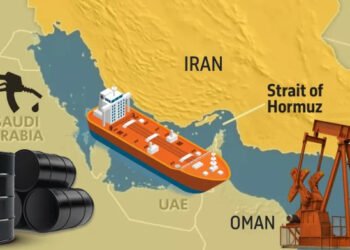
The immediate catalyst for global relief has been the promised reopening of the critical Strait of Hormuz, a vital maritime chokepoint through which a significant portion of the world’s petroleum supply flows daily. Pakistan’s Prime Minister Shehbaz Sharif, who played a central role as a key mediator in these delicate backchannel negotiations, enthusiastically hailed the breakthrough as a peaceful resolution to an incredibly dangerous standoff. Sharif warmly congratulated the leadership of both nations for choosing diplomacy over continued military escalation, expressing optimism that the resumption of maritime trade would quickly stabilize the region. In Europe, the sentiment was echoed with similar enthusiasm, as G7 leaders collectively welcomed the agreement, viewing it as a historic opportunity to finally prevent Iran from acquiring a functional nuclear weapon. French President Emmanuel Macron spoke candidly about the economic toll of the recent blockade, stating that the deal would successfully terminate a situation of great instability that had previously inflicted terrible consequences upon Western economies. Despite the palpable sense of relief radiating from European capitals that had largely been sidelined during the intense bilateral talks, the atmosphere in Israel is markedly hostile and deeply pessimistic. Mark Regev, a seasoned diplomat and former senior adviser to Prime Minister Benjamin Netanyahu, openly questioned the strategic wisdom of the American approach, suggesting that Washington has prematurely discarded its most potent leverage. Regev pointed out that by immediately restoring Iran’s ability to export crude oil and petroleum products, the United States has effectively dismantled the economic and military pressure that was keeping Tehran compliant. In his critical assessment, the current framework does not represent a diplomatic victory but rather an unexpected economic lifeline that has granted the Iranian regime a sudden and unwarranted return to life. This sentiment of betrayal has rapidly spread across the Israeli political landscape, creating severe complications for the ruling coalition just months before the upcoming general elections.
The domestic political fallout inside Israel has been swift and fierce, with opposition leaders aggressively capitalizing on the widespread public anger surrounding the agreement. Yair Lapid, the prominent leader of the opposition, launched a blistering critique against Netanyahu, arguing that the prime minister’s long-standing promise of a historic victory has instead resulted in an unprecedented diplomatic crisis with Washington. Lapid argued that the new arrangement leaves Israel waiting helplessly in the corridor like a scolded child while Iran receives billions of dollars in sanctions relief and retains its massive ballistic missile arsenal. This intense domestic pressure has forced Netanyahu’s Likud party into a rapid tactical retreat, with reports emerging that campaign strategists have hastily scrapped plans to highlight the prime minister’s famously close personal ties with the American president in upcoming election materials.
Even within the typically supportive Israeli intelligence community, the agreement has exposed deep analytical divisions regarding the long-term containment of Tehran’s nuclear ambitions. Danny Citrinowicz, the respected former head of the Iran branch of Israeli military intelligence, offered a rare counter-perspective by suggesting that the deal represents a welcome return to political reality. Citrinowicz argued that before the regional military escalation could spiral completely out of control, the American administration wisely stepped back from unachievable maximalist objectives in favor of a measured approach. However, this pragmatic view remains a minority opinion in local media circles, where commentators like David Horovitz of the Times of Israel have instead characterized the ceasefire as a catastrophic demonstration of American presidential weakness that will inevitably return to haunt the West.
Across the Atlantic, the political landscape in Washington has fractured along remarkably similar ideological lines, creating strange bedfellows and unexpected rifts within both major political parties. The Republican establishment experienced its own internal friction, highlighted by Senator Lindsey Graham’s dramatic pivot from initial skepticism to cautious endorsement following a lengthy briefing with special envoy Steve Witkoff. Graham conceded that while the ultimate success of a verifiable nuclear deal remains highly uncertain, there is very little downside to attempting diplomacy if it successfully reopens global shipping lanes and brings an immediate end to active military hostilities. This conciliatory stance was sharply rejected by other conservative lawmakers, including Senator Bill Cassidy, who warned that the agreement teaches Iran that threatening international waters is an effective method to extract sweeping economic concessions from Washington.
The criticism from the Democratic Party has been even more unsparing, with senior foreign policy figures labeling the diplomatic maneuver as a total capitulation to an adversarial regime. Susan Rice, an experienced diplomat from previous Democratic administrations, delivered a remarkably blunt assessment by calling the memorandum of understanding the single biggest national security blunder observed in recent decades. Senator Adam Schiff joined the chorus of condemnation, expressing disbelief that Washington agreed to grant immediate sanctions relief, release frozen financial assets, and establish a multi-billion-dollar reconstruction fund in exchange for a vague, unenforceable promise. Schiff argued that the terms represent a thorough surrender of American interests, leaving the international community with far fewer tools to monitor Tehran’s hidden stockpiles of highly enriched uranium.
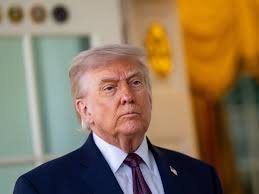
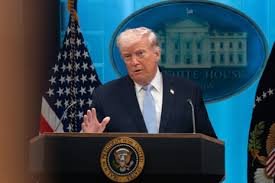
As the contentious sixty-day clock begins to tick, both signing nations are actively framing the diplomatic outcome to suit their respective domestic audiences. Donald Trump has boldly dismissed his critics by hailing the memorandum as a massive victory that fulfills his campaign promise to end costly foreign conflicts and restore American economic stability. Meanwhile, in Tehran, chief negotiator Mohammad Ghalibaf struck a triumphant tone of defiance, publicly declaring the agreement as an undeniable record of American failure and a validation of Iranian resilience. With Iranian President Masoud Pezeshkian having officially signed the document in Tehran, the international community now watches with a mixture of intense anxiety and fragile hope to see if this Versailles accord will truly yield a lasting peace or simply pave the way for an even greater geopolitical storm.
Related News:
 Ukraine war briefing: Zelenskyy offers help to Saudi Crown prince on combatting Iranian drones
 Ukraine Sends Drone Experts to Defend US Bases in Jordan
 Saudi Arabia Urging US to Keep Up Iran Attacks
 Diplomacy on the Brink: Pakistan’s Risky Peace Mission
 Trump Slams Europe as Transatlantic Tensions Boil Over
 High-Value Target: Iranian Strike Destroys US Radar Plane
 UN Warns Israeli Death Penalty Bill Could Be a War Crime
 Pakistan and China Propose Five-Part Peace Plan
 Trump Issues Stark Warning After Strike On Iran’s Largest Bridge
 Hope and Fear as Iranians Flee Across the Turkish Border
 The Price of Hubris: Trump, Netanyahu, and the ‘Easy’ War
 Israel Defies Ceasefire as Lebanon Operations Persist
 Middle East Peace Crisis: Ceasefire Strained by New Violence
 Pakistan Brokers Historic Peace Deal Amid Rising Tensions
 Netanyahu Vows Continued Lebanon Strikes Amid Peace Talks
 Islamabad Hosts Historic Peace Talks Between Iran and USA
 US and Iran Pursue Extension of Ceasefire via Pakistan
 Trump’s Islamabad Gamble: The High Stakes of a New Iran Deal
 The General’s Gambit: Pakistan’s New Role in Global Peace
 Can Trump’s Ceasefire Hold in Lebanon?
 Global order shifts amid Trump-era turmoil
 Middle East Crisis Escalates as Oil Routes Shake Markets
 Saudi Arabia Blocks Trump’s Naval Plan for Hormuz Strait
 Tensions Emerge in Netanyahu-Trump Alliance
 UAE’s Secret Strike on Iran Risks Wider Gulf Conflict
 Netanyahu Claims Secret UAE Visit Amid Regional Conflict
 Netanyahu Calls Early Election Amid Coalition Turmoil
 Plea for Mercy: The Battle to Bring Ahmed al-Doush Home
 Trump Issues New Threat of Strikes Amid Iran Standback
 Global Outrage After Israeli Minister Mocks Bound Activists
 Israeli Strikes in Lebanon Kill 10 Amid Ceasefire Strain
 Hunger increasingly weaponised in global conflicts
 Former ICC prosecutor condemns US sanctions
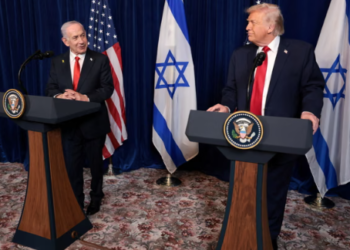 Trump and Netanyahu Clash Over Crucial US and Iran Peace Deal
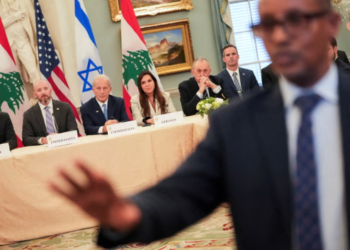 Washington Brokerage Sparking Hope Amid Regional Firestorms
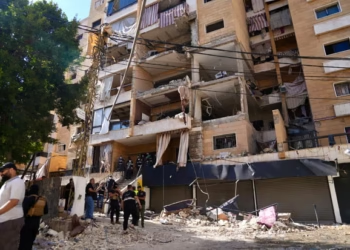 Israel Defies Trump in Direct Strikes on Targets Across Iran
 US and Iran Agree Historic Framework to End 15-Week War
 Global Powers Navigate Fragile Peace as Hormuz Reopens
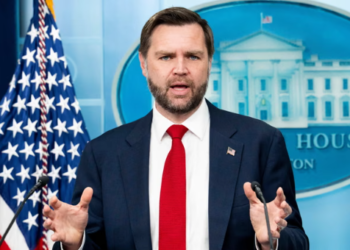 Uncertainty Prevails as Landmark Peace Talks Abruptly Conclude Before Commencement
 Iran To Propose New Shipping Fees In Strait Of Hormuz
 Grief and Devotion Amidst the Rubble of Nabatieh
 High Drama in Tehran Over Secret Nuclear Letters
 Iran Prepares for Massive Six-Day Funeral for Khamenei
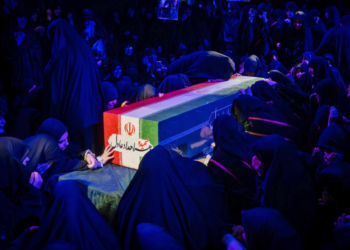 Iran Prepares for Massive Funeral for Supreme Leader
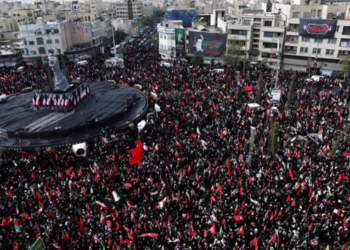 Iran Bids Farewell to Fallen Leader in Massive Procession
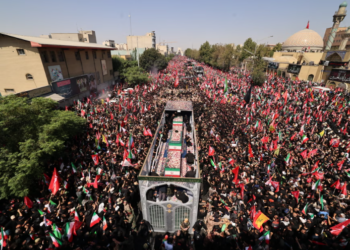 Iran Mourns: Millions at Khamenei’s Final Procession
 Hamas Proposes Handing Over Control of Gaza Strip
 Israeli Officer Investigated for Car Grenade Attack
 Yemen Accuses Iran of Violating National Sovereignty
 Trump Threatens Iran Power Strikes Over Hormuz Impasse
 Houthis Strike Saudi Arabia as Middle East Tensions Rise
 Friedman Uninvited From 2024 Adelaide Writers’ Week
 Spoof “Make America Go Away” Caps Rally Denmark Over Greenland
 New Zealand Covid Response Praised Despite Lingering Scars
 Tehran Strikes Mark War’s Most Devastating Night
 Injured Mojtaba Khamenei Elevated as Iran Leader
 Teenage Titan: Sooryavanshi Smashes IPL Records
 Trump’s Six-Week Iranian War: The High Cost of Ignorance
 Reform UK Pledges To Halt Visas Over Reparations Demands
 US and Iran Agree to Two-Week Provisional Ceasefire
 Trump Signals Hope for New Iran Talks as Ceasefire Fades
 Security Alert Near Israeli Embassy as Police Investigate
 US-Iran Standoff: Will Trump Deploy Ground Troops?
 Investigation Into Anti-Trump Motives After Gala Shooting
 Trump Rejects Tehran Peace Plan as Regional Truce Crumbles
 High Stakes in Beijing as Trump and Xi Meet Amid Global Turmoil
 Fear and Betrayal: The Chilling Case of Kouri Richins
 Trump and Xi Convene in Beijing for Historic High-Stakes Summit
 Aussie Race Row: Coalition Accused of Scapegoating
 Trump Pledges 5,000 Troops for Poland in U-Turn
 Cannes filmmakers split over AI’s role in cinema
 US Condemns ‘Two-Tier’ UK Policing After Student Murder
 Trump Appeals for Middle East Calm but Conflict Escalates
 Millions in British Charity Funds Linked to Illegal Settlements
 US Trafficking Arrest Exposes Shocking Exploitation
 US Military Pacific Boat Strike Kills Three People
 Trump’s Mount Rushmore Speech: A Divisive Anniversary
 Trump Swaps Planes Amid Iran Tensions
 Rotterdam Museum Honours Artist With Peanut Butter Floor
 Bangkok Nightclub Blaze Claims 30 Lives Amid Negligence Probe