Published: 20 May 2026. The English Chronicle Desk. The English Chronicle Online.
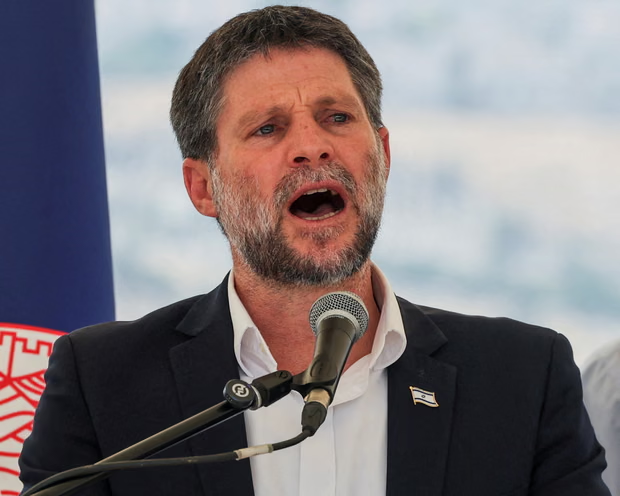
The political landscape of the Middle East faces an intense new wave of diplomatic and territorial instability this week. Israel’s far-right finance minister, Bezalel Smotrich, announced that international prosecutors are actively pursuing his confidential arrest. This startling development has triggered a fiery and immediate response from the prominent cabinet minister. Smotrich has vowed to launch an aggressive political campaign against the neighbouring Palestinian Authority. The escalating situation underscores the deeply fractured relationship between Israeli authorities and international judicial bodies. Observers warn that this development could heavily impact regional security across the occupied territories. The controversy centers on the independent role of the International Criminal Court based in The Hague.
Smotrich claims he received private confirmation regarding a secret judicial request for his immediate detention. The controversial politician did not disclose the specific source of this sensitive legal information. Furthermore, he chose not to reveal the explicit charges leveled against him by prosecutors. The International Criminal Court traditionally maintains strict confidentiality regarding pending warrants to protect investigations. When questioned about the statement, the office of the prosecutor officially declined to comment. The judicial body continuously maintains that its investigation processes remain entirely independent and impartial. Despite this silence, the minister has aggressively condemned the court as an antisemitic institution. He firmly argued that Israel should completely reject dictates from what he called biased bodies.
The immediate casualty of this diplomatic feud appears to be a vulnerable West Bank community. Smotrich announced he has ordered the swift evacuation of the Bedouin village of Khan al-Ahmar. This strategically located Palestinian village has long been a focal point of intense international attention. The minister holds joint powers within both the finance ministry and the defence ministry. He openly stated that this eviction order aims directly to harm the Palestinian Authority. The targeted authority exercises limited self-rule across specific sections of the occupied West Bank territory. Smotrich remarked that the Palestinian leadership started a war and would subsequently receive a war. This harsh rhetoric reflects deep government anger regarding Palestinian support for international legal actions.
The response from Palestinian leadership was swift, expressing deep alarm over the sudden eviction order. A senior Palestinian official, Wasel abu Youssef, described the forced removal as exceedingly dangerous. He urgently called for a firm international response to halt these incoming structural measures. Palestinian leaders view the targeting of Khan al-Ahmar as an illegal form of collective punishment. Human rights organizations have previously warned that displacing this specific community constitutes a war crime. The village sits in a highly contested area that impacts future statehood boundaries. Consequently, any state-sponsored demolition will likely provoke widespread protests across the region. The tension on the ground remains incredibly high as residents await further escalation.
The legal mechanics behind this escalating international dispute are both complex and highly contentious. Israel is notably not a member state of the International Criminal Court system. The nation does not recognize the legal jurisdiction of the court over its citizens. However, the Palestinian territories were officially admitted as a member state back in 2015. A prior ruling by international judges confirmed the court holds jurisdiction over these territories. This mandate allows prosecutors to investigate actions by both Hamas fighters and Israeli officials. The legal scope covers alleged atrocities committed in Gaza and the occupied West Bank. Under revised court guidelines, initial warrant applications are kept strictly sealed from the public.
To secure a formal arrest warrant, prosecutors must present compelling evidence to a panel. Judges must find reasonable grounds to conclude that a suspect committed specific serious crimes. The court previously took decisive action regarding the region during late autumn of last year. In November 2024, the court issued high-profile warrants for prime minister Benjamin Netanyahu. A warrant was also issued for former defence chief Yoav Gallant around that time. Additionally, the court targeted Hamas leader Ibrahim al-Masri for alleged war crimes in Gaza. Those historic actions created an immense diplomatic rift between Israel and western legal institutions. The potential inclusion of Smotrich signals a widening scope of international judicial scrutiny.
The prospect of another warrant against a sitting minister will likely trigger global ramifications. The United States remains a fiercely loyal ally to Israel on the global stage. Washington has historically demonstrated bipartisan opposition to any judicial actions targeting senior Israeli politicians. During the Trump administration, severe sanctions were actively imposed against various court officials. Specifically, eleven international judges and prosecutors faced American economic penalties for their regional investigations. A new warrant could easily prompt further retaliatory measures from lawmakers in Washington DC. This geopolitical dynamic places significant pressure on European nations who support the court. The resulting diplomatic friction threatens to fracture traditional western alliances over Middle Eastern policy.
The United Kingdom has previously taken a noticeably distinct approach regarding these far-right ministers. Last year, Britain and four other western nations imposed targeted sanctions on Bezalel Smotrich. Similar punitive measures were simultaneously leveled against his cabinet colleague, national security minister Itamar Ben-Gvir. Western governments explicitly accused both individuals of repeatedly inciting violence against Palestinian civilians. The imposition of sanctions by close allies signaled growing international frustration with Israeli domestic policy. Smotrich has consistently remained entirely unapologetic regarding his hardline pro-settlement ideological stances. He openly advocates for the permanent conquest and total military absorption of the Gaza Strip.
The finance minister also strongly supports re-establishing Jewish settlements within the blockaded Gaza territory. Israel originally abandoned those specific coastal settlements during its historic disengagement policy of 2005. Prime minister Benjamin Netanyahu has publicly rejected the idea of returning settlers to Gaza. However, Smotrich continues to wield immense leverage within the fragile ruling government coalition. He has successfully worked to expand Jewish settlements across the West Bank during his tenure. The minister frequently refers to the West Bank as an eternal and biblical homeland. His aggressive expansionist policies have drawn consistent condemnation from the United Nations security council. The current legal clash represents a culmination of these long-standing ideological battles.
The ongoing dispute highlights the absolute gridlock characterizing current international diplomacy regarding the conflict. Smotrich firmly maintains that international sanctions represent an attempt to force security suicide on Israel. He insists that his nation will continue defending its historical rights regardless of outside pressure. Meanwhile, international legal bodies appear determined to enforce accountability rules across the occupied zones. The move to evict Khan al-Ahmar shows how legal battles translate into hardship on the ground. As the court maintains its silence, the international community watches the West Bank with anxiety. The coming days will determine if diplomacy can prevent a major humanitarian escalation.
Related News:
 Capitol Attack Anniversary Sparks Deep Political Divide
 Saudi Officials Report Zubaidi Flee Before Yemen Peace Talks
 UK Targets in New York Bomb Threat Hoax: Man Jailed
 Gambia Supreme Court Hears Case to Overturn FGM Ban
 Trump targets Iran trade with 25% tariff warning
 US Senate rejects resolution limiting Trump military powers
 Gulf states warn Trump Iran strikes risk wider Middle East war
 Machado Trump medal gesture reshapes Venezuela power struggle
 Geopolitical football: Iran, Trump and the World Cup clash
 Canada-China trade gains momentum in new strategic partnership
 Syria President Declares Victory as Ceasefire Reached with SDF
 Shinzo Abe’s killer receives life sentence in Japan
 China General Under Investigation Amid Leadership Purge
 Philippines ferry disaster leaves 15 dead, dozens missing
 Cambridge Faces Scrutiny Over Arms Investment Transparency
 Epstein UAE Emails Shake British Royal Andrew’s Legacy
 Christchurch gunman seeks to vacate guilty plea
 Infantino Faces Russia Threat and Trump Concerns at Uefa Congress
 Concerns rise for Canberra boy amid Iran detention fears
 Ukraine Sends Drone Experts to Defend US Bases in Jordan
 Abramovich Chelsea Sale Cash Faces Jersey Probe
 Yvette Cooper: UK Must Follow Principles, Not US Pressure
 Jury Rules Meta and YouTube Liable for Addictive Design
 Saudi Arabia Urging US to Keep Up Iran Attacks
 The Woman Guarding Earth From the Threat of Asteroids
 Germany Grapples With AI Abuse Following TV Star Scandal
 Exiled Tycoon Warns of New Russian Attacks on UK Soil
 LA 2028: Millions of Affordable Olympic Tickets Announced
 Trump Slams Europe as Transatlantic Tensions Boil Over
 Inside the Deceptive Machine: A Former Producer Speaks Out
 Spain Faces Backlash Over Xenophobic Chants in Egypt Draw
 A Global Voice For Justice: Stephen Lewis Dies At Age 88
 Hope and Fear as Iranians Flee Across the Turkish Border
 Reform UK Pledges To Halt Visas Over Reparations Demands
 US and Iran Agree to Two-Week Provisional Ceasefire
 Starmer visits Gulf as US and Iran agree ceasefire
 Gaza Child Arrives in UK for Life-Changing Care
 Pakistan Brokers Historic Peace Deal Amid Rising Tensions
 UK Holds Firm on Strait of Hormuz Amid Trump Pressure
 Trump Signals Hope for New Iran Talks as Ceasefire Fades
 Reeves Slams Trump Over Iran War Lack Of Exit Plan
 US and Iran Pursue Extension of Ceasefire via Pakistan
 Trump’s Islamabad Gamble: The High Stakes of a New Iran Deal
 Ian Katz to Step Down as Channel 4 Content Chief
 The General’s Gambit: Pakistan’s New Role in Global Peace
 Mexico, Spain and Brazil call for Cuba dialogue amid crisis
 Pakistan’s Ambitious Bid for Middle East Peace
 Trump Starts $166bn Tariff Refund Process
 Israeli Soldiers Jailed Over Vandalism of Lebanese Statue
 Trump Weighs Sending Afghan Allies to the Congo
 Timor-Leste Faces Tough Questions Over Resort Proposal
 Pentagon Shakes Up Navy Leadership Amid Hormuz Blockade
 Trump Threatens UK With Big Tariff Over Tech Tax
 Prominent Voices Challenge Palestine Action Ban
 Security Scrutiny After Washington Shooting Incident
 Merz Criticises US Approach in Iran Conflict
 UK Envoy Sparks Controversy Over Special Relationship Claims
 Ukraine Urges UK to Seize Russian Oil Tankers
 US Calls Australia Media Law “Foreign Extortion”
 The Billionaire’s Secretary and the £1m Fraud
 Ukraine strikes Tuapse as oil disaster worsens
 Brewing Tension: Taiwan Baristas Rebrand for World Stage
 Tensions Emerge in Netanyahu-Trump Alliance
 Mission to the World’s Edge: A Heroic Rescue in Tristan
 US and Mexico Face Heatwave as Floods Batter South Africa
 Mexico’s Missing: State Complicity in a Growing Crisis
 French Patient Told Hantavirus Was Just Anxiety
 The Long Way Home: Australia’s High-Stakes Virus Mission
 Putin Signals War End as Russian Momentum Stalls
 Romania’s Judicial Crisis: A System Under Siege
 Lee Lai Makes History with Landmark Stella Prize Victory
 Philippine Senator Flees After Days Under Senate Siege
 Alberta Separatist Bid Blocked by Canadian Court
 Canadian Court Blocks Alberta Independence Referendum Bid
 Big Tobacco Under Fire Over Controversial New Ad Campaign
 Bolsonaro Son Tape Scandal Sparks Massive Brazil Backlash
 Court Upholds Landmark Win for Transgender Rights
 Tragedy in the Maldives: Inside the Deep Sea Rescue
 Liberal Senator Criticises Immigration Rhetoric
 Senate Moves to Restrict Trump’s War Powers on Iran