Published: 20 May 2026. The English Chronicle Desk. The English Chronicle Online.
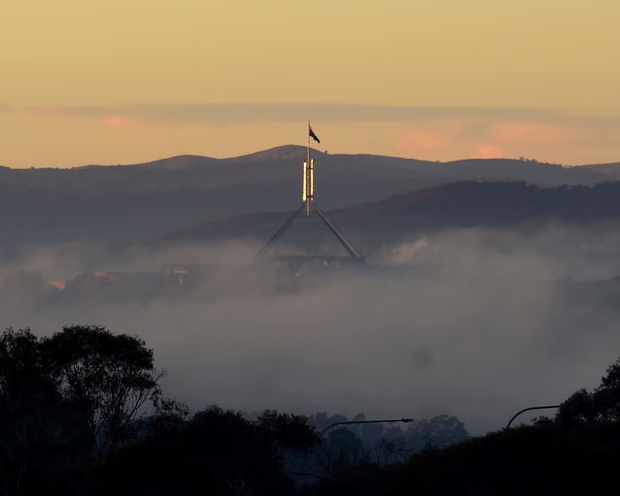
A damning independent audit has rocked the foundations of the Australian federal government this week. The scathing official review has exposed a deep culture of political resistance and systemic delay. It highlights a troubling lack of transparency within several key administrative departments in Canberra. The investigation focused heavily on how officials handle public freedom of information requests daily.
According to the official report, multiple crucial departments are actively blocking vital public access. Prime Minister Anthony Albanese’s own personal department is named as a primary offender here. The Treasury and the Department of Infrastructure are also facing intense scrutiny right now. Together, these powerful sectors have routinely denied the vast majority of official inquiries made.
The extensive review looked closely at the administration of vital public disclosure laws. It revealed that nearly eighty percent of all information applications were completely rejected. This staggering figure has sparked furious debates about democratic accountability across the entire nation. Experts argue that the central government is deliberately hiding important information from citizens.
The independent auditor general examined more than forty-three thousand separate public applications recently. These requests were submitted directly to the Labor administration during the last financial year. The subsequent findings paint a truly grim picture of modern bureaucratic obstruction and defiance. Investigators discovered that key departments completely lack proper policies to ensure open government transparency.
Furthermore, officials have failed miserably to maintain accurate and complete public record-keeping systems. Over the last financial year, seventy-nine percent of applications were refused in part. Even worse, fifty-seven percent of all requests resulted in absolutely no documents being released. This means that a majority of citizens received nothing at all for their efforts.
The audit also revealed that official disclosure logs were highly inaccurate and incomplete. These actions represent a direct violation of current Australian transparency legislation and legal mandates. Additionally, sixty-three percent of applications faced extensive delays beyond the statutory thirty-day limit. This widespread delay tactics have left many journalists and researchers feeling deeply frustrated.
When applicants appealed these decisions, the true extent of the problem became obvious. The Office of the Australian Information Commissioner reviewed numerous complaints from angry public citizens. Remarkably, sixty-two percent of original department decisions were completely overturned or substantially changed. This high reversal rate proves that bureaucrats are actively resisting their disclosure duties.
The formal report explicitly stated that audited entities cannot prove they searched properly. Bureaucrats are simply not keeping adequate records of the information searches they perform. Therefore, departments cannot justify their frequent claims that specific requested documents do not exist. This lack of evidence undermines the credibility of the entire federal public service.
Interestingly, this systemic shutdown comes during a massive surge in public interest and engagement. The total number of information applications increased by twenty-five percent across the government. Citizens are clearly demanding more openness from their elected leaders than ever before now. However, the state apparatus is responding with closed doors and heavy legal redactions.
Prominent legal experts have quickly expressed their deep alarm over these troubling audit findings. Gabrielle Appleby serves as the dedicated head of research for the public integrity centre. She stated that the audit was meant to reassure parliament about effective administration. Instead, the shocking final text provides absolutely no comfort to the general public.
Appleby confirmed that the current system fails to provide necessary transparency and accountability. She noted that a toxic culture of poor record-keeping and delay has taken hold. In her expert view, simply trusting the government to improve is not enough. She is now loudly calling for a comprehensive and fully independent system review.
The original Freedom of Information Act was first established way back in nineteen eighty-two. It was designed to grant regular citizens access to essential minister and department documents. While strict rules dictate what can be withheld, the system remains painfully slow. When documents are finally released, they are often heavily blacked out by censors.
This latest political scandal follows a series of controversial decisions by the Labor government. In March, the administration abruptly dumped its highly unpopular plans to alter information rules. Those proposed changes would have introduced expensive new fees for anyone making a request. The adjustments would have severely reduced public transparency across the entire federal government network.
The government eventually conceded that the bill had no viable path through parliament. Facing fierce opposition, ministers withdrew the controversial legislation before a final vote occurred. However, the fact that they attempted to restrict access has raised serious red flags. Critics argue that the government is actively trying to shield itself from public criticism.
The administration previously argued that public servants were overwhelmed by the volume of requests. They claimed that workers spent too much time processing complex information demands every week. Therefore, they believed that introducing new financial barriers would help streamline the whole system. These proposed charges would have targeted journalists, opposition politicians, and academic researchers specifically.
In Australia, similar information fees at the state level already cost around fifty dollars. Imposing these costs federally would have placed a massive financial burden on public interest journalism. Many independent news outlets simply cannot afford to pay thousands of dollars for information. This move was widely seen as a direct attack on press freedom nationwide.
A previous parliamentary inquiry in twenty-three described the entire system as completely dysfunctional. That report blamed years of severe funding cuts for the current widespread operational collapse. It also highlighted a distinct lack of consequences for officials who break disclosure laws. Furthermore, there is an absence of pro-disclosure leadership within the senior public service ranks.
The international community is watching these democratic developments in Australia with growing concern now. Openness and honesty are considered the absolute cornerstones of any healthy modern democratic society. When a major Western government hides its activities, it sets a dangerous global precedent. The Albanese administration now faces immense pressure to clean up its administrative act.
Journalists in the United Kingdom and Europe are drawing parallels to local transparency battles. Freedom of information remains a vital tool for holding powerful politicians accountable everywhere. Without it, corruption and incompetence can easily flourish behind closed doors without any scrutiny. The situation in Canberra serves as a stark warning to democracies worldwide today.
Moving forward, the Australian government must implement sweeping reforms to restore public trust completely. Officials need comprehensive training to understand their legal obligations to the voting public. Senior leaders must foster a new culture that celebrates openness instead of resisting it. Only then can the true spirit of the original legislation be fully realized.
For now, the public remains skeptical of any vague promises made by federal ministers. The damning statistics in the auditor general’s report speak much louder than political rhetoric. Citizens will continue to demand the information that they have a legal right to. The struggle for true transparency in the southern hemisphere is far from over yet.
Related News:
 Capitol Attack Anniversary Sparks Deep Political Divide
 Saudi Officials Report Zubaidi Flee Before Yemen Peace Talks
 UK Targets in New York Bomb Threat Hoax: Man Jailed
 Gambia Supreme Court Hears Case to Overturn FGM Ban
 Trump targets Iran trade with 25% tariff warning
 US Senate rejects resolution limiting Trump military powers
 Gulf states warn Trump Iran strikes risk wider Middle East war
 Machado Trump medal gesture reshapes Venezuela power struggle
 Geopolitical football: Iran, Trump and the World Cup clash
 Canada-China trade gains momentum in new strategic partnership
 Syria President Declares Victory as Ceasefire Reached with SDF
 Shinzo Abe’s killer receives life sentence in Japan
 China General Under Investigation Amid Leadership Purge
 Philippines ferry disaster leaves 15 dead, dozens missing
 Cambridge Faces Scrutiny Over Arms Investment Transparency
 Epstein UAE Emails Shake British Royal Andrew’s Legacy
 Christchurch gunman seeks to vacate guilty plea
 Infantino Faces Russia Threat and Trump Concerns at Uefa Congress
 Concerns rise for Canberra boy amid Iran detention fears
 Ukraine Sends Drone Experts to Defend US Bases in Jordan
 Abramovich Chelsea Sale Cash Faces Jersey Probe
 Yvette Cooper: UK Must Follow Principles, Not US Pressure
 Jury Rules Meta and YouTube Liable for Addictive Design
 Saudi Arabia Urging US to Keep Up Iran Attacks
 The Woman Guarding Earth From the Threat of Asteroids
 Germany Grapples With AI Abuse Following TV Star Scandal
 Exiled Tycoon Warns of New Russian Attacks on UK Soil
 LA 2028: Millions of Affordable Olympic Tickets Announced
 Trump Slams Europe as Transatlantic Tensions Boil Over
 Inside the Deceptive Machine: A Former Producer Speaks Out
 Spain Faces Backlash Over Xenophobic Chants in Egypt Draw
 A Global Voice For Justice: Stephen Lewis Dies At Age 88
 Hope and Fear as Iranians Flee Across the Turkish Border
 Reform UK Pledges To Halt Visas Over Reparations Demands
 US and Iran Agree to Two-Week Provisional Ceasefire
 Starmer visits Gulf as US and Iran agree ceasefire
 Gaza Child Arrives in UK for Life-Changing Care
 Pakistan Brokers Historic Peace Deal Amid Rising Tensions
 UK Holds Firm on Strait of Hormuz Amid Trump Pressure
 Trump Signals Hope for New Iran Talks as Ceasefire Fades
 Reeves Slams Trump Over Iran War Lack Of Exit Plan
 US and Iran Pursue Extension of Ceasefire via Pakistan
 Trump’s Islamabad Gamble: The High Stakes of a New Iran Deal
 Ian Katz to Step Down as Channel 4 Content Chief
 The General’s Gambit: Pakistan’s New Role in Global Peace
 Mexico, Spain and Brazil call for Cuba dialogue amid crisis
 Pakistan’s Ambitious Bid for Middle East Peace
 Trump Starts $166bn Tariff Refund Process
 Israeli Soldiers Jailed Over Vandalism of Lebanese Statue
 Trump Weighs Sending Afghan Allies to the Congo
 Pentagon Shakes Up Navy Leadership Amid Hormuz Blockade
 Trump Threatens UK With Big Tariff Over Tech Tax
 Prominent Voices Challenge Palestine Action Ban
 Security Scrutiny After Washington Shooting Incident
 Merz Criticises US Approach in Iran Conflict
 UK Envoy Sparks Controversy Over Special Relationship Claims
 Ukraine Urges UK to Seize Russian Oil Tankers
 US Calls Australia Media Law “Foreign Extortion”
 The Billionaire’s Secretary and the £1m Fraud
 Ukraine strikes Tuapse as oil disaster worsens
 Brewing Tension: Taiwan Baristas Rebrand for World Stage
 Tensions Emerge in Netanyahu-Trump Alliance
 Mission to the World’s Edge: A Heroic Rescue in Tristan
 US and Mexico Face Heatwave as Floods Batter South Africa
 Mexico’s Missing: State Complicity in a Growing Crisis
 French Patient Told Hantavirus Was Just Anxiety
 The Long Way Home: Australia’s High-Stakes Virus Mission
 Putin Signals War End as Russian Momentum Stalls
 Romania’s Judicial Crisis: A System Under Siege
 Lee Lai Makes History with Landmark Stella Prize Victory
 Philippine Senator Flees After Days Under Senate Siege
 Alberta Separatist Bid Blocked by Canadian Court
 Canadian Court Blocks Alberta Independence Referendum Bid
 Big Tobacco Under Fire Over Controversial New Ad Campaign
 Bolsonaro Son Tape Scandal Sparks Massive Brazil Backlash
 Court Upholds Landmark Win for Transgender Rights
 Tragedy in the Maldives: Inside the Deep Sea Rescue
 Liberal Senator Criticises Immigration Rhetoric
 Senate Moves to Restrict Trump’s War Powers on Iran
 ICC Arrest Warrant Threat Sparks West Bank Retaliation