Published: 21 April 2026. The English Chronicle Desk. The English Chronicle Online.
Pakistan is currently working hard to increase its global standing through peace efforts. The nation remains the only nuclear-armed country found within the entire Muslim world today. It possesses a massive standing army of roughly six hundred thousand dedicated soldiers now. Many leaders feel the country has been punching far below its potential weight lately. A new multipolar global order is currently taking shape across the entire world. Pakistan is now seeking significantly greater influence in these major international affairs today. It is leveraging military strength to counterbalance long-standing weaknesses in its struggling economy. The nation continues to navigate through a period of very tumultuous domestic politics.
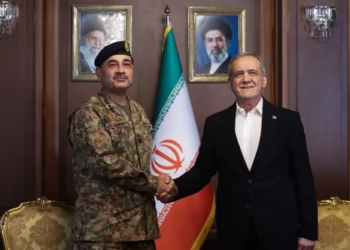
This opening was provided by the Trump administration needing a unique interlocutor today. The government required a mediator for intense diplomatic engagement with the Iranian state. General Munir took on this task after a surprise meeting last June. He held discussions at the White House with President Trump during that time. For Iran, Islamabad’s firm diplomatic support during recent conflicts helped solidify ties. The relationship between these two neighbors has grown much stronger over the past year. Such historical bonds provide a foundation for this delicate diplomatic mediation work today.

Ali Sarwar Naqvi is a former senior Pakistani diplomat with great experience. He currently leads the Centre for International Security Studies located in Islamabad. Naqvi claims that Iran lacked faith in traditional European diplomatic venues recently. Sites like Geneva and Vienna were not trusted to host these crucial talks. Pakistan now possesses the full confidence of all major UN security council members. The nation also enjoys the deep trust of the Iranian leadership as well. Pakistan is a large country with significant nuclear capability and strategic regional importance. Its location makes it an ideal candidate for facilitating these complex regional dialogues.
For several decades, Pakistan has managed to balance ties with China and America. It has also maintained a deep and lasting partnership with various Gulf states. Pakistan was able to call on China to provide assurances to Iran. These specific guarantees helped convince Iran to enter into these peace negotiations. Pakistan’s role in this global arena does not come out of nowhere. The nation has a long history of serving as a vital diplomatic bridge. Zamir Akram is a former Pakistani ambassador with deep knowledge of history. He notes that the Pakistani embassy has represented Iranian interests for many years. This unique arrangement began shortly after the revolution occurred back in nineteen seventy-nine.
Furthermore, Pakistan helped facilitate secret talks back in nineteen seventy-one for America. Those early discussions eventually led to the establishment of diplomatic relations with China. Akram notes that the nation is continuing a long tradition of effective mediation. Pakistan’s primary goal now is ensuring both sides find an honourable exit. Both parties must believe they are achieving a fair result from these talks. The diplomatic environment remains very tense despite the ongoing efforts for lasting peace.
Even during this high-wire diplomacy, Pakistan’s economic vulnerability remains clearly on display. The nation continues to face daily power cuts to save precious national funds. It recently took an emergency three billion dollar loan from Saudi Arabia. There is hope that greater global stature will eventually attract more foreign investment. Such economic growth will depend heavily on implementing necessary and painful structural reforms. The government must lower taxes and enforce more robust laws for real progress. These domestic challenges continue to complicate the country’s ambitious foreign policy goals significantly.
Joshua White is a former White House official with significant regional expertise. He is currently a professor at the prestigious Johns Hopkins University in America. White suggests that traditional policy-making would have initially flagged this risky mission. The United States typically worries about Pakistan’s difficult relationship with the Iranians. He believes the country lacks enough leverage to force a major diplomatic breakthrough. However, the decision-making process in Washington is currently highly personalized and quite unique. It remains dependent on the president’s personal instincts and his own sudden perspectives. The current Pakistani leadership has taken full advantage of this fluid political situation. They have remained quite sophisticated in their efforts to engage the Trump administration.

Elizabeth Threlkeld is a former American diplomat who studies this region very closely. She is currently the director for South Asia at the famous Stimson Center. This American thinktank monitors global developments and produces high-quality research for policymakers. Threlkeld notes that Pakistan’s stock has risen in Washington over the past year. This success stems from its performance during the conflict with India recently. The nation has also taken a more active role in the Middle East. It officially joined the president’s special Board of Peace initiative last year. The significant defense deal signed with Saudi Arabia also boosted its local standing.
The expert believes that Pakistan stands to gain from hosting these critical talks. As long as the country does not set unrealistic expectations for the outcome. It must ensure the meetings occur without any major security incidents or interruptions. Providing an opportunity for both sides to meet is a very valuable service. The nation currently has very little to lose by attempting this difficult task. If successful, the country will greatly enhance its reputation on the global stage. If the efforts fail, it still demonstrates a strong commitment to regional stability. The world will be watching these upcoming developments in the Middle East closely. Pakistan faces a pivotal moment in its ongoing efforts to gain international influence. The coming months will determine if this gamble pays off for the country. Every step in this peace process carries massive weight for the entire region. The government in Islamabad must balance its domestic needs with these international ambitions. Whether this results in a lasting peace remains a very big open question. Regardless, Pakistan is firmly positioning itself at the center of global political discourse. Its future role in these matters seems set to increase significantly from here. The path toward a more stable Middle East remains extremely difficult to navigate. Only time will reveal if these diplomatic efforts can achieve true and lasting success.
Related News:
 George Clooney and Amal Clooney Receive French Citizenship
 Capitol Attack Anniversary Sparks Deep Political Divide
 Saudi Officials Report Zubaidi Flee Before Yemen Peace Talks
 UK Targets in New York Bomb Threat Hoax: Man Jailed
 Gambia Supreme Court Hears Case to Overturn FGM Ban
 Trump targets Iran trade with 25% tariff warning
 Rudd successor: Defence chief and former ministers considered
 US Senate rejects resolution limiting Trump military powers
 Venezuela regime claims release of political prisoners signals new era
 Gulf states warn Trump Iran strikes risk wider Middle East war
 Machado Trump medal gesture reshapes Venezuela power struggle
 Greenland defence seen as shared Nato duty amid troop arrivals
 Geopolitical football: Iran, Trump and the World Cup clash
 Canada-China trade gains momentum in new strategic partnership
 Trump Receives Machado’s Nobel Medal in White House Meeting
 Syria President Declares Victory as Ceasefire Reached with SDF
 US Considers Asylum for British Jews Amid Rising Antisemitism
 Trump slams UK ‘stupidity’ over Chagos Islands, eyes Greenland takeover
 Trump Tightens Grip on EU and UK Energy Supply
 Shinzo Abe’s killer receives life sentence in Japan
 China General Under Investigation Amid Leadership Purge
 Philippines ferry disaster leaves 15 dead, dozens missing
 Cambridge Faces Scrutiny Over Arms Investment Transparency
 Epstein UAE Emails Shake British Royal Andrew’s Legacy
 Christchurch gunman seeks to vacate guilty plea
 Liberal Fallout: Taylor Challenge Casts Shadow Over Sussan Ley’s Leadership
 Infantino Faces Russia Threat and Trump Concerns at Uefa Congress
 Concerns rise for Canberra boy amid Iran detention fears
 Caribbean Leaders Urge Dialogue Amid US Oil Embargo on Cuba
 Anthony Albanese Must Uphold Rights for All Australians
 DHS Probe Into Border Official Sparks National Debate
 Ukraine Sends Drone Experts to Defend US Bases in Jordan
 New Zealand Covid Response Praised Despite Lingering Scars
 Abramovich Chelsea Sale Cash Faces Jersey Probe
 Yvette Cooper: UK Must Follow Principles, Not US Pressure
 US Strike on IRIS Dena Strains Strategic Indian Security Ties
 Slovenia Election: A Nation at a Crossroads
 Jury Rules Meta and YouTube Liable for Addictive Design
 Saudi Arabia Urging US to Keep Up Iran Attacks
 Trump Softens Cuba Oil Stance as Russian Tanker Nears
 The Woman Guarding Earth From the Threat of Asteroids
 IMF Predicts Global Economic Crisis Due to Gulf Unrest
 Spain Shuts Airspace to US Military Over Iran Conflict
 California Defies Trump With Strict New AI Standards
 Germany Grapples With AI Abuse Following TV Star Scandal
 Exiled Tycoon Warns of New Russian Attacks on UK Soil
 Labor Under Fire Over Stalled University Fee Reform
 LA 2028: Millions of Affordable Olympic Tickets Announced
 Trump Slams Europe as Transatlantic Tensions Boil Over
 Inside the Deceptive Machine: A Former Producer Speaks Out
 Italy Faces Third Successive World Cup Absence After Loss
 Turkey End Kosovo Dreams to Secure World Cup Return
 Starmer Urges Ambitious EU Ties Amid Middle East Conflict
 Spain Faces Backlash Over Xenophobic Chants in Egypt Draw
 A Global Voice For Justice: Stephen Lewis Dies At Age 88
 Trump Issues Stark Warning After Strike On Iran’s Largest Bridge
 Hope and Fear as Iranians Flee Across the Turkish Border
 Trump Mocks Starmer and UK Carriers in White House Speech
 Tragic End to Outback Search as Floods Claim a Life
 Ben Roberts-Smith Arrested Over Alleged War Crimes
 Reform UK Pledges To Halt Visas Over Reparations Demands
 US and Iran Agree to Two-Week Provisional Ceasefire
 Starmer visits Gulf as US and Iran agree ceasefire
 Gaza Child Arrives in UK for Life-Changing Care
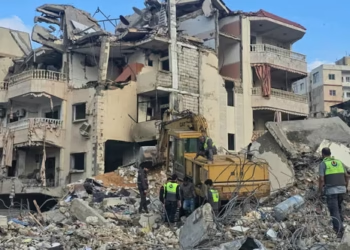 Israel Defies Ceasefire as Lebanon Operations Persist
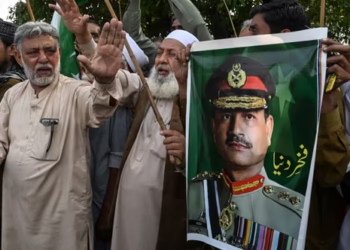 Pakistan Brokers Historic Peace Deal Amid Rising Tensions
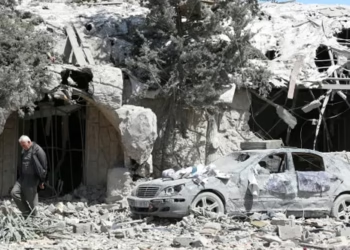 Netanyahu Vows Continued Lebanon Strikes Amid Peace Talks
 UK Holds Firm on Strait of Hormuz Amid Trump Pressure
 Rory McIlroy Eyes New Horizons After Masters Defence
 Trump Signals Hope for New Iran Talks as Ceasefire Fades
 Reeves Slams Trump Over Iran War Lack Of Exit Plan
 US and Iran Pursue Extension of Ceasefire via Pakistan
 Trump’s Islamabad Gamble: The High Stakes of a New Iran Deal
 Wall Street Hits Historic High Amid Hopes for Iranian Peace
 Ian Katz to Step Down as Channel 4 Content Chief
 Middle East Conflict Risks UK Food Supply Chains This Summer
 The General’s Gambit: Pakistan’s New Role in Global Peace
 England Eye Landmark 500th Game Glory in Iceland
 Mexico, Spain and Brazil call for Cuba dialogue amid crisis
 US Forces Seize Iranian Ship Near Hormuz Blockade