Published: 15 April 2026. The English Chronicle Desk. The English Chronicle Online.
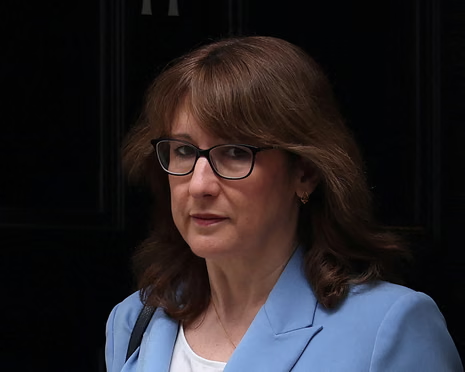
The British Chancellor Rachel Reeves has delivered a stinging rebuke regarding recent global events. She specifically targeted the strategic choices made by the administration of President Donald Trump today. Her comments focused on the military conflict currently unfolding between the United States and Iran. Reeves described the decision to enter this war as a moment of absolute folly. She expressed deep frustration while speaking to the press before her trip to Washington DC. The Chancellor is traveling for the highly anticipated International Monetary Fund spring meeting this week. Her remarks represent a significant escalation in the rhetoric coming from the British government lately. She criticized the lack of a clear exit strategy for the ongoing military campaign. The conflict has already caused a sharp increase in global oil prices this month. Western nations now face a renewed threat of high inflation across their domestic economies. These tensions follow the total collapse of peace talks held recently in Islamabad, Pakistan. Negotiations between American and Iranian officials ended without any formal agreement or a ceasefire. The United States has now officially initiated a blockade of several key Iranian ports today. This blockade specifically targets the Strait of Hormuz where oil tankers frequently pass through daily.

The Chancellor stated that the United Kingdom did not start this damaging global conflict. She emphasized that the British government never wanted to see such a war begin. Reeves shared her feelings of anger regarding the lack of clear American strategic objectives. She believes the United States entered the war without knowing what they hoped to achieve. The closure of the Strait of Hormuz has now become a reality for shipping. This blockade is currently disrupting the vital flow of energy supplies to the entire world. Reeves noted that no sensible person supports the actions of the current Iranian regime. However, she argued that starting a war without a plan is a major error. This folly is now affecting the daily lives of families living in the United Kingdom. American families are also feeling the economic pinch from this sudden and violent escalation. The Chancellor remains firm that the decision to start the war was entirely wrong. She praised Prime Minister Keir Starmer for his resolve in keeping Britain out of it. The Prime Minister has resisted significant international pressure to join the American military effort.
These new comments from Reeves go much further than any previous government statements made. They signal a growing rift between the leadership in London and the White House today. Keir Starmer addressed the House of Commons on Monday to discuss the regional crisis. He told lawmakers that Britain would not be dragged into this particular foreign war. The Prime Minister insisted his decision remains the right path for the British people. He acknowledged that the pressure to join the conflict has been considerable and constant. Meanwhile, the International Monetary Fund has released very concerning economic forecasts for the year. These figures suggest that the UK will suffer more than any other G7 nation. Economic growth is now expected to reach only zero point eight percent this year. This is a sharp drop from the previous forecast of one point three percent. The war in the Middle East is the primary driver of this economic slowdown. High energy costs are expected to persist as long as the blockade continues daily. Rachel Reeves has promised to provide additional support for the poorest British households soon. This support will target rising energy bills that are expected to climb this summer.
The Chancellor is also facing intense political pressure to cancel the fuel duty rise. This planned increase was set to take effect across the country this coming September. Many analysts believe the government must act to protect consumers from soaring petrol prices. Keir Starmer has established a special committee of ministers to monitor the domestic impact. This committee met for the very first time last Friday to discuss the crisis. Official sources confirmed the ministers focused on the situation in the Strait of Hormuz. Downing Street released a statement highlighting the long-term impacts of the current global crisis. They stated that national resilience is now at the heart of their governing approach. The Prime Minister is scheduled to travel to Paris for an international summit tomorrow. More than forty countries will gather there to discuss the safety of global shipping. They hope to find a way to safeguard vessels passing through the dangerous waterway. The agenda includes discussions on how to effectively de-mine the busy Middle Eastern channel. Leaders also want to coordinate the rescue of ships currently stranded in the area. They eventually hope to restore the safe passage of commercial goods for all nations.

The United States government is currently not expected to attend this particular French summit. Many world leaders have chosen to participate in the discussions virtually rather than traveling. This highlights the growing diplomatic isolation of the American position regarding the Iranian blockade. The Chancellor’s trip to Washington will likely be filled with very tense diplomatic exchanges. She must represent British interests while navigating a very difficult relationship with the Americans. The economic fallout from the war is becoming the central focus of global politics. Inflation remains a persistent ghost haunting the recovery of the post-pandemic global trade markets. Households in the United Kingdom are watching the news with a sense of dread. They worry about the cost of living as energy markets react to the blockade. The Chancellor understands that her words carry great weight on the international political stage. By calling the war a folly, she has set a very clear boundary. Britain remains a close ally of the United States but will not follow blindly. The focus in London is now firmly on protecting the domestic economy from shocks.
The government is trying to balance its diplomatic duties with the needs of voters. Every decision made in the coming weeks will have a lasting impact on growth. The Prime Minister remains committed to his policy of non-intervention in this specific conflict. He believes that British involvement would only make the economic situation much worse today. The public seems to support the idea of staying out of another foreign war. Memories of previous conflicts in the Middle East still linger in the national mind. Reeves will use her time in Washington to advocate for a peaceful resolution. She wants to see the global shipping lanes reopened as quickly as possible now. The IMF meeting will be a critical test for her skills as Chancellor. She must convince other finance ministers that stability is the only way forward now. The world is watching to see how the United States responds to criticism. Tensions in the Strait of Hormuz show no signs of easing in the future. This conflict represents a major turning point for international relations in the modern era. The English Chronicle will continue to provide updates on this developing global news story. Readers can expect more detailed analysis as the IMF meeting begins in Washington. For now, the focus remains on the words of a frustrated British Chancellor. Her message to the White House was clear, direct, and filled with genuine concern. The folly of war is a price that everyone is currently paying today. British families are waiting to see if their energy bills will actually stay manageable. The government promises to act, but the global situation remains incredibly volatile and uncertain.
Related News:
 EU Weakens as Trump Targets Venezuela and Greenland
 Venezuela Oil Deal Opens Tensions with US Control
 US Citizens Warned to Venezuela Flee Amid Paramilitary Threats
 Gulf states warn Trump Iran strikes risk wider Middle East war
 Machado Trump medal gesture reshapes Venezuela power struggle
 Greenland defence seen as shared Nato duty amid troop arrivals
 Gulf states warn Trump Iran strikes risk wider Middle East war
 Trump Receives Machado’s Nobel Medal in White House Meeting
 Iran unrest slows under brutal crackdown and global tensions
 Syria President Declares Victory as Ceasefire Reached with SDF
 US Considers Asylum for British Jews Amid Rising Antisemitism
 Thousands Protest ICE Operations in Nationwide US Day of Action
 Epstein Files Reveal Trump Officials’ Emails with Financier
 Thousands Protest ICE in New York Against Trump Deportation Campaign
 Sydney Protest Pepper Spray Clash During Herzog Visit
 Cuba Kills Exiles in Speedboat Attack from US Waters
 Yvette Cooper: UK Must Follow Principles, Not US Pressure
 Saudi Arabia Urging US to Keep Up Iran Attacks
 Washington Enlists Musk to Battle Global Hostility Online
 Macron Urges Stability as Trump Jolts Nato and Iran
 Trump Address Sparks Global Backlash Over Iran War Tactics
 Macron Rebukes Trump Following Mockery of His Marriage
 Trump Sets Tuesday Deadline for Iran to Reopen Vital Strait
 Tragic End to Outback Search as Floods Claim a Life
 Ben Roberts-Smith Arrested Over Alleged War Crimes
 Trump and Tehran Find Common Ground in Landmark Ceasefire
 Netanyahu Vows Continued Lebanon Strikes Amid Peace Talks
 Trump Predicts Rapid Return to Peace Talks in Pakistan
 US and Iran Pursue Extension of Ceasefire via Pakistan
 Pope Leo Calls for Global Unity Following Trump Criticism
 Trump Brokers Ten Day Ceasefire to Halt Lebanon Conflict
 Mexico, Spain and Brazil call for Cuba dialogue amid crisis
 Tensions Flare as Iran Rejects New Peace Talks with US
 Ukraine Urges UK to Seize Russian Oil Tankers
 US Calls Australia Media Law “Foreign Extortion”
 Tragic End to Search for Missing Girl in Alice Springs
 Questions Remain Over The Tragic Bondi Massacre
 Activists allege abuse after Gaza flotilla seizure
 Ukraine strikes Tuapse as oil disaster worsens
 Global order shifts amid Trump-era turmoil
 Australia pushes Pacific security pact amid China tension
 Indiana Republicans Defy Trump in Key Vote Test
 Middle East Crisis Escalates as Oil Routes Shake Markets
 FIFA Confirms Global Ban for Benfica Star Prestianni
 New South Wales Wetland Rescue Legislation Passes
 Tensions Emerge in Netanyahu-Trump Alliance
 Putin Declares Russia Victory at Scaled Victory Day Parade
 US and Mexico Face Heatwave as Floods Batter South Africa
 The Long Way Home: Australia’s High-Stakes Virus Mission
 Trump Warns Iran Ceasefire Is Now on Life Support
 Putin Signals War End as Russian Momentum Stalls
 Scepticism and tight security as Beijing braces for Trump
 UN Faces Crucial Vote on Landmark ICJ Climate Ruling
 US-Mexico Crisis: Cartel Allegations Push Ties to Brink
 Netanyahu Calls Early Election Amid Coalition Turmoil
 Philippine Senator Flees After Days Under Senate Siege
 Solomon Islands Elects China Critic Matthew Wale as Leader
 Tragedy in the Maldives: Inside the Deep Sea Rescue
 US Ebola Case Sparks Urgent Global Screening Measures
 Xi Hosts Putin in Beijing Days After Landmark Trump Summit
 Fragile Truce Shattered as Violence Escapes Diplomatic Control
 The Hunt for Bato: Inside the Hunt for the Fugitive Senator
 Israeli Strikes in Lebanon Kill 10 Amid Ceasefire Strain
 Zelenskyy warns over Oreshnik threat as Kyiv hit
 Hunger increasingly weaponised in global conflicts
 Discontent grows around Putin amid war strain
 Former ICC prosecutor condemns US sanctions
 Bondi Tragedy Survivors Face Online Abuse After Inquiries
 Japan Suffers Plastic Shortage Due to Middle East Crisis
 Venezuela Opposition Steers Uncharted Path Forward
 Aukus Deal Facing Fierce Backing and Historic Criticism
 Thai Princess Bajrakitiyabha Passes Away at 47
 Sentenced to 30 Years: Former Leader’s Secret Drone Plot
 Kyiv Heritage Blazes After Night of Brutal Russian Strikes
 Iran To Propose New Shipping Fees In Strait Of Hormuz
 Trump’s Iran Legacy Hangs on Tehran Deal
 High Drama in Tehran Over Secret Nuclear Letters
 Houthis Strike Saudi Arabia as Middle East Tensions Rise
 Taliban global ties grow as rights fears mount
 Seoul proposes historic peace talks to replace Korean War armistice