Published: 26 May 2026. The English Chronicle Desk. The English Chronicle Online.
The ongoing Australian royal commission investigation has revealed a deeply troubling trend of targeted hostility. Jewish citizens who bravely stepped forward to share their stories are now facing intense digital backlash. This sudden surge in online vitriol began immediately after their formal public testimonies concluded. Prominent legal figures have expressed deep shock over the relentless nature of these digital attacks. The commissioner leading the landmark inquiry has publicly condemned the wave of anonymous hatred. Federal law enforcement agencies have already been called in to investigate the most severe threats.
The official inquiry was established to examine the rising levels of societal prejudice nationwide. Recent hearings focused heavily on the lived experiences of minority groups within local communities. Witnesses provided emotional accounts of the challenges they face in their daily lives. Instead of finding safety in the legal process, many faced immediate cyberbullying online. The disturbing aftermath highlights the growing danger that digital platforms present to public witnesses. Security experts warn that online harassment can quickly cross over into real world harm.
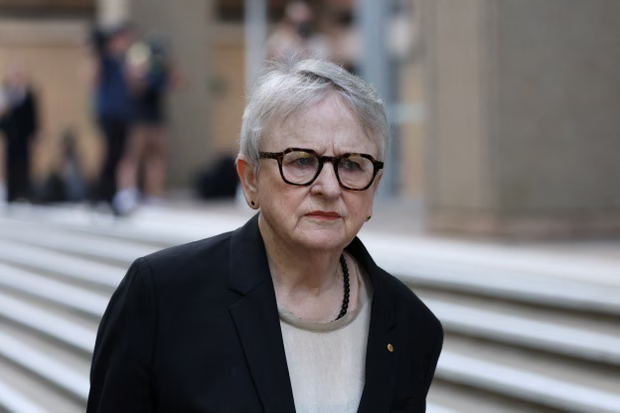
Commissioner Virginia Bell addressed the troubling situation directly during a morning court session. She confirmed that at least one serious incident required immediate federal police intervention. The commission is actively monitoring social media channels to document every offensive statement made. Bell stated that the sheer volume of bigotry directed at witnesses was entirely baffling. She emphasized that these malicious actions only prove the urgent need for this inquiry. The hostile behavior perfectly illustrates the exact type of prejudice they are investigating.
The current legal proceedings are examining a catastrophic security failure from late last year. Public hearings recently focused on the tragic events surrounding a community holiday celebration. New South Wales police representatives provided extensive testimony about their early event security preparations. They detailed the specific planning logistics arranged for the outdoor gathering in December. The community event was designed to be a peaceful celebration by the ocean. However, the evening ended in unprecedented violence that shocked the entire Australian nation.
The horrific incident took place during a traditional coastal Chanukah by the Sea gathering. Two armed individuals launched a coordinated attack from a footbridge overlooking the crowded park. The attackers opened fire indiscriminately on families gathered together on the beach below. The primary shooter was identified by local counter-terrorism police as Sajid Akram. His young son Naveed actively participated in the deadly assault alongside his father. The terrifying ambush transformed a joyful community celebration into a scene of absolute chaos.
The fast-moving assault resulted in the tragic deaths of fifteen innocent community members. Responding police officers shot and killed the older gunman during the active shootout. The younger shooter sustained injuries before being successfully disarmed and taken into custody. He currently faces multiple severe legal charges including fifteen counts of first degree murder. Federal investigators allege the violent attack was heavily inspired by global extremist networks. The devastating incident remains one of the worst public shootings in modern Australian history.
Recent court disclosures revealed the terrifying speed and efficiency of the initial ambush. The gunmen managed to shoot eleven people within the first thirty seconds of firing. Ten of those initial victims tragically sustained fatal wounds from the high-powered weapons. The entire deadly ordeal lasted just under eight minutes before authorities regained control. The sheer speed of the violence left victims with almost no time to flee. The detailed timeline presented to the commission painted a grim picture of the event.
Senior police officials admitted the tragic event fundamentally altered national law enforcement strategies. Assistant Commissioner Peter McKenna stated that Australian policing methods have changed permanently since then. The horrifying reality of the beachside massacre forced a massive reassessment of public safety. Operational priorities across the entire organization were drastically restructured following the devastating December attack. Security protocols for large public gatherings are now far more stringent than before. Law enforcement agencies are adapting to a much more dangerous domestic security environment.
The commission questioned why intelligence agencies failed to anticipate the specific security threat. McKenna explained that police departments always operate under strict resource limitations across regions. He stated that investigators possessed absolutely no actionable intelligence regarding a potential plot. Without specific prior warnings, authorities cannot accurately predict where criminals will strike next. He noted that any popular shopping district or religious service could be targeted. Police cannot simply guess which public locations require permanent high security deployments.
In response to the tragedy, heavily armed officers are now visible at events. Specialized tactical units routinely patrol community gatherings to deter potential copycat style attacks. This visible shift in security strategy reflects the heightened anxiety felt across communities. Many citizens welcome the increased protection while mourning the loss of previous freedoms. The presence of military style weapons underscores the grim reality of modern security. Australia has entered a challenging new era regarding public safety and counter-terrorism.
The inquiry challenged suggestions that police officials underestimated the overall threat level. Legal representatives questioned whether the holiday event was assigned an inappropriately low risk. The local Community Security Group had explicitly requested a stationary police presence throughout. Instead, command staff authorized a mobile patrol unit to visit the site periodically. An internal email revealed that officers were told they did not need to stay. This operational decision left the gathering vulnerable during the critical moments of the attack.
Only four police officers were physically present when the shooting began at the park. The focus of the investigation remains on how the gunmen bypassed intelligence networks. McKenna emphasized that the primary issue was the complete lack of prior information. The department is determined to understand how the suspects planned the massacre undetected. The commission will continue gathering evidence to prevent similar tragedies from occurring again. Meanwhile, the community demands both accountability and better protection from future digital and physical threats.
Related News:
 EU Weakens as Trump Targets Venezuela and Greenland
 Venezuela Oil Deal Opens Tensions with US Control
 US Citizens Warned to Venezuela Flee Amid Paramilitary Threats
 Gulf states warn Trump Iran strikes risk wider Middle East war
 Machado Trump medal gesture reshapes Venezuela power struggle
 Greenland defence seen as shared Nato duty amid troop arrivals
 Gulf states warn Trump Iran strikes risk wider Middle East war
 Trump Receives Machado’s Nobel Medal in White House Meeting
 Iran unrest slows under brutal crackdown and global tensions
 Syria President Declares Victory as Ceasefire Reached with SDF
 US Considers Asylum for British Jews Amid Rising Antisemitism
 Thousands Protest ICE Operations in Nationwide US Day of Action
 Epstein Files Reveal Trump Officials’ Emails with Financier
 Thousands Protest ICE in New York Against Trump Deportation Campaign
 Sydney Protest Pepper Spray Clash During Herzog Visit
 Cuba Kills Exiles in Speedboat Attack from US Waters
 Yvette Cooper: UK Must Follow Principles, Not US Pressure
 Saudi Arabia Urging US to Keep Up Iran Attacks
 Washington Enlists Musk to Battle Global Hostility Online
 Macron Urges Stability as Trump Jolts Nato and Iran
 Trump Address Sparks Global Backlash Over Iran War Tactics
 Macron Rebukes Trump Following Mockery of His Marriage
 Trump Sets Tuesday Deadline for Iran to Reopen Vital Strait
 Tragic End to Outback Search as Floods Claim a Life
 Ben Roberts-Smith Arrested Over Alleged War Crimes
 Trump and Tehran Find Common Ground in Landmark Ceasefire
 Netanyahu Vows Continued Lebanon Strikes Amid Peace Talks
 Trump Predicts Rapid Return to Peace Talks in Pakistan
 Reeves Slams Trump Over Iran War Lack Of Exit Plan
 US and Iran Pursue Extension of Ceasefire via Pakistan
 Mexico, Spain and Brazil call for Cuba dialogue amid crisis
 Ukraine Urges UK to Seize Russian Oil Tankers
 US Calls Australia Media Law “Foreign Extortion”
 Oil Prices Surge Above $120 Amid Iran Blockade Fears
 Tragic End to Search for Missing Girl in Alice Springs
 Questions Remain Over The Tragic Bondi Massacre
 Trump orders US troop pullout from Germany
 Activists allege abuse after Gaza flotilla seizure
 Ukraine strikes Tuapse as oil disaster worsens
 Japan Protests Erupt Over Plans to Revise Constitution
 Australia pushes Pacific security pact amid China tension
 Indiana Republicans Defy Trump in Key Vote Test
 Middle East Crisis Escalates as Oil Routes Shake Markets
 FIFA Confirms Global Ban for Benfica Star Prestianni
 New South Wales Wetland Rescue Legislation Passes
 Tensions Emerge in Netanyahu-Trump Alliance
 US and Mexico Face Heatwave as Floods Batter South Africa
 The Long Way Home: Australia’s High-Stakes Virus Mission
 Trump Warns Iran Ceasefire Is Now on Life Support
 Putin Signals War End as Russian Momentum Stalls
 Fear and Betrayal: The Chilling Case of Kouri Richins
 Scepticism and tight security as Beijing braces for Trump
 UN Faces Crucial Vote on Landmark ICJ Climate Ruling
 US-Mexico Crisis: Cartel Allegations Push Ties to Brink
 Philippine Senator Flees After Days Under Senate Siege
 Solomon Islands Elects China Critic Matthew Wale as Leader
 Tragedy in the Maldives: Inside the Deep Sea Rescue
 US Ebola Case Sparks Urgent Global Screening Measures
 Xi Hosts Putin in Beijing Days After Landmark Trump Summit
 Fragile Truce Shattered as Violence Escapes Diplomatic Control
 The Hunt for Bato: Inside the Hunt for the Fugitive Senator
 Israeli Strikes in Lebanon Kill 10 Amid Ceasefire Strain
 Zelenskyy warns over Oreshnik threat as Kyiv hit
 Hunger increasingly weaponised in global conflicts
 Discontent grows around Putin amid war strain
 Former ICC prosecutor condemns US sanctions
 Japan Suffers Plastic Shortage Due to Middle East Crisis
 Venezuela Opposition Steers Uncharted Path Forward
 Aukus Deal Facing Fierce Backing and Historic Criticism
 Thai Princess Bajrakitiyabha Passes Away at 47
 Sentenced to 30 Years: Former Leader’s Secret Drone Plot
 Kyiv Heritage Blazes After Night of Brutal Russian Strikes
 Trump’s Iran Legacy Hangs on Tehran Deal
 High Drama in Tehran Over Secret Nuclear Letters
 Houthis Strike Saudi Arabia as Middle East Tensions Rise
 Taliban global ties grow as rights fears mount
 Russian Missiles Intensify Pressure on Kyiv
 Trump Calls Strait of Hormuz ‘American Territory’
 Trump Faces Iran War Crisis Before Midterm Vote
 Former Diplomats Urge UK and France to Act on Palestine