Published: 14 May 2026. The English Chronicle Desk. The English Chronicle Online.
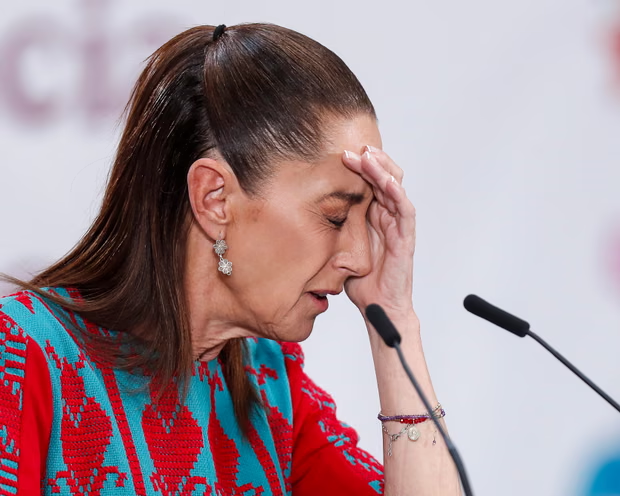
The diplomatic landscape between Mexico and the United States is currently facing an unprecedented and dangerous period of instability. Relations are being pushed toward a total breaking point following explosive accusations from high-ranking officials in Washington. These claims suggest that Mexican government figures have maintained corrupt ties with drug traffickers for many years. Adding to this tension are recent reports detailing clandestine operations by foreign intelligence agents on Mexican soil. President Claudia Sheinbaum addressed these serious allegations during a terse news conference held on Wednesday afternoon. She stated that many external forces are currently betting on the failure of her administration. Sheinbaum emphasized that while Mexico desires a good relationship, sovereignty remains a non-negotiable limit for her. This firm stance comes after inflammatory testimony was delivered to the United States Senate this week. Drug Enforcement Agency director Terry Cole did not hold back during his Tuesday morning hearing. He told senators there is no doubt that narco-traffickers and high-ranking officials are deeply connected. Cole claimed these officials are responsible for the record levels of American deaths from illicit drugs. He argued that they have actively conspired to help produce the poison crossing the northern border.
This public condemnation represents a significant escalation in the ongoing pressure campaign from the White House. President Donald Trump has frequently threatened to send military forces south to tackle the cartels directly. In recent weeks, this rhetoric has intensified, leaving President Sheinbaum in a very difficult political position. She must now balance the demands of her party with an increasingly hawkish American administration. Former Mexican foreign minister Jorge Castañeda has described this current situation as the most difficult since the eighties. He noted that the two nations are entering a moment of friction unlike any seen before. Despite the constant stream of threats from Trump, Sheinbaum had previously managed to maintain a calm appearance. She had consistently denied that any American military presence would be permitted on Mexican territory. At the same time, she has often bowed to specific demands from her northern neighbor. Over the past year, Mexico has extradited nearly one hundred cartel members to the United States. Cooperation seemed to reach a high point in February when a major cartel leader was killed. American officials celebrated that event as a great development for regional security and bilateral cooperation.
However, this thin veneer of cooperation began to fray badly during the course of last month. Reports emerged suggesting that CIA agents were involved in a raid on a northern drug laboratory. This operation apparently took place without any prior approval or knowledge from the Mexican federal government. If true, such actions would represent a clear violation of the Mexican national constitution and laws. Tensions spiked further when the US Justice Department took the bold step of charging a governor. Rubén Rocha Moya, the governor of Sinaloa, was indicted alongside nine other current and former officials. They are accused of aiding the Sinaloa cartel in the massive importation of illegal narcotics. The indictment of a high-ranking member of Sheinbaum’s Morena party was seen as a personal insult. Rather than handing the governor over immediately, Sheinbaum chose to close ranks with her political allies. She argued that Washington had failed to provide any meaningful evidence to support the serious charges. The Mexican leader insisted that no foreign government would decide the future of the Mexican people. This defiance has set the stage for a much larger confrontation with the American legal system.
The legal threats from the north show no signs of slowing down in the coming days. Last week, US acting attorney general Todd Blanche warned that more charges against officials are coming. This threat was made even more explicit during the recent testimony provided by director Terry Cole. He suggested that the indictment of Rocha was merely the start of a much larger wave. Analysts believe that these constant allegations are successfully backing the Mexican president into a difficult corner. Expert Jesús Pérez Caballero noted that Mexico is now forced to remain on the defensive constantly. It is becoming nearly impossible for the government to establish a narrative that protects national interests. Every move by the Mexican presidency is now scrutinized through the lens of these corruption claims. The pressure is not only coming from legal indictments but also from the media landscape. On Tuesday, CNN published a report detailing secret operations by the CIA Ground Branch unit. The report alleged that the agency facilitated the assassination of a cartel member in March. This individual was reportedly killed by a car bomb on a very busy highway. These types of covert actions represent a significant departure from standard international law enforcement protocols.
The CNN report further alleged that the CIA has been involved in several deadly attacks. These operations have supposedly been targeting various cartel members since the beginning of last year. These claims align closely with comments made by President Trump regarding a special land force. He recently stated that if Mexico will not do the job, America will do it. This rhetoric suggests a total disregard for the traditional boundaries of national sovereignty and diplomacy. President Sheinbaum was quick to reject these specific media reports during her Wednesday news conference. She called the idea of CIA agents operating freely in her territory a total fiction. She maintained that her government is in full control of the national security apparatus. However, many experts believe her bravura may be a temporary shield against an inevitable retreat. Mexico remains deeply integrated with the United States on an economic and social level. This intimacy leaves the Mexican leader with very little room to maneuver or resist. Trade agreements and cross-border commerce are essential for the stability of the Mexican national economy.
Jorge Castañeda believes that the problems facing Sheinbaum are essentially unsolvable without significant concessions to Washington. He argued that she will eventually have to hand over Governor Rocha and others. In his view, there is no alternative that does not involve an enormous economic cost. The sheer weight of American influence over Mexican financial markets provides Washington with immense leverage. If the White House chooses to use economic sanctions, the Mexican economy could face a collapse. This reality makes the fiery rhetoric of sovereignty seem somewhat hollow to many international political observers. The Mexican public is also divided on how to handle the growing influence of the cartels. While many people value their national dignity, they also fear the rising tide of violence. The perception of government corruption continues to erode trust in domestic institutions and political leadership. This internal pressure makes it even harder for Sheinbaum to present a truly united front. The United States seems fully aware of these internal fractures and is exploiting them. By targeting specific officials, Washington is creating a sense of paranoia within the Mexican ruling party.
The coming months will likely determine the future of the North American security partnership. If the United States continues to bypass official channels, the relationship could suffer permanent damage. Conversely, if Mexico refuses to address the deep-seated corruption, American interventionism may become the new norm. The shift toward more aggressive tactics by the DEA and CIA suggests a policy change. Washington appears to have lost patience with traditional diplomatic engagement regarding the drug trade crisis. This shift has significant implications for the entire Latin American region and international law. Other nations are watching closely to see how Mexico defends its borders against its neighbor. The potential for a military or intelligence-led escalation remains a very real and present danger. For now, the war of words continues to dominate the headlines in both countries. Sheinbaum is attempting to project strength while the White House is projecting a demand for results. The tragedy of the drug crisis continues to provide the backdrop for this high-stakes game. Thousands of lives are lost every year to the violence and the narcotics themselves. Solving this issue requires a level of trust that currently does not exist between these nations. Without a shared path forward, the breaking point may soon be reached with devastating consequences. Both governments must find a way to cooperate that respects law and human life.
Related News:
 EU Weakens as Trump Targets Venezuela and Greenland
 Venezuela Oil Deal Opens Tensions with US Control
 US Citizens Warned to Venezuela Flee Amid Paramilitary Threats
 Gulf states warn Trump Iran strikes risk wider Middle East war
 Machado Trump medal gesture reshapes Venezuela power struggle
 Greenland defence seen as shared Nato duty amid troop arrivals
 Gulf states warn Trump Iran strikes risk wider Middle East war
 Trump Receives Machado’s Nobel Medal in White House Meeting
 Iran unrest slows under brutal crackdown and global tensions
 Syria President Declares Victory as Ceasefire Reached with SDF
 US Considers Asylum for British Jews Amid Rising Antisemitism
 Thousands Protest ICE Operations in Nationwide US Day of Action
 Epstein Files Reveal Trump Officials’ Emails with Financier
 Thousands Protest ICE in New York Against Trump Deportation Campaign
 Sydney Protest Pepper Spray Clash During Herzog Visit
 Cuba Kills Exiles in Speedboat Attack from US Waters
 Yvette Cooper: UK Must Follow Principles, Not US Pressure
 Saudi Arabia Urging US to Keep Up Iran Attacks
 Washington Enlists Musk to Battle Global Hostility Online
 Teen Girl Charged After Alleged Melbourne Hate Crime Spree
 Macron Urges Stability as Trump Jolts Nato and Iran
 Trump Address Sparks Global Backlash Over Iran War Tactics
 Macron Rebukes Trump Following Mockery of His Marriage
 Trump Sets Tuesday Deadline for Iran to Reopen Vital Strait
 Tragic End to Outback Search as Floods Claim a Life
 Ben Roberts-Smith Arrested Over Alleged War Crimes
 Trump and Tehran Find Common Ground in Landmark Ceasefire
 Netanyahu Vows Continued Lebanon Strikes Amid Peace Talks
 Trump Predicts Rapid Return to Peace Talks in Pakistan
 Reeves Slams Trump Over Iran War Lack Of Exit Plan
 US and Iran Pursue Extension of Ceasefire via Pakistan
 Mexico, Spain and Brazil call for Cuba dialogue amid crisis
 Ukraine Urges UK to Seize Russian Oil Tankers
 US Calls Australia Media Law “Foreign Extortion”
 Oil Prices Surge Above $120 Amid Iran Blockade Fears
 Tragic End to Search for Missing Girl in Alice Springs
 Questions Remain Over The Tragic Bondi Massacre
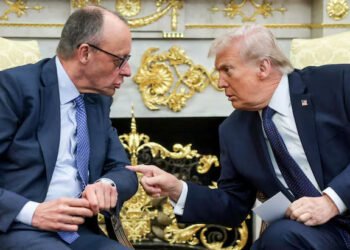 Trump orders US troop pullout from Germany
 Activists allege abuse after Gaza flotilla seizure
 Ukraine strikes Tuapse as oil disaster worsens
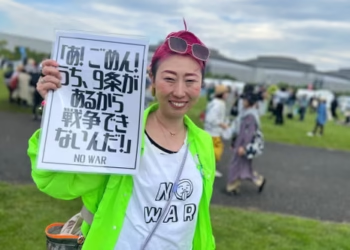 Japan Protests Erupt Over Plans to Revise Constitution
 Australia pushes Pacific security pact amid China tension
 Indiana Republicans Defy Trump in Key Vote Test
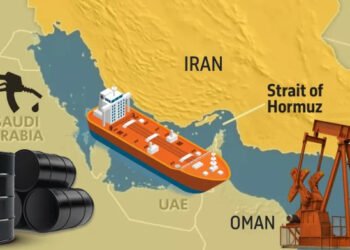 Middle East Crisis Escalates as Oil Routes Shake Markets
 FIFA Confirms Global Ban for Benfica Star Prestianni
 New South Wales Wetland Rescue Legislation Passes
 Tensions Emerge in Netanyahu-Trump Alliance
 US and Mexico Face Heatwave as Floods Batter South Africa
 The Long Way Home: Australia’s High-Stakes Virus Mission
 Trump Warns Iran Ceasefire Is Now on Life Support
 Putin Signals War End as Russian Momentum Stalls
 Fear and Betrayal: The Chilling Case of Kouri Richins
 Scepticism and tight security as Beijing braces for Trump
 UN Faces Crucial Vote on Landmark ICJ Climate Ruling
 Netanyahu Calls Early Election Amid Coalition Turmoil
 Philippine Senator Flees After Days Under Senate Siege
 Solomon Islands Elects China Critic Matthew Wale as Leader
 Tragedy in the Maldives: Inside the Deep Sea Rescue
 US Ebola Case Sparks Urgent Global Screening Measures
 Xi Hosts Putin in Beijing Days After Landmark Trump Summit
 Fragile Truce Shattered as Violence Escapes Diplomatic Control
 The Hunt for Bato: Inside the Hunt for the Fugitive Senator
 Israeli Strikes in Lebanon Kill 10 Amid Ceasefire Strain
 Zelenskyy warns over Oreshnik threat as Kyiv hit
 Hunger increasingly weaponised in global conflicts
 Discontent grows around Putin amid war strain
 Former ICC prosecutor condemns US sanctions
 Bondi Tragedy Survivors Face Online Abuse After Inquiries
 Japan Suffers Plastic Shortage Due to Middle East Crisis
 Venezuela Opposition Steers Uncharted Path Forward
 Aukus Deal Facing Fierce Backing and Historic Criticism
 Thai Princess Bajrakitiyabha Passes Away at 47
 Sentenced to 30 Years: Former Leader’s Secret Drone Plot
 Kyiv Heritage Blazes After Night of Brutal Russian Strikes
 Iran To Propose New Shipping Fees In Strait Of Hormuz
 Trump’s Iran Legacy Hangs on Tehran Deal
 High Drama in Tehran Over Secret Nuclear Letters
 Houthis Strike Saudi Arabia as Middle East Tensions Rise
 Taliban global ties grow as rights fears mount
 Seoul proposes historic peace talks to replace Korean War armistice