Published: 11 June 2026. The English Chronicle Desk. The English Chronicle Online.
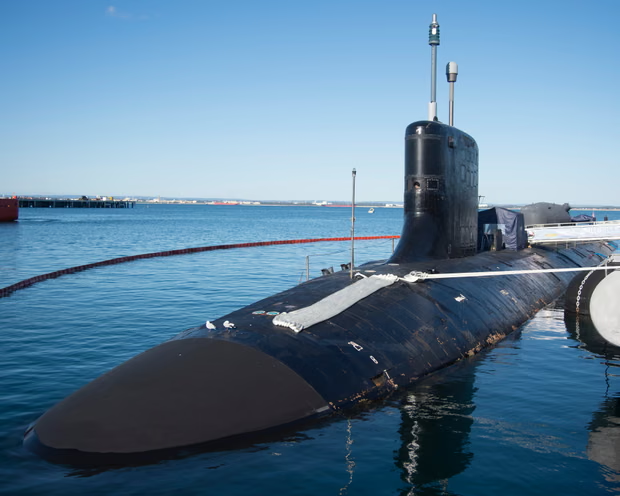
The controversial Aukus security pact has faced fierce new opposition from high profile Australian figures. Former foreign affairs minister Gareth Evans delivered a scathing critique of the trilateral defense agreement. Speaking to an independent public inquiry, Evans labeled the pact as a disastrous policy mistake. He argued that the alliance diminishes the national sovereignty of the Australian continent. The deal secures nuclear powered submarines from both the United States and United Kingdom.
Evans served as a prominent cabinet minister during the historic Hawke and Keating governments. He warned that the incoming submarines will merely serve as extensions of Washington. The massive defence project is currently projected to cost over three hundred billion dollars. Evans stated that relying on American military intervention during a major crisis remains delusional. He suggested that a future American administration would prioritize domestic security over foreign alliances.
The inquiry took place in Melbourne amidst growing public debate regarding regional safety. Evans expressed deep skepticism about the delivery timeline for the American vessels. He noted that the United States fleet faces significant domestic construction delays. The second phase of the project relies heavily on sophisticated British naval architecture. Evans remarked that expecting seamless integration requires an incredibly heroic level of optimism. Reports indicate that the British defence industrial base is facing extraordinary financial stress.
Australia has pledged billions of dollars to help boost manufacturing rates in Britain. However, critics argue that the estimated price tag remains entirely speculative and unstable. Evans suggested that Washington views these submarines as supplementary assets for their fleet. The primary strategic objective appears to involve tracking and neutralizing Chinese underwater naval capabilities. This strategy focuses heavily on protecting the American mainland from potential nuclear threats. The independent inquiry received additional testimony from prominent global peace and safety advocates. Associate Professor Tilman Ruff provided expert evidence regarding the dangers of nuclear proliferation. Ruff previously co-founded the Nobel Peace Prize winning international campaign to abolish nuclear weapons. He warned that the Aukus agreement will inevitably exacerbate existing tensions in Asia. The presence of these vessels could make Australia a prime target for attacks.
Ruff raised serious environmental and safety concerns regarding highly enriched weapons grade uranium. The submarines require this material for propulsion, creating a massive radioactive waste problem. No country has successfully resolved the long term storage of high level waste. The hazardous material remains dangerous to human life over hundreds of thousands of years. Future generations could potentially unearth the buried waste to manufacture crude nuclear weapons.
Australia has historically struggled to establish permanent radioactive waste facilities across the country. Local communities have consistently resisted the imposition of nuclear dumps near their homes. Ruff expressed deep concern over federal laws regarding the designation of defence land. The government holds the power to seize territory for waste storage without consent. This authority presents a profound challenge to democratic governance and environmental safety standards.
The public inquiry is being heavily backed by powerful domestic trade union organizations. The Australian Peace and Security Forum is also actively supporting the ongoing review. Former Labor minister Peter Garrett is helping lead the commission alongside military experts. Former defence force chief Chris Barrie is providing critical oversight for the independent panel. The commissioners plan to hold multiple public hearings across the country this summer.
Current Australian Labor ministers have quickly dismissed the inquiry as inherently biased. Government officials claim the panel was designed from the outset to oppose Aukus. The commissioners intend to deliver a comprehensive final report on their findings this October. Meanwhile, senior diplomats are actively working to reinforce the foundations of the alliance. Foreign Minister Penny Wong confirmed recent productive talks with her British cabinet counterparts.
The United Kingdom government announced that construction milestones are progressing according to plan. The first steel for the new joint submarines will be cut next year. This progress comes despite the British submarine program running significantly over original budgets. British naval projects have also faced years of administrative and technical delivery delays. Wong firmly defended the ambitious project as essential for safeguarding future national sovereignty.
The global security landscape has become vastly more contested over the past decade. Government leaders insist that advanced submarine capability is necessary to protect trade routes. Labor officials acknowledge that the massive engineering project presents unprecedented industrial challenges. However, they remain completely focused on delivering the vessels to the naval fleet. The ruling party is actively working to suppress internal dissent from MPs.
Internal political pressure is mounting ahead of the upcoming Labor national conference. The major political event is scheduled to take place in Adelaide next month. Party leaders want to present a unified front on national security and defense policy. Critics within the party remain highly skeptical of the alignment with foreign superpowers. The debate highlights a deep ideological divide over the future of Australian diplomacy.
Related News:
 EU Weakens as Trump Targets Venezuela and Greenland
 Venezuela Oil Deal Opens Tensions with US Control
 US Citizens Warned to Venezuela Flee Amid Paramilitary Threats
 Gulf states warn Trump Iran strikes risk wider Middle East war
 Machado Trump medal gesture reshapes Venezuela power struggle
 Greenland defence seen as shared Nato duty amid troop arrivals
 Gulf states warn Trump Iran strikes risk wider Middle East war
 Trump Receives Machado’s Nobel Medal in White House Meeting
 Iran unrest slows under brutal crackdown and global tensions
 Syria President Declares Victory as Ceasefire Reached with SDF
 US Considers Asylum for British Jews Amid Rising Antisemitism
 Thousands Protest ICE Operations in Nationwide US Day of Action
 Epstein Files Reveal Trump Officials’ Emails with Financier
 Thousands Protest ICE in New York Against Trump Deportation Campaign
 Sydney Protest Pepper Spray Clash During Herzog Visit
 Cuba Kills Exiles in Speedboat Attack from US Waters
 Yvette Cooper: UK Must Follow Principles, Not US Pressure
 Saudi Arabia Urging US to Keep Up Iran Attacks
 Washington Enlists Musk to Battle Global Hostility Online
 Teen Girl Charged After Alleged Melbourne Hate Crime Spree
 Macron Urges Stability as Trump Jolts Nato and Iran
 Trump Address Sparks Global Backlash Over Iran War Tactics
 Macron Rebukes Trump Following Mockery of His Marriage
 Trump Sets Tuesday Deadline for Iran to Reopen Vital Strait
 Tragic End to Outback Search as Floods Claim a Life
 Ben Roberts-Smith Arrested Over Alleged War Crimes
 Trump and Tehran Find Common Ground in Landmark Ceasefire
 Netanyahu Vows Continued Lebanon Strikes Amid Peace Talks
 Trump Predicts Rapid Return to Peace Talks in Pakistan
 Reeves Slams Trump Over Iran War Lack Of Exit Plan
 US and Iran Pursue Extension of Ceasefire via Pakistan
 Pope Leo Calls for Global Unity Following Trump Criticism
 Mexico, Spain and Brazil call for Cuba dialogue amid crisis
 Ukraine Urges UK to Seize Russian Oil Tankers
 US Calls Australia Media Law “Foreign Extortion”
 Oil Prices Surge Above $120 Amid Iran Blockade Fears
 Tragic End to Search for Missing Girl in Alice Springs
 Questions Remain Over The Tragic Bondi Massacre
 Trump orders US troop pullout from Germany
 Activists allege abuse after Gaza flotilla seizure
 Ukraine strikes Tuapse as oil disaster worsens
 Japan Protests Erupt Over Plans to Revise Constitution
 Australia pushes Pacific security pact amid China tension
 Indiana Republicans Defy Trump in Key Vote Test
 Middle East Crisis Escalates as Oil Routes Shake Markets
 FIFA Confirms Global Ban for Benfica Star Prestianni
 New South Wales Wetland Rescue Legislation Passes
 Tensions Emerge in Netanyahu-Trump Alliance
 US and Mexico Face Heatwave as Floods Batter South Africa
 The Long Way Home: Australia’s High-Stakes Virus Mission
 Trump Warns Iran Ceasefire Is Now on Life Support
 Putin Signals War End as Russian Momentum Stalls
 Fear and Betrayal: The Chilling Case of Kouri Richins
 Scepticism and tight security as Beijing braces for Trump
 UN Faces Crucial Vote on Landmark ICJ Climate Ruling
 US-Mexico Crisis: Cartel Allegations Push Ties to Brink
 Philippine Senator Flees After Days Under Senate Siege
 Solomon Islands Elects China Critic Matthew Wale as Leader
 Tragedy in the Maldives: Inside the Deep Sea Rescue
 US Ebola Case Sparks Urgent Global Screening Measures
 Xi Hosts Putin in Beijing Days After Landmark Trump Summit
 Fragile Truce Shattered as Violence Escapes Diplomatic Control
 The Hunt for Bato: Inside the Hunt for the Fugitive Senator
 Israeli Strikes in Lebanon Kill 10 Amid Ceasefire Strain
 Zelenskyy warns over Oreshnik threat as Kyiv hit
 Hunger increasingly weaponised in global conflicts
 Discontent grows around Putin amid war strain
 Former ICC prosecutor condemns US sanctions
 Bondi Tragedy Survivors Face Online Abuse After Inquiries
 Japan Suffers Plastic Shortage Due to Middle East Crisis
 Venezuela Opposition Steers Uncharted Path Forward
 Thai Princess Bajrakitiyabha Passes Away at 47
 Sentenced to 30 Years: Former Leader’s Secret Drone Plot
 Kyiv Heritage Blazes After Night of Brutal Russian Strikes
 Iran To Propose New Shipping Fees In Strait Of Hormuz
 Trump’s Iran Legacy Hangs on Tehran Deal
 High Drama in Tehran Over Secret Nuclear Letters
 Houthis Strike Saudi Arabia as Middle East Tensions Rise
 Taliban global ties grow as rights fears mount
 Seoul proposes historic peace talks to replace Korean War armistice