Published: 27 July 2026 | The English Chronicle Desk | The English Chronicle Online
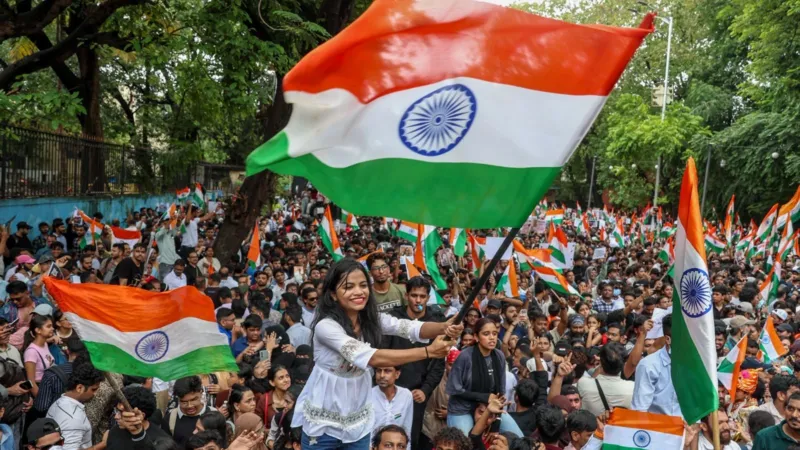
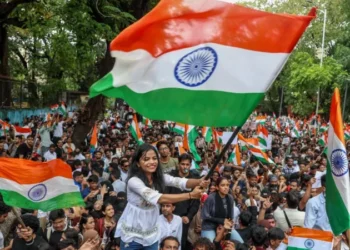
A powerful youth-led protest movement that succeeded in forcing the resignation of an Indian government minister is now entering what organisers describe as its most important chapter. While demonstrators celebrated what they consider a landmark victory, many insist that removing a single politician was never the ultimate objective. Instead, they say the campaign marks the beginning of a broader effort to reshape political accountability, governance and civic participation in the world’s largest democracy.
“This is just the start,” has become the defining slogan of thousands of young protesters whose demonstrations have transformed from spontaneous public gatherings into a nationwide conversation about transparency, institutional reform and the role of young people in Indian politics.

The movement, largely organised by members of Generation Z, has distinguished itself through its decentralised structure, extensive use of digital platforms and ability to mobilise supporters across multiple cities without relying on traditional political organisations.
For weeks, university students, young professionals and first-time voters coordinated demonstrations through encrypted messaging applications, social media campaigns and volunteer networks. Online activism was matched by large-scale peaceful protests in several urban centres, where participants called for greater accountability from elected officials and stronger public oversight of government institutions.
The resignation of the minister is widely regarded as the movement’s first tangible political achievement. Protesters argue that it demonstrates public pressure can influence political outcomes when citizens remain organised, persistent and peaceful.
Yet movement leaders have repeatedly warned against viewing the resignation as a final victory.
According to organisers, the issues that brought thousands of young Indians onto the streets extend well beyond one individual or one government department. Many participants are demanding broader reforms aimed at improving transparency in public administration, strengthening anti-corruption mechanisms, expanding institutional accountability and ensuring that public officials remain answerable to citizens throughout their time in office.
The protests have highlighted a significant shift in India’s political landscape.
Generation Z represents one of the country’s largest demographic groups, with millions reaching voting age in recent years. Raised during an era of smartphones, high-speed internet and digital communication, this generation has developed new methods of civic participation that differ markedly from previous political movements.
Rather than depending primarily on political parties, trade unions or established activist organisations, many young protesters have relied on decentralised digital communities capable of responding quickly to changing developments.
Political analysts believe this model has allowed the movement to remain flexible while avoiding the hierarchical structures that sometimes limit traditional protest campaigns.
However, the same decentralised nature also presents challenges.
Without clearly defined leadership, establishing negotiating teams, developing long-term policy proposals and maintaining organisational unity can become increasingly difficult as movements evolve beyond their initial objectives.
Some organisers argue that preserving the movement’s informal character remains essential because it protects independence from political influence.
Others believe creating permanent civic organisations may help convert public enthusiasm into lasting democratic reforms.
This debate reflects a broader question confronting youth-led movements around the world: how to transform successful protests into sustainable political engagement.
Government officials have responded cautiously following the minister’s departure.
While acknowledging the public’s right to peaceful protest, authorities have stressed that democratic institutions already provide mechanisms for accountability through elections, parliamentary oversight and judicial review.
Several ministers have called for dialogue with youth representatives while emphasising the importance of maintaining public order and institutional stability.
Officials have also encouraged protesters to participate constructively in democratic processes beyond street demonstrations.
Political observers note that the government’s response appears aimed at balancing recognition of legitimate public concerns with reassurance that existing constitutional institutions remain capable of addressing them.
Constitutional experts point out that ministerial resignations are not uncommon in parliamentary democracies.
Stepping down from office may occur for political, ethical or administrative reasons and does not necessarily constitute an admission of legal wrongdoing. In many cases, resignations are intended to preserve confidence in government institutions while investigations or reviews continue independently.
The movement has also drawn attention because of its disciplined commitment to peaceful protest.
Organisers have consistently urged participants to avoid violence, property damage or confrontation with police, arguing that maintaining public support depends on demonstrating respect for democratic principles.
This emphasis on non-violent civic action has helped the movement attract participants from diverse political, social and economic backgrounds.
Many protesters describe themselves as politically independent rather than aligned with any single party.
Instead, they frame their campaign as one centred on accountability, transparency and responsible governance regardless of which political party holds office.
That broad appeal has allowed the demonstrations to resonate with many citizens frustrated by concerns about corruption, administrative inefficiency and declining public trust in institutions.
The movement has also underscored the growing influence of social media in shaping modern political participation.
Digital platforms have enabled protesters to coordinate demonstrations, distribute information, livestream events and engage directly with journalists and policymakers.
However, researchers caution that online activism also carries risks, including misinformation, coordinated disinformation campaigns and the rapid spread of unverified claims during periods of political tension.
Independent fact-checkers and civil society organisations have therefore encouraged citizens to verify information before sharing politically sensitive content online.
Beyond immediate political developments, many analysts believe the protests could have longer-term electoral implications.
India’s younger voters are becoming an increasingly influential electoral force, and political parties are expected to pay closer attention to issues that resonate with Generation Z.
Employment opportunities, higher education, digital rights, environmental protection, public sector transparency and economic inequality are among the concerns frequently highlighted by younger voters.
The recent demonstrations may encourage parties across the political spectrum to develop policies addressing these priorities more directly.
Several universities and academic institutions have also become important spaces for discussion following the protests.
Students have organised debates, public forums and civic education initiatives examining democratic participation, constitutional rights and the responsibilities of elected representatives.
Educators argue that increased political engagement among young people reflects a healthy democratic process, provided discussions remain peaceful and respectful.
International observers have followed developments with interest, viewing the movement as part of a wider global trend in which younger generations increasingly use digital technology alongside traditional civic activism to influence political decision-making.
Similar youth-led campaigns focusing on governance, climate policy, education and social justice have emerged in democracies across multiple continents during the past decade.
While each movement reflects its own national circumstances, many share common characteristics including decentralised organisation, digital mobilisation and emphasis on peaceful participation.
For India’s Generation Z, however, the coming months may prove even more significant than the protests themselves.
Maintaining momentum after achieving an initial objective has historically been one of the greatest challenges facing social movements.

Whether organisers can convert widespread public support into sustained civic engagement, policy advocacy and institutional dialogue remains uncertain.
Many participants acknowledge that lasting reform requires patience.
Changing laws, strengthening institutions and improving governance often involve years of sustained public participation rather than a single political victory.
Even so, the resignation has convinced many young activists that their voices can influence national debate.
As the immediate demonstrations gradually give way to broader discussions about reform, India’s youth movement now faces its defining test.
Its ability to evolve from a protest campaign into a long-term force for democratic participation may determine whether the slogan “This is just the start” becomes a lasting political reality or simply a memorable chapter in the country’s evolving democratic story.
Related News:
 Victory or Compromise? Tehran’s Streets Erupt in Mixed Emotion Following Ceasefire
 Nine Killed in Karachi Consulate Protest
 Canadian astronaut French words ease language row
 Athens Mayor Moves to Tackle Overtourism Crisis
 RAF Typhoons scrambled amid Russian drone threat near Nato
 Southeast Asia Turns to Russia Amid Energy Crisis
 Escobar’s Hippos May Be Moved to India Zoo
 China Fireworks Factory Blast Kills 21 in Hunan
 Australia pushes Pacific security pact amid China tension
 BJP Sweeps West Bengal in Historic Breakthrough
 France Faces Record Presidential Crowded Race Amid Far-Right Surge
 US Awaits Iran Reply on New Ceasefire Proposal
 One Nation Stuns Australia With Historic Farrer Win
 Hormuz Talks Near Critical Stage
 Trump’s Revenge Drive Deepens GOP Divide
 Discontent grows around Putin amid war strain
 Farage and Reform UK Reshape British Politics
 Starmer Leadership Under Pressure After Setbacks
 Millions Gather for Khamenei’s Six-Day State Funeral
 Le Pen’s Popularity Holds Despite Conviction
 Dreyfus Statue Finally Gets Permanent Paris Home
 Venezuela Quake Death Toll Surpasses 4,000
 India’s ‘Cockroach’ Protesters Begin Talks With Government
 Why Violence Has Surged Before Kashmir Election
 Bangladesh President to Step Down After Political Shift
 Houthis Strike Saudi Arabia as Middle East Tensions Rise
 BBC to Apologise Over Edited Trump Speech Amid Backlash
 Britain deploys RAF specialists to assist Belgium with drone threats
 Greene Pushes Epstein Files Amid Trump Fallout
 Trump Deploys DHS to Charlotte in Major Arrest Operation
 December Run-Off in Chile as Election Produces No Winner
 Canada Passes Carney’s First Budget in Tight Parliamentary Vote
 Shadow Fleet at Sea: Europe’s Battle Against Illicit Oil Shipping
 Georgians Defy Government Crackdown After Year of Protests
 EU plans $105bn Ukraine aid using frozen Russian assets
 Russia losses Ukraine war peace talks intensify amid rising deaths
 Albanese Opens Door to Bondi Royal Commission Amid Rising Pressure
 Trump Escalates Minnesota Immigration Surge Amid Rising Tensions
 Iran Protesters Defy Crackdown as Violent Clashes Intensify
 Trump Threatens Strong Action If Iran Executes Protesters
 Machado Trump medal gesture reshapes Venezuela power struggle
 EU weighs response amid Greenland tariff crisis with Trump
 EU Says US Ties Have Suffered ‘Big Blow’ After Greenland Crisis
 Israel Moves to Bar MSF From Gaza Operations
 After the Landslide: Can India Reset Ties with BNP Bangladesh?
 Australian Families Leave Syrian Camp for Home
 Trump Attacks UK-California Energy Pact
 Andrew Arrest Sparks Republic Debate in Australia
 Farage Chagos Islands Row Sparks Fury
 Has Europe truly learned from the failures of 2022?
 Trump Faces Questions Over Iran Conflict Plan
 Herzog Asio meeting sparks security storm
 Nepal Holds First General Election Since Gen Z Protests Toppled Government
 Trump Pressures Congress Over Save America Act
 Iranian Football Squad Asylum Drama Shocks Australia
 Queensland Protest Laws Spark Free Speech Backlash
 Eswatini Deal Sparks Global Outcry Over US Deportations
 Yvette Cooper: UK Must Follow Principles, Not US Pressure
 Trump Iran War Stance Hardens as Conflict Widens
 Trump Nato threats expose Iran strategy vacuum
 Philippines energy emergency sparks coal power surge
 Trump Facing Backlash from Epstein Survivors Over Files
 Nepal to swear in ex-rapper as new prime minister
 Report Says Pezzullo Acted ‘Recklessly’ in Dealings
 Pope Leo Urges Peace in First Easter Mass Address
 ‘The Soul of Spain’: Politicians Clash Over Renewed Push to Move Picasso’s Guernica
 Moldova River Crisis Exposes War’s Hidden Cost
 Ukraine Urges UK to Seize Russian Oil Tankers
 Capitalism ‘Suicidal’, Warns Petro at Climate Summit
 Cartel crackdown raises fears of fresh violence
 Trump Threatens UN Budget Cuts as US Pushes ‘Trade Over Aid’ Agenda
 US Court Restores Abortion Pill Access Temporarily
 Immigration Judges Fear Pressure in Trump Era
 Pope Meets Families in Italy Toxic Waste Zone
 Xi Arrives in North Korea for Rare Summit
 Trump’s Iran Legacy Hangs on Tehran Deal
 Bangladesh Balances China Ties as India Relations Improve
 Trump’s Major Recruitment Drive Targets Border Patrol Growth
 Le Pen to Run for President Despite Embezzlement Conviction
 India’s Gen Z Protesters Claim Victory, Demand More Change