Published: 11 July 2026. The English Chronicle Desk. The English Chronicle Online.
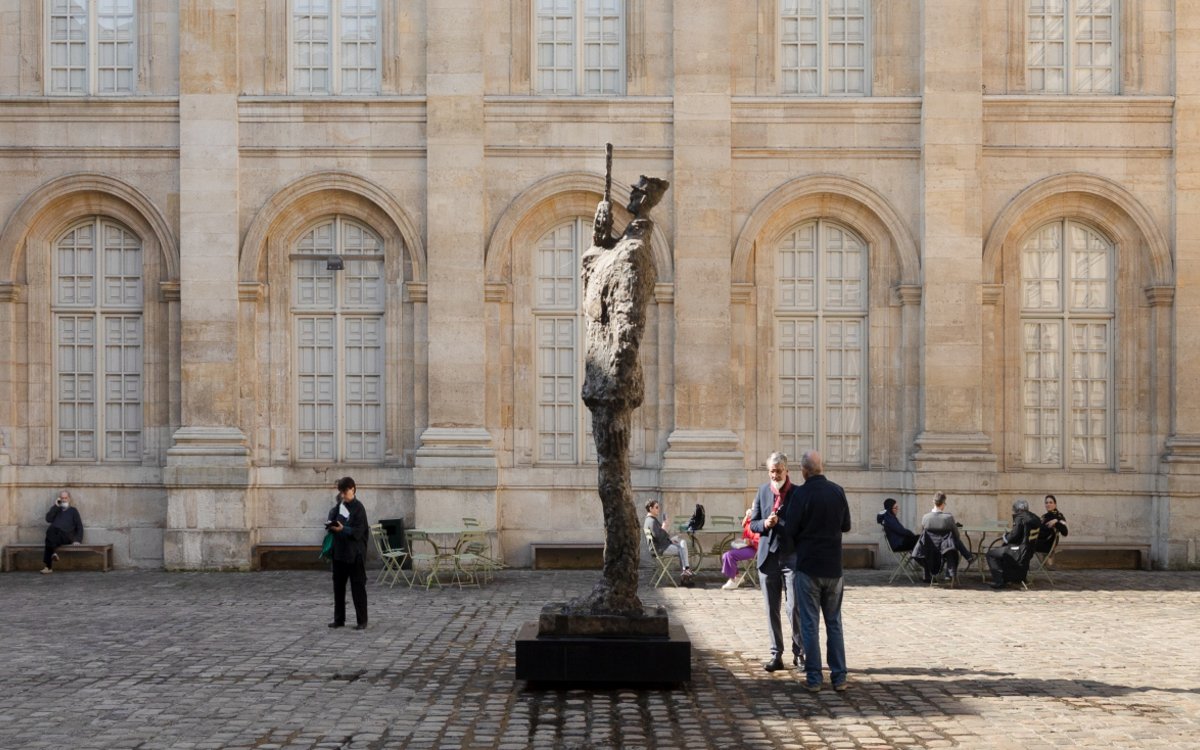
More than a century after Alfred Dreyfus was officially cleared of one of France’s greatest miscarriages of justice, the Jewish army officer’s long-wandering statue has finally found a permanent home in the heart of Paris. The relocation marks a powerful moment of historical recognition, reinforcing France’s commitment to confronting its past while honouring the triumph of justice over antisemitism.
On 12 July, France’s National Dreyfus Commemoration Day, President Emmanuel Macron and Paris Mayor Emmanuel Grégoire are scheduled to unveil the 3.5-metre bronze statue on Rue de Harlay, directly in front of the Cour de Cassation, the country’s highest civil court. The location holds profound historical significance because it was there, on 12 July 1906, that the court fully exonerated Dreyfus after years of false accusations, imprisonment and public humiliation.
For supporters of the move, the new location finally gives Alfred Dreyfus the place in French public memory that many believe he deserved decades ago.
The statue’s journey has been almost as symbolic as the story of the man it represents.
Created in 1985 by renowned artist Louis Mitelberg, known professionally as Tim, the sculpture spent four decades moving from one location to another after repeated objections prevented it from being installed in its intended setting. Originally commissioned during the presidency of François Mitterrand, the monument was meant to stand within the courtyard of the École Militaire, where Dreyfus had been publicly stripped of his military rank in one of the darkest episodes of French history.

However, senior military officials twice opposed the proposal, arguing against placing the memorial at the military academy. Despite being Commander-in-Chief, President Mitterrand ultimately declined to override their objections, leaving the statue without a permanent home.
Alternative locations were considered but repeatedly rejected. For several years the monument stood in the Tuileries Garden before being quietly relocated in 1994 to Place Pierre Lafue, a relatively secluded public square near the former Cherche-Midi military prison where Dreyfus was briefly detained after his arrest.
Hidden away from many visitors, the statue remained largely unnoticed despite commemorating one of the most significant political and judicial scandals in modern French history.
Now, exactly 120 years after Alfred Dreyfus was officially cleared of treason and one year after receiving a posthumous promotion to the rank of brigadier general, the French state has decided to place the monument at one of the country’s most meaningful judicial landmarks.
President Emmanuel Macron has described the move as an enduring reminder that justice, truth and republican values must prevail over hatred and prejudice. In announcing the annual national commemoration, Macron said the memory of Alfred Dreyfus and those who defended him would continue to inspire future generations to uphold the principles of liberty, equality and fraternity.
Among the strongest advocates for relocating the statue has been Ariel Weil, Mayor of Paris Centre and a descendant of the Dreyfus family.
Weil argues that successive governments effectively kept the monument out of public view for decades rather than confronting the uncomfortable legacy of the Dreyfus Affair. According to him, the repeated relocations reflected an unofficial desire to minimise public attention to a painful chapter in French history.
He believes the new location finally acknowledges the national importance of the case while ensuring that visitors, students and future generations can reflect on its historical significance.
The Dreyfus Affair remains one of the defining political crises of the French Third Republic and is widely regarded as one of the most consequential judicial miscarriages in European history.
In 1894, Captain Alfred Dreyfus, a Jewish artillery officer serving in the French Army, was falsely accused of passing military secrets to Germany. Convicted during a secret court martial based largely on fabricated evidence, he was publicly stripped of his rank during a degrading military ceremony in Paris before being sentenced to life imprisonment.
His military sword was ceremonially broken, his insignia torn from his uniform and he was transported to Devil’s Island, the notorious penal colony off the coast of French Guiana, where he spent years in harsh solitary confinement.
Although military investigators later discovered that another officer had committed the espionage and that crucial evidence against Dreyfus had been forged, senior officials attempted to conceal the truth in order to protect the army’s reputation.
The affair divided French society for years, exposing deep political, religious and social tensions while fuelling widespread antisemitism throughout the country.
The turning point came when celebrated novelist Émile Zola published his famous open letter, J’Accuse, accusing military leaders and government officials of orchestrating a grave injustice against an innocent man. The article generated enormous public debate and international attention, eventually forcing authorities to reopen the case.
Following years of legal battles and growing public pressure, France’s highest court formally overturned Dreyfus’s conviction in July 1906. He was reinstated into the French Army, awarded the prestigious Légion d’Honneur and later served during the First World War before retiring from military service. He died in Paris in 1935 at the age of seventy-five.
The statue itself carries powerful symbolism.
Its pedestal bears the deeply personal words Dreyfus wrote to his wife Lucie during his imprisonment: “If you want me to live, help me regain my honour.” Those words continue to resonate as a reminder of the emotional suffering endured not only by Dreyfus himself but also by his family during years of wrongful persecution.
Over the decades, resin replicas displayed at the Museum of Jewish Art and History in Paris and in Tel Aviv became better known than the original bronze sculpture because of its isolated location.
The monument has also been targeted by antisemitic vandalism. In 2002, attackers painted a Star of David alongside an antisemitic slur on the statue, highlighting that the prejudice underlying the original affair has not entirely disappeared.

For historians, relocating the monument represents more than correcting a historical oversight.
The Dreyfus Affair fundamentally reshaped modern France by challenging the relationship between military power, judicial independence, political accountability and civil liberties. It also became a defining struggle over antisemitism and the principles upon which the French Republic was founded.
Weil believes placing the monument outside the Cour de Cassation rather than the École Militaire ultimately carries even greater symbolic weight. Instead of commemorating the site of Dreyfus’s humiliation, the new location honours the institution that restored his reputation and affirmed the rule of law.
The decision also reflects France’s continuing effort to confront difficult chapters of its history openly rather than allowing them to fade from public memory.
As Paris prepares to unveil the monument during the national commemoration ceremony, the statue’s decades-long search for a permanent home finally comes to an end. More than simply relocating a work of art, France is reaffirming its commitment to remembering one of history’s most powerful lessons—that truth may be delayed, but justice must ultimately prevail.
Related News:
 Ukraine Creates Long-Range Strike Command
 Israeli Strike in Southern Lebanon Kills Seven
 Five Years of Taliban Rule Leave Afghanistan in Crisis
 UK University Faces Counter-Terror Probe Over China Pressure
 Second world war veterans honoured as King leads Remembrance Sunday
 Ukraine-Russia war latest: Putin’s troops exploit bad weather to force Kyiv withdrawal from multiple towns
 New Epstein Files Spark Political Clash in Washington
 Ukraine Energy Corruption Scandal Hits Zelensky’s Inner Circle
 Greene Pushes Epstein Files Amid Trump Fallout
 UN Security Council Approves Trump’s Gaza Peace Plan
 WhatsApp Messages Expose Nathan Gill’s Bribery
 Venezuela Threatens Nobel Winner Machado with Fugitive Status
 Trump Envoy to Discuss Ukraine Peace at Kremlin
 Video shows Israeli troops kill Palestinians after surrender
 Guinea-Bissau President Flees After Military Coup
 Iran Leader Blames Protesters, Says They Serve Trump
 Files Link Andrew to Epstein Dinner After Prison Release
 Emails Show Epstein Funded Mandelson’s Husband After Jail
 Thousands Protest ICE in New York Against Trump Deportation Campaign
 Saif al-Islam Gaddafi Reportedly Killed in Libya Shooting
 Belgium Narco-State Warning Raises Alarm Over Crime Surge
 Melania Trump Epstein remarks spark survivor backlash
 Canadian astronaut French words ease language row
 NHS Safety Fears as Nurses Cover Doctor Gaps
 Athens Mayor Moves to Tackle Overtourism Crisis
 US Labor Department in turmoil after secretary resigns
 RAF Typhoons scrambled amid Russian drone threat near Nato
 Trump DOJ Targets James Comey Again
 Two Dead in Adelaide Airport Plane Crash Fire
 Police Suspect Help in Missing Alice Springs Girl Case
 Cartel crackdown raises fears of fresh violence
 Judge halts deportation of Yemeni refugees in US
 Activists allege abuse after Gaza flotilla seizure
 UK may ban protests amid rising antisemitism fears
 China Fireworks Factory Blast Kills 21 in Hunan
 US ‘Narco Boat’ Strikes Draw Global Outcry
 Afghan Families Left in Limbo Face Risk of Deportation
 Trump Announces 3-Day Russia–Ukraine Ceasefire Deal
 France Faces Record Presidential Crowded Race Amid Far-Right Surge
 Immigration Judges Fear Pressure in Trump Era
 US judge dismisses Kilmar Abrego Garcia indictment
 China mine blast death toll rises to 90
 Ebola outbreak in DRC overwhelms health system as cases surge
 Trump’s Revenge Drive Deepens GOP Divide
 Victim says non-custodial rape sentence ‘rock in my face’
 Former ICC prosecutor condemns US sanctions
 Gunman Killed After White House Security Shootout
 Irish Gangland Figure Fails in Dublin Election Bid
 Farage and Reform UK Reshape British Politics
 Starmer Leadership Under Pressure After Setbacks
 Millions Gather for Khamenei’s Six-Day State Funeral
 New Footage Revives Peter Falconio Mystery
 Le Pen’s Popularity Holds Despite Conviction
 Teen Charged After Layla Jeffery Found Dead
 UK’s Largest Muslim Convention Scales Up Security Amid Rising Bigotry
 Taliban global ties grow as rights fears mount
 Is America Ready for an AOC Presidential Run?
 BBC to Apologise Over Edited Trump Speech Amid Backlash
 Britain deploys RAF specialists to assist Belgium with drone threats
 Indian authorities demolish Kashmir home linked to Red Fort blast
 December Run-Off in Chile as Election Produces No Winner
 Shadow Fleet at Sea: Europe’s Battle Against Illicit Oil Shipping
 Georgians Defy Government Crackdown After Year of Protests
 Pentagon Signals Reduced Role in Deterring North Korea
 UK and US Drop in Global Corruption Index Rankings
 SA Police Intensify Search in Gus Lamont Case
 Canberra Poster Seizure Sparks Free Speech Row
 Evo Morales Returns After Mysterious Absence
 Jacinda Ardern Moves To Australia Following Her US Fellowships
 Jacinda Ardern Move Sparks Kiwi Reflection
 Nick Greiner Warns Over Election Review Fallout
 Kelly Wilkinson Inquest Reveals Bail Failure
 Injured Mojtaba Khamenei Elevated as Iran Leader
 Gordon Brown urges court for crimes against children
 Air Canada CEO Faces Outcry Over Recent Language Misstep
 Relationship with Trump may be beyond repair, Starmer warned
 Trump Brokers Landmark Lebanon Ceasefire Amid Regional Hopes
 Ben Roberts-Smith Denies War Crime Allegations in First Statement
 Houthis Strike Saudi Arabia as Middle East Tensions Rise
 Westminster Council Threatens Charing Cross Soup Kitchen