
Published: 7 July 2026 | The English Chronicle Desk | The English Chronicle Online
The United States government has launched a major recruitment campaign aimed at expanding its border enforcement workforce, combining traditional American imagery with modern military-style displays as officials seek to attract thousands of new applicants to the US Border Patrol.
Featuring cowboys, fighter jets and highly visible displays of national security operations, the recruitment drive reflects the Trump administration’s renewed focus on strengthening border enforcement and expanding the agency responsible for protecting the country’s borders.
The campaign has attracted significant attention because of its scale, messaging and political significance. Supporters argue that increasing Border Patrol staffing is necessary to improve border security, combat illegal crossings and strengthen immigration enforcement. Critics, however, say the campaign reflects a broader effort to militarise immigration policy and promote a more aggressive approach to migration.
The recruitment push comes as the administration places immigration enforcement at the centre of its domestic agenda.

Officials have argued that additional personnel are required to manage border challenges, respond to security threats and support law enforcement operations across the country.
The Border Patrol, which operates under the US Customs and Border Protection (CBP), is responsible for securing the nation’s borders between official ports of entry. Agents conduct patrol operations, investigate suspected illegal crossings and assist with humanitarian and emergency responses.
The agency has historically faced difficulties maintaining sufficient staffing levels.
Recruiting and retaining Border Patrol agents can be challenging because the role involves demanding working conditions, long hours, remote assignments and significant physical and psychological pressures.
The new campaign attempts to address those challenges by presenting the role as a prestigious public service career.
Promotional material highlights themes of adventure, duty and national responsibility.
Images of horseback riders, aircraft, tactical equipment and border landscapes are used to create a powerful visual message aimed at attracting applicants who are interested in law enforcement and national security careers.
The inclusion of cowboy imagery reflects a long-standing association between the American frontier and border protection.
Supporters of the campaign say these symbols connect with a tradition of public service and represent the role of agents protecting communities.
Critics argue that such imagery oversimplifies complex immigration issues and presents border enforcement through a narrow security-focused perspective.
The recruitment effort also includes demonstrations of advanced technology and equipment used by border authorities.
Modern Border Patrol operations involve drones, surveillance systems, aircraft, vehicles and other tools designed to monitor large and difficult-to-access areas.
Officials say technology is necessary because the US shares thousands of miles of borders with Mexico and Canada, including vast rural regions that are difficult to patrol.
The use of fighter jets and military-style demonstrations in recruitment messaging has sparked further debate.
While Border Patrol is a civilian law enforcement agency rather than a branch of the military, its operations often involve equipment and tactics associated with national security.
Supporters argue that showcasing these capabilities helps attract candidates interested in challenging and specialised careers.
Opponents warn that the imagery risks blurring the distinction between immigration enforcement and military operations.
The recruitment campaign is also part of a broader expansion effort by the Trump administration.
Officials have called for a larger immigration enforcement workforce, increased deportation operations and stronger measures to prevent unauthorised border crossings.
The administration has repeatedly described border security as a national priority and has argued that additional resources are needed to enforce immigration laws effectively.
The policy approach has generated intense political debate.
Supporters believe stronger enforcement is necessary to maintain control over national borders and ensure that immigration systems operate legally.
They argue that Border Patrol agents face difficult responsibilities and require additional staffing and resources.
Immigration advocates, however, argue that enforcement-focused strategies must be balanced with humanitarian considerations.
They have raised concerns about the impact of expanded operations on migrants, asylum seekers and communities located near the border.
The debate reflects wider disagreements in American politics over immigration policy, national security and the role of government.
Beyond political arguments, recruitment itself presents practical challenges.
Law enforcement agencies across the United States have struggled with hiring shortages in recent years.
Changing workforce expectations, competition from other employers and concerns about workplace conditions have affected recruitment efforts.
Border Patrol officials say they are seeking applicants who are committed to public service and prepared for the responsibilities of the role.
Applicants must complete background checks, medical evaluations, physical fitness assessments and specialised training before becoming agents.
The training process is designed to prepare recruits for a wide range of duties, including immigration law enforcement, emergency response and border security operations.
For successful candidates, the career offers stable employment, benefits and opportunities for advancement.
However, the job can also involve significant challenges.
Agents may be stationed in isolated locations, work irregular schedules and encounter complex situations involving migrants, criminal networks and humanitarian emergencies.
Recruitment campaigns therefore attempt to balance the realities of the profession with messages designed to inspire potential applicants.
The administration’s focus on expanding Border Patrol comes at a time when immigration remains one of the most politically sensitive issues in the United States.
Border security has been a central theme in American elections for decades, with different administrations adopting varying approaches.
The Trump administration has placed the issue at the forefront of its governing agenda, arguing that enforcement must be strengthened to protect national interests.
The recruitment campaign reflects that priority by presenting Border Patrol as a key component of national security.
For supporters, the message is clear: the United States needs more agents to secure its borders and enforce immigration laws.
For critics, the campaign represents a continuation of policies they believe place excessive emphasis on enforcement rather than addressing the wider causes of migration.

As the recruitment drive continues, its success will depend not only on attracting applicants but also on how the public views the expanding role of border enforcement.
The debate surrounding the campaign demonstrates that Border Patrol recruitment is not simply a workforce issue.
It is closely connected to some of the most important political and social questions facing the United States, including immigration, security, identity and the responsibilities of government.
Whether the drive succeeds in significantly expanding the agency remains to be seen, but it has already highlighted the continuing importance of border policy in American politics.
Related News:
 Suspect in Rhode Island Ice Hockey Shooting Killed Ex‑Wife and Son
 Inside Kyiv’s resolve as conflict nears five‑year mark
 What to Watch for During Trump’s State of the Union Address
 US Partially Evacuates Beirut Embassy Amid Rising Iran Tensions
 American Citizen Killed in Cuba Boat Shooting, U.S. Officials Say
 Hillary Clinton Tells House Panel She ‘Had No Idea’ of Epstein’s Crimes
 Ecuador Deploys 75,000 Forces in Anti-Gang Drive
 Missing Cuba-Bound Aid Ships Spark Urgent Search
 ‘I Will Not Abandon Him’: Pauline Hanson Stands by Ben Roberts-Smith After War Crime Charges
 Melania Trump Epstein remarks spark survivor backlash
 US Labor Department in turmoil after secretary resigns
 Trump DOJ Targets James Comey Again
 US ‘Narco Boat’ Strikes Draw Global Outcry
 Trump’s Revenge Drive Deepens GOP Divide
 Gunman Killed After White House Security Shootout
 Zelensky Invites Putin to Direct Peace Talks
 Channel Crossings Surge: Over 1,000 People Arrive in the UK in Small Boats in a Single Day
 Kosovo agrees to host Britain’s refused asylum seekers
 Indian authorities demolish Kashmir home linked to Red Fort blast
 Greene Pushes Epstein Files Amid Trump Fallout
 Venezuela Threatens Nobel Winner Machado with Fugitive Status
 Two National Guard Soldiers Critically Injured Near White House
 American Mother Extradited From UK to U.S. on Murder Charges
 Russia losses Ukraine war peace talks intensify amid rising deaths
 Trump Escalates Minnesota Immigration Surge Amid Rising Tensions
 Trump Threatens Strong Action If Iran Executes Protesters
 EU Says US Ties Have Suffered ‘Big Blow’ After Greenland Crisis
 Trump Praises ‘Terrific’ Petro After White House Talks
 Fears of New Arms Race as US-Russia Nuclear Weapons Treaty Expires
 US Civil Rights Leader Jesse Jackson Dies Aged 84
 Stephen Colbert Says CBS Spiked Interview With Democrat Over FCC Fears
 Last‑ditch Call to Save Police Front Counters in London
 Nine Arrested in France Over Death of Far‑Right Student
 Eight Skiers Found Dead After California Avalanche
 South Korea’s Ex-President Faces Death Penalty in Insurrection Trial
 How Much Could Andrew’s Arrest Hurt the Royal Family?
 Epstein Eyed Record Label Investment to Access Women, Files Suggest
 Hillary Clinton Tells House Panel She Had No Idea of Epstein’s Crimes
 Iran, the US, and a World Cup That Starts in Three Months
 Trump Faces Questions Over Iran Conflict Plan
 US Senate Backs Trump War Powers Amid Iran Missile Barrage
 UK Prepares Aircraft Carrier for Middle East Crisis
 Pete Hegseth Iran War Remarks Spark Alarm
 Real Estate Brothers Convicted in Sex Trafficking Trial
 Iran War Puts Trump at Political Risk Amid Rising Prices
 Point-Blank Gunshot Misses Indian Politician
 Trump’s Confidence Undimmed — But Every Iran Option Carries Risk
 Pope Leo Urges Peace in First Easter Mass Address
 ‘The Soul of Spain’: Politicians Clash Over Renewed Push to Move Picasso’s Guernica
 The Fallen Icon: Ben Roberts-Smith Charged with Five War-Crime Murders
 The $100 Billion Peace: Trump’s ‘Grand Bargain’ Ends Iran Conflict at a Staggering Cost
 The Changing Face of Georgia: Trump-Backed Clay Fuller Wins Election
 The Gilgo Beach Case: Heuermann Expected to Plead Guilty to Eighth Victim
 Moldova River Crisis Exposes War’s Hidden Cost
 Relief at the Pump: Irish PM Unveils €505m Package to Stem Fuel Crisis
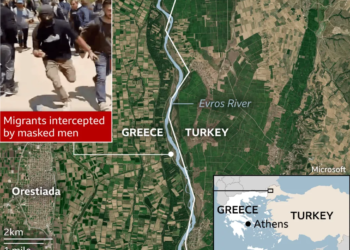 The Masked Frontier: Allegations of Greek Police Using Proxies for ‘Seismic’ Border Pushbacks
 The ‘Big Fish’ Lands: Marcos Confirms Arrest of Key Figure in Flood-Control Scandal
 Canadian astronaut French words ease language row
 The ‘Machli’ Manifesto: Why Indian Politicians are Trading Rallies for Fish Markets
 US Court Weighs Fate of TPS for Migrants
 Two Dead in Adelaide Airport Plane Crash Fire
 The “Charles Charm” Offensive: Did the Royals Find Their Mojo in D.C.?
 Tragedy in the Red Centre: Outback Search Ends in Discovery of Missing Girl’s Body
 A “Breaking Point” for Britain: Terror Adviser Warns Antisemitism is Now a National Security Emergency
 Cartel crackdown raises fears of fresh violence
 Trump Threatens UN Budget Cuts as US Pushes ‘Trade Over Aid’ Agenda
 China Fireworks Factory Blast Kills 21 in Hunan
 US Court Restores Abortion Pill Access Temporarily
 “Community Shield”: Met Police Deploy Specialist 100-Officer Team to Guard London’s Jewish Postcodes
 Tensions Emerge in Netanyahu-Trump Alliance
 France Faces Record Presidential Crowded Race Amid Far-Right Surge
 US Awaits Iran Reply on New Ceasefire Proposal
 Immigration Judges Fear Pressure in Trump Era
 DeSantis’s ‘Alligator Alcatraz’ Faces Final Shutdown
 Farage and Reform UK Reshape British Politics
 Israel, Lebanon Agree on Fragile Ceasefire Deal
 Trump-Netanyahu Call Fuels Iran Talk Crisis
 Israel Strikes Iran After Missile Attack
 Former Olympian Indicted Over Alleged Vandalism at Washington’s Reflecting Pool
 Trump Helps Clear Balogun for Belgium World Cup Clash