Published: 3 July 2026
The English Chronicle Desk
The English Chronicle Online
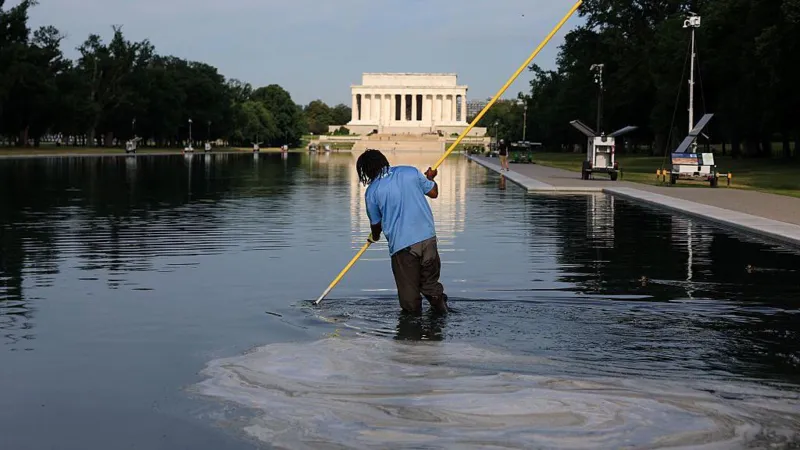
A former Olympian has been indicted in the United States over allegations of vandalising the iconic Reflecting Pool in Washington, D.C., in a case that has drawn widespread attention because of the individual’s sporting background and the significance of the historic site.
Federal prosecutors announced the indictment after an investigation into an incident that allegedly caused damage to one of the nation’s most recognisable public landmarks. The case will now proceed through the American criminal justice system, where the defendant is entitled to the presumption of innocence unless proven guilty in court.
Authorities allege that the former athlete was involved in acts of vandalism affecting the Reflecting Pool, which sits on the National Mall between the Lincoln Memorial and the Washington Monument. The area attracts millions of visitors each year and serves as the backdrop for national ceremonies, public demonstrations and major commemorative events.

The indictment represents a formal accusation rather than a finding of guilt. Prosecutors must now present evidence supporting the allegations, while the defence will have the opportunity to challenge the case during future court proceedings.
The Reflecting Pool is among the most recognisable locations in the United States, symbolising both national history and civic life.
Stretching for more than 2,000 feet, it has featured in countless historic photographs and public events, including presidential ceremonies, civil rights demonstrations and national commemorations.
Because of its historical and cultural importance, any damage to the site often attracts significant public interest.
The National Mall is managed by the National Park Service, which works to preserve monuments, memorials and public spaces visited by millions of people every year.
Officials regularly invest in maintenance and restoration to protect these landmarks from weather, heavy visitor use and occasional acts of vandalism.
According to prosecutors, investigators gathered evidence before presenting the case to a grand jury, which decided there was sufficient basis to issue an indictment.
Under the US legal system, grand juries examine evidence presented by prosecutors to determine whether criminal charges should proceed.
An indictment does not establish guilt but instead allows a criminal case to move forward through the courts.
Further hearings are expected in the coming weeks as legal representatives address procedural matters before any potential trial.
Authorities have not publicly disclosed every detail of the evidence, noting that court proceedings are ongoing.
The individual at the centre of the case previously represented their country as an Olympian, a distinction that has contributed to widespread media attention.
Olympians are often viewed as ambassadors for their nations and role models within their sporting communities.
When former elite athletes become involved in criminal proceedings, public interest can increase because of their previous public profile.
Sporting organisations generally avoid commenting extensively while legal proceedings remain active, emphasising the importance of allowing the judicial process to run its course.
Legal experts caution against drawing conclusions before all evidence has been examined in court.
Acts of vandalism involving historic landmarks are treated seriously by authorities because of the cultural and financial consequences involved.
Damage to monuments and public memorials can require extensive restoration work, often funded by taxpayers.
Law enforcement agencies say protecting nationally significant sites remains a priority, particularly in Washington, where millions of tourists visit each year.
Security measures around major monuments have increased in recent decades, including surveillance cameras, patrols and physical barriers designed to deter criminal damage.
Despite these precautions, isolated incidents continue to occur from time to time.
The indictment marks the beginning of a new stage in the case rather than its conclusion.
The defendant will have the opportunity to enter a plea before the court, after which legal proceedings may continue through pre-trial hearings or potentially a full trial if no agreement is reached beforehand.
Both prosecutors and defence lawyers are expected to examine witness testimony, documentary evidence and any available surveillance footage.
Should the matter proceed to trial, the prosecution must prove the allegations beyond a reasonable doubt.
Legal commentators note that the American justice system places significant emphasis on due process, ensuring defendants have the opportunity to contest evidence presented against them.
The case has generated considerable discussion on social media and among sports fans, many expressing surprise that a former Olympian could become involved in such allegations.
Others have urged restraint, pointing out that an indictment is not equivalent to a conviction.
Public interest has also focused on the importance of preserving national landmarks that carry historical and symbolic significance.
Conservation groups frequently stress that damage to heritage sites can have lasting consequences beyond the immediate financial cost of repairs.
Washington’s monuments attract visitors from around the world and play an important role in American public life.
The Reflecting Pool, in particular, has become synonymous with national remembrance and civic gatherings.
Preservation experts say maintaining these locations requires ongoing cooperation between government agencies, conservation specialists and members of the public.
Educational campaigns often encourage visitors to respect historic sites by following regulations and reporting suspicious behaviour.
Authorities hope such efforts reduce the likelihood of vandalism while ensuring future generations can continue to enjoy these nationally significant locations.
The incident has renewed discussion about balancing public access with the protection of cultural landmarks.
Open public spaces are central to democratic societies, allowing citizens and visitors alike to gather, reflect and participate in civic life.
However, maintaining unrestricted access while safeguarding important monuments presents continuing challenges for authorities.
Technology, including surveillance systems and improved monitoring, has become an increasingly important part of protecting historic locations.
Officials also encourage public cooperation by reporting any behaviour that may place public property at risk.
The case will now move through the federal court system, where judges will oversee the next stages of the legal process.

Future hearings are expected to address procedural matters, evidence and scheduling before any trial takes place.
Until the court reaches a verdict, the allegations remain unproven, and the defendant continues to be presumed innocent under the law.
For authorities responsible for managing the National Mall, the case serves as another reminder of the importance of protecting sites that hold deep historical and cultural significance.
For the sporting community, it highlights how public figures can remain subject to the same legal standards as any other citizen, regardless of past achievements.
As proceedings continue, attention is likely to remain focused on the evidence presented in court and the outcome of a case involving one of America’s best-known public landmarks.
Related News:
 Two National Guard Soldiers Critically Injured Near White House
 American Mother Extradited From UK to U.S. on Murder Charges
 Suspect in Rhode Island Ice Hockey Shooting Killed Ex‑Wife and Son
 Eight Skiers Found Dead After California Avalanche
 Desperate Hunt for Breakthrough in Nancy Guthrie Case Turns to Mexico
 Austrian Climber Found Guilty After Girlfriend Froze to Death on Mountain
 Violence Erupts in Mexico After Drug Lord El Mencho Killed
 Who Was El Mencho, Mexico’s Most Wanted Man?
 What We Know About the Search for Savannah Guthrie’s Mother Nancy
 Family Offers $1M Reward to Bring Home Missing Mother
 Threat of Further Violence Looms After Mexican Cartel Rampage
 US ‘Suitcase Murderer’ Deported From Bali After 11 Years in Jail
 American Citizen Killed in Cuba Boat Shooting, U.S. Officials Say
 Hillary Clinton Tells House Panel She ‘Had No Idea’ of Epstein’s Crimes
 Iran, the US, and a World Cup That Starts in Three Months
 Search Intensifies for Savannah Guthrie’s Mother
 Trump ‘sex attack’ claim reported in Epstein files
 Two Charged After Bomb Attack Outside NYC Mayor’s Home
 Real Estate Brothers Convicted in Sex Trafficking Trial
 US ‘Narco Boat’ Strikes Draw Global Outcry
 Miami Upgrades Shake Up F1 Title Fight
 “A Guardian’s Final Act”: The Heroism of Amin Abdullah Amidst San Diego Mosque Tragedy
 Gunman Killed After White House Security Shootout
 Can World Cup Hosts Overcome Deep Divisions?
 Zelensky Invites Putin to Direct Peace Talks
 Northern Ireland Family of Three Shot Dead in Maguiresbridge Home Incident
 Tottenham Takes On Newcastle
 Channel Crossings Surge: Over 1,000 People Arrive in the UK in Small Boats in a Single Day
 Chaos at Ibrox as Martin’s Rangers Era Comes to an End
 Arsenal Showcase Depth and Flexibility as Arteta Eyes Title Challenge
 WW2 Pilot’s Long-Lost Crash Site Unearthed in Essex
 Indian authorities demolish Kashmir home linked to Red Fort blast
 Greene Pushes Epstein Files Amid Trump Fallout
 Tiny Curacao Makes History as Smallest Nation to Reach World Cup
 Deadly Russian Strikes Hit Western Ukraine, 20 Killed in Ternopil
 Trump Weighs Response to Iran Crackdown as Tehran Says Communication Open With US
 US Clears Nvidia AI Chip Sales to China in Policy Shift
 EU Says US Ties Have Suffered ‘Big Blow’ After Greenland Crisis
 Videos reveal earlier clash before Alex Pretti shooting
 ‘We Are Ready to Talk’: US News Anchor Savannah Guthrie Pleads for Return of Her Abducted Mother
 SA Police Intensify Search in Gus Lamont Case
 Iran Says ‘Guiding Principles’ Agreed With US at Nuclear Talks
 Nine Arrested in France Over Death of Far‑Right Student
 Epstein Eyed Record Label Investment to Access Women, Files Suggest
 Louvre Museum Director Resigns Months After High‑Profile Heist
 Bill Gates ‘Took Responsibility’ Over Epstein Ties in Staff Meeting, Foundation Says
 Hilary Knight speaks out on Trump’s recent hockey remarks
 Deadly Texas Bar Shooting ‘Potentially Act of Terrorism,’ FBI Says
 Kidnapping of Foreigners Soars in Africa’s Lawless Sahel Region
 Trump Faces Questions Over Iran Conflict Plan
 India T20 World Cup Triumph Seals Historic Title Defence
 Iran War Puts Trump at Political Risk Amid Rising Prices
 Iranian Captain Departs Australia Amid Asylum Tension
 Trump’s Confidence Undimmed — But Every Iran Option Carries Risk
 Iran World Cup Move Talks Raise Global Concerns
 Chain of Fire: US Bunker Busters Strike Major Iranian Ammo Depot in Isfahan
 Can Congress Stop US Sports Teams From Moving Cities?
 “The Monster of Hull”: Funeral Director Admits to Preventing 30 Burials and Stealing Charity Cash
 The Fallen Icon: Ben Roberts-Smith Charged with Five War-Crime Murders
 The ‘Big Fish’ Lands: Marcos Confirms Arrest of Key Figure in Flood-Control Scandal
 Justice and Deceit: High Court Convicts Woman in Hong Kong Blackmail Plot
 Beyond the Swoosh: Anta Sports Overtakes Rivals to Become Global Top Three
 “Three-Wheeled Triumph”: Mayor of Erewash Completes 2,000-Mile European Charity Run
 Tragedy in the Red Centre: Outback Search Ends in Discovery of Missing Girl’s Body
 Cartel crackdown raises fears of fresh violence
 Premier League drama defines crucial weekend
 Trump Threatens UN Budget Cuts as US Pushes ‘Trade Over Aid’ Agenda
 US Court Restores Abortion Pill Access Temporarily
 “The Blue Light Intersection”: Seventeen-Year-Old Critically Injured in ‘Nasty’ Police Pursuit Crash
 US Awaits Iran Reply on New Ceasefire Proposal
 Chasing Glory: The Quest for a New World Cup Champion
 DeSantis’s ‘Alligator Alcatraz’ Faces Final Shutdown
 Israel, Lebanon Agree on Fragile Ceasefire Deal
 Fans Bring Flags and Fire to World Cup Scenes
 Fans Invited to Share Scotland World Cup Stories
 Israel Strikes Iran After Missile Attack
 Iran Team Arrives in Mexico Amid US Visa Dispute
 US Launches Strikes on Iran After Military Helicopter Downed Near Strait of Hormuz
 Three-Year-Old Boy Attacked by Crocodile at Zoo as Man Released on Bail
 Canada Secure Historic Last 16 Spot with Late Goal