Published: 27 July 2026 | The English Chronicle Desk | The English Chronicle Online
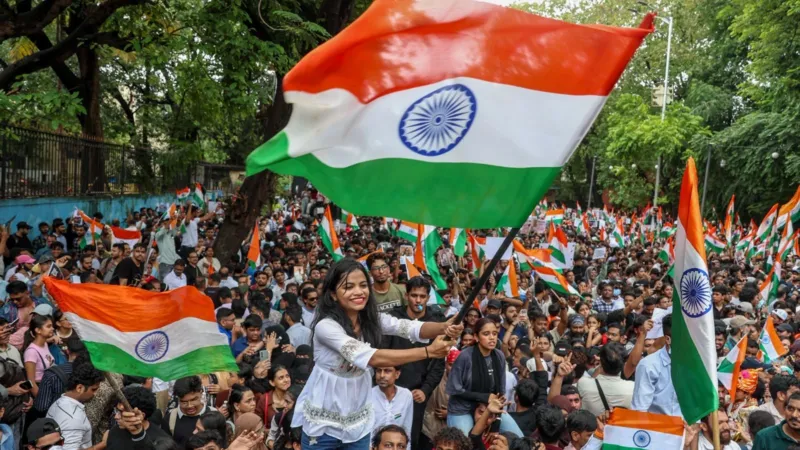
India’s newest wave of youth-led activism has achieved what many believed was unlikely only a few months ago. After weeks of demonstrations, public pressure and a sustained social media campaign, a government minister resigned, marking a significant victory for a movement largely driven by Generation Z. Yet, for many of the young protesters who filled streets and dominated online conversations, the resignation is not the destination but the beginning of a broader campaign for political accountability and institutional reform.
“This is just the start,” has become the defining slogan of the movement, reflecting a generation determined to prove that civic engagement can influence political decisions in the world’s largest democracy.
The protests, organised primarily by students and young professionals, have captured national attention for their decentralised leadership, digital organisation and persistence. Unlike traditional political rallies led by established parties, the demonstrations have largely been coordinated through messaging platforms, social media networks and volunteer groups, enabling thousands of participants across different cities to mobilise rapidly.
The resignation of the minister is widely viewed as the movement’s first major political success. Protesters argue that it demonstrates elected officials remain accountable to public opinion when citizens organise peacefully and maintain pressure over an extended period.

However, movement organisers insist that replacing one individual will not address the deeper structural issues they believe require reform.
Many demonstrators have called for greater transparency in government decision-making, stronger anti-corruption measures, improved accountability mechanisms and broader institutional reforms designed to increase public trust in democratic institutions.
Although individual demands vary between different groups participating in the protests, there is a shared belief that long-term political change requires more than symbolic gestures.
Political analysts describe the movement as one of the most significant examples of youth mobilisation in recent Indian politics.
Generation Z, broadly defined as those born from the late 1990s onward, represents one of India’s largest demographic groups. Raised during a period of rapid digital expansion, many young Indians are accustomed to expressing opinions through online platforms and using technology to organise collective action.
This digital fluency has allowed protesters to bypass traditional organisational structures that previously dominated political mobilisation.
Videos, live broadcasts and real-time updates have enabled demonstrations in one city to inspire similar actions elsewhere within hours.
Social media has also become a powerful tool for documenting events, sharing information and countering misinformation, although authorities and independent observers have repeatedly warned that unverified content circulating online can sometimes complicate public understanding during periods of political tension.
The government’s response has evolved over the course of the demonstrations.
Initially, officials defended existing policies while urging protesters to remain peaceful and respect public order.
Following the minister’s resignation, government representatives acknowledged public concerns but argued that democratic institutions already provide mechanisms for accountability.
Several ministers have called for constructive dialogue rather than prolonged confrontation, emphasising the importance of maintaining political stability while addressing legitimate public grievances.
The resignation itself has generated differing interpretations.
Supporters of the protesters describe it as evidence that peaceful civic action can influence government decisions without violence.
Critics, however, argue that individual resignations should not be interpreted as confirmation of broader institutional failures and caution against drawing conclusions before official investigations or legal processes are completed.
Constitutional experts note that ministerial resignations often occur for political as well as legal reasons.
Stepping down does not necessarily imply guilt or wrongdoing, but may reflect efforts to preserve public confidence, reduce political pressure or allow investigations to proceed without distraction.
The movement’s next challenge lies in maintaining momentum after achieving its initial objective.
History has shown that many protest movements struggle once their immediate demands are met.
Without clear long-term organisation, leadership structures or achievable policy goals, public enthusiasm can gradually diminish.
Some organisers have already begun discussing the creation of permanent civic networks focused on monitoring government performance, promoting voter participation and encouraging greater youth involvement in public policy debates.
Others believe the movement should remain informal and decentralised, arguing that its independence from political parties has been one of its greatest strengths.
This debate reflects broader questions facing modern protest movements worldwide.
Leaderless movements often mobilise quickly and attract diverse participants, but they can encounter difficulties when attempting to negotiate with governments or translate public support into lasting institutional reforms.
India’s political landscape makes these questions particularly significant.
With a young population, expanding internet access and increasing political awareness among first-time voters, Generation Z is expected to play an increasingly influential role in future elections.
Political parties across the ideological spectrum are already paying closer attention to issues affecting younger voters, including employment opportunities, education, climate change, digital rights and government accountability.
Experts believe recent protests could accelerate this trend.
The demonstrations have also highlighted the changing relationship between politics and technology.
Digital platforms now allow citizens to organise campaigns, verify information, broadcast events and engage directly with political leaders in ways that were impossible only a generation ago.
At the same time, researchers caution that online activism alone rarely produces lasting political change without sustained civic engagement, institutional participation and constructive dialogue.
Many participants recognise this reality.
Several protesters have emphasised that future efforts will increasingly focus on encouraging voter registration, supporting public interest campaigns and participating in democratic processes beyond street demonstrations.
Observers suggest this evolution may determine whether the movement becomes a lasting political force or remains remembered primarily for a single successful campaign.
The protests have also attracted international attention as democracies around the world witness growing youth engagement in politics.
From climate activism to anti-corruption campaigns, younger generations are increasingly using both digital technology and peaceful public demonstrations to influence policy debates.
India’s movement reflects this broader global trend while remaining shaped by the country’s own political institutions and democratic traditions.
Government officials continue urging calm as public discussions move beyond the minister’s resignation.
Authorities have indicated willingness to engage with civil society organisations and student representatives on several issues raised during the protests, though concrete policy proposals have yet to emerge.
Whether these conversations produce meaningful reforms remains uncertain.

For now, both supporters and critics acknowledge that the demonstrations have altered the national political conversation.
They have demonstrated the organisational capacity of India’s younger generation and reinforced the importance of civic participation within democratic systems.
The resignation of a minister may represent the movement’s first measurable achievement, but participants argue that their broader objective is to strengthen democratic accountability rather than simply remove individual officeholders.
As one chapter closes, another begins.
The movement now faces its greatest test: transforming public mobilisation into sustained democratic engagement capable of shaping policy long after protest banners have been lowered.
Whether India’s Generation Z can maintain that momentum may influence not only the future of this campaign but also the evolving relationship between young citizens and political power in the world’s largest democracy.
Related News:
 Nine Killed in Karachi Consulate Protest
 North Korea Fires Missiles Amid US-South Korea Drills
 Victory or Compromise? Tehran’s Streets Erupt in Mixed Emotion Following Ceasefire
 Southeast Asia Turns to Russia Amid Energy Crisis
 Escobar’s Hippos May Be Moved to India Zoo
 China Fireworks Factory Blast Kills 21 in Hunan
 Australia pushes Pacific security pact amid China tension
 BJP Sweeps West Bengal in Historic Breakthrough
 US Awaits Iran Reply on New Ceasefire Proposal
 One Nation Stuns Australia With Historic Farrer Win
 Hormuz Talks Near Critical Stage
 China mine blast death toll rises to 90
 Maldives Cave Diving Tragedy Raises Safety Alarm
 Discontent grows around Putin amid war strain
 Millions Gather for Khamenei’s Six-Day State Funeral
 Venezuela Quake Death Toll Surpasses 4,000
 India’s ‘Cockroach’ Protesters Begin Talks With Government
 Why Violence Has Surged Before Kashmir Election
 Bangladesh President to Step Down After Political Shift
 Houthis Strike Saudi Arabia as Middle East Tensions Rise
 BBC to Apologise Over Edited Trump Speech Amid Backlash
 Britain deploys RAF specialists to assist Belgium with drone threats
 Palace May Restore Hyphen to Andrew Mountbatten-Windsor’s Name
 Greene Pushes Epstein Files Amid Trump Fallout
 December Run-Off in Chile as Election Produces No Winner
 Zelenskyy Signs Fighter Jet Deal Amid Russian Drone Attacks
 Shadow Fleet at Sea: Europe’s Battle Against Illicit Oil Shipping
 Tiny Curacao Makes History as Smallest Nation to Reach World Cup
 US Suspends Afghan Immigration After White House Shooting
 Georgians Defy Government Crackdown After Year of Protests
 ‘Extinct’ Antelope Returns to Sahara, Bringing Hope
 Facebook Slow to Remove Bondi Attack Praise, Anti-Hate Group Claims
 US Clears Nvidia AI Chip Sales to China in Policy Shift
 Gulf states warn Trump Iran strikes risk wider Middle East war
 Sydney Shark Attack Surge Shocks Australia Beaches
 EU Says US Ties Have Suffered ‘Big Blow’ After Greenland Crisis
 UK New Car Discounts Near £6,000 as Prices Are Slashed
 Portugal Election Delivers Socialist Win as Far Right Surges
 Australian Families Leave Syrian Camp for Home
 Farage Chagos Islands Row Sparks Fury
 Hilary Knight speaks out on Trump’s recent hockey remarks
 Has Europe truly learned from the failures of 2022?
 Trump Faces Questions Over Iran Conflict Plan
 Iran Civilian Deaths Surge Past 200 Amid Fear
 Herzog Asio meeting sparks security storm
 Trump rebukes Starmer over Iran strikes
 Iran-Iraq border airstrikes spark new tensions
 Petrol Prices Soar as Retailers Accused of Gouging Amid Global Tension
 Penny Wong silent on Australian crew in sub strike
 Australians on US Submarine in Iranian Warship Strike
 Oil Prices Surge Above $100 Amid Iran War
 India T20 World Cup Triumph Seals Historic Title Defence
 Trump Pressures Congress Over Save America Act
 Goma Drone Attack Kills Three as Conflict Escalates
 Queensland Protest Laws Spark Free Speech Backlash
 Trump Nato threats expose Iran strategy vacuum
 Australia Imposes Sudden Travel Ban on Iranian Visitors
 Trump Facing Backlash from Epstein Survivors Over Files
 Russia: The Unforeseen Winner of the Iran Conflict
 Report Says Pezzullo Acted ‘Recklessly’ in Dealings
 Tragedy Strikes Outside Melbourne Comic Con
 “I was fighting two wars”: Ukraine soldiers’ addiction crisis
 Capitalism ‘Suicidal’, Warns Petro at Climate Summit
 US to Escort Trapped Ships Through the Strait of Hormuz
 Premier League drama defines crucial weekend
 Crisis in the Canary Islands as Cruise Ship Evacuated
 US and Mexico Face Heatwave as Floods Batter South Africa
 Putin Signals War End as Russian Momentum Stalls
 Australia Welcomes the Iconic Michelin Guide
 Philippine Senator Flees After Days Under Senate Siege
 High Street Crisis: Fears Grow Over Post Office Closures
 Oil Markets Face ‘Red Zone’ Threat Amid Iran Crisis
 Pope Meets Families in Italy Toxic Waste Zone
 US Strikes Iranian Sites Amid Shaky Ceasefire Talks
 UN Issues Urgent Warning: Imminent Return of El Niño
 UK Economy Suffers a Sharp Downturn as Iran Conflict Bites
 Trump’s Iran Legacy Hangs on Tehran Deal
 Lamine Yamal’s Birthday: Football, Fame, and France
 Argentina vs. England: Old Rivalry Reignites Again
 Berlin Pride Attack Suspect Killed in Police Raid