Published: 16 September 2026. The English Chronicle Desk. The English Chronicle Online.
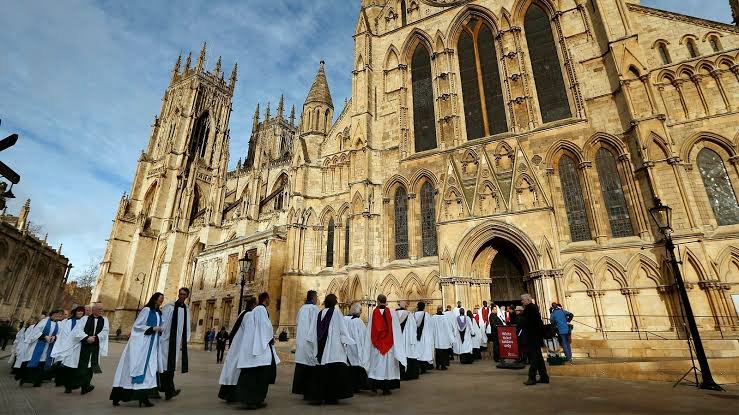
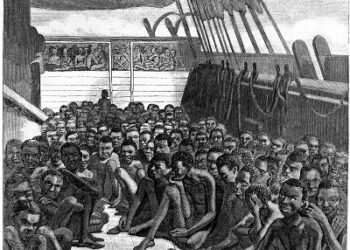
New historical research has uncovered further evidence of the Church of England’s financial and institutional connections to the transatlantic enslavement of Africans, adding to an increasingly detailed record of how slavery was supported by religious, commercial and political networks in Britain.
The findings come as the Church of England continues to debate how it should respond to its historical involvement in slavery and whether existing programmes addressing the legacy of enslavement go far enough. The research is based on the newly digitised Register of British Slave Traders, which documents investors and other participants in Britain’s nearly 250-year involvement in the transatlantic slave trade.
The register identifies 45 Church of England clergymen who invested in the Royal African Company, an organisation that played a major role in the trafficking of enslaved African men, women and children. Their investments helped finance hundreds of voyages and contributed to the company’s relaunch in 1720.
One of the clergymen identified by researchers was Henry Brydges, who later became a canon at St Paul’s Cathedral. According to the research, Brydges purchased half of his £10,000 investment in the Royal African Company on the same day that he became Archdeacon of Rochester.

Professor William Pettigrew, who led the research project, said the evidence revealed a national pattern rather than a relationship limited to a small group of individuals or particular regions. Wealth associated with enslavement, he said, reached communities across Britain through investments, donations and bequests to parishes.
The research adds another dimension to the historical debate surrounding the Church of England. While the institution has previously acknowledged aspects of its relationship with slavery, the newly identified financial connections suggest that the church’s involvement extended beyond individual plantation ownership and included investments in organisations directly involved in the trafficking of enslaved people.
The findings have emerged at a significant moment for the Church of England. Archbishop of Canterbury Sarah Mullally recently visited Cape Coast Castle in Ghana, a site associated with the transatlantic slave trade and the enslavement of the abolitionist Ottobah Cugoano.
Cugoano was enslaved as a child before becoming an abolitionist and Christian writer who argued for justice and an end to slavery. His writings also addressed the moral responsibilities surrounding the wealth and institutions created through the exploitation of enslaved people.
During her visit to Cape Coast Castle, Mullally witnessed the dungeons beneath the historic site, which was once operated by the Royal African Company. The visit prompted her to reaffirm the Church of England’s commitment to what she described as a continuing “journey of repentance” over its historical role.
The timing of the visit has brought renewed attention to the question of how Britain’s religious institutions benefited from or participated in systems of enslavement.
The Royal African Company was particularly significant because of its central position in Britain’s slave-trading economy. Its activities connected merchants, investors, political figures and other institutions with voyages transporting enslaved Africans across the Atlantic.
The newly documented involvement of Church of England clergy indicates that religious figures were among the investors who helped provide capital for that system. Researchers argue that such connections complicate the historical image of slavery as an activity carried out only by merchants and plantation owners operating overseas.
The church’s historical involvement also extends beyond investment. The Society for the Propagation of the Gospel in Foreign Parts, the predecessor of the United Society Partners in the Gospel, was involved in missionary activity connected to the slave economy.
The organisation supplied chaplains to the Royal African Company at Cape Coast Castle. It also controlled the Codrington estate in Barbados, where enslaved Africans were held for more than a century.
The estate generated substantial income for the organisation. Historical accounts describe extremely harsh conditions for the enslaved population, including physical punishment, forced labour and high mortality.
Records cited by researchers show that 19 enslaved people died at Codrington during a seven-month period in 1746. Among the recorded deaths was a person named Daniel, whose death was described in historical records as accidental shooting. The accounts provide evidence of the severe human cost associated with the plantation system.
Researchers say the church’s participation in the ownership and operation of plantations gave religious authority a role within the wider system of enslavement. Professor Pettigrew argued that such relationships could have sent a message that participation in slavery was compatible with established institutions and social respectability.
The history of the church and slavery also includes the use of religious material in colonial societies. Dr Leona Vaughn of the University of Liverpool, who helped organise an Anglican truth-telling event in 2025, has pointed to the continuing need for greater public understanding of the church’s historical involvement.
Among the subjects she has highlighted is the so-called “Slave Bible”, a heavily edited version of biblical texts that was sanctioned for use in some plantation settings from the early 19th century. Passages associated with liberation and resistance were removed, while sections considered compatible with obedience were retained.
The historical record has consequently raised questions about the ways religious institutions and teachings were used within societies structured around slavery. Historians continue to examine how Christian organisations both participated in and responded to the institution of enslavement.
The financial consequences of slavery also extended well beyond the plantations themselves. Professor Alan Lester, a historical geographer at the University of Sussex, has argued that plantation wealth contributed to the development of modern Britain.
He has linked profits generated through the plantation economy to areas including industrial development, railways, public health, welfare, education, universities, church construction and public finances. Such interpretations form part of a broader historical debate about how wealth generated through slavery circulated through British society.
For people within the Church of England, the issue has increasingly become connected with questions of faith and moral responsibility. The Reverend Natasha Beckles, dean of racial justice for Willesden, has argued that confronting slavery’s history is central to the church’s understanding of Christian responsibility and the consequences of treating human beings as commodities.
The Church of England has already taken steps intended to address aspects of this history. In 2023, the Church Commissioners, which manage the church’s investments, launched Project Spire, a £100m impact investment initiative aimed at communities affected by the legacies of slavery.
Project Spire is not formally a reparations fund. Instead, it is designed as an investment programme intended to support communities and address some continuing consequences associated with historical exploitation.
The programme has nevertheless generated debate within the church over whether its scale and structure adequately reflect the extent of historical involvement.
Professor Lester has argued that focusing primarily on the South Sea Company represents only a limited part of the church’s historical connections to slavery. The South Sea Company itself was involved in the trafficking of tens of thousands of enslaved Africans.
The new register suggests that the church’s links were considerably broader, encompassing clergy who invested in the Royal African Company as well as other relationships involving plantation ownership and missionary organisations.
After the abolition of slavery, the financial consequences did not simply disappear. The Society for the Propagation of the Gospel and at least 96 clergy who had enslaved people received compensation under the British government’s abolition arrangements for the loss of what was legally treated at the time as property.
Those payments form part of the historical basis for the modern reparations debate. While enslavers received compensation, the people who had been enslaved did not receive equivalent payments.
The issue remains politically and internationally sensitive. Caribbean and African countries have continued to raise questions about reparatory justice, while the British government has resisted calls for slavery reparations and has not accepted institutional culpability for centuries of trafficking and enslavement.
Within the Church of England, however, the discussion has increasingly focused on acknowledgement, historical truth-telling, investment and practical measures to address continuing inequalities.
The United Society Partners in the Gospel has also established a reparative justice programme, reflecting an institutional effort to confront its predecessor organisation’s historical relationship with slavery.
For researchers, the growing availability of digitised records is changing the understanding of how widespread those relationships were. Names that once appeared separately in financial, church and plantation records can now be connected through large historical databases, allowing scholars to identify networks of investment and institutional influence.
The evidence does not mean that every member of the Church of England participated in slavery or that modern individuals can be directly assigned responsibility for actions carried out centuries ago. Instead, historians are documenting the institutions and people who were involved and examining how the wealth and authority generated through those relationships influenced British society.

That distinction is important as the church considers its response. Historical acknowledgement, investment programmes, reparative initiatives and calls for formal reparations represent different approaches, and they remain subjects of debate both within the church and beyond it.
The latest findings nevertheless broaden the documented picture. They show that Church of England clergy were among investors who helped finance organisations involved in the transatlantic trafficking of enslaved Africans, while church-linked organisations also participated directly in plantation slavery.
As Archbishop Sarah Mullally continues the church’s stated process of repentance and reflection, the newly uncovered records are likely to keep questions of historical responsibility and reparative justice at the centre of the conversation.
For communities in Britain and the Caribbean, the debate is not simply about distant financial records. It concerns the ways wealth, institutions, religious authority and social structures developed through a system that forcibly displaced and exploited millions of African people. The continuing examination of that history is therefore shaping how the Church of England understands its past and considers its responsibilities in the present.
Related News:
 Slave-Trade Wealth Embedded in Britain’s Financial System
 Ghent Professors Questioned Cofnas Appointment
 Pavlohrad Strike Kills Five, Injures 67
 Reform UK Receives Record £36m Donation From Crypto Billionaire
 Richard Tice Faces £100k Tax Controversy
 Reeves Fights to Keep Treasury Role Amid Labour Turmoil
 Farage and Reform UK Reshape British Politics
 Starmer Leadership Under Pressure After Setbacks
 Labour MPs Urge Burnham to Revive UK Aid Target
 Dreyfus Statue Finally Gets Permanent Paris Home
 Is America Ready for an AOC Presidential Run?
 Five Years of Taliban Rule Leave Afghanistan in Crisis
 RAF Barnham Protests Fuel Tensions in Norfolk Town
 Green Leader Targets Starmer’s Former Seat
 Reform Faces Fresh Financial Controversy
 Masked Protesters Bring Dover Port Traffic to Standstill
 Europe’s democracies face a growing far-right threat
 Patriot Platform Raises Concern Across Britain
 Election Candidate Abuse Raises Alarm in England
 UK Pay Growth Slows to 3.9% as Rate Decision Nears
 Bank Urged to Slow Bond Sales as UK Costs Rise
 JLR Eyes NATO Market With New Defender Military Vehicle
 UK Inflation Hits 3.1% as Household Pressure Grows
 UK Must Act with Courage and Clarity on Israel-Palestine Conflict, Says Foreign Affairs Committee Report
 Radioactive Leak at UK’s Nuclear Warhead Base Sparks Outcry Over Safety and Secrecy
 Mutual Inconvenience: Why Alaska Was Chosen for the Trump-Putin Summit on Ukraine
 Is the UK Ready to Put Boots on the Ground in Ukraine? Assessing Military Capacity and Challenges
 Protests Expected as Israeli Arms Firms Join Global Defence Trade Fair in London
 Thousands Gather in London to Protest Donald Trump’s Second UK State Visit
 Trump Urges UK to “Call Out the Military” to Secure Borders Amid State Visit
 UK Fighter Jet Purchase Could Breach Nuclear Treaty, Warns CND
 A Third of EU Citizens in UK Report Discrimination by Public Bodies Post-Brexit
 Jailed Georgian Opposition Leaders Warn UK of Iranian Links to Ruling Party
 Public Trust in SNP Hits Historic Low Amid NHS Concerns
 Johnson Suggests Mandelson Linked to China Spy Controversy
 Witness statements reveal the CPS China spy row collapse in the UK
 Rachel Reeves signals welfare reform ahead of key budget
 Kosovo agrees to host Britain’s refused asylum seekers
 British Woman in Iran ‘Losing Hope’ Amid Ongoing Detention
 Johnson Approved China’s London ‘Super-Embassy’ in 2018
 BBC Journalist Held and Interrogated in Vietnam
 Trump Pulls Canada from His Controversial ‘Board of Peace’ Plan
 Starmer Condemns ‘Depraved’ Russian Strikes on Ukraine
 Trump Tariffs Threat Spark UK and EU Alarm
 Gordon Brown urges court for crimes against children
 Farage Faces Backlash Over Crypto Cameo Endorsements
 UK Banks Maintain £100 Contactless Limit Despite FCA Rule Change
 Teen Admits Filming Westfield Chair Prank
 Army Probes Apache Flyover at Kid Rock’s Nashville Estate
 Relationship with Trump may be beyond repair, Starmer warned
 Kezia Dugdale Warns of Possible Reversal of Equal Rights Gains
 Synagogue Arson Attempt Sparks Security Fears
 UK Stands Firm on Falklands Amid US Rift
 Greens Face Internal Row Over Antisemitism Claims
 US ‘Narco Boat’ Strikes Draw Global Outcry
 Barrister Criticises Trial After Suicide Case Verdict
 Immigration Judges Fear Pressure in Trump Era
 New South Wales Premier Chris Minns Signals Tough Road Ahead for Labor
 Le Pen’s Popularity Holds Despite Conviction
 UK’s Largest Muslim Convention Scales Up Security Amid Rising Bigotry
 Westminster Council Threatens Charing Cross Soup Kitchen
 BBC Warned About Missing Clothes of Murder Victim
 Burnham unveils £65m drought aid for farmers
 Former Diplomats Urge UK and France to Act on Palestine
 Australia Races to Find Tourists Missing in Nepal
 British Museum Faces Questions Over Peter Thiel’s Private Bayeux Viewing
 Ukraine Villagers Demand Answers After Deadly Arms Depot Strike
 Internal Exclusions Surge in England’s Schools
 Bayeux Tapestry Revives Franco-British Ties
 Trump Calls Iran War ‘Small Potatoes’ Despite US Deaths
 UK Subsidence Claims Surge After Record-Breaking Summer
 UK plans tougher Israel stance with settlement trade ban
 Councils spend £125m on illegal children’s care
 Royal Crown Branded Enslaved Africans in Britain’s Slave Trade
 Israel Accused of Undermining Palestinian Life
 UK Retailers Accused of Breaking Refund Laws
 Farage Threatens Union Funding Ban Over Reform Donations
 Australia’s Indigenous Population Was Far Larger Before Colonisation
 North Sea Firms Urge Early End to Windfall Tax
 Fugitive Developer Rants at NSW Corruption Inquiry