Published: 31 October 2026. The English Chronicle Desk. The English Chronicle Online
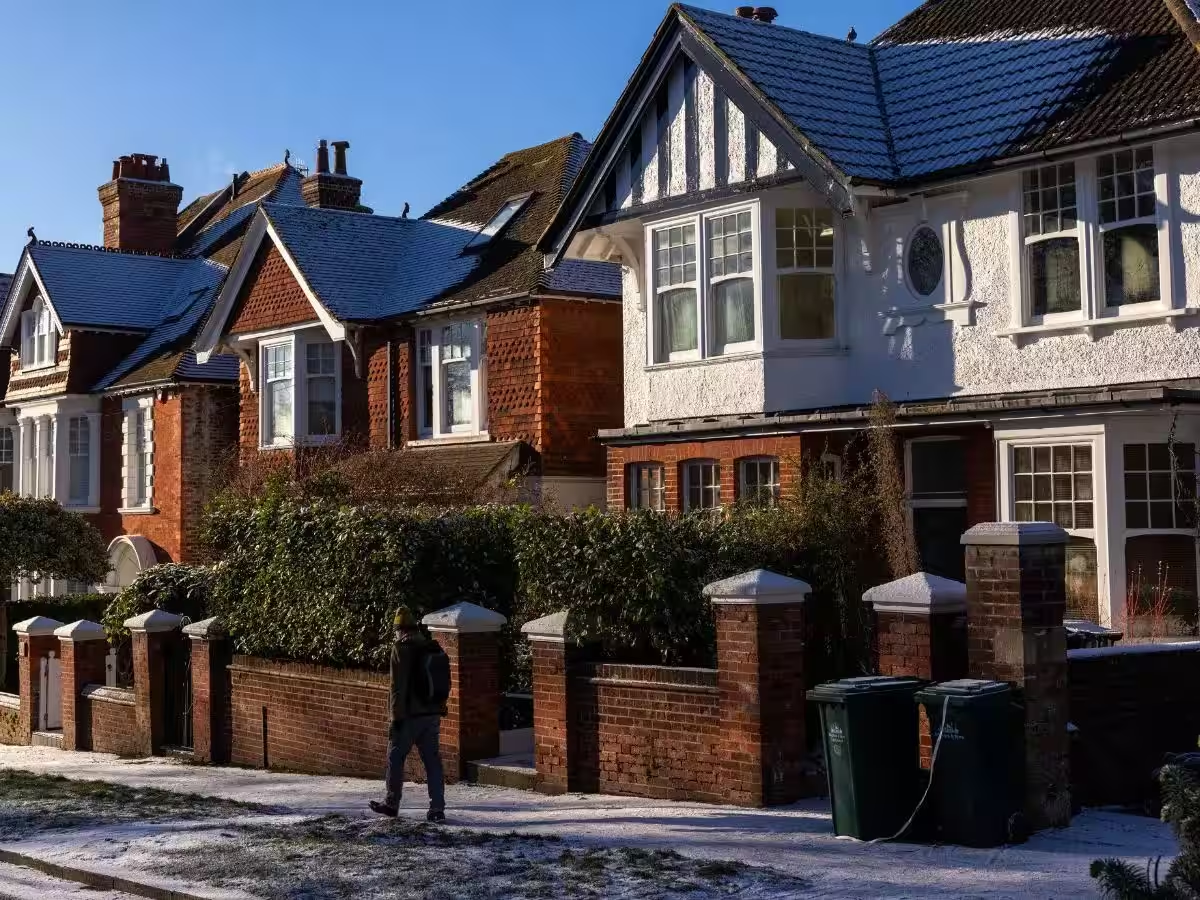
London’s most prestigious residential neighbourhoods are facing a growing property-market downturn, with eight out of 10 homes in some of the capital’s wealthiest postcodes now selling for less than their advertised asking prices, according to research by private bank Coutts.
The findings point to a significant shift in the fortunes of prime central London property, where homes in areas such as Mayfair, Belgravia, Knightsbridge and South Kensington have traditionally attracted some of the world’s wealthiest buyers. Sellers are increasingly being forced to accept substantial discounts as cautious buyers, higher financing costs and broader economic uncertainty weigh on demand.
Coutts found that properties in prime central London sold at an average discount of about 10% below their asking prices. At the same time, prices across the most expensive parts of the capital fell by 5% during the third quarter of 2026.
For owners of high-value homes, even a relatively modest percentage decline can translate into hundreds of thousands of pounds in lost value. In the most expensive cases, the difference between a previous valuation and the eventual selling price can run into millions.

The latest decline has left prices at the upper end of London’s housing market about 14% below their peak reached in 2014. The long period of weakness has been driven by a combination of factors, including Brexit, the Covid-19 pandemic, increased property taxes and higher borrowing costs.
The market has also been affected by changes to the tax environment for wealthy international residents. Estate agents and property specialists have reported weaker interest from overseas buyers following the abolition of the UK’s non-dom tax regime, which had historically helped attract wealthy international residents to London.
Some of the capital’s most exclusive neighbourhoods have experienced particularly steep long-term declines. Knightsbridge has seen prices fall 30.8% from its peak, while South Kensington is 26.9% below its previous high.
Belgravia, another internationally recognised luxury residential district, has also been affected by the wider slowdown. The changes suggest that even London’s most desirable property markets are no longer immune to broader economic pressures.
The deterioration in the market is reflected not only in prices but also in the behaviour of buyers and sellers.
Alex Webster, head of lending at Coutts, said participants at the top end of the market had already become more cautious before the latest government budget. Sellers are now watching closely to see whether the budget will encourage some postponed transactions to return to the market.
However, financing conditions and the wider economic environment are expected to remain important influences on the decisions of wealthy homeowners and prospective buyers.
The cost of borrowing is particularly significant. Although the Bank of England has kept its base interest rate unchanged since last December, movements in financial markets have pushed up swap rates, which influence the pricing of fixed-rate mortgages.
The Bank’s base rate currently stands at 3.75%, but financial-market expectations have been shifting. There is growing speculation that the Monetary Policy Committee could raise the rate to 4%, potentially marking the first increase in three years.
Such a move could further complicate the outlook for the property market.
Higher interest rates can reduce the amount buyers are willing or able to borrow, while increasing the cost of financing for those who need mortgages. At the luxury end of the market, where transactions can involve properties worth several million pounds, even relatively small changes in financing costs can influence purchasing decisions.
The uncertainty is also encouraging some sellers to delay putting their properties on the market.
Coutts found that new listings in prime central London fell by 14% compared with the previous quarter, while the amount of available housing stock declined by 6% compared with the same period a year earlier.
The number of transactions also weakened. Transactions in the third quarter of 2026 were 9.1% lower than a year earlier, according to the research.
The sharpest decline was recorded among properties priced between £2m and £5m. Transactions in that segment fell by 22.3%, highlighting the pressure facing a significant part of London’s high-value housing market.
The figures suggest that the downturn is not simply a result of sellers accepting lower prices. Fewer people are choosing to buy and sell in the first place, creating a market in which both sides are becoming increasingly cautious.
For sellers, accepting a lower offer can be difficult after years of holding expectations based on previous market peaks. For buyers, meanwhile, the prospect of further price falls can encourage them to wait rather than commit to a purchase.
That combination can create a cycle of reduced activity, with fewer transactions making it harder to establish clear market values.
Yet the picture is not uniformly weak across the luxury market.
Separate research by estate agent Savills indicates that buyers at the very highest end of the market are continuing to support activity. The firm recorded 26 transactions involving properties worth more than £10m during the third quarter of 2026.
Those transactions brought the total number of sales above £10m over the previous year to 127. Collectively, the properties involved in those deals were worth approximately £2.88bn.
The figures demonstrate that London remains capable of attracting substantial amounts of international and domestic wealth despite the broader slowdown.
The strength at the very top of the market could indicate that wealthy buyers with large amounts of available capital are less sensitive to mortgage costs than buyers who depend heavily on borrowing. It may also reflect the continued international appeal of prime London addresses, even as the wider luxury property market struggles.
The divergence between the ultra-prime market and the broader high-value market is likely to remain an important feature of London’s housing landscape.
For some wealthy buyers, falling prices could create opportunities. A property that might previously have been considered unaffordable could become more attractive if sellers are prepared to negotiate significant discounts.
For existing homeowners, however, the situation is more complicated. Those who bought near the market peak may now find that their homes are worth substantially less than they expected, particularly in neighbourhoods that have experienced the largest declines.
The weakness also has implications beyond individual homeowners.
London’s luxury property market contributes to a much wider network of estate agents, surveyors, lawyers, lenders, property managers, construction companies and other professional services. A sustained decline in transactions could therefore affect activity across parts of the city’s high-value economy.
At the same time, falling prices could gradually improve affordability for some prospective buyers, although the cost of luxury homes remains far beyond the reach of most households.
The market is also being shaped by a broader change in London’s relationship with wealthy international residents. The capital has historically benefited from strong overseas demand, with global investors attracted by its financial importance, cultural influence, educational institutions and established luxury property market.
Changes to taxation, however, have altered the calculation for some international buyers and residents. Combined with Brexit and changing global economic conditions, this has contributed to a more cautious environment.
The question now is whether the current downturn represents another stage of a prolonged correction or the beginning of a deeper change in London’s luxury property market.
Much will depend on interest rates, economic growth, taxation policy and confidence among wealthy buyers. If borrowing costs rise further, pressure could increase across the market. If financial conditions improve, some of the buyers currently waiting on the sidelines could return.

For now, sellers in prime central London are facing a market that looks very different from the one that prevailed at the height of the luxury property boom. Asking prices no longer guarantee completed sales at similar levels, and buyers increasingly appear willing to negotiate.
The fact that 80% of properties are reportedly selling below their asking prices is a powerful indication of the shift in bargaining power.
For owners in Mayfair, Belgravia, Knightsbridge and other exclusive neighbourhoods, the coming months could therefore require difficult decisions over whether to wait for the market to recover or accept a lower price to secure a sale.
Meanwhile, the continued flow of £10m-plus transactions shows that London’s luxury property market is far from disappearing. Instead, it appears to be dividing into different segments, with the wealthiest buyers continuing to transact while a broader group of buyers and sellers waits for greater economic certainty.
Related News:
 UK House Prices Fall as Mortgage Rates Rise
 Oil nears $100 as Saudi attacks shake markets
 Thames Water Revises Oxfordshire Mega-Reservoir Plan
 UK Retail Sales Rebound as Consumers Spend More
 UK Borrowing Hits £18.3bn Ahead of Budget
 Thinktank Calls for Abolition of UK State Pension
 MPs Defend UK Economic Watchdog Against Critics
 UK Trade Losses Grow Without EU Product Deal
 Should Savers Lock Into 5.25% Fixed Rates?
 UK Diesel Prices Hit Record High Amid Iran Conflict
 Poundland Rescue Bid Could Protect 11,000 Jobs
 UK house price growth slows as mortgage rates rise
 UK borrowing costs surge as global bond sell-off deepens
 UK Assures Public Over Diesel Supply
 UK Diesel Reaches £2 as Inflation Surges Across Europe
 Minister Rejects Fears of UK Diesel Shortage
 Informa Agrees £2.24bn Deal to Buy Clarion
 Google Maps Brings Live Fuel Prices to UK Drivers
 IFS Warns UK Budget Faces £35bn Spending Gap
 UK Van Drivers Face £2.5bn Diesel Cost Surge
 IMF Warns Global Economy Is Nearing Its Limits
IMF Raises UK Growth Forecast Ahead of Healey’s Budget
 Healey Plans £1bn Online Marketplace Tax Crackdown
 Business Chief Urges Burnham to Fix Brexit Damage
 UK Unemployment Falls to 4.7% as Vacancies Decline
UK Borrowing Hits £24.5bn Ahead of Healey’s Budget
 Healey Set to Scrap Planned Cut to Cash ISA Allowance
 BP Profits Surge as Middle East Conflict Lifts Margins
 UK House Price Growth Slows to Two-Year Low
 BBC News Faces Deep Cuts in 2,000 Job Plan
 Reeves Fights to Keep Treasury Role Amid Labour Turmoil
 UK rejects EV charging VAT cut amid Treasury clash
 EasyJet Takeover Sparks Fears Over Passengers’ Future
 Europe Faces Winter Gas Supply Anxiety
 UK Households Could Save £173 on Fixed Energy Deals
 UK Cost Squeeze Deepens as Mortgages and Gas Rise
 Billionaire Chris Rokos poised to leave UK
 JPMorgan Boss Warns Against UK Bank Tax Rise
 John Lewis Losses Widen to £124m as Confidence Falls
 UK State Pension Set to Rise 3.9% as Triple Lock Holds
 UK Pay Growth Slows to 3.9% as Rate Decision Nears
 Bank Urged to Slow Bond Sales as UK Costs Rise
 UK Inflation Hits 3.1% as Household Pressure Grows
 UK Productivity Improves as Bank Weighs Interest Rates
 Japan Raises Rates to 31-Year High
 UK Rent Gap Puts Low-Income Families Under Pressure
 Calls Grow to Expand UK National Wealth Fund
 Chinese Hybrid Car Surge Raises EU Auto Industry Concerns
 Tony Blair Calls for Britain to Rejoin EU Within a Decade
 AO Acquires Jessops in Camera Retail Expansion
 Saudi intercepts Houthi missiles as oil fears grow
 Beaverbrooks Boss Calls for Relief on Business Costs
 Healey urged to act as UK energy bills rise 4%
 Boots Sale Nears as Weston Family Eyes $9bn Deal
 French Debt Fears Put Euro Markets Under Pressure
 UK Faces Calls to Review Bank Failure Bets
 North Sea Strike Threatens UK Fuel Supplies
 UK Weighs Chinese Car Tariffs Amid EU Trade Push
 BT Agrees £400m TalkTalk Rescue Deal
 EU-China Talks Target Surge in Hybrid Car Imports
 UK house prices stall as mortgage costs rise
 IMF Warns Governments Over Rising Debt Burdens
 Tesco Raises Profit Forecast as Consumer Confidence Holds
 Ministers Push ATO to Reconsider Credit Card Ban
 Oil Shock Sends Markets Lower as Middle East Risks Grow
 France Faces Debt Crisis as Protests and Markets Clash
 UK Savers Face Uncertainty as Rates Rise Above 5%
 Hall and Woodford Win Nobel Economics Prize
 UK Could Rejoin EU Through a Switzerland Plus Deal
 UK Inflation Hits 3.5% as Middle East War Drives Fuel Costs
 Tax Online Sales to Save High Street, Burnham Urged
 UK Consumer Confidence Plunges at Fastest Rate Since Brexit Vote
 Labour MPs Urge Burnham to Lead UK Reindustrialisation
 China’s AI Ambitions Hit $2.4 Trillion Market Setback
 UK Chancellor Moves to Scrap Gas Standing Charges
 Fed Expected to Hold Rates Steady Ahead of US Midterms
 UK Budget Leaves Households Facing Higher Energy Bills
 Lloyds Warns Against Extending Higher Bank Tax
 North Korea Linked to Record $6.3bn Binance Crypto Heist
 UK Side-Hustle Tax-Free Limit to Rise to £3,000