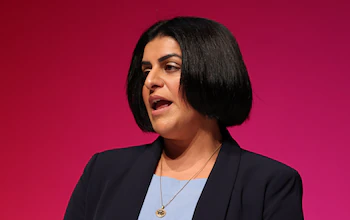
Published: 30 October 2026. The English Chronicle Desk. The English Chronicle Online
Home Secretary Shabana Mahmood is facing growing frustration from fellow ministers over the government’s proposed overhaul of the UK asylum system, with concerns mounting that changes designed to reduce the cost and scale of asylum accommodation could increase homelessness and place additional pressure on local authorities.
The dispute centres on demands for clearer information about the likely social consequences of Mahmood’s proposals. Several ministers have reportedly sought detailed Home Office estimates on how many people could face homelessness or financial hardship as a result of the reforms. They say they have repeatedly struggled to obtain satisfactory answers, creating tension across government at a time when ministers are also attempting to meet ambitious targets on reducing rough sleeping.
The Home Office has defended its approach, arguing that the final design of the new system has not yet been completed and that it is therefore impossible to calculate precisely how many people could be affected. Officials insist that the reforms will be structured to minimise the risk of destitution and homelessness and say the proposals have gone through the government’s normal cross-departmental approval process.

The disagreement nevertheless highlights the difficult political and practical challenges surrounding the government’s attempt to reform the asylum system. Mahmood has argued that the existing arrangements are expensive and unsustainable and that the changes are necessary to restore greater control over immigration while reducing the incentives for people to enter or remain in the asylum system.
One of the most significant elements of the proposed reforms is the government’s plan to move away from permanent leave to remain and alter the way support is provided to people who might otherwise face destitution. The proposals also form part of a wider effort to reduce reliance on asylum hotels and move people into alternative forms of accommodation.
The government has defended the removal of asylum seekers from hotels as part of a broader programme to reduce public expenditure. The Home Office says the reforms have already contributed to savings of more than £1bn for taxpayers since the election and argues that people leaving hotels will be moved into accommodation that is more appropriate for their circumstances.
However, concerns among ministers have focused on what could happen to people who are no longer eligible for support or whose financial resources become insufficient to meet basic living costs. If individuals are unable to secure alternative accommodation, councils and homelessness services could face additional demands.
A government impact assessment released this month acknowledged that there is a risk of increased financial hardship and destitution. It warned that if repayments associated with the new system significantly reduced people’s disposable income, some individuals could struggle to meet basic needs. Such circumstances could increase demand for homelessness services and rough-sleeping support, creating additional financial pressure for local authorities.
That acknowledgement has intensified questions from ministers who want to understand the scale of the potential problem before the reforms are fully implemented.
The concerns did not begin with the current dispute. Former housing ministers Ali McGovern and Miatta Fahnbulleh are understood to have sought information about the likely consequences of Mahmood’s changes while serving in government under Keir Starmer. Steve Reed, who was then housing secretary, was also reportedly concerned that moving asylum seekers out of hotels could contribute to an increase in rough sleeping.
The ministers were particularly concerned that the government’s existing commitment to reduce rough sleeping could become harder to achieve if people leaving asylum accommodation were unable to find stable housing.
McGovern and Fahnbulleh subsequently secured a meeting with Alex Norris, who was then a Home Office minister and is now justice secretary. However, sources familiar with the discussions said the meeting did not provide the level of information they had been seeking.
The two ministers were preparing to send a formal letter to the Home Office demanding greater clarity when Fahnbulleh resigned from government. Her departure contributed to the political events that eventually led to Starmer’s departure from Downing Street, and the planned letter was never sent.
Mahmood’s allies have rejected the suggestion that the Home Office has deliberately withheld information. They point instead to the department’s impact assessment, which says the precise scale of the risk cannot yet be determined because important details of the repayment mechanism have not been finalised.
The assessment indicates that thresholds and repayment rates are intended to be designed so that individuals retain enough income to maintain basic living standards. The Home Office’s argument is therefore that the final impact cannot be properly calculated until the mechanism itself has been developed.
The disagreement has become more significant since Andy Burnham became prime minister and made rough sleeping a major government priority. Burnham has pledged to ensure that every rough sleeper has a route away from the streets by Christmas, backed by hundreds of millions of pounds in government funding.
That commitment has increased the sensitivity surrounding any policy that could potentially add to the number of people requiring homelessness assistance. Ministers responsible for housing and local government are therefore seeking assurances that changes to the asylum system will not undermine the government’s wider strategy.
Angela Rayner, the housing secretary, is also understood to be seeking further details about the potential consequences of Mahmood’s proposals. Her concerns reportedly extend beyond homelessness to the possibility that changes to asylum accommodation could trigger renewed local tensions.
One particular concern is the plan to move asylum seekers out of hotels and into houses in multiple occupation. Similar arrangements have previously generated controversy in some communities, and ministers fear that a renewed concentration of asylum accommodation could lead to fresh anti-immigration protests.
The issue has added another layer to an already contentious debate over migration. Public anger surrounding asylum accommodation has previously resulted in demonstrations and clashes, particularly in areas where residents have opposed the use of hotels for housing asylum seekers.
The government’s migration reforms also extend beyond the asylum system. Mahmood has faced disagreements with colleagues over proposed changes to legal migration, including measures that could make it more difficult for some foreign workers to obtain settled status.
Rayner has argued that care workers should be protected from some of those restrictions. The care sector relies heavily on overseas workers, and ministers have warned that tightening settlement rules could lead to an exodus of experienced staff at a time when the sector is already struggling with recruitment and retention.
The issue has become particularly important for the government because social care providers are already facing workforce pressures. A sudden loss of care workers could increase pressure on hospitals, councils and families who depend on the sector to provide essential services.
Burnham has previously considered intervening on the issue to ensure that care workers receive an exemption from some of the proposed immigration restrictions. Senior ministers are expected to continue discussions over the coming days in an attempt to find a compromise that addresses concerns about both immigration control and workforce shortages.
The government now faces a delicate balancing act. Mahmood has been given political backing to pursue tougher migration policies, but other ministers want assurances that the reforms will not generate costs or social problems elsewhere in government.
A government source said the prime minister wanted ministers to work through the details of the policy while making clear that he supported Mahmood. At the same time, the prime minister has indicated that affected sectors must receive adequate support.
The next 10 days are expected to be particularly important, with a series of meetings between senior ministers likely to determine how several aspects of the reforms are implemented.

For Mahmood, the political challenge is to demonstrate that tougher asylum policies can deliver the promised reductions in costs and pressure on the immigration system without creating a new crisis in homelessness or community relations.
For housing ministers and local authorities, the priority is ensuring that people leaving asylum accommodation do not simply move from government-funded hotels to streets, temporary shelters or overstretched council services.
The dispute illustrates the interconnected nature of immigration, housing, welfare and public services in modern Britain. A policy designed to reduce expenditure in one part of government can potentially create additional costs elsewhere if its wider effects are not carefully managed.
As ministers negotiate the final details, the central question will be whether the government’s migration reforms can achieve their intended objectives while preventing vulnerable people from falling into destitution. The answer could have significant consequences not only for the asylum system but also for Britain’s homelessness strategy, local councils and communities already under pressure from rising demand for public services.
Related News:
 Patriot Platform Raises Concern Across Britain
 Reform UK Receives Record £36m Donation From Crypto Billionaire
 Election Candidate Abuse Raises Alarm in England
 Free Speech Emerges as Key UK Election Issue
 Drumcree Talks Falter as Legal Challenge Deepens
 UK-France Returns Deal Faces Expiry as Talks Stall
 Hundreds of UK prisoners released early amid overcrowding
 Drumcree Talks End Without Agreement Ahead of Appeal
 Badenoch Raises Prospect of 2027 UK Election
 England and Wales Begin Second Wave of Early Prison Releases
 Farage Rejects Claims Reform Would Let Troops Shoot Migrants
 Undercover officer deceived women with ‘grotesque and cruel’ lies, spycops inquiry told
 UK may ban protests amid rising antisemitism fears
 Barrister Criticises Trial After Suicide Case Verdict
 Immigration Judges Fear Pressure in Trump Era
 Murder Probe Continues After Arrest Release
 Westminster Council Threatens Charing Cross Soup Kitchen
 BBC Warned About Missing Clothes of Murder Victim
 Cambridge Professor Jason Arday Found Dead at Home
 RAF Barnham Protests Fuel Tensions in Norfolk Town
 Internal Exclusions Surge in England’s Schools
 Ministers Condemn Far-Right Unrest in Portsmouth
 Councils spend £125m on illegal children’s care
 Piddington Votes for Symbolic Independence Over Asylum Plan
 Mahmood Warns Far Right Over Asylum Protests
 Disabled Travellers Seek Fairer UK Care Rules
 NHS Breast Care Review Finds Serious Patient Harm
 Lib Dems Prepare for Election Amid Reform Challenge
 UK Reviews Hague Child Abduction Cases Involving Abuse
 Democrat Says ICE Restricted Detention Camp Oversight
 King Refers Jamaica Slavery Petition to Privy Council
 UK Pauses Chagos Deal Amid US Opposition
 Court Says Judge Should Not Have Heard Case From Bed
 Judge orders Trump to restore access for three media outlets
 Elif Eralp Emerges as Berlin’s Next Political Force
 Far-Right Activist Arrested After Channel Dinghy Incident
 Portadown protest ends after tense Orange Order standoff
 Fayed Survivors Demand Inquiry Into Medical Regulator
 Dale Vince Plans New London-Wide News Operation
 London Facial Recognition Trial Ends With False Alert
 UK University Strikes Spread as Financial Pressure Grows
 Burnham Opens Door to Possible UK Return to EU
 Green Party faces dispute over Zionism motion
 Almost Half of Fayed Accusers May Be Trafficking Victims
 Banned Health Coach Faces UK Events Criticism
 Latin America women fear rollback of rights
 Gosport Protesters Clash With Police Over Migrant Rescue
 Royal Navy Sailor Charged With Alleged Spying
 Luton Residents Reject Claims of ‘No-Go Zones’
 NSW Police Bid Delays Inquiry Into Sydney Protest
 ICE Agent Shoots Man in New York as Child Escapes Harm
 Controversial Vaccine Trial Approved in Guinea-Bissau
 Trump Attacks Norway After Nobel Peace Prize Snub
 Delhi Braces for Youth Protests Over Voter Roll Dispute
 UK Gaza Refugee Route Criticised Over False Hope Claims
 Recruitment Boss Accused of Leading Doxxing Campaign
 British Military School Abuse Victims Denied Justice
 UK Greens Face Crisis Over Zionism and Extremism Row
 UK Passport Rules Leave Family Facing Separation
 Ohio Airports Become Key Hubs for ICE Deportation Flights
 UK Urges Interpol to Reject Argentina’s Falklands Arrest Requests
 Camera Discovery Triggers Navy Ship Investigation
 Farage Calls for Prosecution of Asylum Seeker Charities
 Gadi Eisenkot: Israel’s Anti-Netanyahu Challenger
 UK Bill Faces Warning Over Fayed Trafficking Victims
 Jenrick Defends Farage Amid Fresh Reform Racism Claims
 UK Pledges Stronger Protections for Disabled Air Passengers
 Jess Phillips Urges Supreme Court to Reverse Abuse Ruling
 Serbia’s Student Victory Sparks a ‘Smell of Freedom’
 Trump’s Midterm Campaign Faces Racism and Political Backlash
 UK Land Registry Plan Faces Opposition From Landowners
 Essex Volunteer Accuses Reform Councillor of Nazi Remark
 King Charles Faces Calls for Slavery Reparations Talks
 Unions Warn Labour Over Zero-Hours Contract Reforms
 British Museum Faces Questions Over Peter Thiel’s Private Bayeux Viewing
 South Africa Withdraws Directive on Asylum Applications
 Elizabeth Struhs Inquest Examines Child Safety Failures
 India’s Voter Roll Crisis Sparks Nationwide Protests
 UK Visa Refusal Threatens Baby’s Family Christmas
 Trump Again Demands Peltola Prosecution as Alaska Race Escalates