Published: 02 October 2026. The English Chronicle Desk. The English Chronicle Online
Efforts to resolve the long-running Drumcree parading dispute in Northern Ireland have ended without an agreement, leaving the issue to return to the courts after five days of political tension and negotiations. Talks involving representatives of the Orange Order and residents of the Garvaghy Road area concluded late Thursday at Hillsborough Castle, with Northern Ireland Secretary Sir Chris Bryant acknowledging that the sides remained unable to reach a settlement.
The immediate focus will now shift to a legal appeal scheduled for Monday. The case concerns the decision that permitted a restricted Orange Order parade along the mainly nationalist Garvaghy Road in Portadown, a route that has been at the centre of one of Northern Ireland’s most sensitive and historically contentious parading disputes.
The latest talks were intended to prevent the confrontation from developing further and to create a mutually acceptable way forward. Bryant said negotiations had examined a wide range of possibilities, including arrangements that would recognise the right to march without the march actually taking place, as well as a proposal involving a final parade followed by an undertaking not to submit further applications for marches along the disputed route.
None of those options secured agreement.

Bryant described the situation as being between a “rock and a hard place” while stressing that his efforts to maintain dialogue would continue. The failure of the talks means that the legal process will once again become central to determining what happens next.
The dispute was reignited after the Northern Ireland Parades Commission gave the Portadown District of the Orange Order permission to use the Garvaghy Road route, subject to restrictions. The decision represented a major change after almost three decades during which the Orange Order had been prevented from completing the route through the predominantly nationalist area. The permission was granted with conditions limiting participation and other aspects of the parade.
The decision has divided local communities and political representatives. Supporters of the Orange Order maintain that the organisation has a right to conduct its traditional parade, while residents of Garvaghy Road have opposed the march through their community.
The dispute has its roots in the intense tensions surrounding parades in Northern Ireland during the 1990s. Drumcree became one of the most prominent flashpoints during that period, with repeated confrontations involving marchers, residents and security forces. Restrictions on the route were subsequently maintained for many years.
The recent attempt to revive the route has therefore carried significance well beyond the planned march itself. For supporters of the Orange Order, the issue concerns cultural tradition, freedom of assembly and the right to conduct a lawful parade. For opponents, the route is associated with historic community tensions and concerns about the impact of a parade through a predominantly nationalist neighbourhood.
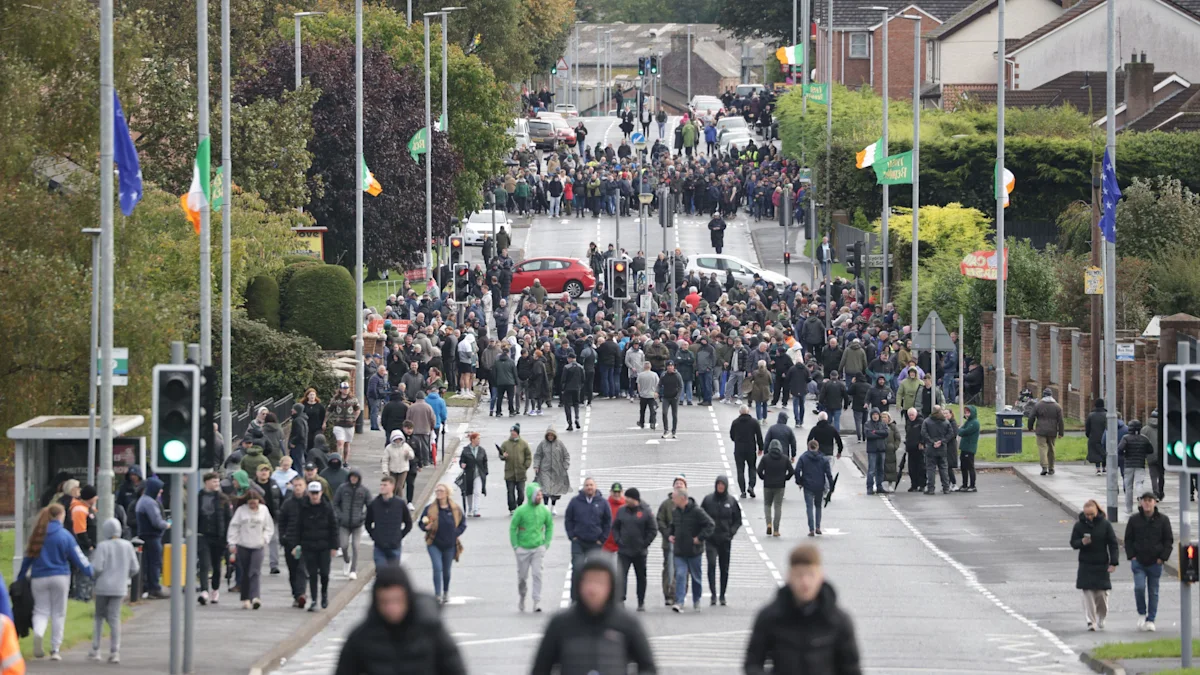
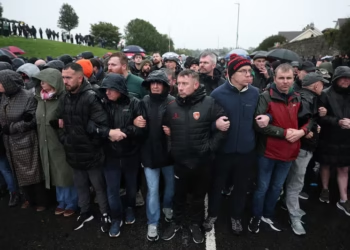
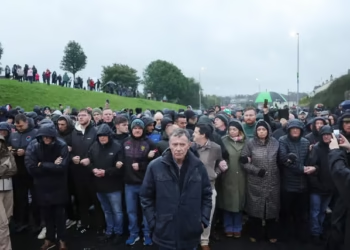
The present standoff began after the approved parade was unable to proceed. Orange Order members attempted to reach the route but were prevented from doing so by police after residents and other protesters gathered to block the way. Police have maintained a significant presence in the area while seeking to prevent confrontation and maintain public safety.
Despite the high level of tension, the Police Service of Northern Ireland has said there has been no violence and no injuries during the current standoff. At the same time, the policing operation has required substantial resources.
The Northern Ireland Policing Board has heard that the PSNI operation connected with the dispute has already cost more than £3 million. Chief Constable Jon Boutcher described the situation as challenging and complex, while indicating that the police had considered the risks involved in attempting to force the parade through the blocked route.
The policing dilemma reflects the difficulty of balancing competing legal rights in a highly sensitive environment. Officers have had to consider the right of people to participate in a permitted parade alongside the potential consequences of attempting to remove protesters from the route.
The legal appeal on Monday is therefore being closely watched by both sides. The residents’ legal challenge had originally been expected to proceed earlier, but it was postponed to give the negotiations at Hillsborough Castle additional time.
Jamie Bryson, a loyalist activist and legal adviser to the Orangemen, said the Orange Order would accept the outcome of Monday’s appeal. He also challenged Garvaghy Road residents to make the same commitment if the court upholds the decision allowing the parade.
The position reflects the importance both sides attach to the legal process. The Orange Order has maintained that it wants to exercise what it regards as its right to march along the traditional route. Portadown District master Nigel Dawson has similarly argued that members have a right to walk down the Garvaghy Road.
Representatives of the residents’ coalition have taken a different position. Breandán Mac Cionnaith said the central issue could not be divided into a partial or compromise parade. His comments reflected the coalition’s opposition to the march proceeding along the road.
Earlier discussions had appeared to offer the possibility of an agreement. Residents had indicated that they could support proposals emerging from negotiations if the Orange Order also accepted them. However, the proposed arrangement was not accepted by unionist representatives, and the negotiations subsequently continued without a final settlement.
The dispute has also attracted attention beyond Northern Ireland. Fourteen members of the United States Congress urged Bryant to intervene, warning that a failure to resolve the issue could damage the progress made since the Good Friday Agreement.
The involvement of American politicians reflects the historical international attention given to Northern Ireland’s peace process. The United States played a significant diplomatic role during the negotiations that led to the Good Friday Agreement, and developments involving community relations in Northern Ireland continue to attract interest among American lawmakers.
For local communities, however, the dispute remains immediate and deeply connected to questions of identity, tradition, rights and public safety.
The current situation also demonstrates how quickly a decision concerning a single parade can develop into a much broader political and policing challenge. The Parades Commission’s decision created a legal route for the Orange Order to attempt to return to the Garvaghy Road, while the subsequent opposition from residents produced a standoff that required a major police operation and emergency political negotiations.
The absence of violence so far has been an important feature of the current dispute. Nevertheless, the continuing blockade and uncertainty surrounding the parade mean that authorities remain alert to the possibility of further tension.
The next major development is expected from the Court of Appeal on Monday. Its ruling could determine whether the existing permission for the parade remains in place or whether the legal challenge by residents succeeds.

Whatever the court decides, the events of the past week have demonstrated that the Drumcree dispute remains a highly sensitive issue nearly three decades after the route was last regularly used. The competing claims of cultural tradition, community consent, legal rights and public safety have proved difficult to reconcile.
For Bryant, the breakdown of the talks leaves the door open for further dialogue, but the immediate political effort has not produced the compromise that officials had hoped for. The court process will now take centre stage, while police and community representatives continue to manage a situation that remains tense but, so far, has avoided violence.
The outcome of Monday’s appeal will provide another important legal development, but it may not by itself resolve the deeper disagreements that have surrounded Drumcree for decades. The continuing challenge for Northern Ireland’s institutions and communities will be finding a way to manage competing rights and traditions without allowing the dispute to develop into renewed confrontation.
Related News:
 Patriot Platform Raises Concern Across Britain
 Hundreds of UK prisoners released early amid overcrowding
 Undercover officer deceived women with ‘grotesque and cruel’ lies, spycops inquiry told
 Barrister Criticises Trial After Suicide Case Verdict
 Murder Probe Continues After Arrest Release
 Westminster Council Threatens Charing Cross Soup Kitchen
 BBC Warned About Missing Clothes of Murder Victim
 Cambridge Professor Jason Arday Found Dead at Home
 Ministers Condemn Far-Right Unrest in Portsmouth
 Councils spend £125m on illegal children’s care
 Reform UK Receives Record £36m Donation From Crypto Billionaire
 Election Candidate Abuse Raises Alarm in England
 Piddington Votes for Symbolic Independence Over Asylum Plan
 Mahmood Warns Far Right Over Asylum Protests
 UK Reviews Hague Child Abduction Cases Involving Abuse
 Democrat Says ICE Restricted Detention Camp Oversight
 King Refers Jamaica Slavery Petition to Privy Council
 Far-Right Activist Arrested After Channel Dinghy Incident
 Portadown protest ends after tense Orange Order standoff
 Free Speech Emerges as Key UK Election Issue
 Fayed Survivors Demand Inquiry Into Medical Regulator
 London Facial Recognition Trial Ends With False Alert
 Drumcree Talks Falter as Legal Challenge Deepens
 UK-France Returns Deal Faces Expiry as Talks Stall
 It’s time to come clean on the China spy case
 French Taxi Driver Cleared in David Lammy Theft Case After Fare Dispute
 Met Police Culture Makes Racial Harm ‘Inevitable’
 Remaining rebel Labour MPs have whip restored
 Prevent Failings Exposed After Southport Attack
 Mass Arrests at London Palestine Protest Spark Debate
 NHS Safety Fears as Nurses Cover Doctor Gaps
 Walsall Rapist Jailed After Hate-Filled Online Trail
 Two Children Die in Wolverhampton House Fire Tragedy
 Police Suspect Help in Missing Alice Springs Girl Case
 Cartel crackdown raises fears of fresh violence
 UK may ban protests amid rising antisemitism fears
 Immigration Judges Fear Pressure in Trump Era
 Victim says non-custodial rape sentence ‘rock in my face’
 RAF Barnham Protests Fuel Tensions in Norfolk Town
 Internal Exclusions Surge in England’s Schools
 Masked Protesters Bring Dover Port Traffic to Standstill
 UN expert urges UK to rethink Israel policy
 Armed Suspect Attacks Ohio Governor Candidate
 Miliband Rejects Chief Rabbi’s West Bank Warning
 Israel Accused of Undermining Palestinian Life
 UK Urged to Probe US Diplomat Case
 Lisa Nandy Calls for Tougher Action on Social Media Doxxing
 Texas Charges Seven Noncitizens in Voting Crackdown
 Iran School Strike Raises War Crimes Questions, UN Says
 Texas Transfers Raise Fears for Migrant Children
 Memphis Questions National Guard Crime Surge
 Disabled Travellers Seek Fairer UK Care Rules
 NHS Breast Care Review Finds Serious Patient Harm
 Harrods Faces Dispute Over Fayed Abuse Compensation
 Lib Dems Prepare for Election Amid Reform Challenge
 Briton Faces Cyprus Court Over Son’s Fatal Fall
 Far-Right Activist Slashes Dinghy in Channel
 UK Pauses Chagos Deal Amid US Opposition
 Court Says Judge Should Not Have Heard Case From Bed
 Judge orders Trump to restore access for three media outlets
 Elif Eralp Emerges as Berlin’s Next Political Force
 Three Die in Channel Crossing Attempt Near France
 Cornell Fraternity Assault Investigation Reopened
 Dale Vince Plans New London-Wide News Operation
 French Student Protests Escalate Into Violent Clashes
 UK University Strikes Spread as Financial Pressure Grows
 Burnham Opens Door to Possible UK Return to EU
 Early Prison Releases Raise Homelessness Concerns
 Green Party faces dispute over Zionism motion
 Major Rent Reform Ends No-Fault Evictions in England
 Proposed Law Leaves Gap for Children of Convicted Paedophiles
 Ben Roberts-Smith Denies War Crime Allegations in First Statement
 Farage and Reform UK Reshape British Politics
 New Footage Revives Peter Falconio Mystery
 Burnham unveils £65m drought aid for farmers
 Unions Warn Labour Over Zero-Hours Contract Reforms
 British Museum Faces Questions Over Peter Thiel’s Private Bayeux Viewing
 Man Arrested in Mississippi Woman’s Death
 UK Retailers Accused of Breaking Refund Laws
 Republican Senator Questions Trump Ad Spending