Published: 30 September 2026. The English Chronicle Desk. The English Chronicle Online
More than 400 people, most of them teenagers, were detained across France on Tuesday as a growing wave of student protests over overcrowded classrooms, teacher shortages and exhausting school schedules escalated into clashes with police. The demonstrations, which began in Paris the previous week, spread to cities and towns across the country, bringing renewed attention to pressures facing France’s education system and to the increasingly tense relationship between young protesters and the authorities.
French interior minister Laurent Nunez said 440 people had been detained nationwide, although he cautioned that the final figure was not yet available. According to the education ministry, about 400 schools experienced protests or disruptions on Tuesday out of approximately 3,700 schools across France.
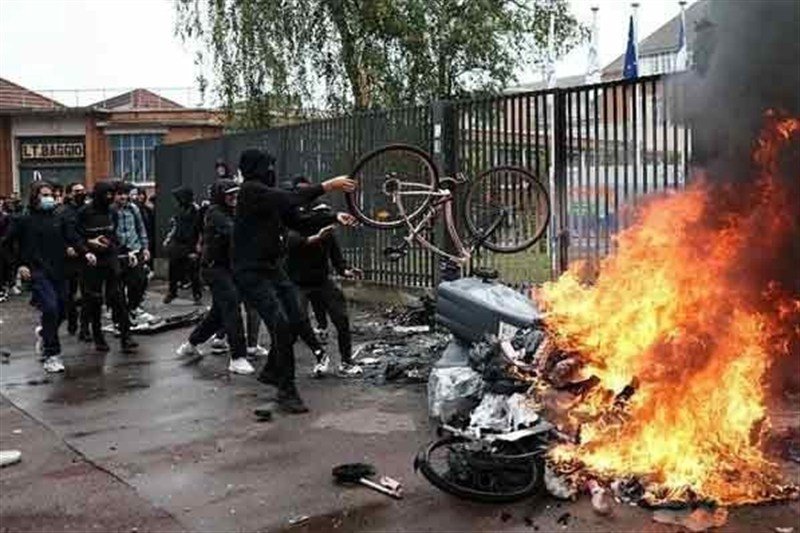
The scale of the demonstrations marked a significant escalation from the initial school blockades in Paris. While many students took part in peaceful demonstrations and displayed placards describing their concerns, confrontations occurred in several locations. In Lille, northern France, protesters reportedly burned rubbish bins and threw bottles, paving stones and other objects towards police. Officers responded with tear gas after some protesters damaged bus shelters and advertising displays.

Authorities said violence also occurred in Bordeaux, Rennes, Nantes and Marseille, while schools in the Rhône region, including those in Lyon, Villeurbanne, Décines-Charpieu and Thizy-les-Bourgs, were affected by attempted blockades and demonstrations.
Nunez said police officers had faced serious dangers during the unrest. He reported that seven incidents involved hydrochloric acid being thrown at officers and said 48 police officers had been injured during clashes across the country. The interior minister argued that there was no justification for protesters to conceal their identities, carry projectiles or deliberately confront law enforcement.
The protests are rooted in concerns that extend beyond individual schools. Student representatives say overcrowded classrooms, shortages of teachers and support staff, and increasingly demanding timetables are placing considerable pressure on pupils. In some schools, students say they are expected to remain in lessons from early morning until the evening.
At the Lamartine lycée in northern Paris, students carried placards highlighting the length of their school days. One message referred to schedules running from 8am to 6pm and questioned how students could maintain such demanding routines.
Ryad Rani, president of the Union Syndicale Lycéene, the high school students’ union, called for nationwide blockades while urging participants to remain peaceful. He said students were protesting what he described as a broader shortage of resources and overcrowded classrooms sometimes containing between 32 and 35 pupils.
For many students, the issue is not simply the number of pupils in a classroom. They also complain about lessons being cancelled because teachers are unavailable, pressure created by long school days and a lack of sufficient educational support. The concerns have brought students into closer alignment with teachers and other public-sector workers who are facing their own disputes with the government.
The protests coincided with a wider strike by French trade unions over the government’s proposed budget. The spending plan includes €54 million in public-sector reductions, while large numbers of public workers participated in industrial action on Tuesday. The education sector was particularly affected, with an estimated 40% of primary school teachers reported to have joined the strike.
The overlap between student protests and the broader public-sector dispute has given the demonstrations a wider political dimension. Students are demanding improvements inside schools, while unions are challenging government spending decisions and the broader direction of public services.
Caroline Chevé, secretary general of the Fédération Syndicale Unitaire, one of France’s main teachers’ unions, said students were experiencing many of the same difficulties as teachers. She pointed to overcrowded classrooms and staff shortages as problems affecting both groups.
The response from the authorities has become another major issue. The interior and education ministries circulated guidance to police concerning public order around schools, including instructions regarding the proportionate use of force. Student representatives have criticised the approach, arguing that young people between the ages of 15 and 18 should not be confronted with what they consider to be an excessively heavy police presence.
Rani described the deployment of specialist police units as unacceptable and said students were being met with riot-control forces when they were attempting to draw attention to educational problems. He also said some teachers and school employees had positioned themselves between police and students during confrontations.
In several locations, however, the authorities have stressed that the violence cannot be justified by the legitimacy of the underlying complaints. Nunez said that demonstrations involving masked individuals carrying projectiles and attacking police crossed a line that could not be defended as ordinary protest activity.
Prime minister Sébastien Lecornu also criticised the escalation. He said fires, fireworks and violence near schools placed students, teachers and police officers at risk. His comments reflected the government’s position that legitimate grievances should not be used to justify attacks or dangerous behaviour.
The dispute has also drawn France’s political opposition into the debate. Jean-Luc Mélenchon, leader of the left-wing France Unbowed party, criticised the government’s handling of the protests and accused authorities of responding to young demonstrators with excessive force. He also alleged that the government’s response carried a racist dimension.
Lecornu rejected Mélenchon’s intervention, describing it as an irresponsible escalation and arguing that elected officials should encourage calm and protect young people rather than intensify tensions. He also rejected the accusation of racism.
The confrontation between the government and political opposition illustrates how quickly the school protests have developed into a broader national debate about public services, policing and political responsibility. Yet the immediate concerns of students remain largely focused on conditions inside their schools.
In the Paris suburb of Seine-Saint-Denis, mayor Bally Bagayoko joined hundreds of students protesting at Lycée Paul-Eluard. He described their demands as legitimate and highlighted concerns about unequal resources between wealthier areas and lower-income communities.
The presence of local political figures has further demonstrated the importance of the protests in communities where educational inequality is already a significant concern. Students and their supporters argue that schools serving disadvantaged populations can face particularly severe shortages of teachers and resources.
At the same time, the violence has raised questions about how authorities can maintain public safety without deepening tensions with young people. Reports of damaged public property, fires and clashes have complicated the wider discussion, particularly because many of the protesters are minors.
France now faces the challenge of addressing the educational concerns that brought students onto the streets while preventing further confrontations around schools. The protests have demonstrated that dissatisfaction among young people is closely connected to wider pressures on public services and government spending.

For students, the central question is whether the education system can provide manageable workloads, adequately staffed classrooms and sufficient resources. For teachers, many of whom have joined the wider strike, the dispute reflects longstanding concerns about working conditions and staffing levels. For the government, the immediate priority is maintaining order while responding to demands without allowing further disruption or violence.
The events of Tuesday have therefore turned a series of school blockades into a much broader national confrontation. Whether the protests continue to expand will depend partly on the government’s response to educational demands and partly on the ability of student organisers to maintain peaceful demonstrations.
What began as a protest over classrooms and timetables has now become part of a larger French debate over public spending, education, inequality, policing and the treatment of young people in political demonstrations. The coming days are likely to determine whether dialogue can reduce tensions or whether further school disruptions and confrontations will follow.
Related News:
 Irish Gangland Figure Fails in Dublin Election Bid
 King Refers Jamaica Slavery Petition to Privy Council
 UK University Faces Counter-Terror Probe Over China Pressure
China-critical UK academics face ‘extremely heavy’ pressure from Beijing
UK University Faces Counter-Terror Probe Over China Pressure
China-critical UK academics face ‘extremely heavy’ pressure from Beijing
 Hungary election: Orbán faces biggest test amid scandal
 Canadian astronaut French words ease language row
 NHS Safety Fears as Nurses Cover Doctor Gaps
 Cartel crackdown raises fears of fresh violence
 France Faces Record Presidential Crowded Race Amid Far-Right Surge
 Trump’s Revenge Drive Deepens GOP Divide
 Former ICC prosecutor condemns US sanctions
 Gunman Killed After White House Security Shootout
 Le Pen’s Popularity Holds Despite Conviction
 Dreyfus Statue Finally Gets Permanent Paris Home
 Teen Charged After Layla Jeffery Found Dead
 Pradhan Resigns Amid Protests
 Cambridge Professor Jason Arday Found Dead at Home
 Exeter Approves Saudi Military Training Partnership
 Ukraine Villagers Demand Answers After Deadly Arms Depot Strike
 British Man Faces Deportation Threat in Sweden
 Masked Protesters Bring Dover Port Traffic to Standstill
 UN expert urges UK to rethink Israel policy
 Armed Suspect Attacks Ohio Governor Candidate
 Ministers Condemn Far-Right Unrest in Portsmouth
 Councils spend £125m on illegal children’s care
 British widow says deportation from Sweden feels like a death sentence
 Miliband Rejects Chief Rabbi’s West Bank Warning
 Patriot Platform Raises Concern Across Britain
 Israel Accused of Undermining Palestinian Life
 Iran School Strike Raises War Crimes Questions, UN Says
 Texas Transfers Raise Fears for Migrant Children
 Memphis Questions National Guard Crime Surge
 Mahmood Warns Far Right Over Asylum Protests
 Briton Faces Cyprus Court Over Son’s Fatal Fall
 UK Reviews Hague Child Abduction Cases Involving Abuse
 Democrat Says ICE Restricted Detention Camp Oversight
 Japan PM Backs International Criminal Court
 Paris child pickpocketing gang leader jailed for eight years
 Elif Eralp Emerges as Berlin’s Next Political Force
 Far-Right Activist Arrested After Channel Dinghy Incident
 Portadown protest ends after tense Orange Order standoff
 Three Die in Channel Crossing Attempt Near France
 Madrid Tent Camp Grows as Spain Housing Crisis Deepens
 Cornell Fraternity Assault Investigation Reopened
 French Taxi Driver Cleared in David Lammy Theft Case After Fare Dispute
 Just Stop Oil Protesters Convicted Amid Climate Defence Row
 US Justice Department Files Lawsuit Against California Over Partisan Voting Maps
 Greene Pushes Epstein Files Amid Trump Fallout
 Trump Deploys DHS to Charlotte in Major Arrest Operation
 Venezuela Threatens Nobel Winner Machado with Fugitive Status
 Thousands Protest ICE Operations in Nationwide US Day of Action
 Italian Town Buys Mussolini Villa to Keep Away Fascist Fans
 Report Says Pezzullo Acted ‘Recklessly’ in Dealings
 Suspected Plot Targets Pipeline Before Hungary Vote
 Ben Roberts-Smith Denies War Crime Allegations in First Statement
 Learner Driver Charged After Expo Tragedy
 China Fireworks Factory Blast Kills 21 in Hunan
 US ‘Narco Boat’ Strikes Draw Global Outcry
 Barrister Criticises Trial After Suicide Case Verdict
 Pope Meets Families in Italy Toxic Waste Zone
 Farage and Reform UK Reshape British Politics
 Starmer Leadership Under Pressure After Setbacks
 Le Pen to Run for President Despite Embezzlement Conviction
 New Footage Revives Peter Falconio Mystery
 Ukraine Creates Long-Range Strike Command
 England and Norway Fans Turn Miami Into World Cup Carnival
 Westminster Council Threatens Charing Cross Soup Kitchen
 BBC Warned About Missing Clothes of Murder Victim
 Ghent Professors Questioned Cofnas Appointment
 Bayeux Tapestry Revives Franco-British Ties
 UK plans tougher Israel stance with settlement trade ban
 Europe’s democracies face a growing far-right threat
 Sweden Election Hangs on Far-Right Breakthrough
 Turkey LGBTQ Crackdown Expands With New Arrests
 British Columbia Sues OpenAI Over School Shooting
 US Networks Suspend Trump White House Pool Coverage
 Republican Senator Questions Trump Ad Spending
 Free Speech Emerges as Key UK Election Issue
 Tennessee Set to Execute Woman After Clemency Denied
 London Facial Recognition Trial Ends With False Alert