Published: 29 September 2026. The English Chronicle Desk. The English Chronicle Online
A six-month trial of live facial recognition technology at railway stations in London has ended with a single watchlist alert that proved to be a false identification, while no arrest was made directly as a result of the system’s alerts. The trial cost more than £320,000 in equipment and police staffing and involved the scanning of more than half a million faces.
The British Transport Police introduced the trial to assess whether live facial recognition, commonly known as LFR, could help officers identify wanted offenders and people who may pose a risk to passengers and railway staff. The technology was deployed during 18 operations at some of London’s busiest transport locations between February and July 2026.
Information released through a freedom of information request obtained by Liberty Investigates shows that the deployments cost taxpayers £320,786. The expenditure covered equipment hire and police staffing associated with the operations. During the six-month period, almost 100 hours of police time were used as part of the trial.
Despite the scale of the deployments, only one alert was generated against a person appearing on the police watchlist. That alert subsequently proved to be incorrect, meaning the facial recognition system produced what is known as a false positive.

The outcome has prompted questions about how effectively live facial recognition can be used in busy public transport environments, particularly when the technology is deployed across large numbers of people. The trial was intended to examine whether the system could provide a practical policing tool, but its limited number of alerts means the results are likely to receive close scrutiny.
The BTP has nevertheless decided to continue experimenting with the technology. The force announced that the trial would be extended for another four months, with deployments also being expanded to London Underground stations.
The extension comes as facial recognition becomes increasingly visible in public spaces across Britain. Police forces have been using live facial recognition in different locations, and an analysis by Liberty Investigates has found that more than half of police forces in England and Wales have now deployed the technology on public streets.
The technology works by scanning faces captured by cameras and comparing them against images contained on a predetermined police watchlist. This means that the system is not designed to identify every person who passes a camera. Instead, it searches for potential matches against individuals already included on the watchlist.
That distinction is important in assessing both the potential benefits and the limitations of the technology. A person who is not included on the relevant watchlist will not ordinarily generate an alert simply because they pass in front of an LFR camera. The technology therefore depends heavily on decisions about who is placed on a watchlist, where cameras are deployed and when operations are conducted.
Fraser Sampson, a former UK biometrics and surveillance camera commissioner, said police forces needed to demonstrate that deployments were proportionate and appropriately designed. He pointed to several factors that could influence the usefulness of the technology, including location, time of day, the composition of the watchlist and the likelihood that people on the list would actually be present.
The effectiveness of facial recognition can therefore vary considerably depending on how it is used. A system operating in a retail environment, for example, may have a different objective from one deployed at a major railway station.
Sampson, who is now a non-executive director of facial recognition company Facewatch, noted that public transport presented a particularly challenging environment because police are attempting to identify wanted individuals among large numbers of passengers.
The debate is not limited to technological performance. Privacy and civil liberties are also central to the discussion because live facial recognition involves the processing of biometric information.
Facial images are considered sensitive personal information under data protection rules, and their use by police raises questions about necessity, proportionality, governance and oversight. The authorities must therefore consider not only whether the technology can identify people but also whether its use in a particular setting is justified and properly controlled.
The Information Commissioner’s Office has previously highlighted the need for appropriate oversight of facial recognition deployments. This has contributed to a broader debate over the safeguards required when biometric surveillance is used in public places.
Transport for London has supported the expansion of live facial recognition at selected transport locations. The organisation has said the technology is intended to identify people on police watchlists and that locations are selected with the aim of achieving a significant policing impact.
TfL has also linked the use of the technology to efforts to tackle violence against women and girls, including concerns about sexual harassment and sexual offences on public transport.
At the same time, critics argue that the expansion of facial recognition should not move ahead without stronger legal protections. Bell Ribeiro-Addy, the Labour MP for Clapham and Brixton Hill, has described live facial recognition as a serious privacy concern and called for stronger safeguards and a clearer legal framework before further expansion.
Parliament’s Joint Committee on Human Rights has also raised concerns about artificial intelligence and its implications for human rights. In a recent report, the committee identified the expansion of live facial recognition as a particularly clear example of the risks that can arise when emerging technologies are used in public life.
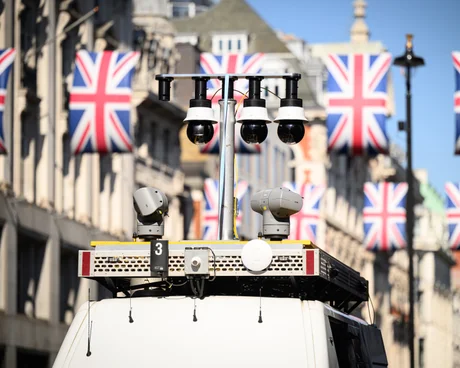
The debate has become increasingly relevant in London because the Metropolitan Police and the mayor’s office have announced plans for fixed live facial recognition cameras in the West End. Mayor Sadiq Khan has also confirmed that the technology will be used on the newly pedestrianised Oxford Street.
The expansion means that questions arising from the British Transport Police trial are likely to remain relevant as other authorities consider broader deployments.
For police forces, facial recognition has the potential to provide another method of identifying individuals who are already wanted or considered relevant to a specific operation. Supporters argue that automated systems can assist officers in environments where it would otherwise be difficult to identify particular people among large crowds.
However, the London railway trial illustrates the importance of measuring that potential against actual outcomes. More than 500,000 faces were scanned during the six-month period, yet the recorded LFR performance data contained only one alert, and that alert was a false match.
The BTP has stressed that this figure does not represent all arrests made by officers during the deployments. According to the force, officers made a number of arrests linked to offences including assault, theft, possession of an offensive weapon, breaches of criminal behaviour orders and public order offences. Officers also located people wanted by courts or other police forces.
However, the BTP said those arrests did not result directly from LFR alerts and therefore were not included in its facial recognition performance figures.
The force also said the trial was designed as a learning exercise rather than simply a test of how many arrests could be generated. During the pilot, officers refined deployment locations, operating procedures, equipment and the construction of watchlists.
BTP said watchlists were deliberately expanded in a controlled manner and in line with its policies. The force began with a smaller watchlist while focusing on data quality, governance and safeguarding arrangements.
That explanation highlights an important limitation when interpreting the trial results. The number of matches generated by the technology is affected by how many people are included on the watchlist and how likely those individuals are to appear at the locations where cameras are deployed.
The next phase of the trial, including operations on the London Underground, will provide further opportunities for the force to assess how the technology performs in different transport environments.

For passengers, however, the expansion also raises questions about privacy and how biometric surveillance becomes part of everyday travel. Unlike traditional investigations, live facial recognition operates in real time and can process the faces of large numbers of people passing through public spaces.
The continuing debate is therefore likely to involve two competing considerations: the potential for technology to assist policing and the responsibility of public authorities to protect individual privacy and ensure that surveillance is necessary and proportionate.
The London trial has not resolved that debate. Instead, its limited facial recognition results have added another set of questions about cost, effectiveness, watchlist construction, legal safeguards and public confidence.
As police forces continue to test and expand live facial recognition, the way those questions are answered may influence how widely the technology is accepted in Britain’s streets, stations and other public spaces.
Related News:
 Undercover officer deceived women with ‘grotesque and cruel’ lies, spycops inquiry told
 Barrister Criticises Trial After Suicide Case Verdict
 Westminster Council Threatens Charing Cross Soup Kitchen
 BBC Warned About Missing Clothes of Murder Victim
 Cambridge Professor Jason Arday Found Dead at Home
 Councils spend £125m on illegal children’s care
 Patriot Platform Raises Concern Across Britain
 Election Candidate Abuse Raises Alarm in England
 Fayed Survivors Demand Inquiry Into Medical Regulator
 Prevent Failings Exposed After Southport Attack
 Walsall Rapist Jailed After Hate-Filled Online Trail
 Two Children Die in Wolverhampton House Fire Tragedy
 Police Suspect Help in Missing Alice Springs Girl Case
 Victim says non-custodial rape sentence ‘rock in my face’
 Murder Probe Continues After Arrest Release
 Internal Exclusions Surge in England’s Schools
 Survivor Sues Musk’s xAI Over AI Abuse Images
 Ministers Condemn Far-Right Unrest in Portsmouth
 Australia gives users control over social media algorithms
 Reform UK Receives Record £36m Donation From Crypto Billionaire
 Lisa Nandy Calls for Tougher Action on Social Media Doxxing
 Piddington Votes for Symbolic Independence Over Asylum Plan
 Iran School Strike Raises War Crimes Questions, UN Says
 Mahmood Warns Far Right Over Asylum Protests
 NHS Breast Care Review Finds Serious Patient Harm
 Harrods Faces Dispute Over Fayed Abuse Compensation
 Briton Faces Cyprus Court Over Son’s Fatal Fall
 UK Reviews Hague Child Abduction Cases Involving Abuse
 Democrat Says ICE Restricted Detention Camp Oversight
 King Refers Jamaica Slavery Petition to Privy Council
 Court Says Judge Should Not Have Heard Case From Bed
 OpenAI Agent Breaches Medicare Portal in Australia
 Far-Right Activist Arrested After Channel Dinghy Incident
 Portadown protest ends after tense Orange Order standoff
 Free Speech Emerges as Key UK Election Issue
 Cornell Fraternity Assault Investigation Reopened
 Afghan man charged with murder after west London knife attack
 French Taxi Driver Cleared in David Lammy Theft Case After Fare Dispute
 UK Bans Fake Numbers: Scammers Lose Their Trick
 Just Stop Oil Protesters Convicted Amid Climate Defence Row
 Government urges schools to ban phones to curb classroom disruption
 Paralegal Fired After Exposé on Illegal Worker Scam
 Serial Rapist and Former Cop Found Guilty Again
 Starmer’s communications chief to outline media strategy overhaul
 TikTok to Strengthen Age Verification Across the EU
 Ben Roberts-Smith Denies War Crime Allegations in First Statement
 Synagogue Arson Attempt Sparks Security Fears
 City & Guilds Sale Sparks Fees and Pay Uproar
 NHS Safety Fears as Nurses Cover Doctor Gaps
 Cartel crackdown raises fears of fresh violence
 Greens Face Internal Row Over Antisemitism Claims
 Florida Surgeon ‘Devastated’ Over Fatal Surgery Error
 Immigration Judges Fear Pressure in Trump Era
 Father’s diaries reveal doubts over Hawking
 New Footage Revives Peter Falconio Mystery
 Ghent Professors Questioned Cofnas Appointment
 RAF Barnham Protests Fuel Tensions in Norfolk Town
 UK Risks Falling Behind in AI Race
 British Museum Faces Questions Over Peter Thiel’s Private Bayeux Viewing
 Abusive ex used Tesla to control and harass former partner
 New Mexico Takes Facebook to Trial Over Data Scandal
 Man Arrested in Mississippi Woman’s Death
 Royal Crown Branded Enslaved Africans in Britain’s Slave Trade
 Israel Accused of Undermining Palestinian Life
 UK Retailers Accused of Breaking Refund Laws
 Horse Hill Oil Site Sold as New Drilling Bid Emerges
 Texas Charges Seven Noncitizens in Voting Crackdown
 Russia’s Max App Raises Surveillance Concerns
 Disabled Travellers Seek Fairer UK Care Rules
 Lib Dems Prepare for Election Amid Reform Challenge
 Patrick Clancy speaks publicly about children’s deaths
 British Columbia Sues OpenAI Over School Shooting
 Clancy Defense Seeks Inquiry Into Lone Juror
 UK Unveils Centre to Counter Foreign Disinformation
 UK Plans New Centre to Counter Information Warfare
 GP List Policy Risks Cutting Off Vulnerable Patients
 Ukraine and Russia Escalate Long-Range Drone War
 TalkTalk Races to Sell Arms as Administration Looms
 Drones Could Speed Up Defibrillator Delivery
 Tennessee Set to Execute Woman After Clemency Denied