Published: 25 September 2026. The English Chronicle Desk. The English Chronicle Online
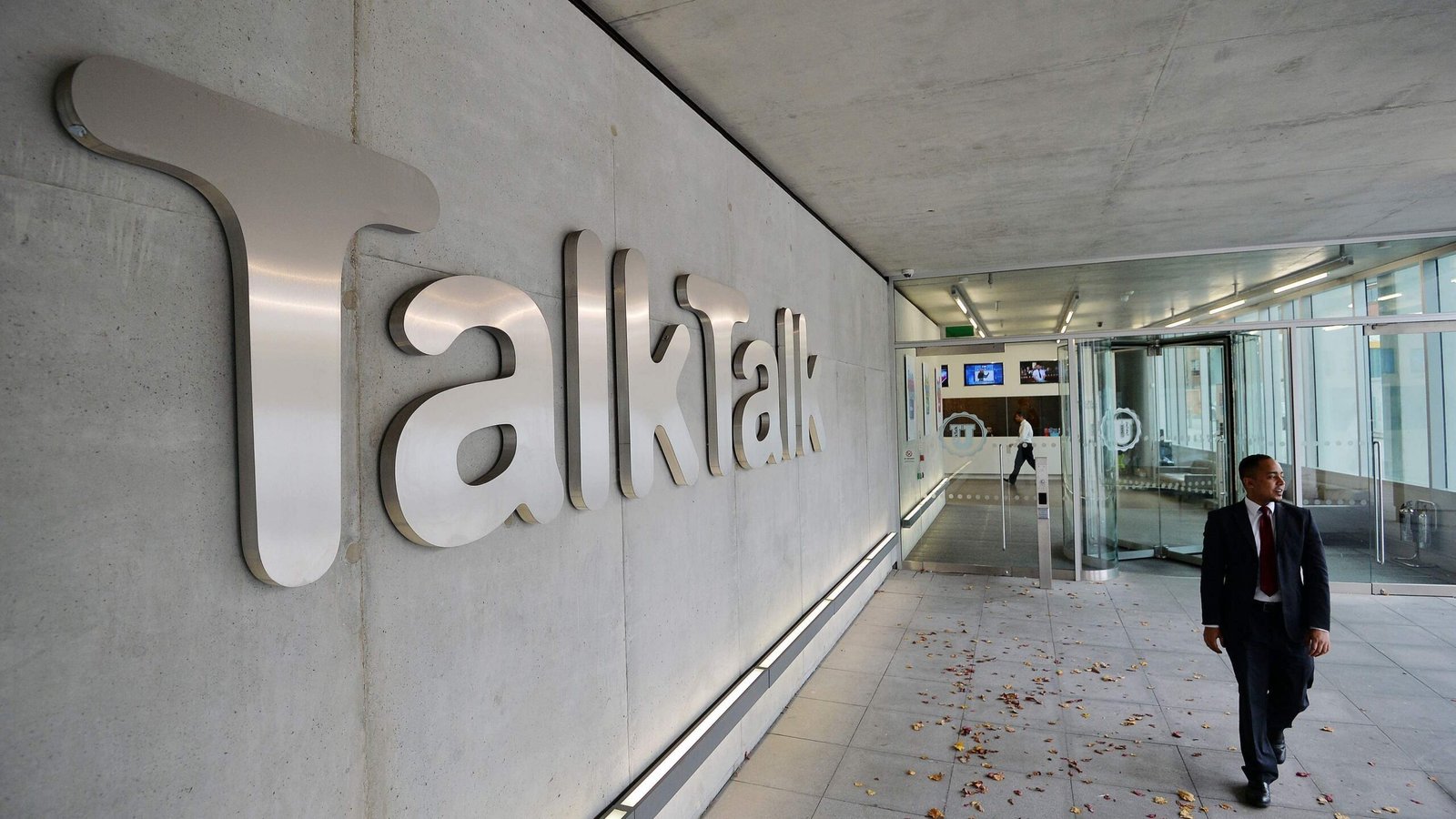
TalkTalk is racing to secure the future of its remaining operations as mounting financial pressure raises the prospect of administration, with the telecommunications group working to complete separate transactions involving its consumer broadband business and wholesale arm.
The company said on Friday that it had entered the final stages of a sales process covering its consumer operations and PXC, its wholesale business. It expects both transactions to be concluded imminently, although the precise terms and final completion arrangements remain subject to agreement.
The developments come at a critical point for TalkTalk, which has experienced a prolonged decline in its customer base and faced increasingly difficult conditions in the highly competitive UK telecommunications market. The company once served around 4 million customers in 2019, but that figure has fallen substantially, with the group now serving roughly 1.5 million customers.
TalkTalk’s current situation has also placed hundreds of jobs in focus. Around 900 employees are understood to be affected by the company’s restructuring efforts, while the continuity of broadband services for customers has become a central concern as potential buyers consider taking control of parts of the business.

Opus Broadband is understood to be close to acquiring TalkTalk’s consumer operation in a transaction valued at about £100m. Separately, investment group Octopus is involved in discussions concerning PXC, TalkTalk’s wholesale operation, although the precise value of that transaction has not been disclosed.
The proposed sales represent a significant restructuring of TalkTalk rather than a straightforward change of ownership. Separating the consumer business from the wholesale operation creates operational and commercial questions because the two parts of the company have historically been closely connected.
For customers, one of the most important issues is whether any change in ownership would affect broadband services, billing arrangements, customer support or the infrastructure used to deliver connections. Industry analysts have indicated that an orderly transfer should allow services to continue with limited disruption, provided the necessary operational arrangements are completed.
Opus has publicly stressed that protecting customers and employees would be a priority if its proposed acquisition proceeds. The company has indicated that keeping customers connected and protecting the roles of TalkTalk employees would be central to the transition.
The issue is particularly significant for vulnerable customers. Around 250,000 TalkTalk customers are considered vulnerable, making continuity of service an important consideration for regulators and any potential purchaser. For households that depend on broadband for communication, work, education, healthcare access or essential services, even a short interruption could have wider consequences.
The UK communications regulator Ofcom is expected to pay close attention to any transfer of TalkTalk’s customer base. A change in ownership could involve the movement of customers onto different operational systems or platforms, but such a process would require careful planning to prevent avoidable disruption.
TalkTalk’s wholesale business, PXC, adds another layer of complexity. PXC provides telecommunications infrastructure and wholesale services to other organisations and has links to public-sector communications arrangements. The business also has connections to services ultimately used by the Ministry of Defence, although the current arrangements are understood to involve a third-party reseller rather than PXC supplying the department directly.
That distinction is significant because continuity arrangements are already built into the wider telecommunications system. Industry rules and commercial safeguards mean that alternative providers can be available to reduce the risk of a sudden loss of service if one supplier experiences financial or operational difficulties.
The potential sale of PXC has nevertheless attracted attention because of its importance within TalkTalk’s wider structure. The wholesale operation is a substantial part of the group’s infrastructure and commercial relationships, while the consumer operation relies on wholesale connectivity arrangements. Any separation therefore needs to establish how those relationships will continue after ownership changes.
TalkTalk’s financial position has deteriorated over a prolonged period. The company has faced substantial debt and repeated pressure on cash flow, while the shrinking consumer customer base has reduced the scale of its retail business. Its owners and financial backers have provided significant support during the past two years in an effort to stabilise the group.
If the proposed transactions are completed at the reported prices, however, TalkTalk’s existing owners, including founder Sir Charles Dunstone, are expected to absorb substantial losses. Reports indicate that approximately £1bn of debt could ultimately be written off as part of the restructuring.
For investors and creditors, the sales therefore represent an attempt to preserve viable parts of the business rather than a transaction designed to maintain the company in its previous form. The value of the assets being sold has been affected by TalkTalk’s financial difficulties, leaving the group facing the prospect of transferring valuable operations while still carrying significant financial losses.
TalkTalk was founded by Charles Dunstone in 2003 as part of Carphone Warehouse and became one of the best-known names in the British broadband market. Its rapid expansion helped establish it as a major competitor in consumer telecommunications, but the market has since become increasingly crowded.
The rise of full-fibre networks, competition from major telecommunications groups and the growth of alternative broadband providers have changed the industry substantially. Customers have increasingly had access to competing offers, while broadband providers have faced pressure to invest in networks and maintain competitive pricing.
TalkTalk’s declining customer numbers have consequently become a major challenge. Losing millions of customers over several years has reduced the scale of its consumer operation at the same time as the company has continued to face substantial infrastructure and financing obligations.
The current sales process is also unfolding against a complicated backdrop. Earlier discussions with potential buyers have changed as the company’s financial position has developed. Opus had previously been associated with a substantially higher potential valuation for the consumer operation, but the latest reported proposal is around £100m, reflecting the deterioration in TalkTalk’s financial circumstances.
The situation surrounding PXC has also evolved during recent weeks. Negotiations with Octopus have faced uncertainty, although the companies have remained involved in discussions over a possible transaction. Other potential buyers have previously been associated with the wholesale operation, highlighting the difficulty of reaching a final agreement while TalkTalk attempts to resolve its wider financial position.
The prospect of administration remains an important consideration if the sales cannot be completed or sufficient additional financing cannot be secured. Administration would introduce a different set of priorities, with protecting customers and maintaining essential telecommunications services likely to become more urgent than maximising the value available to shareholders.
A collapse would also create logistical challenges because of the sheer number of customers involved. Moving around 1.5 million broadband customers between providers would be a substantial undertaking, requiring coordination between TalkTalk, network operators, regulators and potential receiving companies.
The government and regulators therefore have an interest in ensuring that any restructuring does not create a wider disruption to communications services. TalkTalk’s role in the broadband market means that its financial problems extend beyond the company’s shareholders and employees to customers, suppliers, wholesale partners and organisations that rely on telecommunications infrastructure.
For employees, the uncertainty is equally significant. TalkTalk’s workforce has been operating under the shadow of restructuring, while potential buyers have different strategies for the businesses they are seeking to acquire. Opus’s stated intention to protect employee roles offers some reassurance, but the final impact on employment will depend on the terms of any completed transaction and how the businesses are integrated.
The immediate priority for TalkTalk is therefore to turn advanced negotiations into completed agreements. The company is attempting to secure buyers for its two principal operating divisions while managing the consequences of its debt burden and protecting continuity for customers.

If the transactions proceed, TalkTalk will emerge in a substantially different form, with its consumer and wholesale operations separated under new ownership arrangements. The process could provide a route for parts of the business to continue operating while addressing financial obligations accumulated over years.
For customers, the most important measure will be whether services continue without significant interruption. For employees, the focus will be on whether proposed protections translate into continued employment. For regulators and public authorities, maintaining reliable communications will remain a key consideration.
TalkTalk’s latest announcement therefore marks an important stage in an increasingly complex restructuring. The company has not yet completed the transactions, and the final outcome will depend on the successful conclusion of negotiations. Until those agreements are formally secured, uncertainty will remain over the ownership, financial structure and long-term future of one of Britain’s best-known broadband brands.
Related News:
 UK Risks Falling Behind in AI Race
 Europe EV Demand Surges as Fuel Prices Rise
 UK rejects EV charging VAT cut amid Treasury clash
 UK firms accused of ‘AI washing’ boom
 Billionaire Chris Rokos poised to leave UK
 Oil nears $100 as Saudi attacks shake markets
 McLaren to Create 1,000 UK Jobs in £450m Investment
 Nats Boss Summoned as UK Flight Chaos Continues
 JPMorgan Boss Warns Against UK Bank Tax Rise
 John Lewis Losses Widen to £124m as Confidence Falls
 AI CEOs Call for Slower Development
 Thames Water Revises Oxfordshire Mega-Reservoir Plan
 UK Retailers Accused of Breaking Refund Laws
 JLR Eyes NATO Market With New Defender Military Vehicle
 Next Raises Profit Forecast After Strong Summer Sales
 UK Productivity Improves as Bank Weighs Interest Rates
 Nvidia chief rejects AI extinction fears
 Chinese Hybrid Car Surge Raises EU Auto Industry Concerns
 UK Trade Losses Grow Without EU Product Deal
 AO Acquires Jessops in Camera Retail Expansion
 North Sea oil workers must lose weight or face job loss
 UK Taskforce Unveils Plan to Streamline Nuclear Reactor Rules
 UK Car Sales Pass 2 Million as Chinese Brands Surge
 MPs warn AI financial risks threaten UK stability
 MPs warn AI financial risks threaten UK stability
 AI job losses UK: Britain faces sharper employment shock
 UK New Car Discounts Near £6,000 as Prices Are Slashed
 Wealthy Britons Flee Gulf War but Avoid UK Taxes
 UK Wage Growth Slows as Jobs Market Holds Firm
 Oil and Gas Prices Surge Amid Iran-Israel Attacks on Gasfields
 Apple at 50: Three Products That Changed How We Live
 OpenAI Halts Stargate UK Project Amid Energy Crisis
 Heavier SUVs Accelerate Britain’s Pothole Crisis
 Student Loan Interest May Rise Despite 6% Cap
 Carmakers Face £3bn Gap in UK Loan Payout Scandal
 Reform UK funding: mystery billionaire revealed
 BBC News Faces Deep Cuts in 2,000 Job Plan
 New UK advice scheme to boost savings and investing
 City & Guilds Faces Governance Crisis Over Sale
 Britons Build Emergency Supplies Amid Rising Fears
 Reeves Fights to Keep Treasury Role Amid Labour Turmoil
 EasyJet Takeover Sparks Fears Over Passengers’ Future
 Weight-Loss Drugs Offer Food Savings Mainly to High Earners
 Pubs and Hotels Face Business Rates Reform Review
 UK Households Could Save £173 on Fixed Energy Deals
 Burnham Faces Mounting Budget Challenges
 London Launches First Self-Driving Taxis
 UK Subsidence Claims Surge After Record-Breaking Summer
 Reform Faces Fresh Financial Controversy
 Ukraine Moves to Seize Water Company
 Spire Healthcare Agrees £1bn Takeover by Toscafund
 UK House Prices Fall as Mortgage Rates Rise
 Australia gives users control over social media algorithms
 UK retailers plan 100,000 placements for young people
 Apple Folding iPhone Set for Major CEO Test
 Iceland to Open First UK High Street Store in Falklands
 Reform Faces Questions Over £72m Donations
 Farage Threatens Union Funding Ban Over Reform Donations
 Louise Haigh Urges UK to Heed AI Safety Warnings
 Horse Hill Oil Site Sold as New Drilling Bid Emerges
 Anthropic Backs $31.9bn Queensland Data Centre
 Horse Hill Oil Site Sold for £1m as Drilling Bid Returns
 Entain Plans 400 Job Cuts After Profit Update
 OpenAI Reveals Six Cases of Concerning AI Behaviour
 Trump Threatens EU Over Canada Partnership Proposal
 Barclays Staff Push Back Against Office Return Plan
 Tom Watson Takes Senior Role at Palantir
 UK Retail Sales Rebound as Consumers Spend More
 UK Rent Gap Puts Low-Income Families Under Pressure
 Reform UK Faces Internal Debate Over £72m Spending
 Calls Grow to Expand UK National Wealth Fund
 UK Flights Hit by Fresh Air Traffic Control Fault
 Australia Renewables Reach Record 80% Grid Demand
 UK Borrowing Hits £18.3bn Ahead of Budget
 Thinktank Calls for Abolition of UK State Pension
 MPs Defend UK Economic Watchdog Against Critics
 Tony Blair Calls for Britain to Rejoin EU Within a Decade
 Norfolk Broads Housing Levy Faces Environmental Criticism
 Elizabeth Holmes Set for Halfway House Transfer
 EU Slashes Steel Quotas But Grants UK Favourable Rates