Published: 09 September 2026.The English Chronicle Desk. The English Chronicle Online.
The chief executive of Britain’s air traffic control provider has been summoned to meet the UK transport secretary as widespread flight disruption entered its second day, with more than 1,900 cancellations recorded across airports and hundreds of thousands of passengers affected.
Martin Rolfe, chief executive of Nats, is expected to brief Transport Secretary Heidi Alexander on Wednesday as pressure mounts over the latest failure affecting the UK’s air traffic control system. The incident has prompted renewed questions about the resilience of the country’s aviation infrastructure and calls from major airlines for stronger accountability at the organisation.
Rolfe is facing growing pressure to resign following the latest disruption, which represents the third major stoppage involving Nats in just over three years. Airlines including Ryanair and Wizz Air have called for him to leave his position or be removed, arguing that repeated failures have caused serious disruption for passengers and substantial financial losses for carriers.
The latest incident began at about 1pm on Tuesday and affected flight operations at some of Britain’s busiest airports, including Heathrow, Gatwick, Manchester and Stansted. Birmingham, Edinburgh and Belfast were also among airports affected as the technical problem spread through the aviation network.

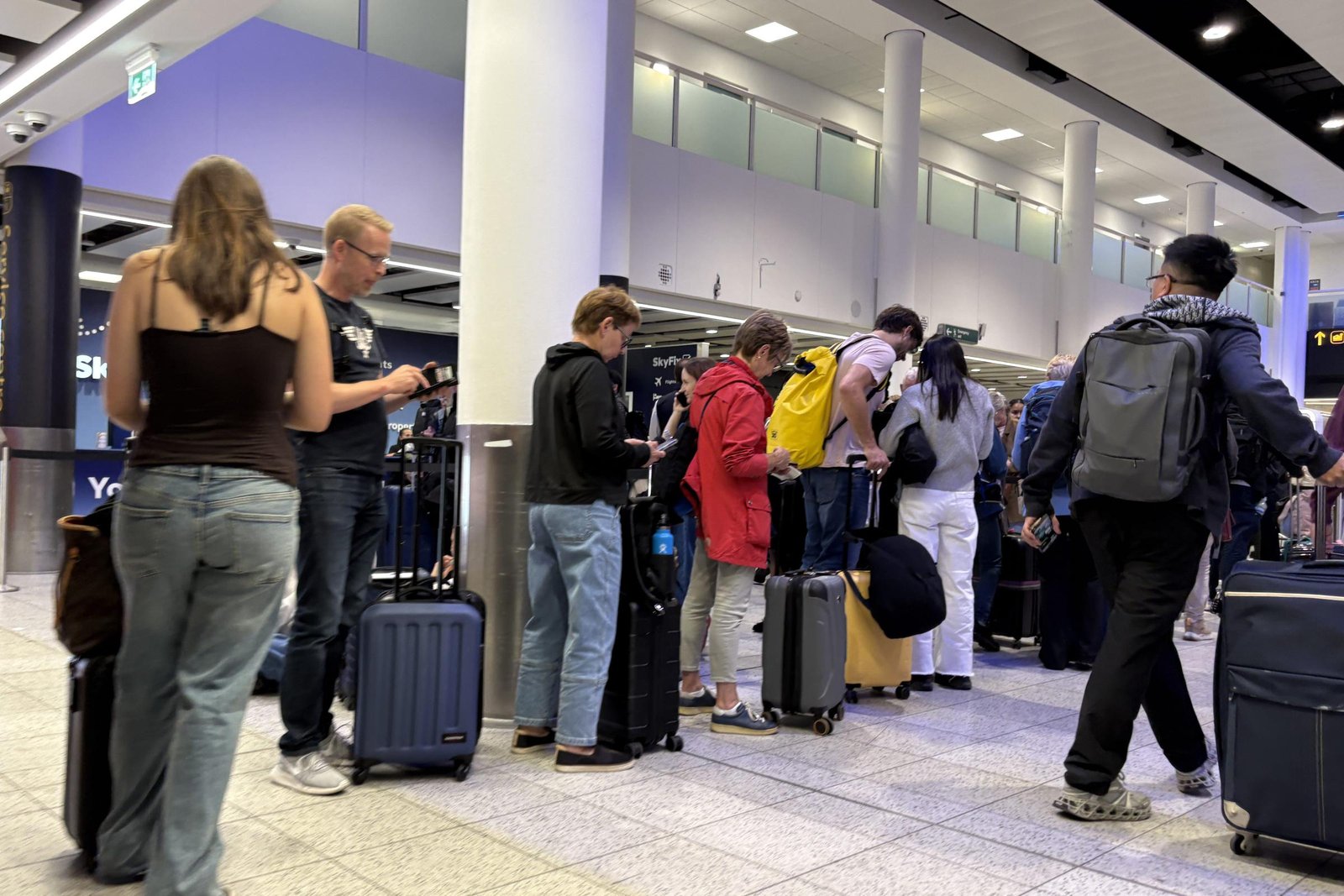
Thousands of passengers were left facing lengthy delays, with some travellers reportedly remaining on grounded aircraft for hours while others were stranded overnight at airports outside the UK. The disruption created a ripple effect across the wider European aviation network as airlines struggled to reposition aircraft and crews.
According to aviation data, more than 1,900 flights to and from UK airports had been cancelled by Wednesday. Around 1,750 flights were cancelled on Tuesday alone from approximately 5,800 scheduled services. Heathrow accounted for 541 of those cancellations, making it one of the airports most severely affected by the failure.
Heathrow said on Wednesday that flights were operating again, although disruption could continue as airlines worked to reposition aircraft and crew following the previous day’s breakdown. Passengers were advised to check the status of their flights before travelling to the airport.
Gatwick also confirmed that flights had resumed but warned that disruption was likely to continue. The airports’ warnings reflected the difficulty of restoring a complex aviation network after a major interruption, even after the original technical problem has been resolved.
Nats said the failure occurred within its flight processing system but insisted that it was not the same fault responsible for previous major outages in 2023 and 2025. The organisation described the recovery process as complex and said it would take time for the entire aviation network to return to normal.
Rolfe ruled out a cyber-attack as the cause of the latest problem and defended the resilience of the systems operated by Nats. He said the organisation would conduct a full investigation into what happened and emphasised Britain’s strong international reputation for aviation safety and resilience.
The chief executive also suggested that the latest incident was highly unusual given the organisation’s long operating history. Nats has provided air traffic control services for decades, and the recurrence of major technical problems has raised concerns about whether existing safeguards and contingency systems are sufficient to prevent another widespread disruption.
The explanation has not satisfied some airlines. Ryanair, one of Europe’s largest carriers, has strongly criticised Nats and questioned why previous lessons had apparently not prevented another major breakdown.
The airline said more than 65,000 of its passengers had already been affected when around 50 of its flights were cancelled on Tuesday. By Wednesday, Ryanair said it had cancelled more than 250 flights as a result of the continuing disruption, with the financial impact expected to run into millions of pounds.
Neal McMahon, Ryanair’s chief operations officer, argued that airlines had been told the latest incident again involved the flight processing system. He questioned why adequate backup arrangements had not prevented a technical problem from producing such widespread disruption.
The airline has called on the transport secretary and Nats’ board to take decisive action, arguing that repeated failures cannot simply be followed by explanations without accountability. Ryanair’s criticism has added significant pressure on the Nats leadership at a time when the government is seeking answers over the reliability of Britain’s aviation infrastructure.
Wizz Air UK has also joined calls for greater accountability. Yvonne Moynihan, the airline’s managing director, said repeated technical failures should prompt serious consideration of whether the current leadership remains appropriate.
The latest disruption has revived memories of earlier failures within the UK’s air traffic control system. In 2023, a major technical problem caused extensive disruption and led to thousands of flight cancellations and delays. The incident was serious enough to prompt a parliamentary investigation into the resilience and operation of the UK’s air traffic control arrangements.
A separate incident last year also caused widespread disruption, although it was considered less severe than the 2023 failure. The recurrence of problems has now intensified concerns among airlines and passengers about the reliability of the infrastructure on which Britain’s aviation network depends.
The timing of the latest failure has also increased pressure on the government. Aviation is a critical part of Britain’s economy, supporting tourism, international trade, business travel and millions of passenger journeys every year. Major airports such as Heathrow and Gatwick operate at extremely high volumes, meaning even a relatively short interruption can create consequences across the wider network.
For passengers, the disruption has created uncertainty over cancelled flights, missed connections and overnight stays. Travellers whose aircraft were unable to depart faced long waits while airlines attempted to arrange alternative services. Those already travelling abroad were also affected as aircraft and crew were left in the wrong locations.
Airlines face additional costs when disruption occurs because they may need to provide accommodation, meals and alternative transport for passengers while also dealing with aircraft and crew positioning problems. The financial consequences can therefore continue even after flights resume.
The latest crisis also raises broader questions about the UK’s investment in aviation technology. Modern air traffic control depends heavily on sophisticated computer systems capable of processing enormous amounts of information and coordinating thousands of aircraft. Any failure in a critical part of that system can quickly affect airports and airlines far beyond the location of the original problem.
Nats has maintained that the latest technical failure was different from previous incidents and that the organisation’s systems remain resilient. However, the government’s decision to summon Rolfe for a briefing indicates the seriousness with which ministers are treating the disruption.
Alexander is expected to seek a detailed explanation of what caused the breakdown, why its effects were so widespread and what measures can be introduced to prevent a similar incident in the future. The meeting could also determine whether additional oversight or reforms are required.

For Rolfe, the meeting comes at a particularly difficult moment. Calls for his resignation from major airlines mean that the issue is no longer confined to technical questions. It has become a debate about leadership, accountability and public confidence in the UK’s air traffic control system.
As flights gradually resume, the immediate priority for airlines and airports will be clearing the backlog and returning aircraft and crews to their planned positions. But the longer-term challenge will be rebuilding confidence that Britain’s aviation infrastructure can withstand technical failures without causing another nationwide crisis.
The government will now face pressure to ensure that the investigation produces meaningful answers. With more than 1,900 cancellations already recorded and hundreds of thousands of passengers affected, the latest incident has demonstrated how quickly a technical problem can become a national transport crisis.
The focus will now turn to the meeting between Rolfe and Alexander, the findings of the investigation and whether Nats can demonstrate that its systems and contingency arrangements are sufficiently robust to prevent a fourth major disruption.
Related News:
 UK Risks Falling Behind in AI Race
 London Launches First Self-Driving Taxis
 McLaren to Create 1,000 UK Jobs in £450m Investment
 North Sea oil workers must lose weight or face job loss
 UK Taskforce Unveils Plan to Streamline Nuclear Reactor Rules
 UK Car Sales Pass 2 Million as Chinese Brands Surge
 MPs warn AI financial risks threaten UK stability
 MPs warn AI financial risks threaten UK stability
 AI job losses UK: Britain faces sharper employment shock
 UK New Car Discounts Near £6,000 as Prices Are Slashed
 UK Aviation Watchdog Clips Heathrow’s Fee Hike Wings
 OpenAI Halts Stargate UK Project Amid Energy Crisis
 Heavier SUVs Accelerate Britain’s Pothole Crisis
 Europe EV Demand Surges as Fuel Prices Rise
 Reform UK funding: mystery billionaire revealed
 UK rejects EV charging VAT cut amid Treasury clash
 UK firms accused of ‘AI washing’ boom
 Essex valley emerges as rising English wine hub
 EasyJet Takeover Sparks Fears Over Passengers’ Future
 Ukraine Moves to Seize Water Company
 UK retailers plan 100,000 placements for young people
 Billionaire Chris Rokos poised to leave UK
 Oil nears $100 as Saudi attacks shake markets
 How to Exit Your Broadband Contract Without Paying Exit Fees
 Jaguar Land Rover Extends Production Halt Following Cyber-Attack
 Reeves Faces Setback as Labour May Miss Homes Target
 Virgin Trains Moves Closer to Challenging Eurostar Monopoly
 Trump’s UK Ambassador Urges North Sea Drilling to Strengthen US Ties
 UK Bans Fake Numbers: Scammers Lose Their Trick
M&S Profits More Than Halve After Cyber-Attack
UK Bans Fake Numbers: Scammers Lose Their Trick
M&S Profits More Than Halve After Cyber-Attack
 Tony Blair think tank warns Rachel Reeves must cut taxes if manifesto broken
 Patients to Test Health at Home to Ease NHS Winter Pressure
 Millionaires group urge Reeves to introduce wealth tax to ‘lift kids out of poverty’
 Northern Lights may illuminate UK skies this week
 New laws to bolster UK’s defences against cyber attacks on NHS, transport and energy
 Global markets drop amid tech sell-off and China slowdown
 Coffins Now Too Large to Cremate Amid Rising Obesity Crisis
 Starmer Says Labour’s Economic Plan Needs Years to Deliver
 Virgin Media Fined £23.8m Over Telecare Safety Failures
 Rising Water Bills Lift Troubled Thames Back to Profit
 Starmer Faces Parliamentary Battles Over UK-EU ‘Reset’ Plan
 ScottishPower Tops List of Worst UK Energy Suppliers
 City & Guilds pay surge sparks backlash amid £22m cuts
 UK Government Borrowing Drops to £11.6bn in December
 Childnet Censorship Row Over Teen Safety Speeches
 BT Names New Openreach Chief Amid Major Fibre Expansion
 UK Unemployment Rate Climbs to 5.2% Peak
 UK shelves £110m border project amid trade strain
 Facial Recognition Error Leads to Wrongful Arrest in Milton Keynes
 Rolling Hills and Heritage: A Car-Free Break in Leicestershire
 Switching Energy Deal Can Save £200 as Price Cap Falls
 Rachel Reeves Faces Middle East Conflict Test
 Grocery Inflation Rises Amid War Fears
 BrewDog sold Highland estate for knockdown price after abandoning reforestation plans
 Cancer Death Rate in Britain Falls by Nearly a Third
 UK Energy Reform Could Cut Bills by £200
 Rising Costs Force Families to Rethink Days Out
 Aegon Sells Historic UK Arm to Standard Life for £2bn
 UK Staycations Rise as Travel Fears Grow
 Silent Tracks: Rail Line Without Passengers
 DeepMind Staff Vote to Unionize Over US Military Contract
 Lotus Boss Pledges Future to Norfolk and Seeks State Support
 UK Firms Freeze Spending as Iran Conflict Bites
 Reeves to Fast-Track Clean Energy Amid Iran Crisis
 Belfast Approves Pilot Extension of Sunday Trading Hours
 Tube Strike Brings Capital to a Standstill Over Shift Disputes
 Tube Strike Brings Capital to a Standstill Over Shift Disputes
 BP Stands Firm on Amanda Blanc Amid Boardroom Storm
 Tech Trends and the Battle Against Exam Hall Cheating
 UK House Prices Drop For Third Month Due To War Fears
 Stolen Mobiles Could Soon Become Useless Bricks
 AI Scams Push UK Investment Fraud Past £220m
 UK Ministers Lobby Trump Over Under-16s Social Media Ban
 EU Slashes Steel Quotas But Grants UK Favourable Rates
 Sainsbury’s Boss Optimistic As Grocery Inflation Eases
 Trump Faces Backlash Over $2bn Earnings Since Return
 Burnham unveils £65m drought aid for farmers
 Unions Warn Labour Over Zero-Hours Contract Reforms
 Queue row erupts on Wales’ highest mountain
 Swedish Mining Push Puts Sami Land Rights Under Pressure