Published: 24 October 2026. The English Chronicle Desk. The English Chronicle Online
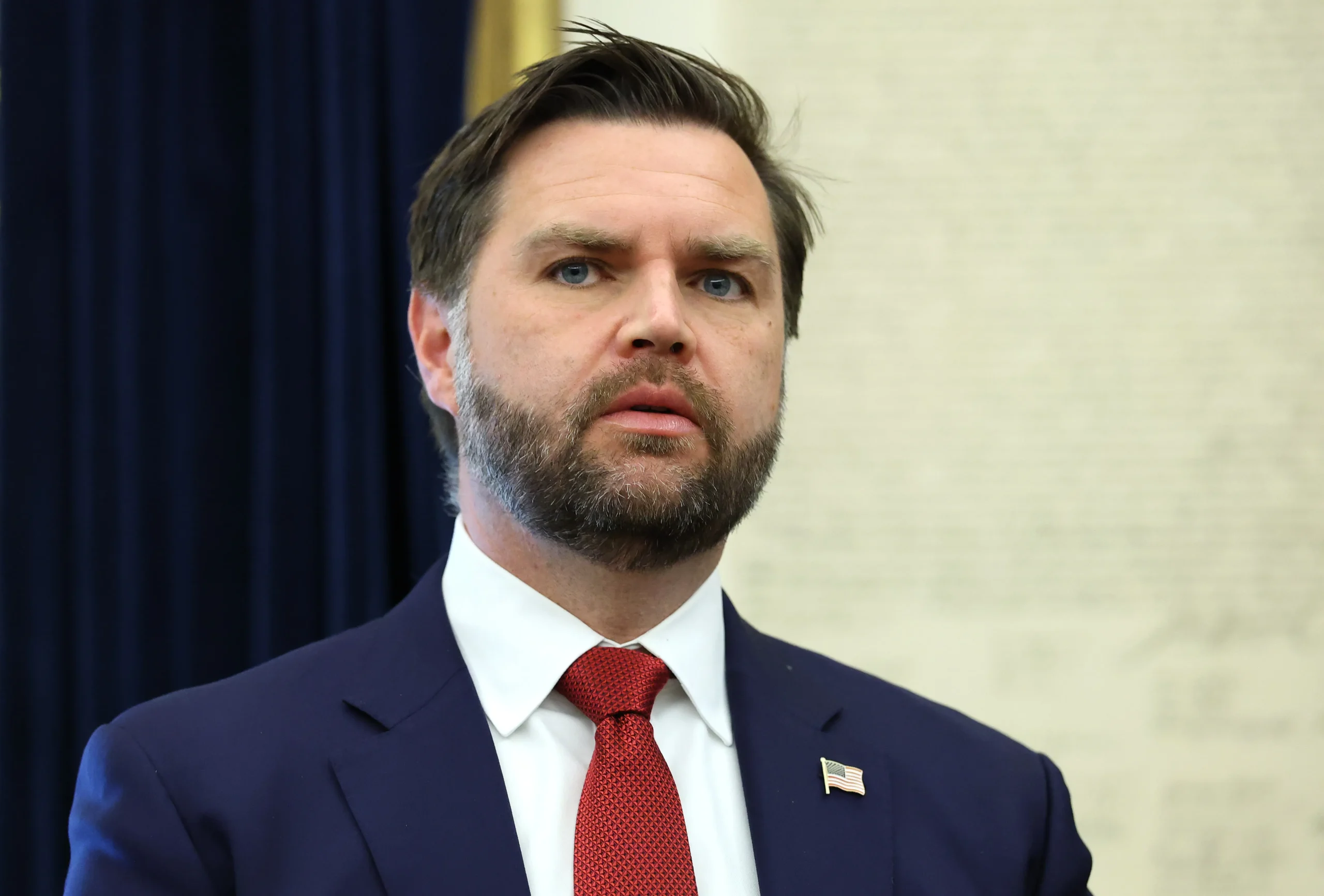
Vice-president JD Vance has emerged as one of the most visible figures in the Republican campaign for the 2026 midterm elections, travelling across the country to rally support for Republican candidates while facing growing speculation about whether his activity could become the foundation of a future presidential campaign.
Vance’s increased presence on the campaign trail comes at a politically important moment for the Republican Party. Donald Trump remains the dominant figure within the party, but concerns about his declining approval ratings and the approaching congressional elections have increased attention on the politicians who could shape the Republican Party after the current administration.
The vice-president has visited a wide range of states in recent weeks, delivering speeches and campaigning for Republican candidates. His appearances have included events in Iowa, Florida, Texas, Alaska, Georgia, Michigan and his home state of Ohio, giving him opportunities to build relationships with state-level politicians, donors, activists and voters.

The scale of the campaign effort has inevitably encouraged speculation about whether Vance is quietly preparing for a presidential run in 2028. Political analysts have described the travel schedule as an opportunity for the vice-president to establish a national network and accumulate political goodwill before a potential Republican nomination contest.
The question became more prominent after Vance suggested that Trump would support him if he eventually sought the presidency. When Trump was subsequently asked about the possibility in the Oval Office, however, he offered praise for Vance without confirming that the two men had discussed a future presidential campaign.
Trump described his vice-president as talented and a good person but said the two had not, in his account, discussed the subject. The exchange provided little clarity about whether Trump intends to identify a successor or whether the Republican Party will face an open contest once the current administration ends.
Vance’s position is unusual because he has spent relatively little time in national elected office. He served only a short period as a US senator before Trump selected him as his running mate in 2024. Since becoming vice-president, however, he has developed a prominent role within the administration and increasingly acted as one of its most effective public defenders.
That role has sometimes involved explaining or reframing controversial statements and policies associated with Trump. Supporters view Vance as someone capable of presenting the administration’s arguments in a more structured way, while critics have accused him of attempting to make contentious presidential statements appear more conventional.
The dynamic could become particularly important if Vance eventually seeks the Republican nomination. His political identity remains closely connected to Trump and the Make America Great Again movement, meaning that loyalty to the president could help him maintain support among the party’s core voters while simultaneously making it more difficult to establish an independent political identity.
The experience of former vice-president Mike Pence illustrates the potential risks. Pence was closely associated with Trump during the administration’s first term but ultimately refused to overturn the 2020 election result. During the attack on the US Capitol on 6 January 2021, rioters called for Pence to be executed, and he was evacuated to safety.
The episode demonstrated how quickly political alliances can change when a vice-president takes a position that conflicts with Trump’s demands or with the expectations of his most committed supporters.
Vance has so far taken a very different approach. His public loyalty to Trump has remained consistent, even when the president has faced controversy over foreign policy, domestic politics or personal financial questions. Vance has repeatedly defended the administration and rejected allegations that Trump has personally benefited improperly from his presidency.
That loyalty has strengthened his position within Trump’s political coalition, but it also creates a strategic challenge for the future. If Vance eventually seeks the presidency, he will have to appeal to voters who support Trump while potentially demonstrating that he can lead independently.
Political observers have suggested that Vance may attempt to present himself as a continuation of the Trump agenda without reproducing all of the president’s personal style. Such a strategy could allow him to maintain the support of the Republican base while offering a different public presentation.
However, Vance’s political history could complicate that effort. Before becoming a Trump ally, he publicly described himself as a “never Trumper” and sharply criticised Trump. He later transformed his political relationship with the former president and became one of his strongest supporters.
That evolution has contributed to a reputation for political flexibility. Supporters can interpret the change as evidence of political growth, while critics view it as evidence that Vance has altered his positions in response to political circumstances.
The 2026 midterm campaign is giving voters another opportunity to observe how Vance operates on a national stage. His speeches have included strong attacks against Democratic candidates, reflecting the increasingly combative style of Republican campaigning.
Among the candidates he has targeted are Democratic Senate contenders in states where Republicans are seeking to defend or expand their congressional position. His rhetoric has often portrayed the Democratic Party as a radical political force that threatens American values and national interests.
That approach may become a defining feature of Vance’s political identity if he eventually seeks the presidency. A future campaign could rely heavily on contrasts between Republican and Democratic positions while presenting Vance as a defender of the Trump-era political movement.
At the same time, Vance faces the challenge of reaching voters outside the Republican base. A successful presidential campaign would require him to appeal not only to committed MAGA supporters but also to a wider electorate.
Former Republican congressman Joe Walsh has argued that Vance must first maintain credibility with Trump’s supporters before he can broaden his appeal. That means continuing to embrace many of the political positions associated with the current Republican coalition.
Vance’s foreign-policy positions could also shape that future campaign. He has taken positions that are strongly associated with the nationalist wing of the Republican Party, including skepticism toward continued US support for Ukraine and a more restrained approach to certain overseas commitments. His views on Israel and US involvement abroad have also attracted attention.
Yet ideology may not be the only factor affecting his prospects. His public style has received significant scrutiny since the 2024 campaign. Some political observers have questioned whether he has developed the kind of personal connection with voters that presidential candidates typically need.
Attempts at humour and informal exchanges have occasionally attracted criticism, with opponents arguing that his presentation can appear carefully constructed. Supporters, however, have continued to view him as an articulate advocate capable of presenting conservative arguments to audiences beyond the traditional Republican base.
The question of authenticity could become increasingly important if Vance moves toward a presidential campaign. Modern political campaigns place considerable emphasis on personal identity, and candidates are frequently judged not only by their policies but also by whether voters believe their public persona reflects their genuine beliefs.
There is also a historical obstacle facing Vance: the difficulty vice-presidents have traditionally faced when attempting to succeed their presidents. Although serving vice-presidents have frequently been considered potential successors, relatively few have successfully won the presidency while directly following their predecessor.
George HW Bush remains the most prominent modern example of a sitting vice-president winning the presidency in 1988. Other vice-presidents have struggled to separate themselves from the records of the administrations they served.
Al Gore’s 2000 campaign illustrates the problem from another angle. As Bill Clinton’s vice-president, Gore attempted to establish his own political identity after Clinton became embroiled in controversy. Gore sought to distance himself from Clinton during the presidential campaign but ultimately lost to George W Bush.
The experience suggests that a vice-president can face competing pressures. Remaining closely associated with the president can make it difficult to establish independence, while breaking away too sharply can alienate the political coalition that helped secure the vice-presidency.
Vance therefore faces a complicated political path if he intends to seek the White House. His current midterm campaign schedule provides an opportunity to build relationships and demonstrate his ability to campaign across different parts of the country. But it also keeps him closely tied to Trump at a time when the president remains the central force in Republican politics.

For now, Vance has not formally announced a presidential campaign, and the future Republican field remains uncertain. His increasingly prominent role in the midterms can be understood both as support for Republican candidates and as an opportunity to develop his national political network.
The coming years will determine whether that visibility becomes the foundation of a presidential campaign or simply reflects the responsibilities of a vice-president operating as one of the administration’s principal political surrogates. What is already clear is that Vance has become an important figure in the Republican Party’s national campaign structure, and his actions during the midterms will provide voters and party activists with a closer look at the political identity he may eventually seek to carry beyond the Trump era.
Related News:
 Trump’s Revenge Drive Deepens GOP Divide
 Is America Ready for an AOC Presidential Run?
 Families Await USS Abraham Lincoln Homecoming
 Latin America women fear rollback of rights
 USS Lincoln Ends Record 265-Day Deployment
 Bolsonaro Gains Key Endorsement Ahead of Brazil Runoff
 Trump Attacks Norway After Nobel Peace Prize Snub
 Trump Names Katie Zacharia as Next White House Spokesperson
 Trump Names Katie Zachariah as Next White House Press Secretary
 Ten US Midterm Races That Could Defy Expectations
 Millions Face Tougher Medicaid Rules From January
 Ohio Airports Become Key Hubs for ICE Deportation Flights
 Brazil Cuts Working Week to 40 Hours in Lula Election Boost
 Talarico Faces Tough Voter Test in Texas Senate Race
 Trump Slams Ukraine Strikes as Russia Ceasefire Collapses
 Obama Warns Against Threat to Ilhan Omar’s Citizenship
 Lula Supporters Make Final Push Ahead of Brazil Runoff
 Rubio Urges Cubans to Seize Moment for Change
 Thousands Protest ICE Operations in Nationwide US Day of Action
 Epstein Files Reveal Trump Officials’ Emails with Financier
 Thousands Protest ICE in New York Against Trump Deportation Campaign
 Clinton Testimony Erupts in Fiery Exchange
 Melania Trump Epstein remarks spark survivor backlash
 UK Stands Firm on Falklands Amid US Rift
 Trump orders US troop pullout from Germany
 Judge halts deportation of Yemeni refugees in US
 Trump approval plunges amid Iran war fears
 Ohio’s Battle for Trust: Democrats Vying to Flip the Buckeye State
 US ‘Narco Boat’ Strikes Draw Global Outcry
 Ohio Primaries Set Stage for Crucial Midterms
 Afghan Families Left in Limbo Face Risk of Deportation
 Tensions Emerge in Netanyahu-Trump Alliance
 US Awaits Iran Reply on New Ceasefire Proposal
 Immigration Judges Fear Pressure in Trump Era
 Hormuz Talks Near Critical Stage
 Farage and Reform UK Reshape British Politics
 Starmer Leadership Under Pressure After Setbacks
 House Curbs Trump’s War Powers in Rare Rebellion
 Trump’s Mount Rushmore Speech: A Divisive Anniversary
 Le Pen’s Popularity Holds Despite Conviction
 Houthis Strike Saudi Arabia as Middle East Tensions Rise
 Trump Hardens Canada Trade Stance as Talks Stall
 Trump Calls Iran War ‘Small Potatoes’ Despite US Deaths
 Lib Dems Prepare for Election Amid Reform Challenge
 US Networks Suspend Trump White House Pool Coverage
 Democrat Says ICE Restricted Detention Camp Oversight
 Xi urges Trump to avoid US-China military conflict
 Lula accuses Trump of seeking control over Brazil
 Republican Senator Questions Trump Ad Spending
 Madrid Tent Camp Grows as Spain Housing Crisis Deepens
 Burnham Opens Door to Possible UK Return to EU
 Drumcree Talks Falter as Legal Challenge Deepens
 Green Party faces dispute over Zionism motion
 Brazil Election Draws Religion Into Final Campaign
 French School Protests Escalate as 400 Schools Close
 Lula Warns of Bolsonaro Family Return as Brazil Votes
 Bosnia’s Young People Look Beyond Election Hope
 Quebec separatists return to power without majority
 Canadian Veterans Condemn Trump Allies’ Military Remarks
 Argentina Protesters Resist Milei’s Land Sale Drive
 Vance Demands Iran Cut Nuclear Enrichment
 Trump Says He Deserves Nobel Peace Prize
 Labour Wins Key London By-election as Greens Fall Short
 Gaza War Deepens India’s Strategic Ties With Israel
 Turkey Rules Out Troops in Saudi Arabia’s Houthi Conflict
 Trump Rules Out Iran Attack Before US Elections
 Trump’s Russian Diesel Deal Sparks Ukraine Fury
 Panama Hit by Powerful 7.7-Magnitude Earthquake
 US Execution Livestream Plan Sparks Global Outrage
 Delhi Detains Protest Leaders as Youth Rally Escalates
 French Students Protest Poor Conditions in Paris Suburbs
 Brazil Court Scandal Threatens Lula as Bolsonaros Rise
 Greta Thunberg Backs French Students in School Protests
 Gadi Eisenkot: Israel’s Anti-Netanyahu Challenger
 Trump Rallies GOP as Senate Democrats Boost Key Races
 Serbia Leader Linked to Controversial Trump Tower Plan
 Milan Luxury Stores Shut as Italy Plans Troop Deployment
 Zelenskyy Says US Failed to Warn Kyiv of Russian Strikes
 Omar Claims US Raid on Residence Was Meant to Intimidate
 Greens Face Leadership Test as Jordon Steele-John Misconduct Claims Leave Party in Limbo