Published: 05 October 2026. The English Chronicle Desk. The English Chronicle Online
Across Latin America, a growing political debate over false allegations of sexual and domestic violence is raising concern among women’s rights advocates, who fear that proposed legal changes could discourage victims from reporting abuse and weaken protections built up over decades.
Lawmakers in Bolivia, Chile, Argentina and Peru are considering measures that would introduce tougher penalties or new legal procedures for people accused of making false reports of gender-based, domestic or sexual violence. Supporters argue that the proposals are necessary to protect people who are wrongly accused and to strengthen the principle that every person is presumed innocent until proven guilty.
Women’s rights organisations, however, say the political focus on false accusations does not reflect the scale of the problem. They argue that available evidence suggests false reports are relatively uncommon, while under-reporting of violence remains a much larger concern across the region.

The debate has become particularly prominent in Chile, where senator Vanessa Kaiser has emerged as one of the strongest advocates of measures targeting what she describes as the misuse of laws designed to protect women. Kaiser has argued that men should be protected from accusations made against them simply because of their gender and has called for sanctions against people who knowingly make false claims of domestic or sexual violence.
Her position reflects a broader argument that has gained support among conservative political movements in several Latin American countries. According to this view, laws introduced to combat violence against women have sometimes created an imbalance in which men can become vulnerable to accusations without adequate protection.
Similar arguments are now appearing in legislative proposals across the region.
In Bolivia, lawmakers have proposed changes to legislation governing violence against women that could result in prison sentences of up to six years for people found guilty of making false reports of gender-based violence. Another proposal would increase penalties for false criminal accusations more generally while introducing additional punishment when allegations involve sexual or gender-based offences.
Argentina is also considering changes to its laws. A proposal before the Senate would increase existing penalties for false accusations, with previous versions providing for significantly higher sentences when allegations involve gender-based violence, sexual offences or violence against children. A revised version has changed some of the terminology, but legal experts and women’s rights advocates remain concerned that the legislation could still affect cases involving gender-based violence.
Chile’s proposal goes beyond simply increasing prison sentences. It would establish a special procedure for alleged false complaints arising from family court cases, including disputes involving domestic violence and sexual offences. Under the proposed system, an accusation could potentially be examined after an acquittal, dismissal or other decision rejecting the original complaint. A complainant could then face compensation claims, demands for a public retraction or even criminal proceedings.
Peru has also seen proposals for tougher punishment involving false allegations of violence against women or family members, with possible prison terms reaching six years.
Supporters of the measures say they are not intended to prevent genuine victims from seeking justice. Instead, they argue that the legal system must also recognise the damage caused by fabricated allegations and ensure that people who are wrongly accused have meaningful protection.
In Bolivia, supporters have described the proposals as a way to reinforce the presumption of innocence and create a balance in legislation dealing with violence against women. They argue that existing laws can sometimes be misused during family disputes, particularly divorce and custody proceedings.
Yet researchers and women’s rights groups say the evidence does not indicate that false accusations are occurring on a scale that justifies such sweeping legislative changes.
In Bolivia, claims involving false accusations represented only a tiny proportion of cases filed in 2024. In Argentina, investigations involving alleged false reports similarly accounted for a very small share of criminal cases examined between 2023 and 2025. Available data also suggests that only a minority of those cases involved gender-based or family violence.
The figures have prompted critics to question why false reporting has become such a prominent political issue when the much larger challenge remains the number of violent incidents that never reach the authorities.
In Chile, for example, government research has shown that most women experiencing sexual violence do not report their most recent experience. Only a small proportion of women surveyed said they had formally reported what happened to them.
The situation is similarly concerning in Argentina. National data on femicide has shown that only a minority of women killed in gender-related violence had previously reported abuse. Other research indicates that a large majority of women who experience violence from a partner never make a formal complaint.
For women’s rights campaigners, these figures are critical to understanding the potential consequences of the proposed laws. They argue that women who are already uncertain about approaching police, prosecutors or courts could become even more reluctant if they believe an unsuccessful complaint might expose them to criminal punishment.
Paula Ávila-Guillén, a women’s rights advocate, has warned that the developments could push Latin America backwards by creating a climate in which victims fear that they will be punished if authorities do not ultimately accept their allegations.
The concern is particularly significant because reporting violence is already difficult for many women. Victims may face financial obstacles, lengthy judicial proceedings, institutional prejudice and scepticism from authorities. Overloaded courts and prosecutors can also contribute to delays, leaving victims exhausted and sometimes forcing them to abandon cases.
In Bolivia, campaigners say women already face substantial barriers when attempting to report abuse. Economic difficulties and weaknesses within the justice system can make pursuing a case extremely difficult. In some circumstances, victims may report violence but later withdraw because they cannot afford legal assistance or because proceedings become too burdensome.
Similar problems have been reported in Peru, where women may wait until violence becomes repeated or extreme before seeking official help. Once they report, they can face lengthy court processes, scepticism and large backlogs. Economic dependence on an abusive partner can also make it difficult to continue with a case, particularly when children are involved.
The political debate is therefore taking place against a wider struggle over the future of gender policy in Latin America.
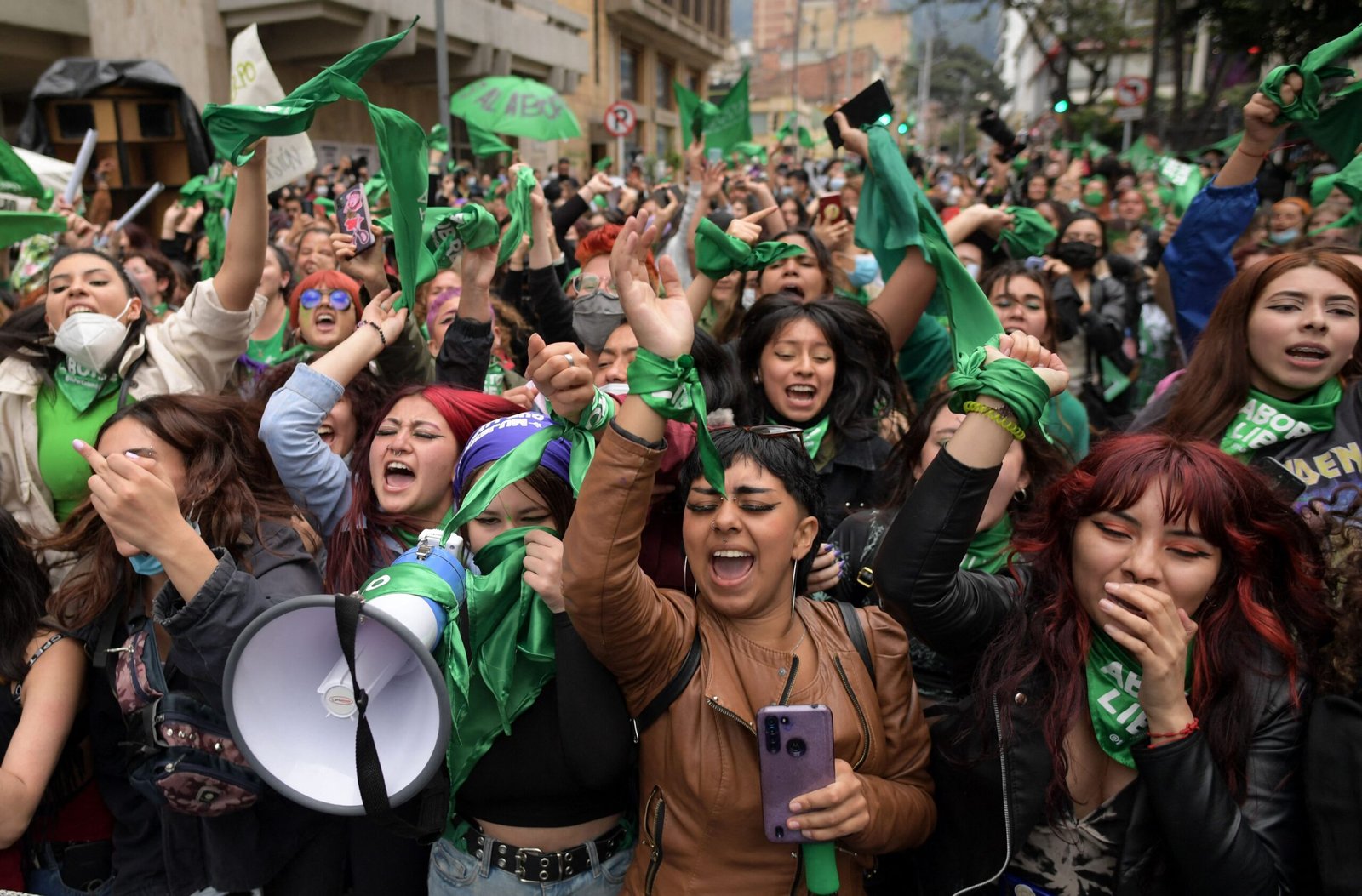
Over the past decade, powerful women’s movements have transformed public discussion about violence, femicide and reproductive rights. Campaigns such as Ni Una Menos, which began in Argentina, spread across the region and placed violence against women at the centre of political debate. The wider movement for reproductive rights also contributed to major legal and social changes in several countries.
At the same time, conservative and far-right political movements have become increasingly vocal in opposing what they describe as “gender ideology”. Their campaigns have targeted a wide range of policies, including abortion, sexuality education, gender terminology, LGBTQ+ rights and legal protections for women.
Women’s rights advocates argue that the proposals on false accusations should therefore not be viewed in isolation. They see them as part of a wider political effort to challenge laws and institutions created through years of feminist campaigning.
Argentina has become a particularly important example of this broader political shift. Under President Javier Milei, the government has dismantled or reduced several institutions and programmes associated with gender equality and support for women and LGBTQ+ people. Changes to policies concerning gender-based violence have also generated concern among feminist organisations.
The growing debate has attracted attention from the regional monitoring mechanism responsible for assessing compliance with the Inter-American treaty on violence against women. Its experts have warned that proposed legislation in Argentina and Bolivia could create additional barriers to justice, increase fears of retaliation and contribute to the re-victimisation of women.
The concern is not limited to those two countries. Similar proposals or discussions have also been observed in other parts of the region, including Guatemala, Uruguay and Paraguay.
The disagreement ultimately centres on how governments should balance the rights of people accused of crimes with the need to ensure that victims can safely seek protection. Few dispute that deliberately fabricated accusations can cause serious harm and should be addressed through fair legal procedures. The question is whether new or tougher laws are proportionate to the scale of the problem and whether they could unintentionally discourage genuine victims from coming forward.

For campaigners, the greatest danger is that women may begin to see the justice system not as a source of protection but as another potential threat.
As Latin American governments consider the proposed changes, the debate is likely to remain deeply political as well as legal. Supporters say stronger safeguards are necessary to prevent abuse of the justice system. Opponents fear that the measures could undermine hard-won protections and create another barrier between victims and justice.
For millions of women across the region, the outcome could have consequences far beyond the courtroom. It may influence whether a woman experiencing violence feels confident enough to make a report, whether she believes authorities will listen and whether seeking protection will be viewed as an act of courage or a potential legal risk.
Related News:
 Immigration Judges Fear Pressure in Trump Era
 Israel Accused of Undermining Palestinian Life
 Texas Transfers Raise Fears for Migrant Children
 Democrat Says ICE Restricted Detention Camp Oversight
 King Refers Jamaica Slavery Petition to Privy Council
 Police Suspect Help in Missing Alice Springs Girl Case
 Cartel crackdown raises fears of fresh violence
 US states redraw maps after voting rights ruling
 Judge halts deportation of Yemeni refugees in US
 US ‘Narco Boat’ Strikes Draw Global Outcry
 US judge dismisses Kilmar Abrego Garcia indictment
 Trump’s Revenge Drive Deepens GOP Divide
 Former ICC prosecutor condemns US sanctions
 Gunman Killed After White House Security Shootout
 New Footage Revives Peter Falconio Mystery
 Dreyfus Statue Finally Gets Permanent Paris Home
 Israeli Strike in Southern Lebanon Kills Seven
 Is America Ready for an AOC Presidential Run?
 Five Years of Taliban Rule Leave Afghanistan in Crisis
 Ukraine Villagers Demand Answers After Deadly Arms Depot Strike
 Argentina Orders Return of Nazi-Looted Painting
 UN expert urges UK to rethink Israel policy
 Armed Suspect Attacks Ohio Governor Candidate
 Miliband Rejects Chief Rabbi’s West Bank Warning
 Patriot Platform Raises Concern Across Britain
 Texas Charges Seven Noncitizens in Voting Crackdown
 Iran School Strike Raises War Crimes Questions, UN Says
 Gaza Strike Kills Child and Paramedic
 Memphis Questions National Guard Crime Surge
 Trump Media Ban Triggers First Amendment Clash
 US Networks Suspend Trump White House Pool Coverage
 Clancy Defense Seeks Inquiry Into Lone Juror
 Japan PM Backs International Criminal Court
 Republican Senator Questions Trump Ad Spending
 Tennessee Set to Execute Woman After Clemency Denied
 Cornell Fraternity Assault Investigation Reopened
 Fayed Survivors Demand Inquiry Into Medical Regulator
 French Student Protests Escalate Into Violent Clashes
 Trump Ads Trigger Fight Over Taxpayer Money
 Drumcree Talks Falter as Legal Challenge Deepens
 UK-France Returns Deal Faces Expiry as Talks Stall
 Tennessee Execution Fails After Two Lethal Doses
 Hundreds of UK prisoners released early amid overcrowding
 Drumcree Talks End Without Agreement Ahead of Appeal
 Almost Half of Fayed Accusers May Be Trafficking Victims
 French School Protests Escalate as 400 Schools Close
 New Prosecutor Takes Over Cornell Assault Case
 Thousands Protest ICE Operations in Nationwide US Day of Action
 Thousands Protest ICE in New York Against Trump Deportation Campaign
 Melania Trump Epstein remarks spark survivor backlash
 Ben Roberts-Smith Denies War Crime Allegations in First Statement
 Afghan Families Left in Limbo Face Risk of Deportation
 Florida Surgeon ‘Devastated’ Over Fatal Surgery Error
 Barrister Criticises Trial After Suicide Case Verdict
 US green card applicants must apply from abroad, DHS says
 Ukraine Creates Long-Range Strike Command
 Le Pen’s Popularity Holds Despite Conviction
 Westminster Council Threatens Charing Cross Soup Kitchen
 BBC Warned About Missing Clothes of Murder Victim
 Survivor Sues Musk’s xAI Over AI Abuse Images
 Trump Calls Iran War ‘Small Potatoes’ Despite US Deaths
 Councils spend £125m on illegal children’s care
 New Mexico Takes Facebook to Trial Over Data Scandal
 Man Arrested in Mississippi Woman’s Death
 Royal Crown Branded Enslaved Africans in Britain’s Slave Trade
 Fugitive Developer Rants at NSW Corruption Inquiry
 Turkey LGBTQ Crackdown Expands With New Arrests
 Yemen War Displaces 125,000 as Fighting Intensifies
 Omar Proposes Bill to Redirect ICE Funding
 Mahmood Warns Far Right Over Asylum Protests
 Harrods Faces Dispute Over Fayed Abuse Compensation
 Lib Dems Prepare for Election Amid Reform Challenge
 Lula accuses Trump of seeking control over Brazil
 Free Speech Emerges as Key UK Election Issue
 London Facial Recognition Trial Ends With False Alert
 Burnham Opens Door to Possible UK Return to EU
 Green Party faces dispute over Zionism motion
 Badenoch Raises Prospect of 2027 UK Election
 Musk’s DOGE Sparks Turmoil Inside US Government
 Families Await USS Abraham Lincoln Homecoming