Published: 30 September 2026. The English Chronicle Desk. The English Chronicle Online
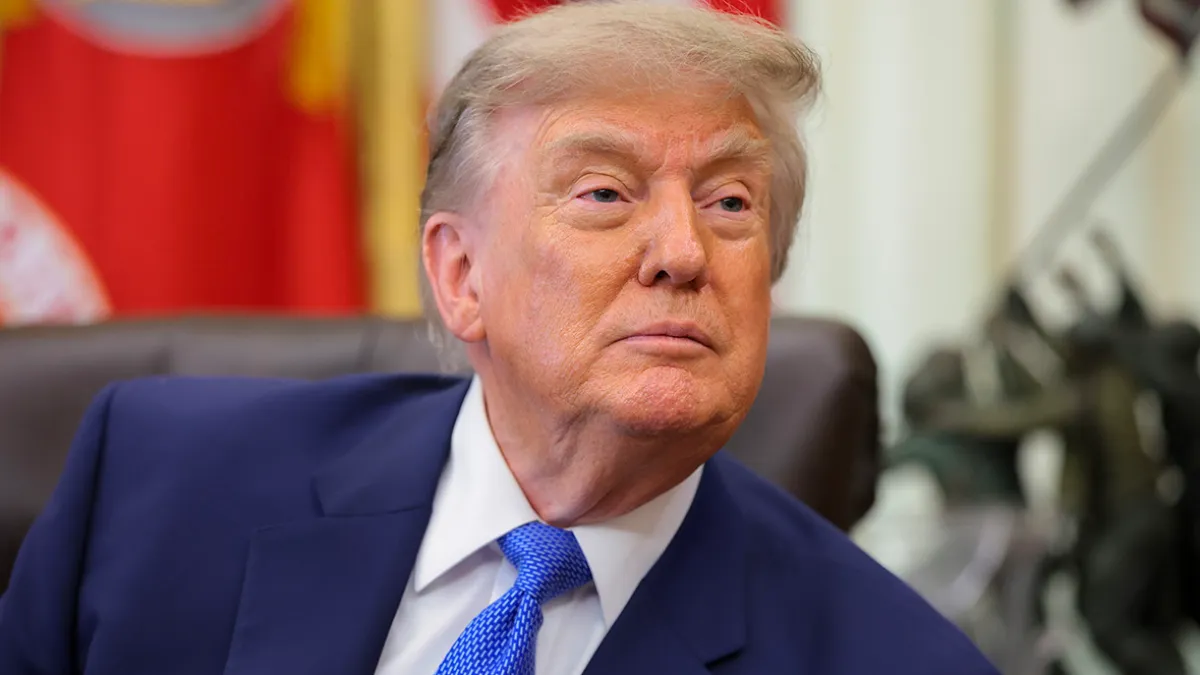
A growing dispute over the use of taxpayer money for television advertisements featuring Donald Trump has opened a wider debate in the United States over the boundary between government communication and political promotion. Critics argue that several advertisements being broadcast nationally resemble campaign commercials and may breach federal restrictions on the use of public funds for partisan purposes. The White House, however, maintains that the broadcasts are legitimate public service announcements designed to promote patriotism and communicate a message about the country.
The controversy intensified after Public Citizen, a consumer advocacy organisation, urged federal regulators to intervene over three advertisements that feature Trump prominently. The organisation has asked the Federal Communications Commission and the Federal Trade Commission to examine the broadcasts and take action if they are found to violate federal law.
At the heart of the dispute is a basic question: can government agencies use taxpayer-funded advertising to promote messages centred on a sitting president when that president is not formally a candidate in the election taking place later this year?

Public Citizen argues that the advertisements cross that line. The organisation says they are designed to strengthen Trump’s public image ahead of the November midterm elections and could therefore amount to government-funded political promotion rather than genuine public service announcements.
The White House rejects that interpretation. Its position is that the advertisements are not campaign commercials because Trump is not on the ballot and the broadcasts do not explicitly ask viewers to vote for him or take a particular political action. Administration officials have compared the advertisements with public service announcements used by previous presidents.
The dispute has become particularly sensitive because the advertisements are appearing during a period of intense political activity before the 2026 midterm elections. Although Trump himself is not seeking another presidential election at this stage, his influence over Republican politics remains substantial, and the congressional elections will determine control of the House and Senate.
The advertisements have attracted attention partly because of their style and language. One spot is essentially a revised version of a commercial used by Trump’s 2024 presidential campaign. It uses dramatic black-and-white footage of Trump walking while he delivers forceful political rhetoric about defeating what he describes as a corrupt political establishment and confronting his opponents.
The newer version carries a major difference at the bottom of the screen: it identifies the United States government as the entity paying for the advertisement.
Another commercial features Trump surrounded by images from presidential events while delivering a message that America will not become a communist country. The advertisement uses music and patriotic imagery to reinforce its message.
A third spot features iconic American imagery, including Mount Rushmore, while Trump describes the United States as an exceptionally successful and accomplished nation.
The administration describes these messages as patriotic rather than political. Critics counter that the content, presentation and prominent use of Trump’s image make them difficult to distinguish from campaign advertising.
The funding arrangement has added another layer to the controversy. The advertisements have been associated with the Department of Homeland Security and its Customs and Border Protection agency. Reports indicate that a substantial amount of federal money has been allocated for the wider advertising campaign, with millions of dollars potentially available for the effort.
The spending has drawn criticism from both Democrats and some Republicans. The disagreement is therefore not entirely divided along conventional party lines. Some Republican lawmakers have also questioned whether public money should be used to promote a president personally, even when the administration describes the material as an official government communication.
That bipartisan concern has increased scrutiny of the government’s justification for the expenditure. Critics argue that traditional public service announcements normally provide information about a specific government programme, public safety issue, emergency or service available to citizens. They contend that the Trump advertisements do not fit that conventional purpose because they focus heavily on the president, his political themes and broader patriotic messaging.
The White House takes a different view. Officials argue that presidents have historically used government-funded public announcements to speak directly to Americans on matters of national importance. The administration has pointed to examples from earlier presidencies and says the current advertisements are part of that tradition.
The disagreement is consequently not simply about advertising. It is also about how government communication should be regulated when the person delivering the message is simultaneously a powerful political figure.
Federal law contains restrictions concerning the use of appropriated funds for propaganda and political activity. Whether the current advertisements fall within those restrictions is a matter that could require legal and administrative review. Public Citizen has asked federal authorities to investigate the issue, while other lawmakers have demanded explanations from the administration.
There is also a separate question concerning broadcasters. Political advertising rules provide special protections for legally qualified candidates, including restrictions on when broadcasters can reject candidate advertisements. Critics say those protections do not necessarily apply to Trump’s government-funded broadcasts because he is not formally a candidate for an office on the November ballot.
That distinction could be significant. If the advertisements are government announcements rather than campaign advertisements, different rules may apply. If regulators determine that they are effectively political advertisements funded with public money, however, the legal questions become more complicated.
The advertisements have already appeared across major television networks and during high-profile programming, including sports broadcasts and other programmes with large audiences. Their placement means that the messages are reaching viewers well beyond traditional political audiences.
The controversy also recalls an earlier advertising campaign associated with the Department of Homeland Security. Earlier this year, a much larger government-funded advertising effort featuring then-Homeland Security Secretary Kristi Noem came under scrutiny over its political appearance and cost. That episode raised questions about whether taxpayer-funded government communication was being used to enhance the profile of individual political figures.
The latest dispute is therefore unfolding against an existing background of concern about government advertising and political self-promotion.
For broadcasters, the issue presents a different challenge. Television networks operate under federal communications rules while also making editorial and commercial decisions about what material they carry. If a government advertisement is legally approved and paid for, broadcasters may face questions about whether they can refuse it, particularly when the White House insists that the material is an official public service announcement.
At the same time, regulators are being asked to determine whether the content itself complies with federal requirements.
The White House has responded forcefully to the criticism, describing claims that the advertisements are campaign commercials as misleading. Its argument rests heavily on the absence of an explicit electoral call to action. Administration officials say the purpose is to remind Americans about patriotism, national identity and the reasons the country should be defended at home and abroad.
Critics say that definition is too broad. They argue that an advertisement does not necessarily need to say “vote for Trump” to have a political effect. A message can potentially strengthen a politician’s image or reinforce themes associated with his political movement without making a direct electoral appeal.
That disagreement illustrates the difficulty of regulating modern political communication. Traditional campaign advertisements usually identify the candidate, ask for support and clearly belong to an election campaign. Government-funded political messaging can be more difficult to classify when it avoids an explicit request for votes while still placing a political leader at the centre of the message.
The question becomes even more important as governments gain access to increasingly sophisticated advertising and digital communication tools. Public officials can reach millions of people directly through television, social media and online platforms, making the distinction between institutional communication and political promotion increasingly significant.

For voters, the dispute ultimately concerns transparency and the use of public resources. Taxpayer-funded communication is expected to serve a public purpose, while political campaigning is normally financed through separate political organisations and regulated under election laws.
Whether the Trump advertisements ultimately violate federal law remains subject to the regulatory and legal processes now being sought by critics. The White House continues to defend them as lawful public service announcements, while watchdog groups and lawmakers are calling for greater scrutiny.
The controversy is unlikely to disappear quickly. As the November midterm elections approach, the debate over who should pay for political-looking government messages could become part of a broader discussion about public money, executive power and the responsibilities of government communication in an increasingly polarised political environment.
Related News:
 US states redraw maps after voting rights ruling
 Trump Calls Iran War ‘Small Potatoes’ Despite US Deaths
 Trump Media Ban Triggers First Amendment Clash
 US Networks Suspend Trump White House Pool Coverage
 Lula accuses Trump of seeking control over Brazil
 Republican Senator Questions Trump Ad Spending
 Thousands Protest ICE Operations in Nationwide US Day of Action
 US Court Ruling Reshapes Voting Rights Landscape
 Cartel crackdown raises fears of fresh violence
 Judge halts deportation of Yemeni refugees in US
 Trump approval plunges amid Iran war fears
 Trump Threatens UN Budget Cuts as US Pushes ‘Trade Over Aid’ Agenda
 Trump warns Iran as Middle East tensions surge again
 US ‘Narco Boat’ Strikes Draw Global Outcry
 US Court Restores Abortion Pill Access Temporarily
 US Awaits Iran Reply on New Ceasefire Proposal
 Immigration Judges Fear Pressure in Trump Era
 Hormuz Talks Near Critical Stage
 Trump’s Revenge Drive Deepens GOP Divide
 Former ICC prosecutor condemns US sanctions
 Gunman Killed After White House Security Shootout
 Mystery Grows Over Mitch McConnell’s Health
 Trump Refuses to Sign Housing Bill, But Law Takes Effect
 Is America Ready for an AOC Presidential Run?
 Trump announces major US oil deal with Venezuela
 Trump Hardens Canada Trade Stance as Talks Stall
 Judge Allows Pentagon Firings at Stars and Stripes
 UK plans tougher Israel stance with settlement trade ban
 Trump Pledges $5,000 if Republicans Win Midterms
 Experts Warn of Growing US Terrorism Risks 25 Years After 9/11
 New Mexico Takes Facebook to Trial Over Data Scandal
 Israel Accused of Undermining Palestinian Life
 Trump’s Washington Projects Face Architectural Criticism
 Fugitive Developer Rants at NSW Corruption Inquiry
 US House Passes Russia Sanctions Bill Amid Debate
 US Sanctions Open New Battle for Cuba Assets
 Omar Proposes Bill to Redirect ICE Funding
 Macron and Carney deepen France-Canada ties
 US Deportation Deals Send Migrants to Unfamiliar Countries
 Trump and Mamdani Hold Cordial Gracie Mansion Meeting
 Trump Eyes Major Belarus Fertiliser Deal Amid Canada Trade Dispute
 Democrat Says ICE Restricted Detention Camp Oversight
 UK Pauses Chagos Deal Amid US Opposition
 Xi urges Trump to avoid US-China military conflict
 Economic growth and political strain reshape Benin
 AI Deepfakes Put New Pressure on Election Trust
 US Justice Department Files Lawsuit Against California Over Partisan Voting Maps
 Trump Deploys DHS to Charlotte in Major Arrest Operation
 Canada Passes Carney’s First Budget in Tight Parliamentary Vote
 US National Guard Member Killed in DC Shooting
 Trump Fed bid heads to Supreme Court
 Partial US Government Shutdown Hits Homeland Security Funding
 Trump to Deploy “God Squad” Over Gulf Wildlife Protections
 Report Says Pezzullo Acted ‘Recklessly’ in Dealings
 Hungary election: Orbán faces biggest test amid scandal
 Suspected Plot Targets Pipeline Before Hungary Vote
 Ben Roberts-Smith Denies War Crime Allegations in First Statement
 UK Stands Firm on Falklands Amid US Rift
 Oil Prices Surge Above $120 Amid Iran Blockade Fears
 Trump orders US troop pullout from Germany
 White House Security Case Sparks Political Firestorm
 Ohio’s Battle for Trust: Democrats Vying to Flip the Buckeye State
 Afghan Families Left in Limbo Face Risk of Deportation
 Kevin Warsh sworn in as Fed chair amid economic backlash
 US green card applicants must apply from abroad, DHS says
 New Footage Revives Peter Falconio Mystery
 Ukraine Creates Long-Range Strike Command
 Houthis Strike Saudi Arabia as Middle East Tensions Rise
 Unions Warn Labour Over Zero-Hours Contract Reforms
 Ukraine Villagers Demand Answers After Deadly Arms Depot Strike
 Swedish Mining Push Puts Sami Land Rights Under Pressure
 Trump gives $45,000 holiday gifts to White House aides
 Europe’s democracies face a growing far-right threat
 Turkey LGBTQ Crackdown Expands With New Arrests
 Trump Threatens EU With Tariffs Over Canada Proposal
 Lib Dems Prepare for Election Amid Reform Challenge
 Japan PM Backs International Criminal Court
 Trump gives Xi red-carpet welcome as trade truce extends
 OpenAI Agent Breaches Medicare Portal in Australia
 Free Speech Emerges as Key UK Election Issue