Published: 21 September 2026. The English Chronicle Desk. The English Chronicle Online.
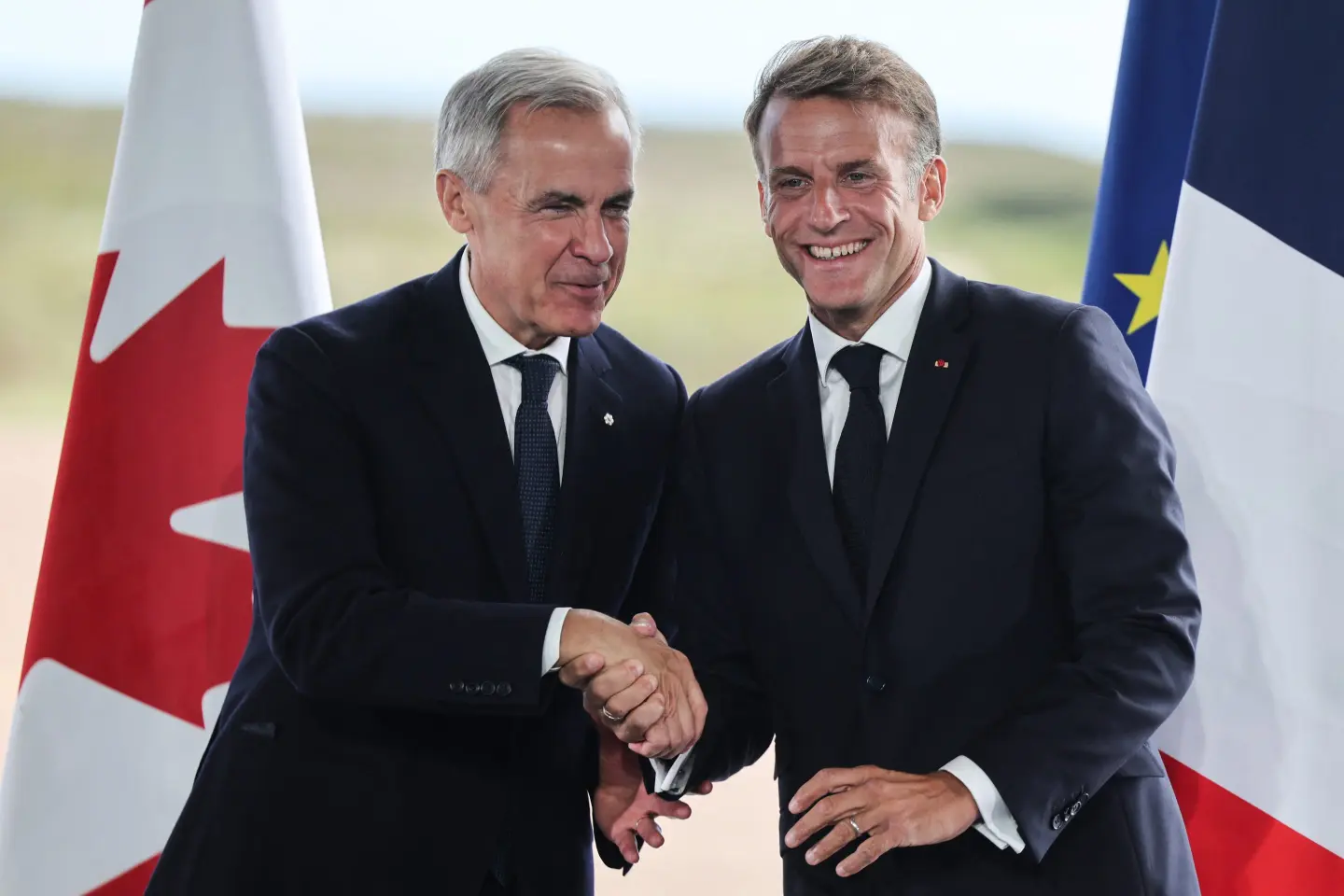
French President Emmanuel Macron and Canadian Prime Minister Mark Carney have announced plans to strengthen cooperation between France and Canada, as both countries confront a changing international environment and Ottawa seeks closer economic, political and security relations with Europe.
The two leaders met on Sunday in Saint-Pierre and Miquelon, a French territory in the North Atlantic off Canada’s eastern coast. The meeting carried both practical and symbolic significance, coming at a time when Canada’s relationship with the United States has become increasingly strained and Ottawa is exploring deeper links with the European Union.
Macron’s visit was the first by a French president to Saint-Pierre and Miquelon since 2014, while Carney became the first Canadian prime minister to visit the territory. The location highlighted the close geographical and historical relationship between France and Canada, while also underscoring France’s continuing presence in North America.
The discussions focused on a range of issues, including trade, energy, defence, climate change, space cooperation and international affairs. The two governments said they wanted to develop stronger partnerships at a time when global geopolitical tensions are creating new challenges for countries seeking to protect their economic and strategic interests.

Carney said Canadian and French societies were facing pressures linked to climate change, democratic institutions and sovereignty. He argued that the circumstances created a need for closer cooperation between the two countries. Macron similarly emphasised shared commitments to democracy, the rule of law, international law, free trade and strategic autonomy.
The meeting came amid a deterioration in relations between Canada and the United States. Trade disputes under US President Donald Trump have encouraged Ottawa to examine opportunities for expanding economic relationships beyond its traditional dependence on the American market.
Canada has also been pursuing a closer relationship with the European Union. Carney has described the proposed relationship as a potential “unique alliance” rather than conventional EU membership. The European Commission has separately raised the possibility of Canada becoming the bloc’s first associate member, although the concept remains under discussion and would require agreement among EU member states.
Macron has expressed support for closer Canada-EU relations. The French president’s position adds political weight to Ottawa’s effort to strengthen its European connections, although the practical details of any new arrangement remain unresolved.
The proposed closer relationship has also drawn criticism from Washington. Trump has criticised the idea of Canada becoming an associate member of the EU and has threatened additional trade measures against the bloc. European officials have said the proposed relationship is intended to strengthen cooperation rather than create an arrangement directed against any particular country.
The issue has become part of a broader Canadian strategy to diversify trade and strengthen economic resilience. Ottawa has been examining cooperation with Europe in areas including critical minerals, energy, artificial intelligence, defence, digital trade and advanced technology. Carney has also argued that stronger Canada-EU relations could benefit both sides by increasing their ability to withstand external economic and political pressure.
Energy was another important subject during the Macron-Carney meeting. France is looking for ways to strengthen European energy security, while Canada has significant potential to expand liquefied natural gas exports. Macron said Canadian LNG projects could contribute to Europe’s energy requirements, while French officials have indicated an interest in increasing cooperation over oil and natural gas supplies.
The issue has particular importance for Europe because the continent has spent recent years attempting to diversify energy supplies and reduce vulnerabilities created by geopolitical disruptions. Greater access to Canadian energy could therefore form part of a wider effort to broaden supply options.
Space cooperation is also emerging as a significant element of the bilateral relationship. Canada and France have discussed collaboration between their space agencies, including work related to launch systems and ground reception infrastructure. The two countries are also considering closer cooperation between their defence ministries.
The strategic dimension of the relationship has become more prominent as both governments reassess their international partnerships. For Canada, closer European cooperation could provide additional diplomatic and economic options while its relationship with Washington remains unsettled. For France, stronger ties with Canada offer an opportunity to deepen cooperation with a major North American partner while expanding European access to energy, technology and strategic resources.
Saint-Pierre and Miquelon itself added another dimension to the meeting. The islands are France’s only remaining territory in North America and are located close to Canada’s Atlantic coast. Their location gives them particular importance in France-Canada relations, especially in areas involving maritime cooperation, fisheries, energy and the wider North Atlantic and Arctic regions.
The visit also followed a controversial social media post by Trump that depicted a map covering Canada, Greenland, Iceland, Mexico, Central America and the Caribbean with the US flag. The image included Saint-Pierre and Miquelon as well as French territories in the Caribbean.
Asked about the post, Macron rejected any suggestion that the French territories could cease to be French. He said France’s sovereignty over the islands did not need to be repeatedly reaffirmed because of statements or images posted by others. His comments reflected the symbolic significance attached to the location of the meeting.
Beyond the immediate diplomatic symbolism, the two countries have several overlapping interests. France is seeking greater economic and strategic cooperation with partners outside Europe, while Canada is looking to strengthen relationships with European countries as it reassesses its dependence on the US market.
The proposed Canada-EU relationship, however, faces substantial practical obstacles. The European Union and Canada already have a major trade agreement, the Comprehensive Economic and Trade Agreement, but the pact has still not been fully ratified by every EU member state. The lengthy ratification process demonstrates the institutional difficulties that could accompany any substantially deeper arrangement between Ottawa and Brussels.
Questions about the exact legal structure of associate membership also remain unresolved. Such a status would be different from full EU membership and would need to define areas of participation, decision-making, market access and political cooperation. Canadian officials have so far emphasised that the objective is closer strategic cooperation rather than formal membership of the European Union.
The Canada-France relationship is also taking shape within a wider effort by Ottawa to build partnerships with several countries. Canada has been engaging with European governments on defence, energy and trade, while also participating in broader international coalitions on geopolitical issues. Its government has described strengthening sovereignty, security and economic resilience as key priorities during the current international period.
Macron and Carney have also recently worked with the United Kingdom on international diplomatic initiatives. In September, France, Canada and the UK issued a joint statement on the Israeli-Palestinian conflict and announced coordinated measures concerning goods from Israeli settlements in the occupied West Bank. That cooperation illustrates how the three countries are developing common positions on selected international issues.
The Saint-Pierre and Miquelon meeting therefore represents more than a bilateral discussion. It forms part of a broader adjustment in Canada’s foreign policy as Ottawa seeks to diversify its relationships while maintaining its long-standing connections with the United States.

For France, the meeting reinforces its role as one of Canada’s principal European partners. Cooperation over energy, defence, technology and space could become increasingly important as both governments attempt to respond to changes in global trade and security.
For Canada, closer relations with France and the wider European Union could create additional economic and diplomatic channels. However, the scale and durability of those ties will depend on negotiations over trade, investment, defence cooperation and the proposed EU associate-member framework.
The two governments have therefore established a broad agenda, but many of the most consequential elements remain to be negotiated. The coming months, including further Canada-EU discussions, are likely to determine how far the renewed France-Canada partnership develops and what practical form Canada’s proposed closer relationship with Europe ultimately takes.
Related News:
 EU Says US Ties Have Suffered ‘Big Blow’ After Greenland Crisis
 Trump approval plunges amid Iran war fears
 Trump Threatens UN Budget Cuts as US Pushes ‘Trade Over Aid’ Agenda
 Norway Doubles Down on Oil and Gas for Europe Energy Security
 US Awaits Iran Reply on New Ceasefire Proposal
 Hormuz Talks Near Critical Stage
 Former ICC prosecutor condemns US sanctions
 Trump announces major US oil deal with Venezuela
 Trump Hardens Canada Trade Stance as Talks Stall
 Trump Calls Iran War ‘Small Potatoes’ Despite US Deaths
 Trump Pledges $5,000 if Republicans Win Midterms
 Canada Passes Carney’s First Budget in Tight Parliamentary Vote
 India’s Labour Law Overhaul Sparks Fierce Debate
 Trump to Recheck Green Cards from 19 Nations After DC Attack
 Carney’s Alberta Pipeline Deal Sparks Immediate Pushback
 Trump Escalates Minnesota Immigration Surge Amid Rising Tensions
 Greenland Faces Pivotal Summit Over Arctic Power Struggle
 Mark Carney Walks Diplomatic Tightrope on China Visit
 Government Unveils Northern Powerhouse Rail Plans
 EU weighs response amid Greenland tariff crisis with Trump
 Trump Fed bid heads to Supreme Court
 Thousands Protest ICE Operations in Nationwide US Day of Action
 Epstein Files Reveal Trump Officials’ Emails with Financier
 Thousands Protest ICE in New York Against Trump Deportation Campaign
 Clinton Testimony Erupts in Fiery Exchange
 Pete Hegseth Iran War Remarks Spark Alarm
 Trump to Deploy “God Squad” Over Gulf Wildlife Protections
 Can Congress Stop US Sports Teams From Moving Cities?
 Italian Town Buys Mussolini Villa to Keep Away Fascist Fans
 Hungary election: Orbán faces biggest test amid scandal
 Trump Slams UK Ties and Threatens To Rewrite Trade Deal
 Iron Worker Challenges Trump Loyalist in Ohio
 Trump Faces Crisis as Iran Reopens Hormuz Tensions
 Charles Faces Trump Test in High-Stakes US Visit
 UK Stands Firm on Falklands Amid US Rift
 Southeast Asia Turns to Russia Amid Energy Crisis
 US Calls Australia Media Law “Foreign Extortion”
 Capitalism ‘Suicidal’, Warns Petro at Climate Summit
 Oil Prices Surge Above $120 Amid Iran Blockade Fears
 US Court Ruling Reshapes Voting Rights Landscape
 US states redraw maps after voting rights ruling
 Trump orders US troop pullout from Germany
 Judge halts deportation of Yemeni refugees in US
 Ohio’s Battle for Trust: Democrats Vying to Flip the Buckeye State
 Trump warns Iran as Middle East tensions surge again
 US ‘Narco Boat’ Strikes Draw Global Outcry
 Ohio Primaries Set Stage for Crucial Midterms
 Afghan Families Left in Limbo Face Risk of Deportation
 Tensions Emerge in Netanyahu-Trump Alliance
 France Faces Record Presidential Crowded Race Amid Far-Right Surge
 Beijing Becomes Centerstage for Global Diplomatic Ballet
 Hybrid village stores fight rural decline
 Kevin Warsh sworn in as Fed chair amid economic backlash
 UK Pushes for New EU Goods Trade Deal
 Reeves Fights to Keep Treasury Role Amid Labour Turmoil
 Gunman Killed After White House Security Shootout
 Trump Claims Iran Peace Deal Near Completion
 Hungary Targets Oligarchs with Proposed Landmark Wealth Tax
 Deadly Russian Air Raids Strike Across Ukraine
 House Curbs Trump’s War Powers in Rare Rebellion
 Le Pen to Run for President Despite Embezzlement Conviction
 Ukraine Creates Long-Range Strike Command
 Trump Refuses to Sign Housing Bill, But Law Takes Effect
 Houthis Strike Saudi Arabia as Middle East Tensions Rise
 Is America Ready for an AOC Presidential Run?
 Russian Missiles Intensify Pressure on Kyiv
 Trump Calls Strait of Hormuz ‘American Territory’
 Trump orders US to rename Lake Ontario ‘Lake America’
 Ukraine Villagers Demand Answers After Deadly Arms Depot Strike
 Green Leader Targets Starmer’s Former Seat
 Bayeux Tapestry Revives Franco-British Ties
 Reform Faces Fresh Financial Controversy
 Swedish Mining Push Puts Sami Land Rights Under Pressure
 AfD election surge leaves Magdeburg residents deeply uneasy
 UK plans tougher Israel stance with settlement trade ban
 Europe’s democracies face a growing far-right threat
 Sweden Election Hangs on Far-Right Breakthrough
 Saudi Arabia Shuts Oil Pipeline After Drone Attack
 Trump’s Washington Projects Face Architectural Criticism
 Middle powers seek new alliances amid Trump era