Published: 14 September 2026. The English Chronicle Desk. The English Chronicle Online.
US President Donald Trump’s ambitious programme of construction and renovation in Washington DC is facing growing criticism from architects, preservationists and other observers, who argue that a series of large-scale projects could permanently alter the character of the American capital.
The projects include a major ballroom at the White House, a proposed triumphal arch, extensive changes to historic public spaces and a series of decorative renovations featuring gold, classical ornamentation and highly ambitious architectural designs.
Critics say the programme reflects Trump’s personal taste and preference for grand, highly visible structures, while raising questions about historic preservation, public spending, regulatory oversight and the appropriate relationship between political power and national architecture.
The most controversial project is the planned ballroom complex at the White House. What was initially presented as a relatively modest event space has expanded considerably in both size and cost.

Trump originally said the ballroom would not interfere with the existing White House and would accommodate around 650 guests. The project was initially estimated to cost about $200 million and was expected to rely substantially on private funding.
The plans changed dramatically, however, after the historic East Wing was demolished to make way for the new development. The proposed ballroom subsequently expanded to accommodate approximately 1,000 people, while its reported cost rose to around $600 million, with a significant portion expected to be covered by taxpayers.
The scale of the proposed building has become a particular concern among architectural critics. At its current size, the ballroom would reportedly be several times the volume of the White House itself, potentially changing the visual relationship between the historic presidential residence and its surrounding structures.
Trump has praised the planned building in highly ambitious terms, comparing its appearance favourably with major historic European buildings. Architectural critics, however, have questioned whether the classical elements used in the design form a coherent whole.
The project has also evolved beyond a conventional ceremonial or entertainment space. Trump has described the development as a broader military and national security complex, with significant facilities planned beneath the ballroom.
According to descriptions of the project, the underground complex would include a command and emergency operations centre, a military hospital, secure communications facilities and situation rooms. Specialised air-handling and filtration systems are also reportedly planned to provide protection against biological, chemical and radiological threats.
Trump has characterised the underground structure as capable of providing protection in the event of a nuclear attack. A military drone facility and air-defence capabilities have also been associated with the development.
The transformation of a presidential event venue into a structure incorporating military-grade infrastructure has raised questions about the project’s original purpose and architectural character.
The legal process surrounding the construction has also attracted attention. Court proceedings temporarily halted work before the US Supreme Court allowed construction to resume. The ruling, however, did not resolve every question surrounding the project’s legality.
Court proceedings have additionally raised broader concerns about the limits of executive power over nationally significant buildings and landmarks. During one legal discussion, a judge questioned whether the government could theoretically demolish an iconic national monument without an effective legal obstacle. An administration lawyer’s response drew widespread attention.
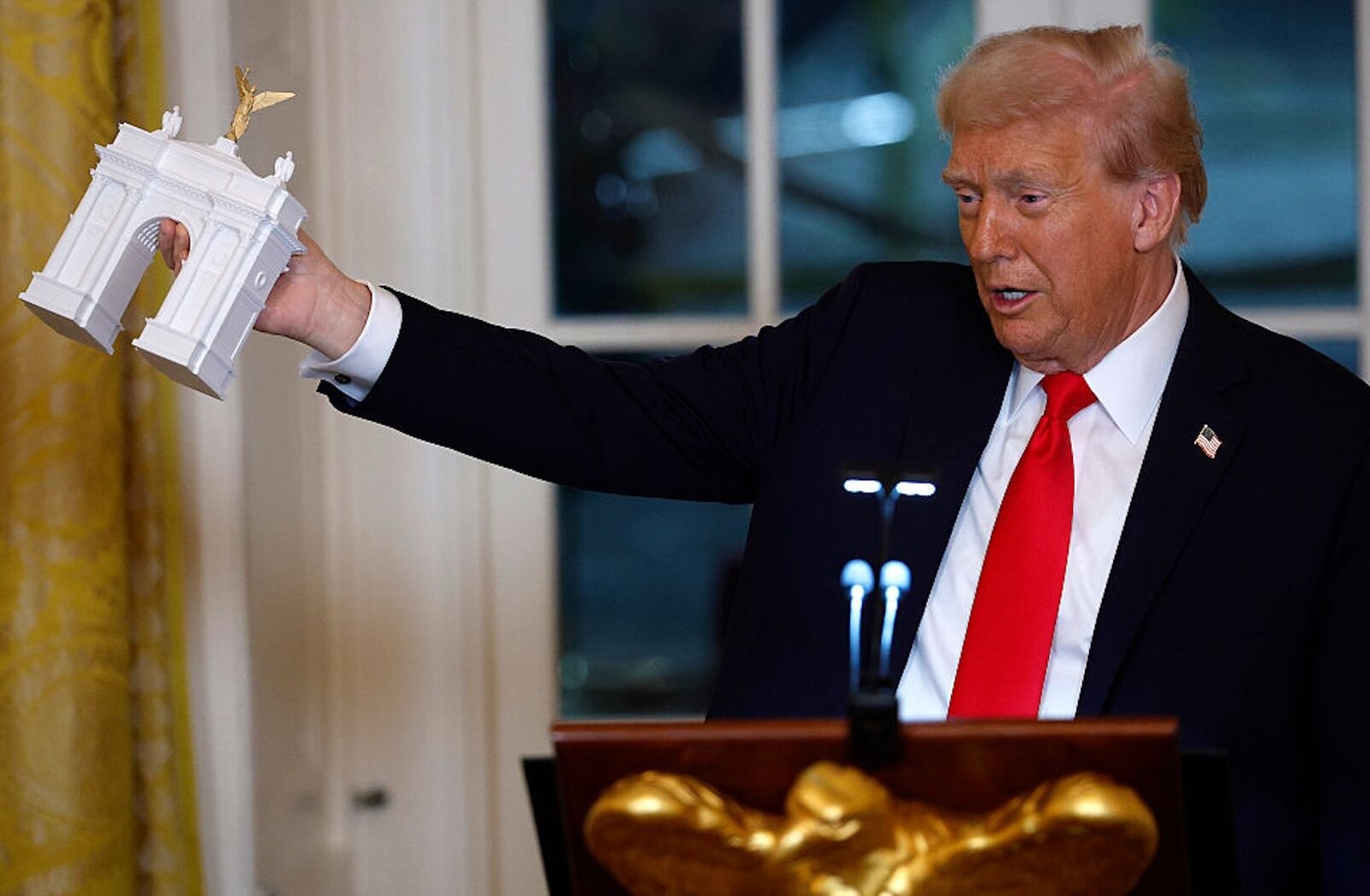
Another major Trump-backed project is a proposed triumphal arch near Memorial Circle on Columbia Island in the Potomac River. The structure is planned to rise approximately 250 feet, a symbolic figure corresponding to the number of years since American independence.
Trump has presented the arch as a major celebration of the United States. However, critics have argued that the project is closely associated with the president’s own image and political legacy.
Trump has previously indicated that the structure is intended to honour him, while describing it as potentially the greatest and most beautiful triumphal arch in the world.
The architectural concept draws inspiration from classical Roman arches and other monumental structures. The current design reportedly includes a large golden-winged female figure at the top, accompanied by eagles and additional decorative elements.
The proposed scale has increased substantially from an earlier concept. A smaller arch was initially envisioned before the project expanded into a much larger structure under Trump’s direction.
Architectural observers have compared the proposed monument with monumental projects associated with historical political leaders and authoritarian governments, arguing that its scale and symbolism could make it appear more like a personal monument than a conventional civic structure.
The National Park Service has reportedly determined that the project could adversely affect numerous historic sites in Washington. Veterans groups have also raised concerns about the proposed structure’s visual relationship with Arlington National Cemetery.
Despite these objections, preliminary work on the project is expected to continue.
A temporary model displayed at a public event earlier this year also attracted criticism after reports that its materials warped and deteriorated in hot weather. The incident became a source of ridicule online, with critics questioning the quality and practicality of the design.
The ballroom and arch are not the only projects reshaping Washington.
Trump’s administration has pursued a broader programme of cosmetic improvements across the capital, including renovations to fountains, monuments and public spaces. Some statues have been covered in gold leaf, while additional monuments and memorial projects have received substantial funding.
The administration has described these initiatives as part of an effort to make Washington more attractive and restore what it regards as a traditional American aesthetic.
Critics argue that the approach places excessive emphasis on visual spectacle while weakening the protections designed to preserve the capital’s historic character.
Among the most significant policy changes under discussion are proposed revisions to historic preservation procedures. Preservation advocates fear that narrowing the definition of historically significant sites and reducing requirements for consultation could make it easier for major construction projects to proceed with limited public scrutiny.
The National Trust for Historic Preservation and other preservation groups have warned that weakening these safeguards could damage America’s shared architectural and cultural heritage.
The controversy has also highlighted the contrast between Trump’s stated support for traditional American monumental architecture and his administration’s efforts to reduce some of the regulatory protections surrounding historic sites.
Supporters of the administration argue that excessive regulation can prevent development, increase costs and delay projects that could improve public spaces and government facilities. They contend that Washington needs investment and modernisation rather than an approach that freezes the city in the past.
Opponents respond that the capital’s historic buildings and landscapes are public assets whose preservation should not be sacrificed for political ambitions or short-term development goals.
The condition of the Lincoln Memorial reflecting pool has become another contentious example. A previous renovation reportedly experienced serious problems, including deterioration of the surface treatment and extensive algae growth after the pool was refilled.
The administration initially faced criticism over the quality of the renovation, while legal documents later attributed the problems to what was described as a rushed and poorly executed project.
The incident has contributed to wider questions about how contracts for high-profile Washington improvements are awarded and monitored.
Critics have also questioned the use of no-bid contracts for some projects and the potential influence of private interests in government construction.
Trump’s approach to architecture is closely connected with his personal history as a property developer. Throughout his career, he has favoured large buildings, elaborate interiors, luxury finishes and highly visible branding.
That aesthetic has now entered the heart of the federal government, where buildings traditionally carry a different symbolic responsibility.
Washington’s most important structures were generally designed to represent institutions rather than individual political leaders. The White House, Capitol, Supreme Court and national monuments collectively form an architectural landscape intended to express the continuity of the American state.
Trump’s critics fear that his construction programme could shift that balance toward personal political symbolism.
The proposed National Garden of American Heroes is another example of the administration’s approach. The planned project would feature hundreds of statues representing figures considered important to American history and culture. The proposed list includes controversial historical figures, including slave owners and individuals whose monuments were removed during nationwide debates over racial justice.
Supporters say the garden would restore recognition of figures they believe have been unfairly removed from public spaces. Critics argue that selecting historical heroes through political criteria risks simplifying complicated aspects of American history.
Questions have also been raised about whether such a large number of sculptures could be produced to an appropriate artistic standard within the proposed timeframe.
Taken together, the projects represent a major intervention in Washington’s architectural landscape.
The debate is ultimately about more than the appearance of individual buildings. It concerns how a democratic society should treat its public spaces, how historic heritage should be protected and how much influence an individual president should have over the physical symbols of national identity.

Trump has made clear that construction and design are personally important to him. He has frequently discussed architectural projects publicly and has described building as an enjoyable part of his work.
His supporters see this enthusiasm as evidence of an administration willing to invest in American infrastructure and public spaces.
His critics see something very different: a concentration of political power expressed through monumental construction, lavish decoration and projects designed to leave a highly visible personal legacy.
As work continues on several of the initiatives, the debate over Trump’s architectural legacy is likely to intensify. Whether the projects ultimately become enduring symbols of American renewal or examples of excessive political self-expression will depend not only on their appearance but also on their cost, construction quality, legal foundations and impact on Washington’s historic landscape.
For now, the transformation of the US capital remains one of the most visible cultural and political legacies of Trump’s presidency.
Related News:
 Trump Calls Iran War ‘Small Potatoes’ Despite US Deaths
 Government Unveils Northern Powerhouse Rail Plans
 Trump Fed bid heads to Supreme Court
 Sanders Condemns Billionaire ‘Greed’ in California Tax Debate
 Can Congress Stop US Sports Teams From Moving Cities?
 Iron Worker Challenges Trump Loyalist in Ohio
 US Labor Department in turmoil after secretary resigns
 US states redraw maps after voting rights ruling
 Trump approval plunges amid Iran war fears
 Trump Threatens UN Budget Cuts as US Pushes ‘Trade Over Aid’ Agenda
 US ‘Narco Boat’ Strikes Draw Global Outcry
 US Awaits Iran Reply on New Ceasefire Proposal
 Immigration Judges Fear Pressure in Trump Era
 Kevin Warsh sworn in as Fed chair amid economic backlash
 Hormuz Talks Near Critical Stage
 Trump Refuses to Sign Housing Bill, But Law Takes Effect
 Is America Ready for an AOC Presidential Run?
 Trump announces major US oil deal with Venezuela
 Trump Hardens Canada Trade Stance as Talks Stall
 Judge Allows Pentagon Firings at Stars and Stripes
 Reform Faces Fresh Financial Controversy
 Trump Pledges $5,000 if Republicans Win Midterms
 Experts Warn of Growing US Terrorism Risks 25 Years After 9/11
 New Mexico Takes Facebook to Trial Over Data Scandal
 Trump’s UK Ambassador Urges North Sea Drilling to Strengthen US Ties
 Millionaires group urge Reeves to introduce wealth tax to ‘lift kids out of poverty’
 Canada Passes Carney’s First Budget in Tight Parliamentary Vote
 US National Guard Member Killed in DC Shooting
 Starmer Says Labour’s Economic Plan Needs Years to Deliver
 Trump press secretary attacks reporter over ICE question
 Kyrsten Sinema Faces High-Profile Lawsuit Over Marriage Interference
 Starmer Plans UK-China Visit Amid Business and Diplomatic Goals
 UK Government Borrowing Drops to £11.6bn in December
 Partial US Government Shutdown Hits Homeland Security Funding
 Thousands Protest ICE Operations in Nationwide US Day of Action
 Epstein Files Reveal Trump Officials’ Emails with Financier
 Sinema payment row deepens after $9,000 transfer claim
 EU Signals Open Mind on UK Customs Union Talks
 Nurses’ families fear breakup under UK immigration crackdown
 UK shelves £110m border project amid trade strain
 California Democrats Vow Trump Reckoning
 Trump’s Surgeon General Pick Evades Vaccine Questions
 Reeves Must Back Defence Plan or Face Dismissal, Says Unite Chief
 Adelaide University Faces Backlash Over Event Cancellation
 Trump to Deploy “God Squad” Over Gulf Wildlife Protections
 Trump Signals Hope for New Iran Talks as Ceasefire Fades
 UK Stands Firm on Falklands Amid US Rift
 Investigation Into Anti-Trump Motives After Gala Shooting
 Trump Defiant After Washington Hotel Shooting
 Identity Revealed: Suspected Washington Gunman Named
 Oil Prices Surge Above $120 Amid Iran Blockade Fears
 Trump orders US troop pullout from Germany
 Silent Tracks: Rail Line Without Passengers
 White House Security Case Sparks Political Firestorm
 Ohio’s Battle for Trust: Democrats Vying to Flip the Buckeye State
 Tough Fiscal Realities Await Next Scottish Government
 Afghan Families Left in Limbo Face Risk of Deportation
 US green card applicants must apply from abroad, DHS says
 Albanese Defends Tax Reforms Amid Emotional Speech
 DeSantis’s ‘Alligator Alcatraz’ Faces Final Shutdown
 House Curbs Trump’s War Powers in Rare Rebellion
 Is JD Vance the Ultimate Fall Guy for Trump’s Shaky Iran Deal?
 Trump Faces Backlash Over $2bn Earnings Since Return
 AOC Backs El-Sayed in Tight Michigan Senate Primary
 US Courts Back Trump on Park Signage Removals
 Trump’s Mount Rushmore Speech: A Divisive Anniversary
 Ukraine Creates Long-Range Strike Command
 Houthis Strike Saudi Arabia as Middle East Tensions Rise
 Burnham unveils £65m drought aid for farmers
 Unions Warn Labour Over Zero-Hours Contract Reforms
 RAF Barnham Protests Fuel Tensions in Norfolk Town
 British Museum Faces Questions Over Peter Thiel’s Private Bayeux Viewing
 Ukraine Villagers Demand Answers After Deadly Arms Depot Strike
 Bayeux Tapestry Revives Franco-British Ties
 Swedish Mining Push Puts Sami Land Rights Under Pressure
 UK plans tougher Israel stance with settlement trade ban
 Trump gives $45,000 holiday gifts to White House aides
 Europe’s democracies face a growing far-right threat
 Man Arrested in Mississippi Woman’s Death
 Israel Accused of Undermining Palestinian Life