Published: 14 September 2026. The English Chronicle Desk. The English Chronicle Online.
Thames Water has revised plans for a major reservoir in Oxfordshire as the struggling water company attempts to move forward with one of the largest water infrastructure projects ever proposed in the south-east of England, despite strong opposition from local councils, residents and campaigners.
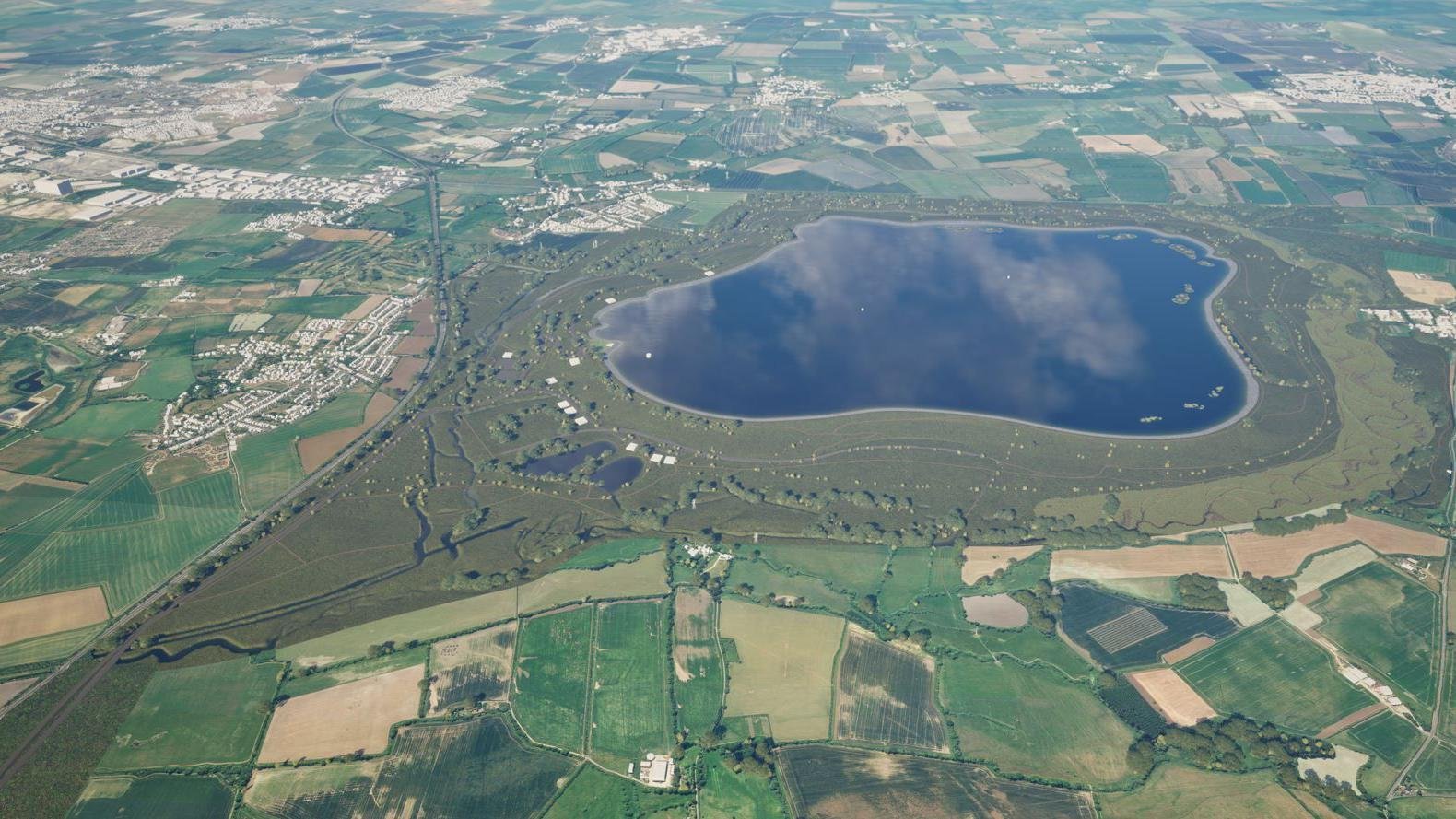
The White Horse reservoir, planned near Abingdon, is designed to hold around 150 billion litres of water and would cover approximately 6.7 square kilometres. If completed, the facility would be roughly comparable in surface area to Gatwick Airport and would represent a major expansion of the region’s water-storage capacity.
The latest changes have prompted a new public consultation, giving landowners and other affected parties an opportunity to comment on amendments to the scheme. The consultation follows an earlier statutory process that concluded in January, while Thames Water is aiming to submit a formal planning application by the end of 2026.
The company says the revised plans are necessary because additional land and access points are required to support construction and environmental mitigation. The changes involve a much larger overall project area, including land needed for construction activities, the relocation of nearby solar farms and changes to local rivers and streams.

The reservoir was previously known as the South East Strategic Reservoir Option and has been under consideration for many years. Its development is being presented by Thames Water as a response to rising demand for water in southern England, where population growth and increasingly unpredictable weather patterns are putting additional pressure on existing supplies.
The scale of the project has changed dramatically since it was first proposed. Earlier plans envisaged a reservoir covering about 10 square kilometres with an estimated cost of around £1 billion. More recent estimates have placed the project cost between £5.5 billion and £7.5 billion, based on 2023 prices.
The increase has become one of the central points of controversy surrounding the project. Critics argue that construction inflation since 2023 could push the eventual bill significantly higher, potentially bringing the total cost to between £7.5 billion and £10 billion.
The financial implications are particularly significant because customers are expected to contribute toward the cost. Customers of Thames Water, Affinity Water and Southern Water would ultimately pay for the reservoir through their water bills over a period of up to 100 years.
The issue is unfolding against a difficult financial background for Thames Water itself. At the end of March, the regulated value of the company’s assets was estimated at approximately £23 billion, while its net debt had risen to around £18.5 billion.
The company’s financial position has raised broader questions about its ability to finance major infrastructure projects while maintaining essential services and dealing with its substantial debt burden. Government ministers are considering possible options for the future ownership and financial structure of the company, including whether it should be placed into a special administration arrangement or remain under private-sector control following a proposed debt write-off.
Against this backdrop, the proposed reservoir has attracted increased scrutiny over whether such a large investment represents the most effective way to address future water shortages.
Thames Water argues that the project is necessary because the south-east faces a significant long-term gap between water demand and available supplies. The company points to population growth and climate change as major factors behind increasing pressure on the region’s water resources.
The need for additional water has become increasingly visible during periods of extreme weather. Heatwaves and prolonged dry conditions can sharply increase household demand while simultaneously reducing the availability of water in rivers, reservoirs and underground sources.
Industry projections suggest that the problem could become substantially more serious in the coming decades. Rapid, a partnership involving the water regulator Ofwat, the Environment Agency and the Drinking Water Inspectorate, has projected a potential shortfall of more than two billion litres of water per day by 2055.
Thames Water believes the White Horse reservoir could play an important role in addressing that future shortage. If the project receives approval and construction proceeds according to the current timetable, major works could begin in 2032, with water becoming available from around 2040.
The reservoir would ultimately serve an estimated 15 million people, making it a strategically significant project for the wider south-east rather than simply an infrastructure development for Oxfordshire.
However, the project’s design has generated particular concern because it would be largely constructed above ground rather than being formed primarily through a conventional valley dam. The main reservoir would be enclosed by walls that could reach approximately 25 metres in height.
That design would make the facility the largest fully bounded reservoir in Europe, according to the project’s description. The unusual construction method is linked to local geological conditions. The proposed site contains extensive clay, making it one of the few areas in southern England considered suitable for a reservoir of this scale.
But the clay layer is relatively shallow, extending only a few metres in depth in places. As a result, Thames Water would need to rely on a large engineered structure with substantial walls to contain the enormous volume of water.
Campaigners have questioned whether the technical and financial risks of such a structure have been adequately assessed. They have also challenged Thames Water’s calculations regarding the project’s cost and its long-term strategic value.
Local authorities have expressed strong reservations as well. The Vale of White Horse District Council, Abingdon Town Council and Oxfordshire County Council have rejected the plans, with flood risk emerging as one of the most serious concerns.
Several rivers and streams run through or close to the proposed site and would have to be diverted as part of the development. Local authorities and campaigners fear that altering these waterways could increase flood risks for nearby communities.
The concern becomes particularly serious because the proposed reservoir would itself contain an enormous volume of water. Any failure of the containment structure could potentially have severe consequences for communities downstream.
Derek Stork, chair of the Group Against Reservoir Development, has described the proposal as fundamentally flawed and argued that alternative methods could provide water more sustainably.
Campaigners have also criticised what they describe as inadequate consultation with local organisations, councils and residents. They say crucial information about the consequences of a potential reservoir failure and the resulting flood risk has not been made sufficiently available.
One of the main concerns raised by opponents is the absence, in their view, of comprehensive dam-breach analysis and detailed flood-risk modelling that can be independently assessed. The proposed location includes areas classified as being at severe flood risk, making the question of emergency planning particularly important.
Thames Water has rejected suggestions that it has failed to engage with affected communities. The company says it has been conducting engagement on the project for more than four years and that the latest consultation is part of a continuing process rather than a standalone exercise.
The company has also said that feedback from the latest consultation, together with responses gathered during last year’s statutory public consultation, will be used to shape the final proposals.
The consultation therefore represents an important stage in the future of the project. Supporters will argue that the reservoir is necessary to protect millions of people from future water shortages, while opponents are expected to continue questioning its cost, design, environmental consequences and flood risks.
The debate also highlights a wider challenge facing the UK water industry. Climate change, population growth and ageing infrastructure are increasing pressure on water supplies, while customers and regulators are demanding greater value for money from utilities.
Large reservoirs can provide long-term security, but they require enormous financial investment and can permanently transform landscapes. Smaller-scale storage, leakage reduction, water recycling, demand management and improvements to existing infrastructure are among the broader approaches being considered across the industry.

For Thames Water, the White Horse project is therefore more than a single construction proposal. It is closely connected to the company’s financial future, the UK’s long-term water strategy and the question of how the cost of adapting to climate change should be shared between companies, governments and consumers.
With a planning application expected by the end of the year, the controversy surrounding the reservoir is likely to intensify. The outcome of the consultation could influence the final design, environmental safeguards and the evidence presented to regulators and planning authorities.
Whether the White Horse reservoir ultimately becomes a landmark piece of Britain’s water infrastructure or remains an example of an oversized and controversial proposal will depend on the forthcoming planning process, financial decisions and assessments of its environmental and safety implications.
For the millions of people expected to benefit from additional water supplies, the project promises greater security in an increasingly unpredictable climate. For communities living near the proposed site, however, the focus remains firmly on cost, disruption and the potential risks associated with placing Europe’s largest fully bounded reservoir in their region.
Related News:
 UK House Prices Fall as Mortgage Rates Rise
 Oil nears $100 as Saudi attacks shake markets
 UK rejects EV charging VAT cut amid Treasury clash
 Pubs and Hotels Face Business Rates Reform Review
 UK Households Could Save £173 on Fixed Energy Deals
 UK Subsidence Claims Surge After Record-Breaking Summer
 Billionaire Chris Rokos poised to leave UK
 JPMorgan Boss Warns Against UK Bank Tax Rise
 John Lewis Losses Widen to £124m as Confidence Falls
 Wealthy Britons Flee Gulf War but Avoid UK Taxes
 UK Wage Growth Slows as Jobs Market Holds Firm
 BBC News Faces Deep Cuts in 2,000 Job Plan
 New UK advice scheme to boost savings and investing
 Britons Build Emergency Supplies Amid Rising Fears
 Reeves Fights to Keep Treasury Role Amid Labour Turmoil
 Essex valley emerges as rising English wine hub
 Weight-Loss Drugs Transform Fashion Shopping Habits
 EasyJet Takeover Sparks Fears Over Passengers’ Future
 Burnham unveils £65m drought aid for farmers
 Firms on both sides fear damage from US-Canada trade war
 Europe Faces Winter Gas Supply Anxiety
 Burnham Faces Mounting Budget Challenges
 Dutch Bank Moves 86 Tonnes of Gold to London
 UK Cost Squeeze Deepens as Mortgages and Gas Rise
 Spire Healthcare Agrees £1bn Takeover by Toscafund
 UK retailers plan 100,000 placements for young people
 Oil Prices Surge as Saudi Pipeline Closure Deepens Crisis
 Aberdeen Chosen for GB Energy HQ at Marischal Square
 UK Energy Reform Could Cut Bills by £200
 UK Banks Maintain £100 Contactless Limit Despite FCA Rule Change
 UK Doubles Steel Tariffs to 50% to Protect Domestic Plants
 Oil and Gas Prices Surge Amid Iran-Israel Attacks on Gasfields
 Rising Costs Force Families to Rethink Days Out
 North Sea Drilling to Cut UK Imports Only Slightly
 Heavier SUVs Accelerate Britain’s Pothole Crisis
 Student Loan Interest May Rise Despite 6% Cap
 Europe EV Demand Surges as Fuel Prices Rise
 Carmakers Face £3bn Gap in UK Loan Payout Scandal
 Reform UK funding: mystery billionaire revealed
 Albanese Rejects Gas Export Tax Push
 Spirit Airlines shuts down after 34 years amid crisis
 City & Guilds Faces Governance Crisis Over Sale
 Tractor Breakdown Tests Lincolnshire Farmers
 UK Pushes for New EU Goods Trade Deal
 Sycamore Gap Artwork Chosen After Public Vote
 UK firms accused of ‘AI washing’ boom
 Public Confidence in University Degrees Plummets in the UK
 Severn Trent CEO Reward Package Doubled Despite Public Anger
 Labour MPs Urge Burnham to Revive UK Aid Target
 UK Schools Struggle as Classrooms Top 40C
 London Tube Heat Reaches Dangerous Levels
 Three-Quarters of England’s Riverbanks Still Off Limits
 Weight-Loss Drugs Offer Food Savings Mainly to High Earners
 London’s 2026 ‘Great Stink’ Raises Sewer Concerns
 Canada to Match Trump’s 50% Tariffs Dollar for Dollar
 Shein targets $27bn valuation in Hong Kong debut
 US CEOs Earn 614 Times More Than Workers
 UK Risks Falling Behind in AI Race
 Trump Hardens Canada Trade Stance as Talks Stall
 Green Leader Targets Starmer’s Former Seat
 Reform Faces Fresh Financial Controversy
 Ukraine Moves to Seize Water Company
 Swedish Mining Push Puts Sami Land Rights Under Pressure
 Councils spend £125m on illegal children’s care
 McLaren to Create 1,000 UK Jobs in £450m Investment
 Nats Boss Summoned as UK Flight Chaos Continues
 Iceland to Open First UK High Street Store in Falklands
 Reform UK Receives Record £36m Donation From Crypto Billionaire
 Reeves Faces Setback as Labour May Miss Homes Target
 Trump’s UK Ambassador Urges North Sea Drilling to Strengthen US Ties
 Millionaires group urge Reeves to introduce wealth tax to ‘lift kids out of poverty’
 Starmer Says Labour’s Economic Plan Needs Years to Deliver
 Starmer Faces Parliamentary Battles Over UK-EU ‘Reset’ Plan
 ScottishPower Tops List of Worst UK Energy Suppliers
 Silent Tracks: Rail Line Without Passengers
 Tube Strike Brings Capital to a Standstill Over Shift Disputes
 EU Slashes Steel Quotas But Grants UK Favourable Rates
 Apollo Launches £5.7bn Bid for Aviation Giant easyJet
 Olympus Awaits Unesco Heritage Recognition
 Unions Warn Labour Over Zero-Hours Contract Reforms