Published: 14 September 2026. The English Chronicle Desk. The English Chronicle Online.
Israel is facing fresh allegations that its policies in the occupied West Bank are systematically making Palestinian life increasingly difficult and threatening the conditions required for Palestinian communities to survive and remain on their land.
The allegations are contained in a major report by the Israeli human rights organisation B’Tselem, which argues that restrictions on movement, settler violence, economic pressure, displacement and attacks on Palestinian institutions are working together as part of a wider system of control.
According to the report, the situation extends well beyond individual incidents of violence. B’Tselem says Palestinians are experiencing a broad assault on many ordinary aspects of life, including access to employment, education, healthcare, family connections, agricultural land and essential public services.
The organisation describes this process as the “elimination” of the conditions that sustain Palestinian collective life. It argues that the policies are producing a fragmented environment in which Palestinian communities become increasingly vulnerable, while Israeli settlements, outposts and related infrastructure continue to expand.
The report identifies five interconnected areas of pressure: violence and intimidation, restrictions on movement, economic pressure, the destruction of social and political structures, and what it describes as ethnic cleansing and territorial takeover.

B’Tselem argues that these developments have accelerated significantly since October 2023, following the Hamas attack on southern Israel and the subsequent regional escalation. However, the organisation says the ideological and political foundations of the current policies existed before the latest conflict.
A central element of the report is the role of Bezalel Smotrich, Israel’s far-right finance minister, who has also exercised significant authority over civilian matters in the West Bank.
B’Tselem points to a political document known as the Decisive Plan, published by Smotrich in 2017, as an important framework for understanding developments in the territory. The organisation argues that the ideas contained in the plan have increasingly been reflected in government policy, budgets and administrative practices.
The report says Palestinians were effectively presented with a choice between accepting Jewish supremacy, leaving the territory or facing military suppression if they resisted.
B’Tselem argues that the implementation of such ideas has become more visible and extensive in recent years, with settler activity increasingly intertwined with broader state structures.
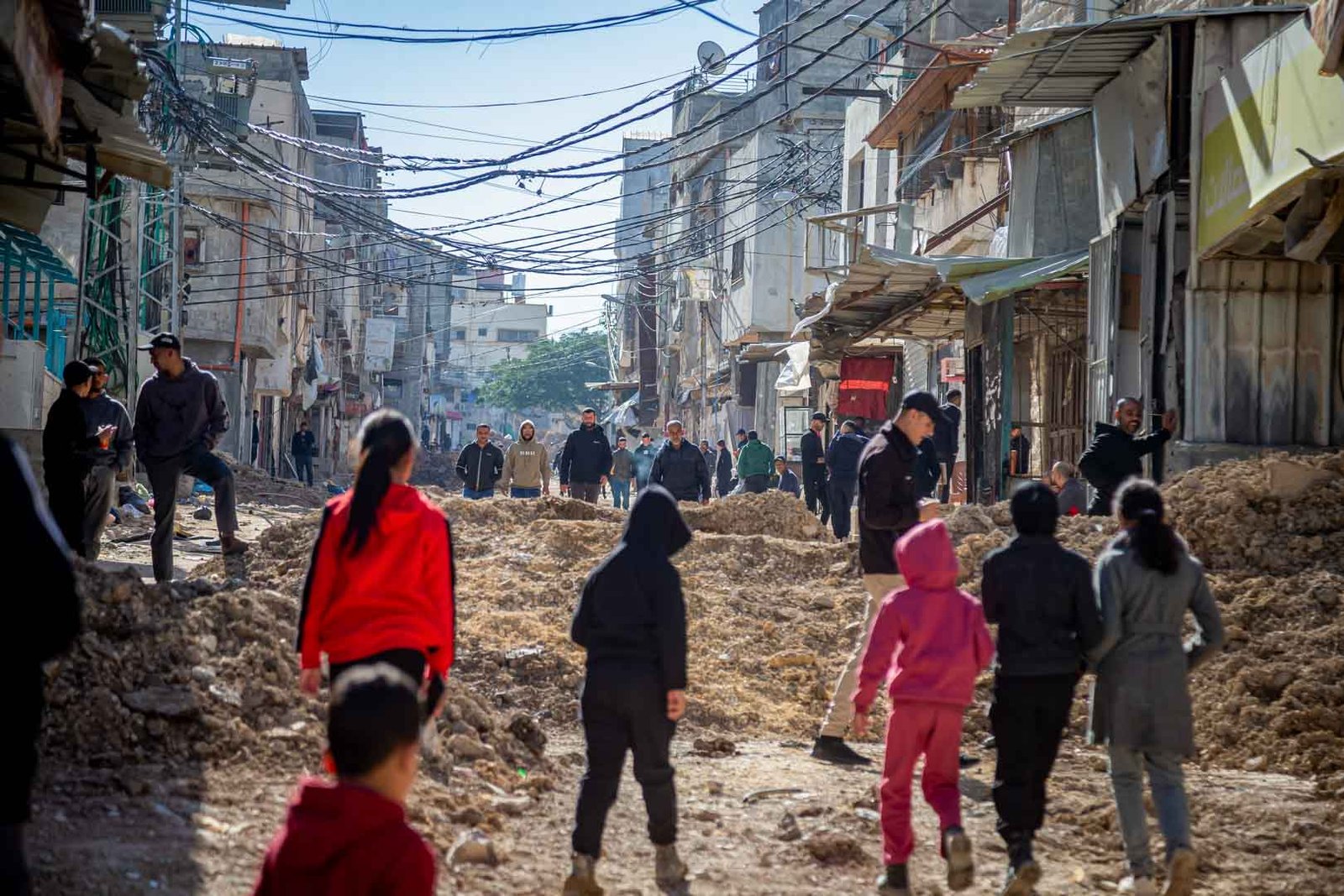
One of the clearest examples cited by the report is the increasing difficulty Palestinians face in travelling between communities.
In the village of Sair, a 49-year-old Palestinian man, Haytham Adnan Murad, recently encountered a road closure while returning from a hospital appointment in Hebron with his 12-year-old daughter. His daughter had undergone surgery and was unable to walk.
A road gate that had been open earlier in the day was closed by Israeli forces. Murad was therefore forced to leave his taxi and carry his daughter around the roadblock to reach his village.
He described the situation as part of everyday life, saying that conditions could change between morning and afternoon and that the experience had deprived people of a sense of dignity.
The incident illustrates one of the report’s central arguments: restrictions that might appear temporary or isolated can have a much broader effect when they repeatedly interfere with healthcare, education, employment and family life.
B’Tselem says displacement has also accelerated. According to the organisation, 64 entire Palestinian communities have been forcibly displaced in the West Bank since October 2023.
The report describes settler violence as another major component of the pressure facing Palestinian communities. It argues that such violence increasingly operates within a broader system of control rather than functioning solely as isolated acts committed by private individuals.
According to B’Tselem, some incidents take place alongside soldiers or in circumstances involving security forces, while settlers may also have access to state-provided weapons, equipment or infrastructure. The organisation further alleges that perpetrators frequently act with little accountability.
The economic situation has also deteriorated sharply. B’Tselem describes the Israeli policy since 2023 as one of “full economic strangulation”, arguing that restrictions have damaged employment opportunities, civilian infrastructure, agriculture and access to resources.
The impact can be seen in unemployment figures. According to data cited by the organisation, unemployment in the West Bank increased from 13.1% in 2022 to 31.3% in 2024. By 2025, nearly half of young people were reportedly neither employed nor enrolled in education or vocational training.
The economic consequences extend beyond individual workers. When employment disappears, families lose stable incomes, businesses struggle and communities become increasingly dependent on humanitarian assistance.
United Nations figures cited in the report indicate that hundreds of thousands of Palestinians in the West Bank required assistance to purchase food in 2024, representing a significant increase from the previous year.
Education has also been affected. B’Tselem reports that between 8% and 20% of West Bank schools were closed during the 2023-24 academic year, disrupting the education of children already living under significant political and economic pressure.
The organisation also says Palestinian civil society has faced increasing restrictions. Community organisations, workers’ groups and associations providing services to children and vulnerable people have reportedly experienced raids, closures, harassment and arrests involving employees, volunteers and activists.
The consequences are not limited to physical displacement or economic hardship. B’Tselem argues that the pressure is also damaging Palestinian social and political structures by weakening community organisations, restricting movement between communities and disrupting institutions that help maintain collective identity.
Kareem Jubran, who leads B’Tselem’s field research in the West Bank, said the organisation’s findings indicate that the incidents should not be viewed separately. He argued that, when considered together, the various measures point toward a broader objective of making Palestinian collective life increasingly difficult.
B’Tselem executive director Yuli Novak similarly described the situation as a new phase of an older political project. He said the process had accelerated following the formation of a right-wing and far-right Israeli government and intensified further after October 2023.
The organisation’s assessment has emerged amid growing international criticism of settlement expansion and settler violence in the occupied West Bank.
The British government has recently issued particularly strong criticism of extremist settler activity, with Foreign Secretary Ed Miliband accusing settler groups of engaging in actions amounting to ethnic cleansing and criticising the support they receive from elements within Israel’s political leadership.
Israel, however, has consistently rejected many international allegations concerning its conduct in the West Bank and maintains that its security measures are necessary to protect Israeli citizens from violence and attacks.
The Israeli military body responsible for coordinating civilian affairs in the West Bank has been approached for a response to the allegations contained in the B’Tselem report.
The dispute reflects a much wider international disagreement over the future of the West Bank, Israeli settlements, Palestinian statehood and the legal and political status of the territory.
For Palestinians living in affected communities, however, the issue is experienced through practical hardships rather than diplomatic arguments. A closed road can mean a longer journey to hospital. A damaged agricultural area can mean the loss of a family’s income. Restrictions on movement can prevent workers from reaching jobs or children from reaching schools.
The cumulative effect of these pressures is at the heart of B’Tselem’s argument. The organisation says that Palestinian life is being fragmented through a combination of restrictions, economic pressure, violence and displacement rather than through a single policy or event.

The report therefore presents the situation as a long-term transformation of the West Bank, in which Palestinian communities become smaller, more isolated and increasingly dependent while Israeli settlements and associated infrastructure become more established.
The findings are likely to intensify debate over Israel’s policies in the West Bank and the international response to them. They also add to growing calls for stronger scrutiny of settlement activity and protection for Palestinian civilians.
Whether the current trajectory can be reversed remains uncertain. What is clear from the latest report is that conditions for many Palestinians in the West Bank are becoming increasingly difficult, with consequences reaching into nearly every aspect of daily life.
As international pressure grows, the central question remains whether the policies shaping the West Bank will continue to produce greater Palestinian displacement and fragmentation, or whether sustained diplomatic and legal pressure will lead to a significant change in direction.
Related News:
 Miliband Rejects Chief Rabbi’s West Bank Warning
 Cartel crackdown raises fears of fresh violence
 Former ICC prosecutor condemns US sanctions
 New Footage Revives Peter Falconio Mystery
 Israeli Strike in Southern Lebanon Kills Seven
 Ukraine Villagers Demand Answers After Deadly Arms Depot Strike
 Argentina Orders Return of Nazi-Looted Painting
 UN expert urges UK to rethink Israel policy
 Files Link Andrew to Epstein Dinner After Prison Release
 Emails Show Epstein Funded Mandelson’s Husband After Jail
 Iran Crisis Tests Trump’s Global Leadership
 Ben Roberts-Smith Denies War Crime Allegations in First Statement
 Police Suspect Help in Missing Alice Springs Girl Case
 US states redraw maps after voting rights ruling
 Judge halts deportation of Yemeni refugees in US
 US ‘Narco Boat’ Strikes Draw Global Outcry
 Immigration Judges Fear Pressure in Trump Era
 Israeli Strikes in Lebanon Kill 10 Amid Ceasefire Strain
 US judge dismisses Kilmar Abrego Garcia indictment
 China mine blast death toll rises to 90
 Ebola outbreak in DRC overwhelms health system as cases surge
 Gunman Killed After White House Security Shootout
 Irish Gangland Figure Fails in Dublin Election Bid
 Murder Probe Continues After Arrest Release
 Ukraine Creates Long-Range Strike Command
 Dreyfus Statue Finally Gets Permanent Paris Home
 Five Years of Taliban Rule Leave Afghanistan in Crisis
 US immigration arrests hit record high in July
 Survivor Sues Musk’s xAI Over AI Abuse Images
 Daughter Finds Bones in Parents’ Burned-Out Car
 Trump Calls Iran War ‘Small Potatoes’ Despite US Deaths
 Patriot Platform Raises Concern Across Britain
 Royal Crown Branded Enslaved Africans in Britain’s Slave Trade
 Jailed Georgian Opposition Leaders Warn UK of Iranian Links to Ruling Party
 French Taxi Driver Cleared in David Lammy Theft Case After Fare Dispute
 UK University Faces Counter-Terror Probe Over China Pressure
 Just Stop Oil Protesters Convicted Amid Climate Defence Row
 Ukraine-Russia war latest: Putin’s troops exploit bad weather to force Kyiv withdrawal from multiple towns
 US Justice Department Files Lawsuit Against California Over Partisan Voting Maps
 Oklahoma Governor Grants Last-Minute Clemency to Death Row Inmate
 Greene Pushes Epstein Files Amid Trump Fallout
 Trump Deploys DHS to Charlotte in Major Arrest Operation
 South African Detained After Neo-Nazi Rally in Australia
 Venezuela Threatens Nobel Winner Machado with Fugitive Status
 Trump Envoy to Discuss Ukraine Peace at Kremlin
 Video shows Israeli troops kill Palestinians after surrender
 Chinese & Japanese Boats Clash Near Disputed Islands
 Iran Leader Blames Protesters, Says They Serve Trump
 UK and EU Signal Fresh Push for Defence Cooperation Talks
 Thousands Protest ICE Operations in Nationwide US Day of Action
 Thousands Protest ICE in New York Against Trump Deportation Campaign
 Mojtaba Khamenei Chosen as Iran’s New Supreme Leader
 Tehran Oil Depot Strikes Darken City With Toxic Smoke
 Mojtaba Khamenei Supporters Rally as Iranians Fear Repression
 Iran Defiance Grows Amid US-Israel War Pressure
 Injured Mojtaba Khamenei Elevated as Iran Leader
 Report Says Pezzullo Acted ‘Recklessly’ in Dealings
 Hungary election: Orbán faces biggest test amid scandal
 Suspected Plot Targets Pipeline Before Hungary Vote
 Learner Driver Charged After Expo Tragedy
 OpenAI CEO Apologizes After Canada Shooting Case
 Activists allege abuse after Gaza flotilla seizure
 Trump warns Iran as Middle East tensions surge again
 Afghan Families Left in Limbo Face Risk of Deportation
 Trump Announces 3-Day Russia–Ukraine Ceasefire Deal
 Tensions Emerge in Netanyahu-Trump Alliance
 Barrister Criticises Trial After Suicide Case Verdict
 US green card applicants must apply from abroad, DHS says
 Le Pen’s Popularity Holds Despite Conviction
 Houthis Strike Saudi Arabia as Middle East Tensions Rise
 Westminster Council Threatens Charing Cross Soup Kitchen
 BBC Warned About Missing Clothes of Murder Victim
 Former Diplomats Urge UK and France to Act on Palestine
 UK plans tougher Israel stance with settlement trade ban
 Councils spend £125m on illegal children’s care
 Abusive ex used Tesla to control and harass former partner
 Europe’s democracies face a growing far-right threat
 New Mexico Takes Facebook to Trial Over Data Scandal
 Sweden Election Hangs on Far-Right Breakthrough
 Saudi Arabia Shuts Oil Pipeline After Drone Attack