Published: 05 September 2026. The English Chronicle Desk. The English Chronicle Online.
The daughter of a British couple who died in devastating wildfires in southern Spain has demanded a full investigation after she discovered what appeared to be human bones and personal belongings inside her parents’ burned-out car weeks after authorities told her that the vehicle had been thoroughly searched.
Danielle Gillam-Kirton says the discovery has left her questioning whether her parents, Pete and Fran Gillam, were properly identified and whether their remains were fully recovered before their funeral. The family is now awaiting DNA testing on the bones found inside the vehicle.
Pete and Fran Gillam had retired to Bédar in Spain’s Almería province, where they had built a new life and become part of the local community. Fran, a former headteacher, was remembered for her involvement in community activities, including organising quiz nights to raise money for a nearby school. The couple also enjoyed playing padel at a local sports club and had established strong friendships in the area.
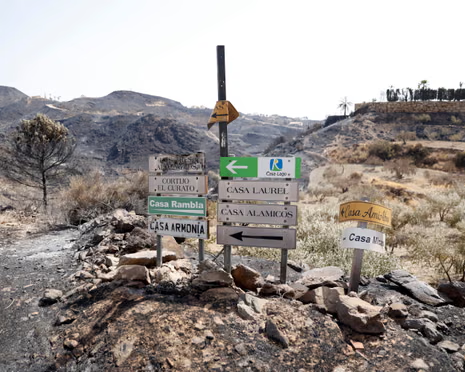
Their lives were cut short when a major wildfire swept through the region in July.
For Gillam-Kirton, the confirmation of her parents’ deaths was devastating enough. But she says the circumstances surrounding the recovery of their remains have created another painful and confusing chapter for the family.

Spanish police had reportedly told her that the vehicle in which her parents died had been meticulously inspected and that no personal possessions had been recovered. Gillam-Kirton was particularly concerned about her parents’ wedding rings and believed they were likely to have been wearing them when they died.
She was eventually given an opportunity to inspect the vehicle, which had been taken to a police compound in Mojácar.
She said she was warned that she would find nothing.
Instead, Gillam-Kirton says she immediately noticed what appeared to be a human bone on one of the front seats. She described being overwhelmed by shock as she realised what she appeared to be holding.
She and her partner then searched the vehicle further and found additional bones. They also discovered mobile phones, keys, jewellery, money and other belongings that had reportedly not been recovered during the earlier police inspection.
The discovery has raised serious questions for the family because a funeral had already taken place.
Gillam-Kirton has expressed the anguish behind the central question confronting her family: if the bones found inside the car belonged to her parents, what exactly had been cremated?
The remains have now been submitted for DNA analysis following what Gillam-Kirton describes as weeks of delay by the local authorities. She says forensic scientists who reviewed photographs of the bones believed they appeared to be human, although definitive identification will depend on the results of formal testing.
Initially, the family was reportedly told that the material could have been animal remains. Gillam-Kirton has challenged that explanation, pointing to the size and location of the bones she discovered.
The dispute is not limited to the Gillam family. Gillam-Kirton says she has also assisted another bereaved family who had concerns about the recovery of their relatives following the same wildfire.
According to her account, the family had been told that their loved ones died while attempting to escape the flames on foot and that a forensic team had subsequently cleared the area. However, when a search party involving a police officer and a relative returned to the hillside, they reportedly found what appeared to be human bones and personal belongings.
The allegations have intensified calls from bereaved families for a wider and more transparent investigation into the disaster.
For the families, the questions extend far beyond how the fire started. They want authorities to establish how warnings were issued, when residents were alerted, whether evacuation instructions reached those in danger, how emergency operations were conducted and how the victims’ remains and belongings were handled after their deaths.
Gillam-Kirton has also previously criticised the authorities over the emergency warning system.
She says an initial fire alert was issued at about 4.30pm, but the evacuation order did not come until roughly three hours later. The evacuation warning was reportedly delivered by a lone police officer travelling from house to house as the fire threatened the community.
Thirteen residents from the Gillams’ village were among those who died.
The speed with which the fire spread has become an important part of the families’ concerns. Wildfires in southern Europe can develop rapidly when extreme heat, dry vegetation and strong winds combine. In such circumstances, even a short delay in warning residents can have potentially devastating consequences.
Gillam-Kirton says the families have also been deeply hurt by what they regard as an early attempt to suggest that victims had failed to follow evacuation instructions.
She says later information indicated that the instructions in question had not actually been properly communicated.
For relatives who had just lost loved ones, such claims were particularly difficult to accept.
The family now wants the circumstances surrounding the deaths and the subsequent handling of the victims to be examined independently and comprehensively.
Gillam-Kirton has called on the British government to continue pressing Spanish authorities for answers. She points out that several British nationals died in the disaster and argues that the treatment of British victims and their families should remain a matter of concern for the UK authorities.
The UK Foreign Office has said it is supporting the family of the British couple and expressed sympathy for everyone affected by the devastating wildfires. It has also indicated that responsibility for investigations into deaths occurring in Spain rests with the Spanish authorities.
The local authorities in Bédar have been approached for a response to the family’s concerns.
The forthcoming DNA results could prove crucial. If the bones found inside the Gillams’ vehicle are confirmed as human and identified as belonging to Pete or Fran, questions could arise about how their remains were initially recovered, examined and identified.
If the remains are found to belong to someone else, the discovery could raise an even broader set of questions about the victims of the wildfire and the handling of human remains at the scene.
Until the forensic examination is complete, however, the family is left with uncertainty.
For Gillam-Kirton, the issue is about much more than forensic procedure. Her parents were people with families, friends and a community that loved them. Their possessions are now among the few physical links their relatives have to them.
She believes those belongings should have been treated with the same dignity and care afforded to the people who owned them.
The tragedy has also highlighted the importance of proper procedures following major natural disasters. When multiple people die in rapidly developing emergencies, the accurate recovery and identification of remains becomes essential not only for legal and investigative purposes but also for grieving families seeking certainty.
Gillam-Kirton says she does not want her parents to become merely two names among the victims of a devastating wildfire. She wants to understand what happened to them and whether anything could have been done differently.
She also believes that a proper investigation could help protect others in the future.

Wildfires are becoming an increasingly serious threat in many parts of Europe, particularly during periods of extreme heat and drought. Communities living in vulnerable areas may face similar emergencies again, making lessons from previous disasters especially important.
For the Gillam family and others who lost loved ones in Bédar, those lessons begin with establishing the truth.
The discovery of bones inside a vehicle that authorities had reportedly declared thoroughly searched has transformed an already devastating loss into an unresolved investigation. Until the DNA results are known and the wider questions surrounding the emergency response and recovery process are properly addressed, the families say they will continue demanding answers.
For Danielle Gillam-Kirton, the search for those answers is ultimately an act of love for her parents. She wants their final moments understood, their remains properly accounted for and their deaths treated with the dignity they deserved.
And above all, she wants certainty about the people her family laid to rest.
Related News:
 New Footage Revives Peter Falconio Mystery
 Israeli Strike in Southern Lebanon Kills Seven
 Ukraine Villagers Demand Answers After Deadly Arms Depot Strike
 Trump Speaks on Prince Andrew’s Royal Scandal Fallout
 Pregnant UK Teen to Be Freed from Georgian Jail
 Just Stop Oil Protesters Convicted Amid Climate Defence Row
 British Grandmother to Return Home After Death Sentence in Bali
 Second world war veterans honoured as King leads Remembrance Sunday
 Emails Show Epstein Funded Mandelson’s Husband After Jail
 Undercover officer deceived women with ‘grotesque and cruel’ lies, spycops inquiry told
 ICE Detains Soldier’s Bride Days After Louisiana Wedding
 Prevent Failings Exposed After Southport Attack
 Ben Roberts-Smith Denies War Crime Allegations in First Statement
 Iran Threats Target Journalists in UK
 Walsall Rapist Jailed After Hate-Filled Online Trail
 Chornobyl Still at Risk 40 Years After Disaster
 Two Children Die in Wolverhampton House Fire Tragedy
 Police Suspect Help in Missing Alice Springs Girl Case
 Cartel crackdown raises fears of fresh violence
 US ‘Narco Boat’ Strikes Draw Global Outcry
 Search Intensifies for Missing Hiker on WA Bibbulmun Track
 Barrister Criticises Trial After Suicide Case Verdict
 China mine blast death toll rises to 90
 Ebola outbreak in DRC overwhelms health system as cases surge
 Victim says non-custodial rape sentence ‘rock in my face’
 Murder Probe Continues After Arrest Release
 Ukraine Creates Long-Range Strike Command
 Dreyfus Statue Finally Gets Permanent Paris Home
 UK’s Largest Muslim Convention Scales Up Security Amid Rising Bigotry
 Westminster Council Threatens Charing Cross Soup Kitchen
 BBC Warned About Missing Clothes of Murder Victim
 Cambridge Professor Jason Arday Found Dead at Home
 Five Years of Taliban Rule Leave Afghanistan in Crisis
 Nepal-Tibet Flood Death Toll Rises as 2,478 Remain Missing
 Survivor Sues Musk’s xAI Over AI Abuse Images
 Nepal Flood Survivors Face Unimaginable Loss
 Peterborough Mosques Tighten Security After Attack
 French Taxi Driver Cleared in David Lammy Theft Case After Fare Dispute
 UK Bans Fake Numbers: Scammers Lose Their Trick
 Palace May Restore Hyphen to Andrew Mountbatten-Windsor’s Name
 Greene Pushes Epstein Files Amid Trump Fallout
 Criminal Gangs Pose as Truckers to Hijack UK Supply Chains
 Deadly Russian Strikes Hit Western Ukraine, 20 Killed in Ternopil
 Serial Rapist and Former Cop Found Guilty Again
 Royal Navy Shadows Russian Warships Entering the Channel
 Inside the Helpline Protecting Missing Children in the UK
 Most Tories Expect to Support a Farage-Led Government
 Two National Guard Soldiers Critically Injured Near White House
 American Mother Extradited From UK to U.S. on Murder Charges
 Met Police Vetting Failures Let Serial Rapists Remain
 School vetting failure exposed by London abuse case
 SA Police Intensify Search in Gus Lamont Case
 El Mencho Killed as Mexico Faces Violence
 Trump Tariffs Threat Spark UK and EU Alarm
 Iranian Australian community divided after vigils
 Kelly Wilkinson Inquest Reveals Bail Failure
 UK Rescue Flight Delayed Amid Middle East War
 Gordon Brown urges court for crimes against children
 UK Energy Reform Could Cut Bills by £200
 Fugitive Dezi Freeman Killed in Rural Victoria Shootout
 Relationship with Trump may be beyond repair, Starmer warned
 UK Stands Firm on Falklands Amid US Rift
 RFU Backs Borthwick Despite England’s Poor Six Nations
 Trump Announces 3-Day Russia–Ukraine Ceasefire Deal
 Fear and Betrayal: The Chilling Case of Kouri Richins
 UK Faces Mass Water Shortages by 2055, Lords Warn
 Maldives Cave Diving Tragedy Raises Safety Alarm
 Pope Meets Families in Italy Toxic Waste Zone
 Farage and Reform UK Reshape British Politics
 Britain’s Crowning Butterfly Takes the Nation by Storm
 Shocking Zoo Incident Sparks Attempted Murder Probe
 Guarding Justice: The Henry Nowak Case and Police Accountability
 Kylian Mbappé Slams Paraguayan Senator Over Racist Attack
 UK Schools Struggle as Classrooms Top 40C
 Olympus Awaits Unesco Heritage Recognition
 Powerful 7.7-Magnitude Earthquake Hits Eastern Indonesia
 Burnham unveils £65m drought aid for farmers
 Former Diplomats Urge UK and France to Act on Palestine
 Ghent Professors Questioned Cofnas Appointment
 British Museum Faces Questions Over Peter Thiel’s Private Bayeux Viewing